Loading...
Done
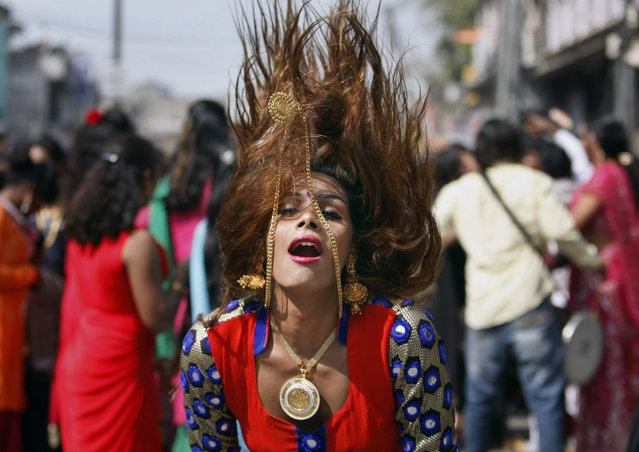
A eunuch dances during a rally to mark the congregation of thousands of eunuchs from different parts of India, in Jammu, India, Friday, March 13, 2015. The term eunuchs is used in India to describe transvestites, transsexuals and others who identify themselves as neither male nor female but as a member of a third gender. They traditionally survive by begging, dancing at weddings or blessing newborn babies and are frequently subjected to discrimination. (Photo by Channi Anand/AP Photo)

A eunuch dances during a rally to mark the congregation of thousands of eunuchs from different parts of India, in Jammu, India, Friday, March 13, 2015. The term eunuchs is used in India to describe transvestites, transsexuals and others who identify themselves as neither male nor female but as a member of a third gender. They traditionally survive by begging, dancing at weddings or blessing newborn babies and are frequently subjected to discrimination. (Photo by Channi Anand/AP Photo)
Details
21 Mar 2015 12:33:00
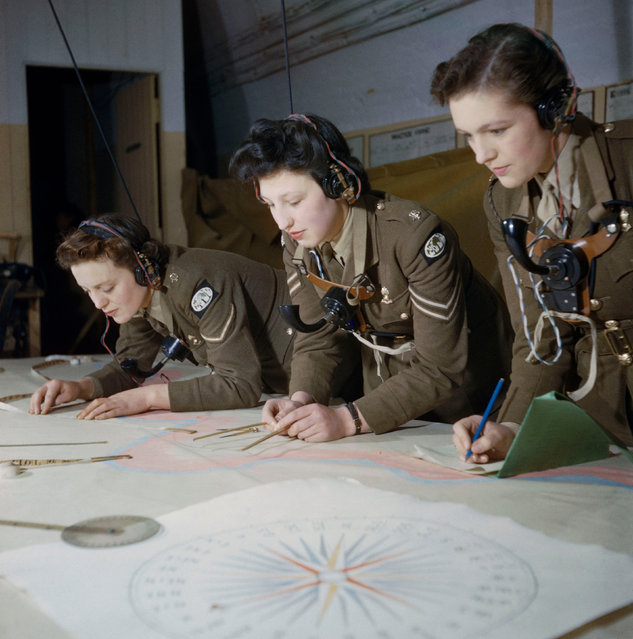
Auxiliary Territorial Service (ATS) plotters at work at Coastal Artillery Headquarters in Dover, December 1942. (Photo by Ted Dearberg/IWM/PA Wire)

Auxiliary Territorial Service (ATS) plotters at work at Coastal Artillery Headquarters in Dover, December 1942. The Auxiliary Territorial Service was the women's branch of the British Army during the Second World War. It was formed on 9 September 1938, initially as a women's voluntary service, and existed until 1 February 1949, when it was merged into the Women's Royal Army Corps. The ATS had its roots in the Women's Auxiliary Army Corps (WAAC), which was formed in 1917 as a voluntary service. During the First World War its members served in a number of jobs including clerks, cooks, telephonists and waitresses. The WAAC was disbanded after four years in 1921. (Photo by Ted Dearberg/IWM/PA Wire)
Details
13 Jul 2017 07:52:00
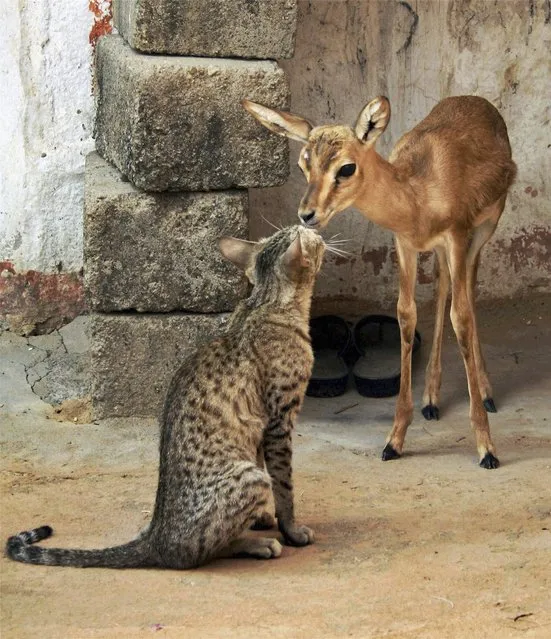
In this Wednesday, May 23, 2012 photograph, a young deer and a cat share a moment in Feench village near Jodhpur, Rajasthan state, India

In this Wednesday, May 23, 2012 photograph, a young deer and a cat share a moment in Feench village near Jodhpur, Rajasthan state, India. (Photo by AP Photo)
Details
16 Jun 2012 11:07:00
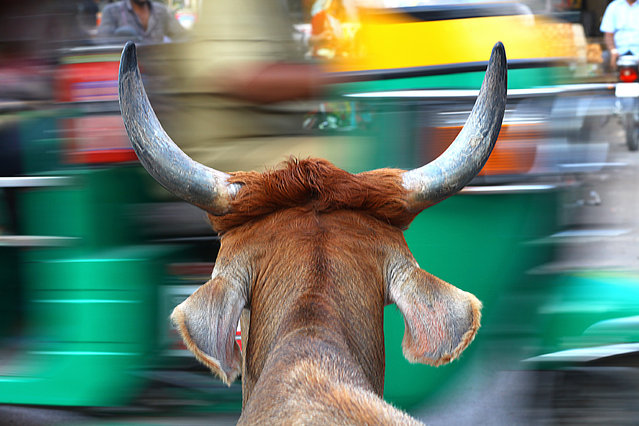
“Slow”. A calm cow in the messy streets of Jodhpur. Photo location: India. (Photo and caption by Matthias Troeger/National Geographic Photo Contest)

“Slow”. A calm cow in the messy streets of Jodhpur. Photo location: India. (Photo and caption by Matthias Troeger/National Geographic Photo Contest)
Details
20 May 2014 12:18:00
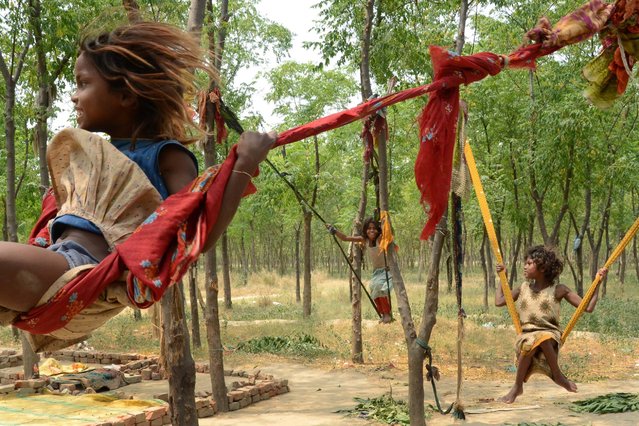
Children of Indian laborers play on make-shift swings in Amritsar, India, May 12, 2015. (Photo by Narinder Nanu/AFP Photo)

Children of Indian laborers play on make-shift swings in Amritsar, India, May 12, 2015. (Photo by Narinder Nanu/AFP Photo)
Details
16 May 2015 12:12:00
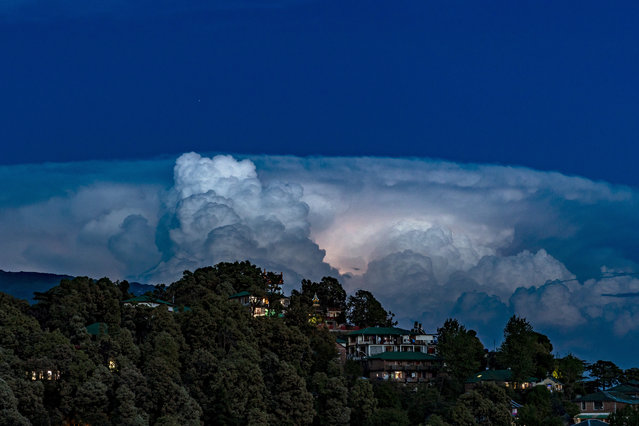
A flash of lightning lights up a raincloud hovering over a township in Dharmsala, India, Sunday, April 19, 2020. (Photo by Ashwini Bhatia/AP Photo)

A flash of lightning lights up a raincloud hovering over a township in Dharmsala, India, Sunday, April 19, 2020. (Photo by Ashwini Bhatia/AP Photo)
Details
25 Aug 2020 00:03:00
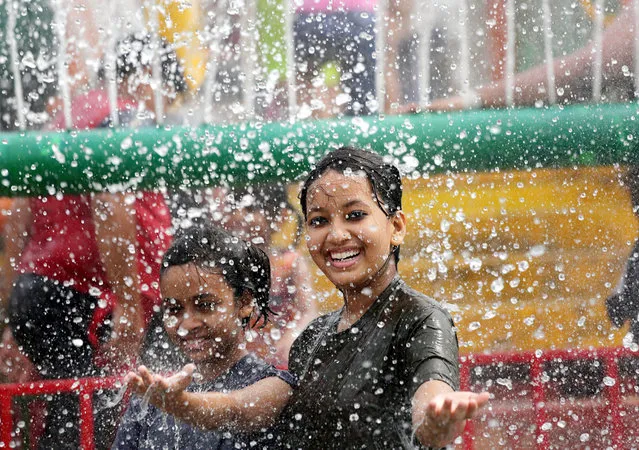
An Indian girl smiles under a water splash at a water park as the temperatures reached 38 degree Celsius in Calcutta, eastern India, 12 June 2016. The summer or pre-monsoon season lasts from March to July in eastern India with the highest day temperatures ranging from 38 to 45 degrees Celsius. (Photo by Piyal Adhikary/EPA)

An Indian girl smiles under a water splash at a water park as the temperatures reached 38 degree Celsius in Calcutta, eastern India, 12 June 2016. The summer or pre-monsoon season lasts from March to July in eastern India with the highest day temperatures ranging from 38 to 45 degrees Celsius. (Photo by Piyal Adhikary/EPA)
Details
13 Jun 2016 11:28:00
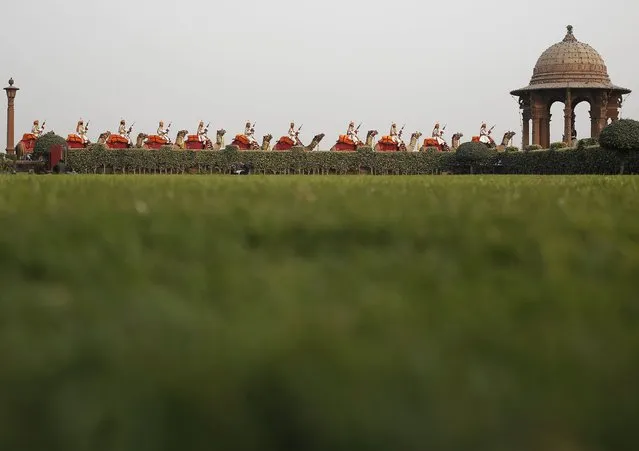
India's Border Security Force (BSF) soldiers ride their camels during a rehearsal for the “Beating the Retreat” ceremony in New Delhi, India, January 27, 2016. (Photo by Anindito Mukherjee/Reuters)

India's Border Security Force (BSF) soldiers ride their camels during a rehearsal for the “Beating the Retreat” ceremony in New Delhi, India, January 27, 2016. The ceremony symbolises retreat after a day on the battlefield, and marks the official end of the Indian Republic Day celebrations. It is held every year on January 29. (Photo by Anindito Mukherjee/Reuters)
Details
29 Jan 2016 11:55:00