Loading...
Done
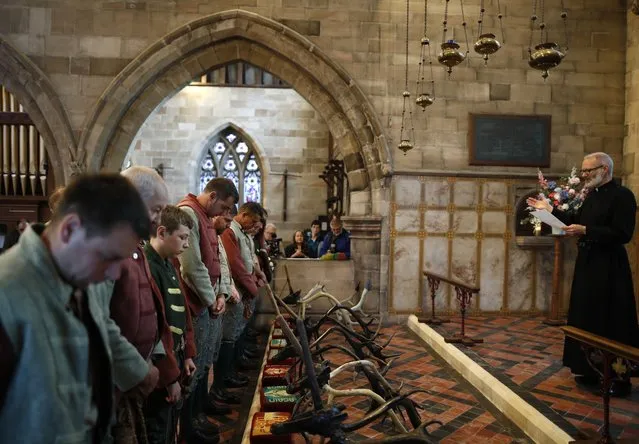
Reverend Simon Davis prays with the dancers before the Abbots Bromley Horn Dance in Abbots Bromley, Britain, September 12, 2016. The Abbots Bromley Horn Dance is an English folk dance dating back to the Middle Ages. The dance takes place each year in Abbots Bromley, a village in Staffordshire, England. The modern version of the dance involves reindeer antlers, a hobby horse, Maid Marian, and a Fool. According to some, the use of antlers suggests an Anglo-Saxon origin along with other native Anglo-Saxon traditions that have survived into modern times in various forms. (Photo by Darren Staples/Reuters)

Reverend Simon Davis prays with the dancers before the Abbots Bromley Horn Dance in Abbots Bromley, Britain, September 12, 2016. The Abbots Bromley Horn Dance is an English folk dance dating back to the Middle Ages. (Photo by Darren Staples/Reuters)
Details
13 Sep 2016 09:36:00
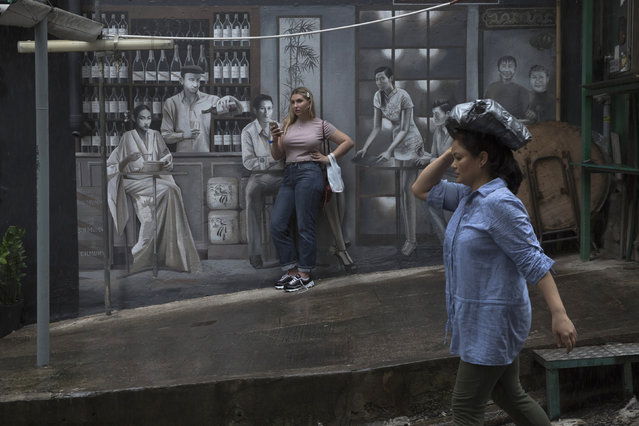
In this June 12, 2017 photo, a woman stands in front of a mural on the slope in Central district, Hong Kong. (Photo by Kin Cheung/AP Photo)

In this June 12, 2017 photo, a woman stands in front of a mural on the slope in Central district, Hong Kong. Once known as Victoria after the British queen, Hong Kong island's waterfront formed the core of the British settlement after Hong Kong island was handed over as a colony in 1842. Today as Hong Kong approaches the 20th anniversary of its return to China, it remains a bustling commercial and financial center as well as the location of the main government offices. However, along the streets that angle sharply upward toward the mountains above, a more relaxed pace of life endures. (AP Photo/Kin Cheung)
Details
28 Jun 2017 08:18:00
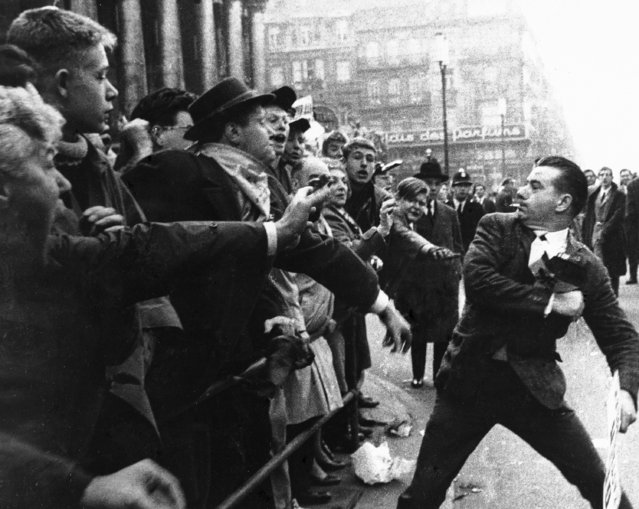
A Flemish demonstrator, one of thousands who gathered for a march through Brussels to protest against what the Flemings call their subjucation by the French-speaking Walloons, draws back as he is jeered by a crowd of Walloons on the pavement in a Brussels Street, on October 14, 1962. The Flemish demonstrators clashed with Walloon counter demonstrators as riot police sought to maintain order. (Photo by AP Photo)

A Flemish demonstrator, one of thousands who gathered for a march through Brussels to protest against what the Flemings call their subjucation by the French-speaking Walloons, draws back as he is jeered by a crowd of Walloons on the pavement in a Brussels Street, on October 14, 1962. The Flemish demonstrators clashed with Walloon counter demonstrators as riot police sought to maintain order. The Flemings claim that although they form 60% of the population in Belgium, they are inadequately represented in the government, and they say, the Walloons get most of the top jobs in the armed forces and the diplomatic service. (Photo by AP Photo)
Details
16 Oct 2015 08:05:00
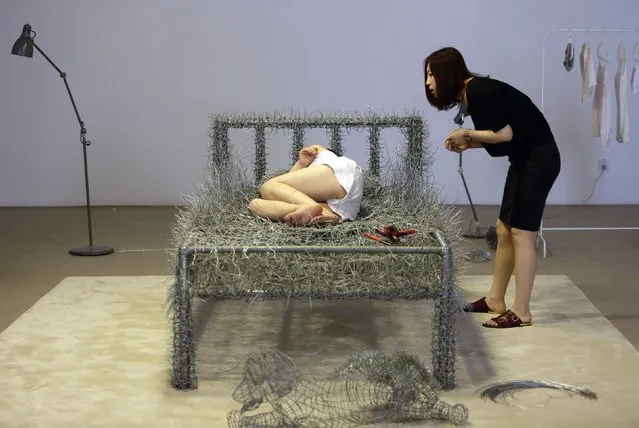
Chinese artist Zhou Jie takes a nap on an unfinished iron wire bed, one of her sculpture works, after lunch as a friend of hers looks on at Beijing Now Art Gallery, in Beijing August 11, 2014. (Photo by Jason Lee/Reuters)

Chinese artist Zhou Jie takes a nap on an unfinished iron wire bed, one of her sculpture works, after lunch as a friend of hers looks on at Beijing Now Art Gallery, in Beijing August 11, 2014. Zhou started her art project titled “36 Days” on August 9, in which she would live inside an exhibition hall with an unfinished iron wire bed, some iron wire sculptures in the shape of stuffed animal dolls, a certain amount of food and her mobile phone, for 36 days. The entire process is open to visitors and she may also interact with them, according to Zhou. (Photo by Jason Lee/Reuters)
Details
16 Aug 2014 10:37:00


“The Red River Hog (Potamochoerus porcus), also known as the Bush Pig (but not to be confused with P. larvatus, common name “Bushpig”), is a wild member of the pig family living in Africa, with most of its distribution in the Guinean and Congolian forests. It is rarely seen away from rainforests, and generally prefers areas near rivers or swamps.

Red River Hogs eat grass, berries, roots, insects, molluscs, small vertebrates and carrion. They are capable of causing damage to plantations. Red River Hogs typically live in herds of 6-20 members led by a dominant boar. Sows rear 3-6 piglets at a time.”

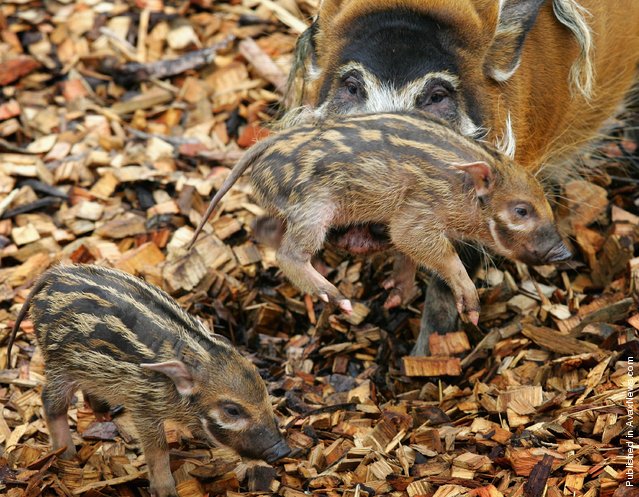
Photo: Two 17 day old red river hoglet twins forage for food next to their mother Bahiti at London Zoo on August 23, 2007 in London, England. Red River hoglets inhabit the forests and swamps of West and Central Africa. The recent additions to the London Zoo pig pen have been eagerly awaited by zoo keepers. (Photo by Chris Jackson/Getty Images)

Details
18 Mar 2011 15:15:00
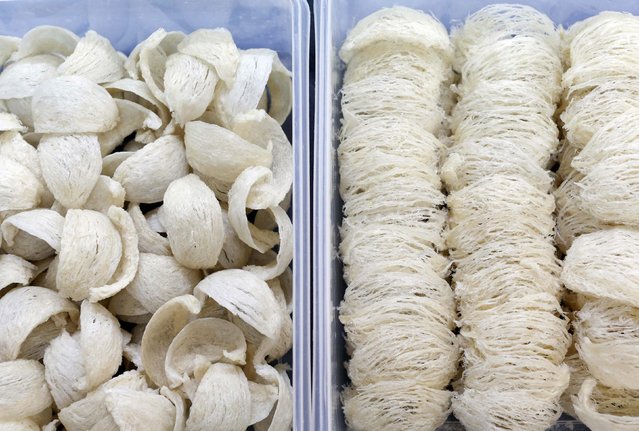
Two styles of cleaned bird's nest, Yan Zhan (L) and Su Zhan (R) await repacking at a processing plant in Kuala Lumpur, February 17, 2015. Prized in China for is alleged health benefits for hundreds of years, nests made from swiftlets' saliva are being mixed into coffee and cereal as the Southeast Asian producers of the delicacy seek to broaden its appeal, and their profit margins. (Photo by Olivia Harris/Reuters)

Two styles of cleaned bird's nest, Yan Zhan (L) and Su Zhan (R) await repacking at a processing plant in Kuala Lumpur, February 17, 2015. Prized in China for is alleged health benefits for hundreds of years, nests made from swiftlets' saliva are being mixed into coffee and cereal as the Southeast Asian producers of the delicacy seek to broaden its appeal, and their profit margins. The nests are among the world's most expensive foods, selling for up to $2,500 a kg and the swiftlets that weave them are indigenous to Indonesia, Malaysia, Thailand and Vietnam. (Photo by Olivia Harris/Reuters)
Details
24 Feb 2015 13:57:00
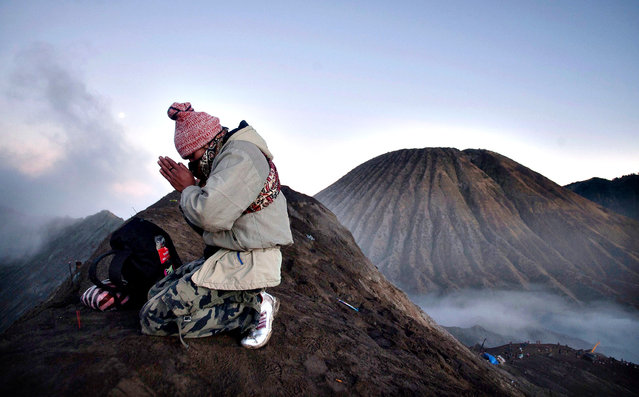
A Tengger tribesman prays at Mount Bromo during the annual Kasada ceremony in East Java on August 12, 2014. The Kasada ceremony is a festival held every 14th day of the Kasada month in the traditional Hindu lunar calender to honour Sang Hyang Widhi (God Almighty) and is based on the legend of Roro Anteng and Joko Seger from the Majapahit Kingdom, from which their Tengger tribe name originates. (Photo by Juni Kriswanto/AFP Photo)

A Tengger tribesman prays at Mount Bromo during the annual Kasada ceremony in East Java on August 12, 2014. The Kasada ceremony is a festival held every 14th day of the Kasada month in the traditional Hindu lunar calender to honour Sang Hyang Widhi (God Almighty) and is based on the legend of Roro Anteng and Joko Seger from the Majapahit Kingdom, from which their Tengger tribe name originates. Hundreds of worshippers from the Tengger tribe offer food and livestock as a symbolic sacrifice which they throw into the crater for the blessings of safety and prosperity to their familyies and community. (Photo by Juni Kriswanto/AFP Photo)
Details
16 Aug 2014 11:19:00
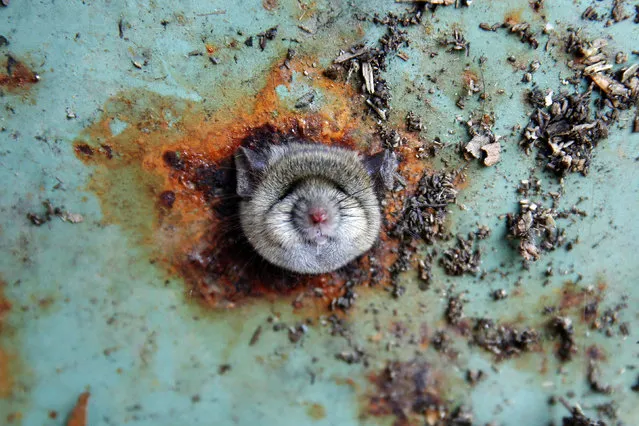
A rat's head rests as it is constricted in an opening in the bottom of a garbage can in the Brooklyn borough of New York, U.S., October 18, 2016. (Photo by Lucas Jackson/Reuters)

A rat's head rests as it is constricted in an opening in the bottom of a garbage can in the Brooklyn borough of New York, U.S., October 18, 2016. The Brooklyn rat was saved on Tuesday after getting its head stuck in the dumpster while scavenging for food, according to the New York Daily News. As the rat was scurrying around the bottom of the trash can, it came across a few ventilation holes. The hungry creature poked his head into one of them, but to its dismay couldn't get back out,Reuters photographer Lucas Jackson told the Daily News. Jackson was able to take some adorable photos of the rat's unfortunate situation before it was rescued. (Photo by Lucas Jackson/Reuters)
Details
19 Oct 2016 12:26:00