Loading...
Done
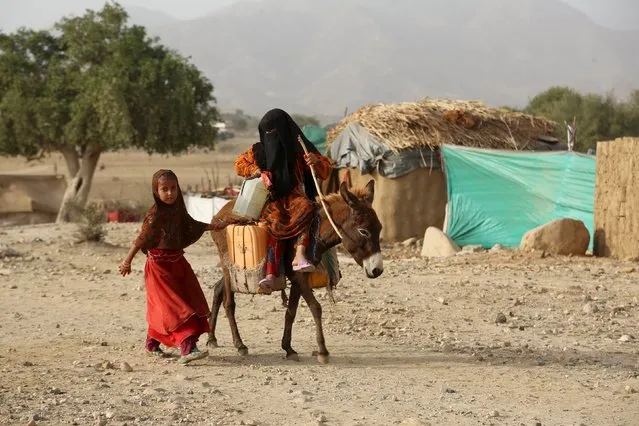
A girl rides a donkey as another walks by at the Shawqaba camp for internally displaced people who were forced to leave their villages by the war in Yemen's northwestern province of Hajjah March 12, 2016. In northwest Yemen, one of the poorest countries in the Middle East, about 400 families uprooted by the war have been stuck in the Shawqaba camp in Hajjah province for the past year. Residents live in poorly built huts that protect them neither from summer heat nor winter cold in a camp that lacks the most basic services. (Photo by Abduljabbar Zeyad/Reuters)

A girl rides a donkey as another walks by at the Shawqaba camp for internally displaced people who were forced to leave their villages by the war in Yemen's northwestern province of Hajjah March 12, 2016. In northwest Yemen, one of the poorest countries in the Middle East, about 400 families uprooted by the war have been stuck in the Shawqaba camp in Hajjah province for the past year. Residents live in poorly built huts that protect them neither from summer heat nor winter cold in a camp that lacks the most basic services. (Photo by Abduljabbar Zeyad/Reuters)
Details
09 Apr 2016 13:16:00
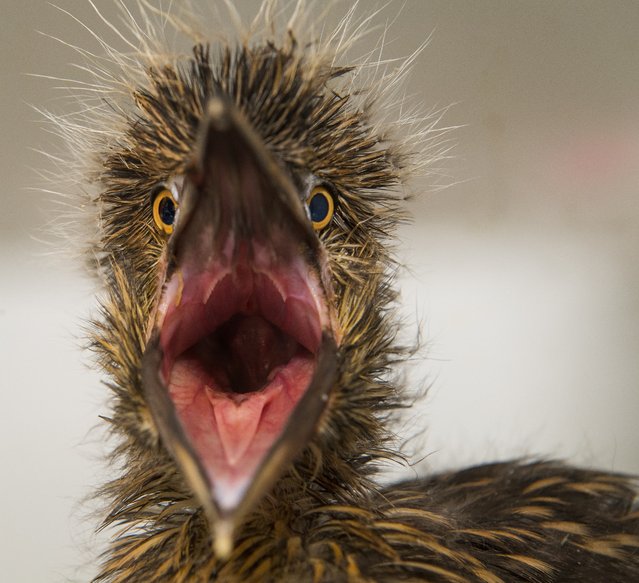
A baby Black-crowned Night Heron squawks in its incubator while being cared for at City Wildlife rescue and rehabilitation center in Washington, DC on May 31, 2017. The heron is one of several that have been brought to CW by the staff at The National Zoo over the past few years. The heron is a native bird and has made an established rookery inside the zoo grounds over a hundred years ago.  Every year at this time, some of the chicks get pushed or fall out of the nest and require human care.  Because the birds are native and not part of the Smithsonian collection, they partnered with CW to rehabilitate the herons for re-release back to the flock inside Zoo. They're reintroduced back to their flock so that they can migrate together in the Fall. The Black-crowned heron usually migrates from the DC area down to southeast North Carolina, some going as far as Jacksonville, FL in winter. The Black-crowned heron is the species of greatest conservation need in the District of Columbia because their numbers are in such rapid decline due to habitat loss. (Photo Linda Davidson/The Washington Post)

A baby Black-crowned Night Heron squawks in its incubator while being cared for at City Wildlife rescue and rehabilitation center in Washington, DC on May 31, 2017. The heron is one of several that have been brought to CW by the staff at The National Zoo over the past few years. (Photo Linda Davidson/The Washington Post)
Details
04 Jun 2017 08:04:00
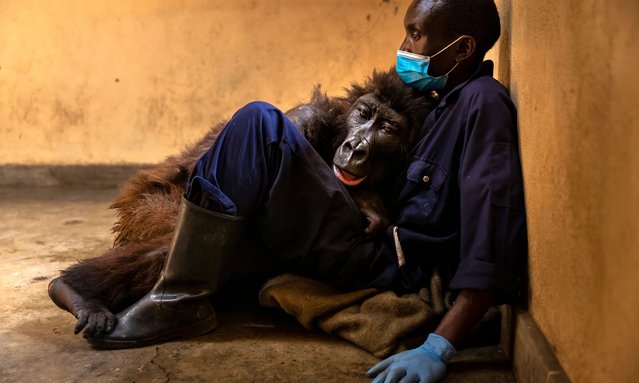
Orphaned mountain gorilla, Ndakasi, lies in the arms of her caregiver, Andre Bauma, on September 21, 2021 shortly before her death, which the park confirmed on September 26. Mr Bauma and others at the Senkwekwe Mountain Gorilla Center had cared for Ndakasi and other orphans for 13 years. Ndakasi had suffered a prolonged illness prior to her death. This is the only mountain gorilla orphanage in the world and takes in mountain gorilla orphans who have lost their families to poaching or conflict. A number of the orphans here were rescued from sales by poachers in sting operations carried out by Congolese National Park Authority (ICCN) rangers. (Photo by Brent Stirton/Getty Images)

Orphaned mountain gorilla, Ndakasi, lies in the arms of her caregiver, Andre Bauma, on September 21, 2021 shortly before her death, which the park confirmed on September 26. Mr Bauma and others at the Senkwekwe Mountain Gorilla Center had cared for Ndakasi and other orphans for 13 years. Ndakasi had suffered a prolonged illness prior to her death. This is the only mountain gorilla orphanage in the world and takes in mountain gorilla orphans who have lost their families to poaching or conflict. A number of the orphans here were rescued from sales by poachers in sting operations carried out by Congolese National Park Authority (ICCN) rangers. (Photo by Brent Stirton/Getty Images)
Details
17 Oct 2021 08:04:00
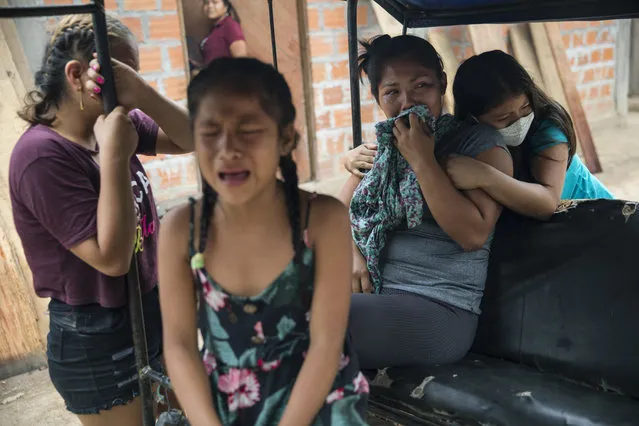
Family members mourn the passing of Manuela Chavez, who died from symptoms related to the new coronavirus at the age of 88, as a government team prepares to remove her body from inside her home, in the Shipibo Indigenous community of Pucallpa, in Peru's Ucayali region, Monday, August 31, 2020. While the lucky are cured with ancestral ailments, the less fortunate often die at home. A government team travels from one spartan, thatch-roofed home to the next, removing the dead from their homes where they took their last breaths. (Photo by Rodrigo Abd/AP Photo)

Family members mourn the passing of Manuela Chavez, who died from symptoms related to the new coronavirus at the age of 88, as a government team prepares to remove her body from inside her home, in the Shipibo Indigenous community of Pucallpa, in Peru's Ucayali region, Monday, August 31, 2020. While the lucky are cured with ancestral ailments, the less fortunate often die at home. A government team travels from one spartan, thatch-roofed home to the next, removing the dead from their homes where they took their last breaths. (Photo by Rodrigo Abd/AP Photo)
Details
18 Sep 2020 00:03:00
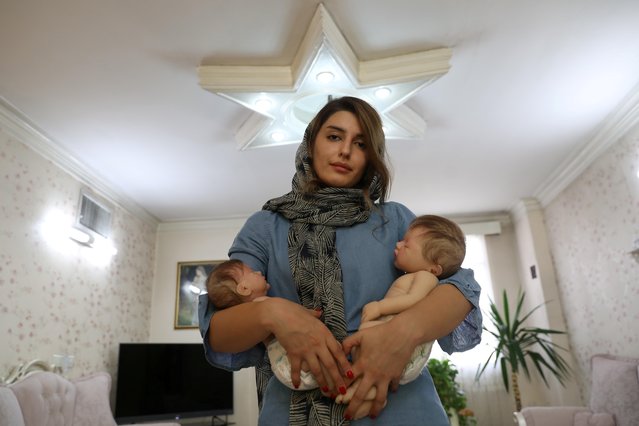
Twenty-four-year-old Maryam Aghayee makes hyper-realistic baby dolls acting as surrogates for some Iranian families who are apprehensive of having more children. “It has been about three or four months since I started this work”, says Maryam in Tehran, Iran on October 7, 2020. “After making my second doll, many orders have been coming in. The second doll was much more realistic than the previous one. After making my second doll, I said that from now on I can take customer orders. I did not intend to start a business from the beginning because it was a hobby, but after the second doll, the demand for these kinds of dolls increased, customers want to have such dolls”. (Photo by Majid Asgaripour/WANA (West Asia News Agency) via Reuters)

Twenty-four-year-old Maryam Aghayee makes hyper-realistic baby dolls acting as surrogates for some Iranian families who are apprehensive of having more children. “It has been about three or four months since I started this work”, says Maryam in Tehran, Iran on October 7, 2020. “After making my second doll, many orders have been coming in. The second doll was much more realistic than the previous one. After making my second doll, I said that from now on I can take customer orders. I did not intend to start a business from the beginning because it was a hobby, but after the second doll, the demand for these kinds of dolls increased, customers want to have such dolls”. (Photo by Majid Asgaripour/WANA (West Asia News Agency) via Reuters)
Details
25 Oct 2020 00:01:00
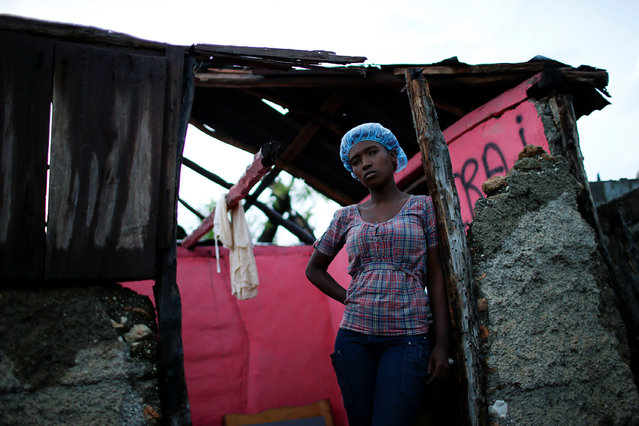
Carine Louis-Jean, 22, poses for a photograph in her destroyed house after Hurricane Matthew hit Jeremie, Haiti, October 17, 2016. “The roof of my house is completely gone and some of walls were destroyed. I have lost everything I had, but I thank God that I have a friend who is letting me stay at her house. I could say I'm lucky, because none of my family died during the hurricane, but I do not think I'm lucky”, said Louis-Jean. (Photo by Carlos Garcia Rawlins/Reuters)

Carine Louis-Jean, 22, poses for a photograph in her destroyed house after Hurricane Matthew hit Jeremie, Haiti, October 17, 2016. “The roof of my house is completely gone and some of walls were destroyed. I have lost everything I had, but I thank God that I have a friend who is letting me stay at her house. I could say I'm lucky, because none of my family died during the hurricane, but I do not think I'm lucky”, said Louis-Jean. (Photo by Carlos Garcia Rawlins/Reuters)
Details
11 Nov 2016 08:23:00
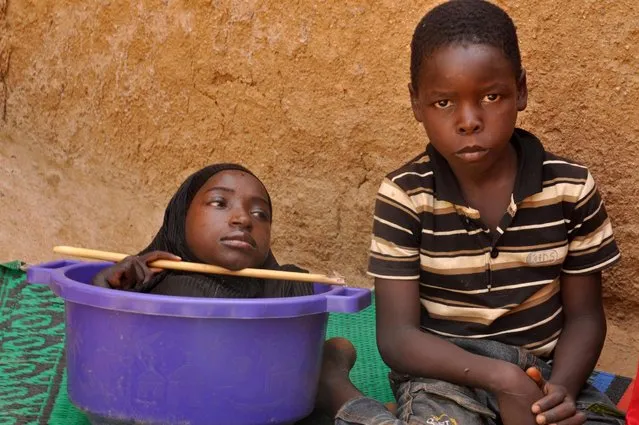
Rahma, 19, pictured with her 10-year old brother Fahad on June 21, 2016 in Kano, Nigeria. A teenage girl born without limbs lives her life in a plastic bowl. Rahma Haruna is a bright, happy girl, despite suffering from a mystery condition that stopped her arms and legs developing properly – leaving her practically limbless and in constant pain. The 19-year- old, from Kano, Nigeria, was born a healthy baby but when she turned six months old her growth came to a sudden halt and she stopped hitting key development milestones. Rahma’s family do their best to provide her with a fulfilling life and transport her around the village in a plastic bowl. Rahma said: “They help me a lot. How do they? They give me anything I need”. Rahma died on 25 December 2016. (Photo by Sani Maikatanga/Barcroft Images)

Rahma, 19 (L), pictured with her 10-year old brother Fahad on June 21, 2016 in Kano, Nigeria. A teenage girl born without limbs lives her life in a plastic bowl. Rahma Haruna is a bright, happy girl, despite suffering from a mystery condition that stopped her arms and legs developing properly – leaving her practically limbless and in constant pain. The 19-year- old, from Kano, Nigeria, was born a healthy baby but when she turned six months old her growth came to a sudden halt and she stopped hitting key development milestones. Rahma’s family do their best to provide her with a fulfilling life and transport her around the village in a plastic bowl. Rahma said: “They help me a lot. How do they? They give me anything I need”. Rahma died on 25 December 2016. (Photo by Sani Maikatanga/Barcroft Images)
Details
30 Dec 2016 10:52:00
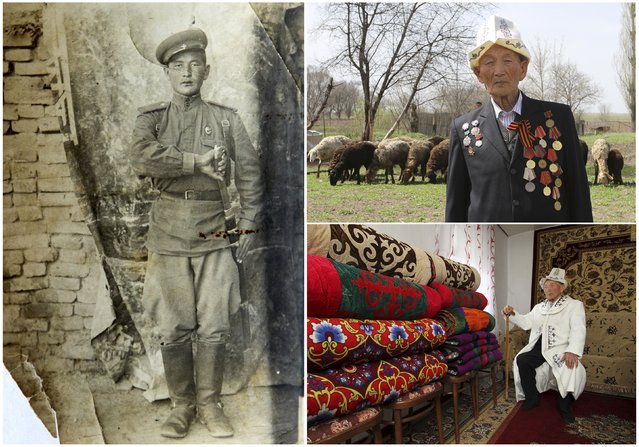
World War Two veteran Abla Begaliyev, 91, is seen in an undated handout picture (L), poses for a picture in Arashan (Top R) and at home in Kyrgyzstan April 14, 2015. Begaliyev served in the border guard cavalry from February 1942 until April 1947. Originally from Kyrgyzstan, he fought on the Ukrainian front and relocated to the border with Afghanistan at the end of World War Two. (Photo by Vladimir Pirogov/Reuters/Family handout (L))

World War Two veteran Abla Begaliyev, 91, is seen in an undated handout picture (L), poses for a picture in Arashan (Top R) and at home in Kyrgyzstan April 14, 2015. Begaliyev served in the border guard cavalry from February 1942 until April 1947. Originally from Kyrgyzstan, he fought on the Ukrainian front and relocated to the border with Afghanistan at the end of World War Two. As the world marks the 70th anniversary of the end of World War Two, Reuters photographers the length and breadth of the former Soviet republics (CCCP) captured portraits of Red Army veterans, mostly now in their 80s and 90s, today and through archive pictures at the time. More than 20 million Soviet citizens were killed in the war. (Photo by Vladimir Pirogov/Reuters/Family handout (L))
Details
08 May 2015 14:22:00