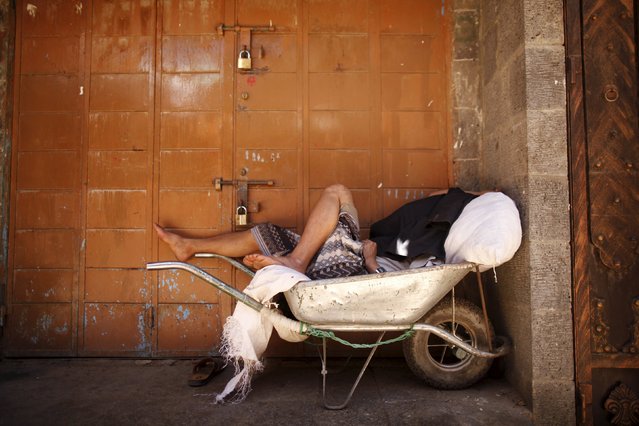
A man sleeps on a wheelbarrow outside a closed shop at a market during the first day of a ceasefire in Yemen's capital Sanaa April 11, 2016. (Photo by Khaled Abdullah/Reuters)
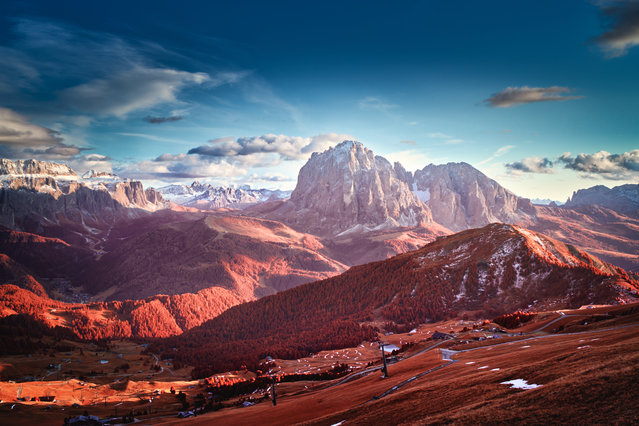
A selection of winning images from the Life in Another Light photo contest 2020, from Kolari Vision. Here: Lights and Shadows in the Dolomites, in the landscape infrared category. (Photo by Tomasz Grzyb/Kolari Vision)
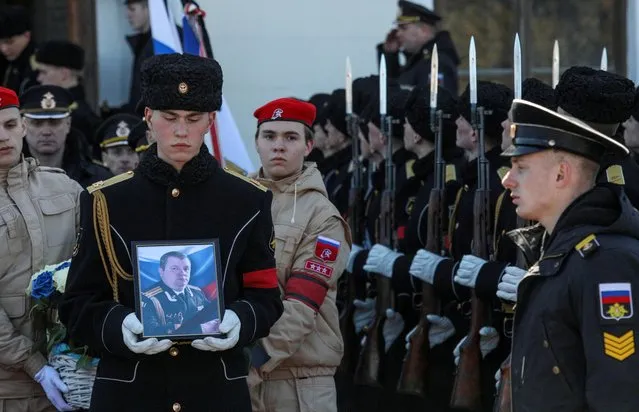
Sailors attend a memorial and funeral service for first rank captain Andrei Paliy, Russia's Black Sea Fleet deputy commander, who was killed in the eastern Ukrainian port city of Mariupol on March 20, in Sevastopol, Crimea on March 23, 2022. (Photo by Alexey Pavlishak/Reuters)
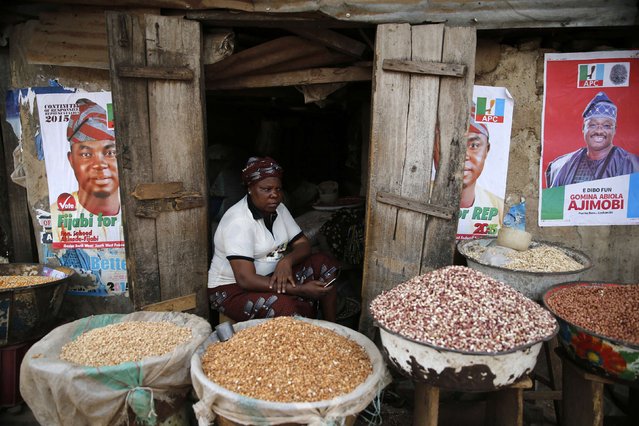
Latefat Alao, 56, a ethnic Yoruba Muslim woman, waits for customers in front of her in Beere market in Ibadan, southwest Nigeria, January 29, 2015. Much of the grain and wheat traders like Alao sell comes from the north and Boko Haram's campaign has negatively affected farmers and food markets. Reuters photographer Akintunde Akinleye photographed Nigerians and asked them about their views on the elections as well as their hopes and concerns for the country. (Photo by Akintunde Akinleye/Reuters)
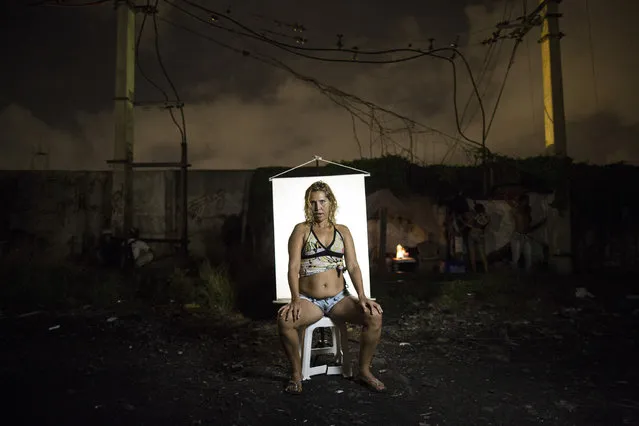
In this March 18, 2015 photo, Andrea, better known as Loira, which is the Portuguese word for “blonde”, poses for a portrait in an open-air crack cocaine market, known as a “cracolandia” or crackland where users can buy crack, and smoke it in plain sight, day or night, in Rio de Janeiro, Brazil. Andrea says she is married and has a home, but she keeps returning to crackland to feed her addiction. (Photo by Felipe Dana/AP Photo)
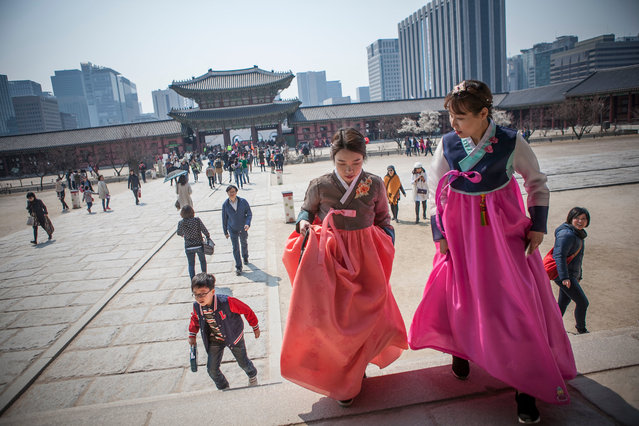
Young Korean women wearing hanbok (Korean traditional dress) walk inside Gyeongbok Palace on March 27, 2016 in Seoul, South Korea. There has been a trend in recent years for the young Koreans to wear the traditional Korean dress, Hanbok. Wearing the traditional dress, they will walk around downtown Seoul on weekends taking selfies, and share their memories with friends on social media, and also to promote their traditional dress to foreign visitors. (Photo by Jean Chung/Getty Images)
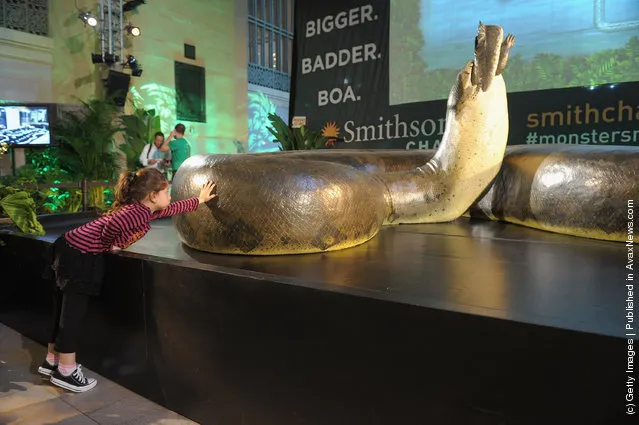
“Titanoboa is a genus of snake that lived approximately 58–60 million years ago, during the Paleocene epoch, a 10-million-year period immediately following the dinosaur extinction event. The only known species is the Titanoboa cerrejonensis, the largest snake ever discovered, which supplanted the previous record holder, Gigantophis”. – Wikipedia
Photo: Leah Del Rio views a replica of the prehistoric Titanoboa, the largest snake to ever live, on display at Grand Central Terminal on March 23, 2012 in New York City. (Photo by Michael Loccisano/Getty Images)