Loading...
Done
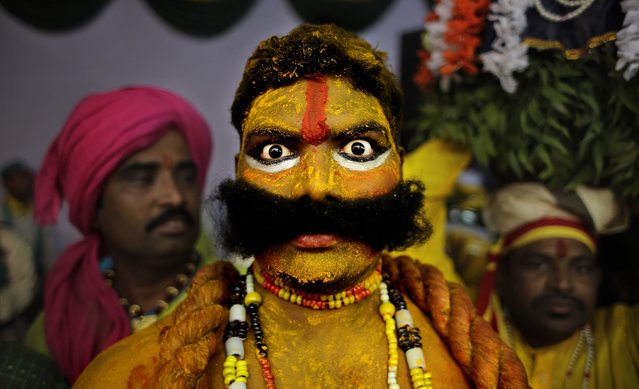
An artist from the state of Telangana reacts to the camera as they wait for their turn to perform during a media preview displaying a glimpse of culture of different parts of India, in New Delhi, India, Thursday, January 22, 2015. The tableaux will be part of the Indian Republic Day parade on Jan. 26. (Photo by Altaf Qadri/AP Photo)

An artist from the state of Telangana reacts to the camera as they wait for their turn to perform during a media preview displaying a glimpse of culture of different parts of India, in New Delhi, India, Thursday, January 22, 2015. The tableaux will be part of the Indian Republic Day parade on Jan. 26. (Photo by Altaf Qadri/AP Photo)
Details
23 Jan 2015 13:04:00
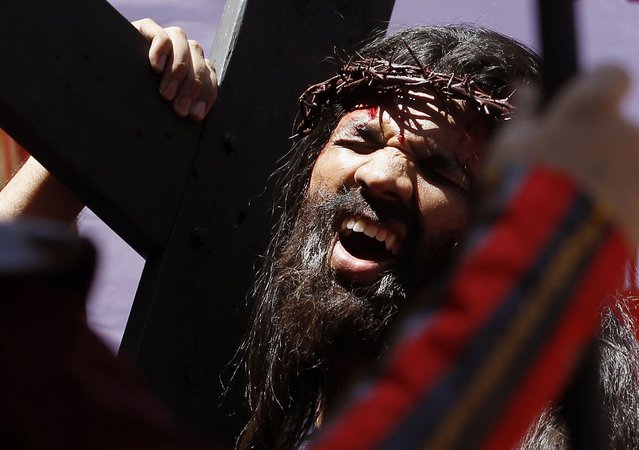
An India Christian devotee reenacts the sufferings of Jesus Christ on the occasion of Good Friday in Mumbai, India, Friday, March 29, 2013. Christians all over the world are marking Good Friday, the day when Christ was crucified. (Photo by Rajanish Kakade/AP Photo)

An India Christian devotee reenacts the sufferings of Jesus Christ on the occasion of Good Friday in Mumbai, India, Friday, March 29, 2013. Christians all over the world are marking Good Friday, the day when Christ was crucified. (Photo by Rajanish Kakade/AP Photo)
Details
30 Mar 2013 08:10:00
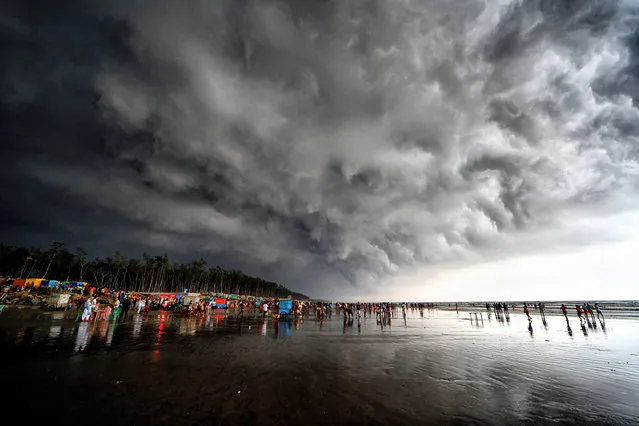
A crowd of people gathered at the seaside of Udaipur, Digha, India before a cloud burst of rain on May 21, 2022. India Meteorological Department (IMD) has predicted that the Monsoon rain will likely arrive a week early this year due to twin cyclones, Asani and Karim. (Photo by Avishek Das/SOPA Images/LightRocket via Getty Images)

A crowd of people gathered at the seaside of Udaipur, Digha, India before a cloud burst of rain on May 21, 2022. India Meteorological Department (IMD) has predicted that the Monsoon rain will likely arrive a week early this year due to twin cyclones, Asani and Karim. (Photo by Avishek Das/SOPA Images/LightRocket via Getty Images)
Details
23 Aug 2022 04:43:00
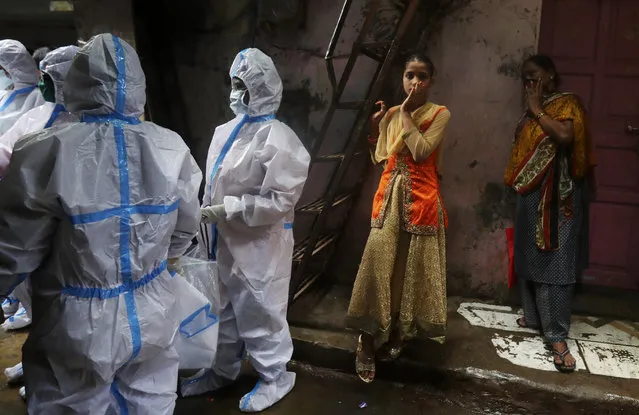
Health workers screen residents for COVID-19 symptoms at Dharavi, one of Asia's biggest slums, in Mumbai, India, Monday, August 3, 2020. India is the third hardest-hit country by the pandemic in the world after the United States and Brazil. (Photo by Rafiq Maqbool/AP Photo)

Health workers screen residents for COVID-19 symptoms at Dharavi, one of Asia's biggest slums, in Mumbai, India, Monday, August 3, 2020. India is the third hardest-hit country by the pandemic in the world after the United States and Brazil. (Photo by Rafiq Maqbool/AP Photo)
Details
05 Aug 2020 00:07:00
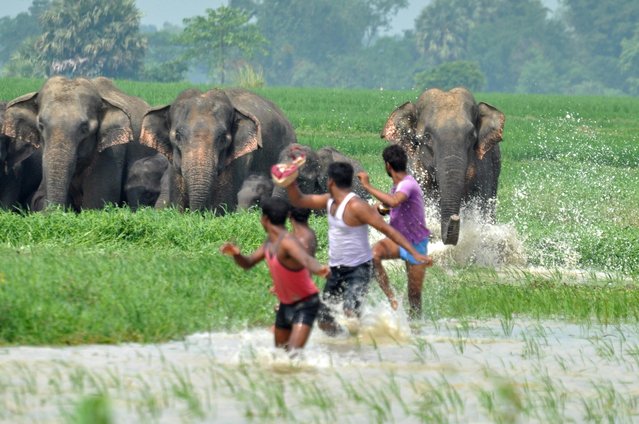
These men are chased by the defiant elephants on May 4, 2013. Taken by Biplab Hazra in Bishnupur, India, the images show the extreme lengths the inhabitants of the town go to to deter elephants from damaging their crops and property. Elephants encroaching out of their habitats is an increasingly common occurrence with deforestation in much of India. (Photo by Biplab Hazra/Caters News Agency)

These men are chased by the defiant elephants on May 4, 2013. Taken by Biplab Hazra in Bishnupur, India, the images show the extreme lengths the inhabitants of the town go to to deter elephants from damaging their crops and property. Elephants encroaching out of their habitats is an increasingly common occurrence with deforestation in much of India. (Photo by Biplab Hazra/Caters News Agency)
Details
31 Mar 2019 00:05:00
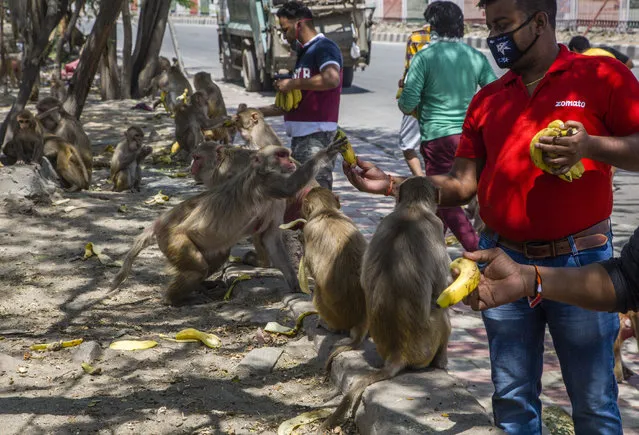
Men give bananas to monkeys gathered on the side of the road as India remains under an unprecedented lockdown over the highly contagious coronavirus (COVID-19) on April 08, 2020 in New Delhi, India. Wild animals, including monkeys, are roaming human settlements in India as people are staying indoors due to the 21-day lockdown. With India's 1.3 billion population and tens of millions of cars off the roads, wildlife is moving towards areas inhabited by humans. Wild animals in many countries have been seen roaming streets. A study says some 60 percent of the new diseases found around the globe every year are zoonotic, meaning they originate in animals and are passed on to humans. COVID-19 is a zoonotic disease that is suspected to have come from the wet markets of Wuhan, China. (Photo by Yawar Nazir/Getty Images)

Men give bananas to monkeys gathered on the side of the road as India remains under an unprecedented lockdown over the highly contagious coronavirus (COVID-19) on April 08, 2020 in New Delhi, India. Wild animals, including monkeys, are roaming human settlements in India as people are staying indoors due to the 21-day lockdown. (Photo by Yawar Nazir/Getty Images)
Details
12 Apr 2020 00:05:00
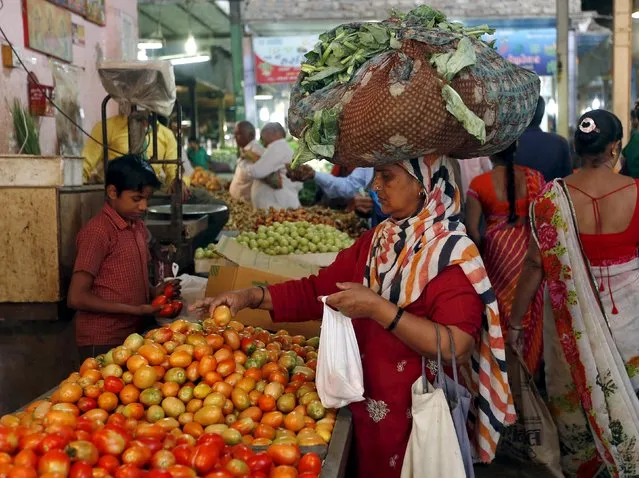
A woman carrying cabbage leaves on her head buys tomato at a market in Ahmedabad, India, November 9, 2015. (Photo by Amit Dave/Reuters)

A woman carrying cabbage leaves on her head buys tomato at a market in Ahmedabad, India, November 9, 2015. India's villages face a sharp spike in food prices in 2016, as a second year of drought drives up the cost of ingredients such as sugar and milk, and poor transport infrastructure stops falling global prices from reaching rural areas. (Photo by Amit Dave/Reuters)
Details
19 Nov 2015 08:02:00
Caroline de Guitaut, Curator of Royal Collections, holds the Cullinan III and IV Broach and the Cullinan VII Delhi Durbar Necklace and Cullinan Pendant at The Queen's Gallery, Buckingham Palace

“A dazzling exhibition featuring jewelry made with the world’s largest diamond will be part of the celebrations marking the 60th anniversary of Queen Elizabeth II’s reign. The jewelry was made with a 3,106-carat diamond discovered in 1905 at the Cullinan Diamond Mine near Pretoria, the capital of South Africa. The diamond was so large that miners initially thought it was a worthless crystal and almost threw it away”... – Vidya Kauri via News.nationalpost.com

Photo: Caroline de Guitaut, Curator of Royal Collections, holds the Cullinan III and IV Broach and the Cullinan VII Delhi Durbar Necklace and Cullinan Pendant at The Queen's Gallery, Buckingham Palace on May 15, 2012 in London, England. (Photo by Peter Macdiarmid)
Details
17 May 2012 10:59:00