Loading...
Done
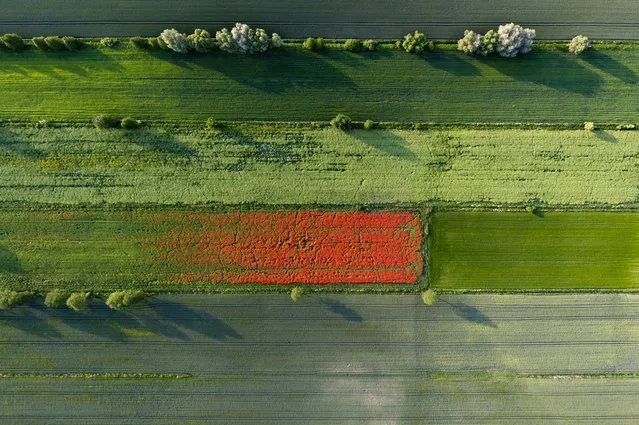
A view over fields of grain in Spring white chamomile, blue cornflower and other weeds growing amongst the grain sprouts. (Photo by Kacper Kowalski/Panos Pictures)

In his book “Side Effects”, aerial photographer Kacper Kowalski took to the skies to paint a portrait of the complex relationship between humans and nature. From the sky, he captured where nature and civilization collide into aesthetic, abstract colors and shapes. Photo: A view over fields of grain in Spring chamomile, cornflower and other weeds growing amongst the grain sprouts. (Photo by Kacper Kowalski/Panos Pictures)
Details
04 Sep 2014 08:19:00
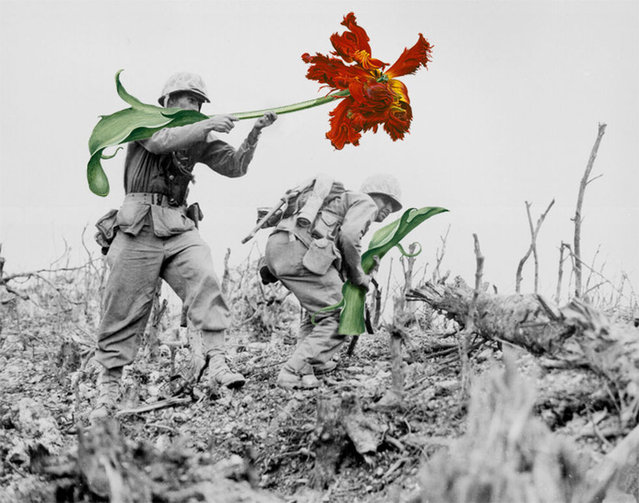
Flowers Of War By Mister Blick

It would have been so much better if the pictures created by Mister Blick were real. How wonderful it would be if these men were actually holding flowers, and none of these wars happened. Regretfully, all these wars have left their mark on the history of mankind. Wars are always bad. They bring nothing but destruction and terror to the regular people, while the big players make huge profits off of the suffering of the common folk. However, establishing dominance is an integral part of the human nature, and the desire to wage wars is simply an extension of this trait. Strong countries always suppress the weaker ones to gain even more power. Unfortunately, this is as inevitable as the sunrise or sunset. (Photo by Mister Blick)
Details
23 Nov 2014 11:58:00
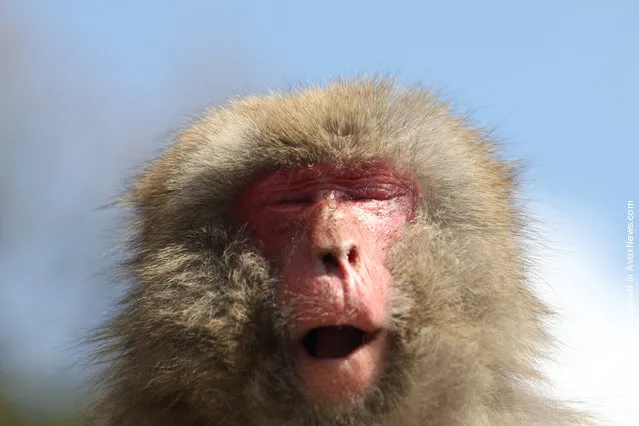
A 19-year-old Japanese macaque monkey named Monday sneezes while suffering an allergy to pollen from the cedar tree, at Awajishima Monkey Center

A 19-year-old Japanese macaque monkey named Monday sneezes while suffering an allergy to pollen from the cedar tree, at Awajishima Monkey Center on March 26, 2012 in Sumoto, Hyogo, Japan. Some twenty monkeys are suffering the effects of hay fever at this time of the year, with the typical symptoms being the same as with humans. (Photo by Buddhika Weerasinghe/Getty Images)
Details
27 Mar 2012 10:01:00
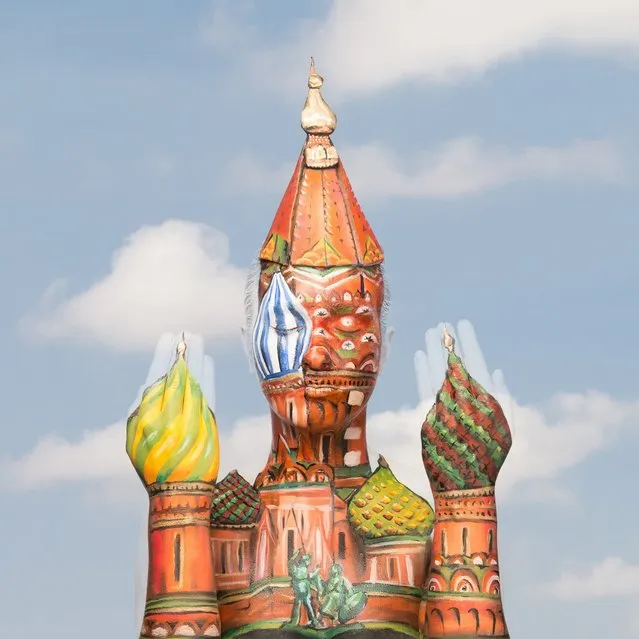
Body Painter By Emma Fay

There is something frightening and at the same time appealing in the living sculptures of 27-year-old British artist Emma Fay. Body art in conjunction with the flexibility of acrobats and fantasy of the artist using water-based paints, a brush and sponge, is transformed into a beautiful work of art. It is not immediately possible to make out the human body in the picture. First you look at the landscape and suddenly begin to distinguish someone’s arm, or neck. Or you look into the eyes of an amazing bull, and it turns out that it is perfectly folded back. Lovely people, temples are and wonderful people-insects are.
Details
10 Jan 2016 08:02:00
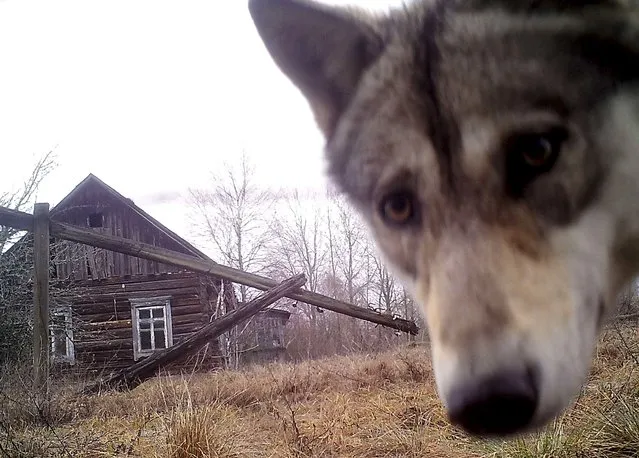
A wolf looks into the camera at the 30 km (19 miles) exclusion zone around the Chernobyl nuclear reactor in the abandoned village of Orevichi, Belarus, March 2, 2016. (Photo by Vasily Fedosenko/Reuters)

A wolf looks into the camera at the 30 km (19 miles) exclusion zone around the Chernobyl nuclear reactor in the abandoned village of Orevichi, Belarus, March 2, 2016. What happens to the environment when humans disappear? Thirty years after the Chernobyl nuclear disaster, booming populations of wolf, elk and other wildlife in the vast contaminated zone in Belarus and Ukraine provide a clue. (Photo by Vasily Fedosenko/Reuters)
Details
08 Apr 2016 15:13:00
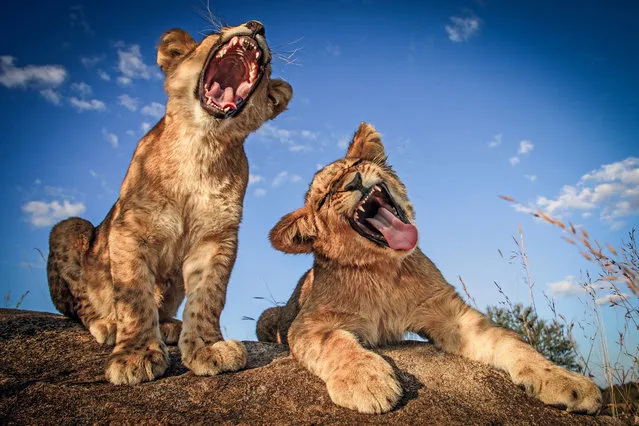
The two lion cubs singing their hearts out  at Antelope park in Zimbabwe. (Photo by David Jenkins/Caters News Agency)

They say a picture is worth a thousand words, and these striking images of 2017 are no exception. The photo highlights include incredible snapshots of the natural world as well as some awesome animal and human encounters. The vibrant gallery also shows thrill-seekers pushing themselves to the limit with breathtaking stunts captured in perfect clarity. The pictures have been taken by a host of photographers from around the world. Here: The two lion cubs singing their hearts out at Antelope park in Zimbabwe. (Photo by David Jenkins/Caters News Agency)
Details
03 Jan 2018 07:27:00
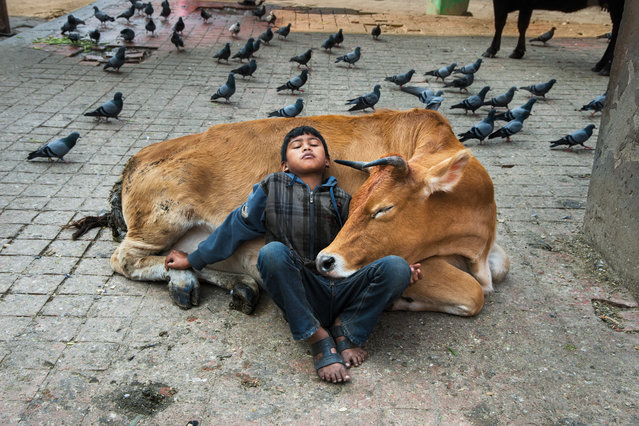
A boy rests against a cow, Kathmandu, Nepal, 2013. “Cows have been designated the national animal in Nepal. They roam freely, and are considered sacred by the 80% of Nepalis who are Hindu”. (Photo by Steve McCurry/The Guardian)

The legendary US photographer’s favourite shots of creatures and how they interact with humans feature in “Animals”, his latest book. Here: A boy rests against a cow, Kathmandu, Nepal, 2013. “Cows have been designated the national animal in Nepal. They roam freely, and are considered sacred by the 80% of Nepalis who are Hindu”. (Photo by Steve McCurry/The Guardian)
Details
07 Nov 2019 00:01:00
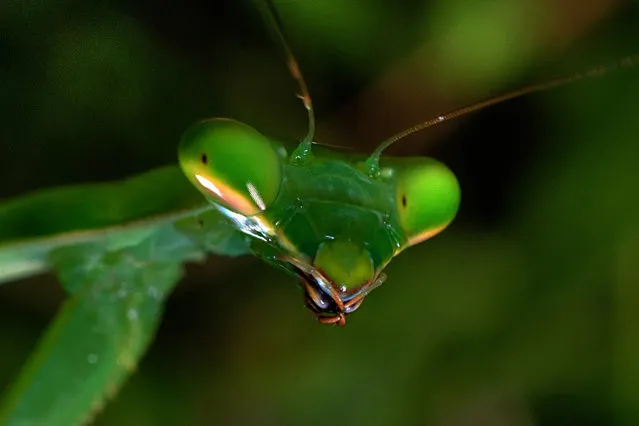
Close Encounter of the Insect Kind: Check out the awesome face on this praying mantis. I can't get over the mouth, it's like something from a science fiction movie. Of all photographic styles macro is definitely my favorite. I am constantly amazed, in every photo that I take, by the intricate level of detail that exists on even the smallest of creatures. It's a stark reminder that a very complex and infinitely beautiful world exists just beyond our human-sized level of perception. Photo taken in Donnybrook, Queensland, Australia. (Photo by Andrew Young/National Geographic Photo Contest

Close Encounter of the Insect Kind: “Check out the awesome face on this praying mantis. I can't get over the mouth, it's like something from a science fiction movie. Of all photographic styles macro is definitely my favorite. I am constantly amazed, in every photo that I take, by the intricate level of detail that exists on even the smallest of creatures. It's a stark reminder that a very complex and infinitely beautiful world exists just beyond our human-sized level of perception. Photo taken in Donnybrook, Queensland, Australia” – Andrew Young. (Photo by Andrew Young/National Geographic Photo Contest via The Atlantic)
Details
24 Sep 2012 09:18:00