Loading...
Done
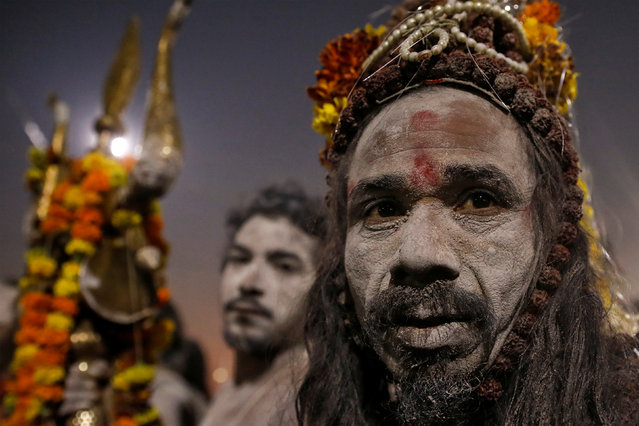
Naga Sadhus or Hindu Holy men leave after taking a dip during the first "Shahi Snan" (grand bath) at “Kumbh Mela” or the Pitcher Festival, in Prayagraj, previously known as Allahabad, India, January 15, 2019. (Photo by Danish Siddiqui/Reuters)

Naga Sadhus or Hindu Holy men leave after taking a dip during the first "Shahi Snan" (grand bath) at “Kumbh Mela” or the Pitcher Festival, in Prayagraj, previously known as Allahabad, India, January 15, 2019. (Photo by Danish Siddiqui/Reuters)
Details
17 Jan 2019 00:03:00
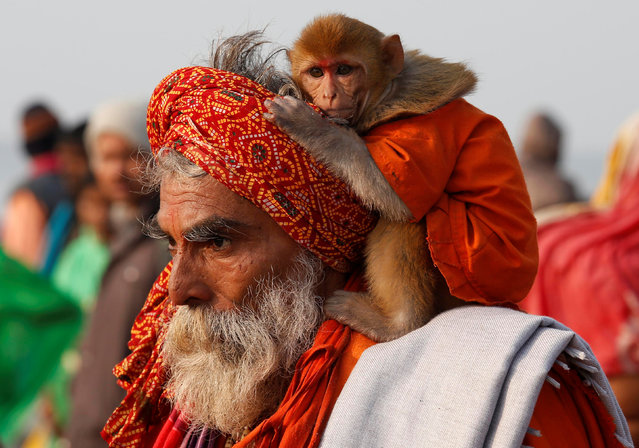
A Sadhu or a Hindu holy man carrying his pet monkey walks after taking a dip at the confluence of the river Ganges and the Bay of Bengal on the occasion of “Makar Sankranti” festival at Sagar Island, south of Kolkata, India, January 14, 2017. (Photo by Rupak De Chowdhuri/Reuters)

A Sadhu or a Hindu holy man carrying his pet monkey walks after taking a dip at the confluence of the river Ganges and the Bay of Bengal on the occasion of “Makar Sankranti” festival at Sagar Island, south of Kolkata, India, January 14, 2017. (Photo by Rupak De Chowdhuri/Reuters)
Details
16 Jan 2017 10:30:00
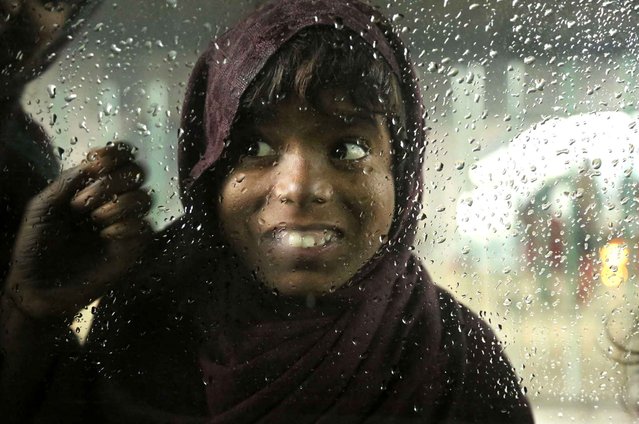
A homeless street child looks in the window of a car in Jammu, India, Friday, January 6, 2017. Some 800 million people in the country live in poverty, many of them migrating to big cities in search of a livelihood and often ending up on the streets. (Photo by Channi Anand/AP Photo)

A homeless street child looks in the window of a car in Jammu, India, Friday, January 6, 2017. Some 800 million people in the country live in poverty, many of them migrating to big cities in search of a livelihood and often ending up on the streets. (Photo by Channi Anand/AP Photo)
Details
02 Feb 2017 04:34:00
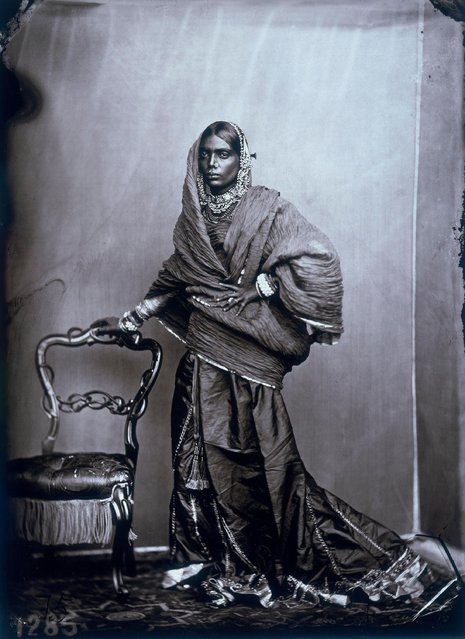
Full portrait of a woman in the harem in the royal palace of Jaipur, India, 1857 – 1865. (Photo by Maharaja Ram Singh III/Alinari via Getty Images)

These images give a rare insight into the life of a 19th Century Indian Maharajah. Maharajah Ram Singh ruled in the famous pink city of Jaipur between 1835 and 1880, and was also a keen photographer. Here: Full portrait of a woman in the harem in the royal palace of Jaipur, India, 1857 – 1865. (Photo by Maharaja Ram Singh III/Alinari via Getty Images)
Details
06 Feb 2017 01:03:00
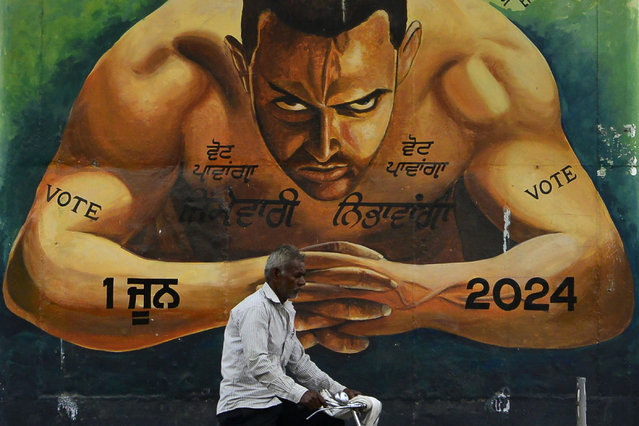
A man rides a bicycle past a mural portraying Bollywood actor Aamir Khan and slogans to encourage people to cast their vote, in Jalandhar on May 10, 2024 ahead of the fourth phase of voting of India's general election. (Photo by Shammi Mehra/AFP Photo)

A man rides a bicycle past a mural portraying Bollywood actor Aamir Khan and slogans to encourage people to cast their vote, in Jalandhar on May 10, 2024 ahead of the fourth phase of voting of India's general election. (Photo by Shammi Mehra/AFP Photo)
Details
24 Aug 2024 04:33:00
Coaches of the North-East Express passenger train that derailed late Wednesday near Raghunathpur railroad station in Buxar district of Bihar state, India, Thursday, October 12, 2023. The train was on its way to Assam state from New Delhi. (Photo by Aftab Alam Siddiqui/AP Photo)

Coaches of the North-East Express passenger train that derailed late Wednesday near Raghunathpur railroad station in Buxar district of Bihar state, India, Thursday, October 12, 2023. The train was on its way to Assam state from New Delhi. (Photo by Aftab Alam Siddiqui/AP Photo)
Details
01 Jan 2024 19:20:00


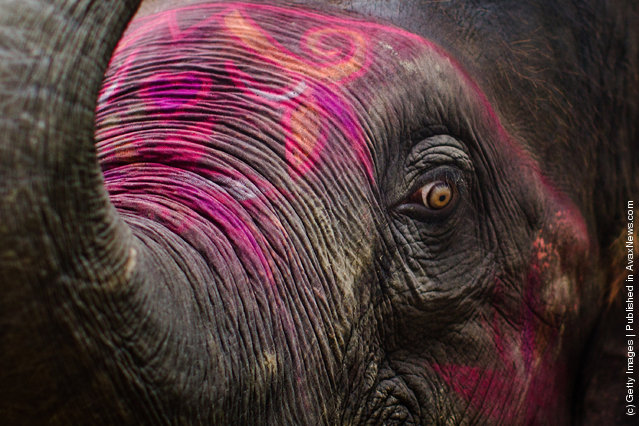
SONEPUR, INDIA - NOVEMBER 15: An elephant is painted in decorative colours during the Sonepur Mela on November 15, 2011 in Sonepur near Patna, India. The cattle fair, held in the Indian state of Bihar, has its origins during ancient times, when people traded elephants and horses across the auspicious river Ganges. The mela used to attract traders from places as distant as Central Asia. It is one of Asia's largest cattle fairs and lasts for a fortnight. (Photo by Daniel Berehulak/Getty Images)
Details
16 Nov 2011 02:42:00
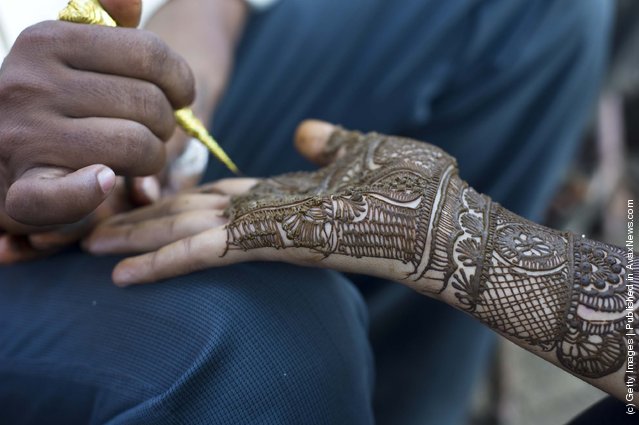
Application of henna or “Mehndi”  to a girls hand in a market in Jaipur, India

“Mehndi or menhdi is the application of henna as a temporary form of skin decoration in India, as well as by expatriate communities from the country. The word mehndi is derived from the Sanskrit word mendhikā. The use of mehndi and turmeric is described in the earliest Vedic ritual books. Haldi (Staining oneself with turmeric paste) as well as mehndi are important Vedic customs as a symbolic representation of the Outer and the Inner Sun. Vedic customs are meant to awaken the “inner light” and so the gold of the inner Sun has an important symbolic function”. – Wikipedia

Photo: Application of henna or “Mehndi” to a girls hand in a market on October 18, 2010 in Jaipur, India. (Photo by Simon de Trey-White/Getty Images)
Details
23 Nov 2011 13:33:00