Loading...
Done
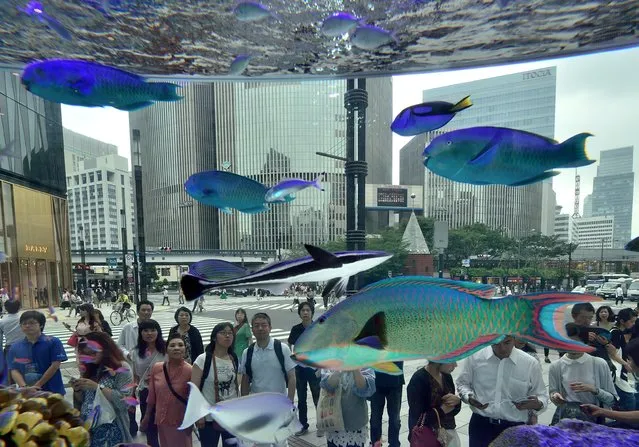
Visitors look at tropical fish transported from Japan's southern island of Okinawa displayed in a giant 14-ton fish tank at the Sony Square event space in Tokyo on July 17, 2016. The 45-day-long summer exhibition will be held through August 28 to display sea creatures common to the waters around Okinawa. (Photo by Kazuhiro Nogi/AFP Photo)

Visitors look at tropical fish transported from Japan's southern island of Okinawa displayed in a giant 14-ton fish tank at the Sony Square event space in Tokyo on July 17, 2016. The 45-day-long summer exhibition will be held through August 28 to display sea creatures common to the waters around Okinawa. (Photo by Kazuhiro Nogi/AFP Photo)
Details
18 Jul 2016 13:05:00
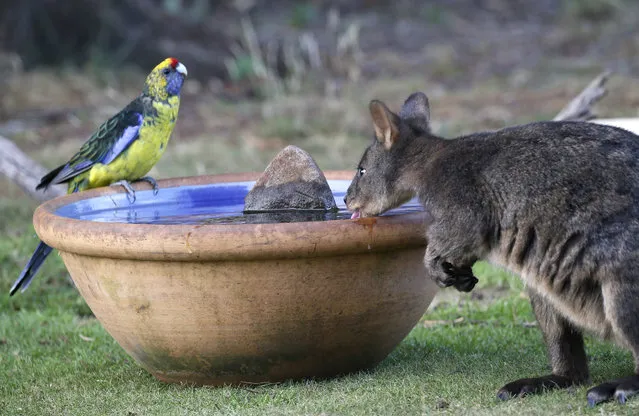
A green rosella and a wallaby, known as a Pademelon, eye off as they drink from a water bowl put out for thirsty wild animals at a back-yard in Kayena, in northern Tasmania, 01 February 2019. Australia recorded its hottest month on record in January; it was also the hottest and driest month on record for the Australian island state of Tasmania. (Photo by Barbara Walton/EPA/EFE)

A green rosella and a wallaby, known as a Pademelon, eye off as they drink from a water bowl put out for thirsty wild animals at a back-yard in Kayena, in northern Tasmania, 01 February 2019. Australia recorded its hottest month on record in January; it was also the hottest and driest month on record for the Australian island state of Tasmania. (Photo by Barbara Walton/EPA/EFE)
Details
03 Feb 2019 00:03:00
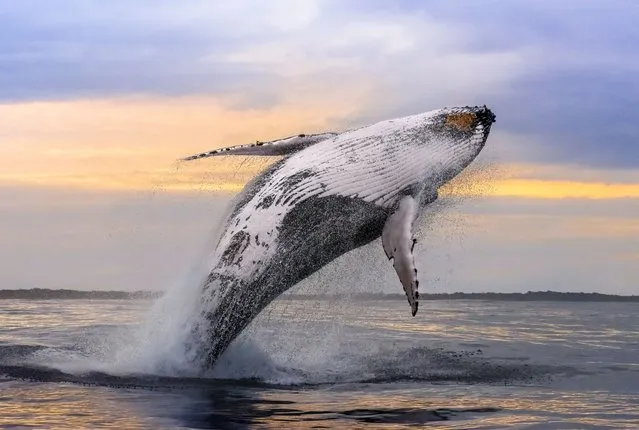
A 40-tonne humpback launching out of the water in an incredible breach in New South Wales, Australia on October 2022 in front of a sunset. The humpback whale can grow up to 56 feet long and typically covers 9,900 miles a year as it travels through the oceans of the world. Humpback whales are a species of Baleen whale, meaning they don't have teeth. Instead, they have baleen which helps them to filter feed. Their main source of food is krill or tiny bait fish. (Photo by Jodie Lowe/Media Drum Images)

A 40-tonne humpback launching out of the water in an incredible breach in New South Wales, Australia on October 2022 in front of a sunset. The humpback whale can grow up to 56 feet long and typically covers 9,900 miles a year as it travels through the oceans of the world. Humpback whales are a species of Baleen whale, meaning they don't have teeth. Instead, they have baleen which helps them to filter feed. Their main source of food is krill or tiny bait fish. (Photo by Jodie Lowe/Media Drum Images)
Details
30 Oct 2022 04:28:00
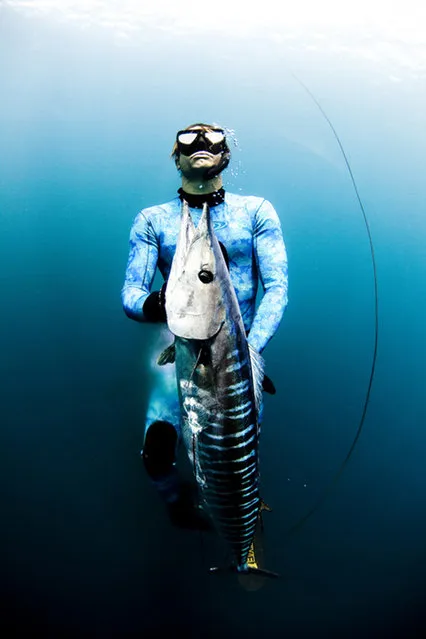
Free Dive Hunters

Without the use of any type of scuba equipment, divers descend to great depths armed with underwater guns, harpoons and strong line to stalk and hunt prey. Some of the best free-divers in the world can hold their breath for up to 5 minutes under water and go to depths greater than 100 feet.
(All photography © Eyeconic Images.)
Details
26 Jun 2013 14:17:00
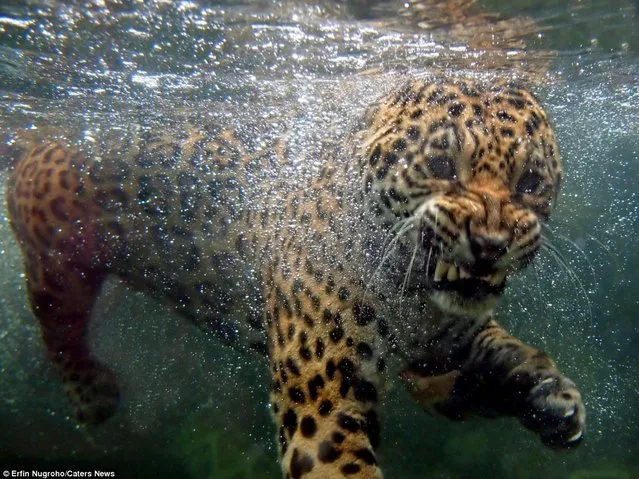
Hungry Rare Jaguar Swims For His Supper

“Most cats run away at the first sign of water but this jaguar shows that some just love to make a splash. The fierce-looking feline was spotted doing an impressive moggy paddle as it swam for meat at Taman Safari in Indonesia. The spectacular shots were captured by professional photographer, Erfin Nugroho, who was visiting the centre for endangered animals with his family”. – Richard Hartley-Parkinson. (Photo by Erfin Nugroho/Caters News)
Details
18 Apr 2012 11:49:00
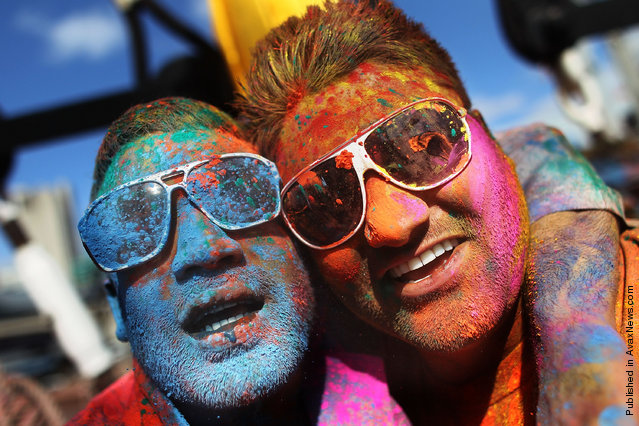
Indian Festival Of Holi Celebrated In Manhattan

Revelers celebrate the Indian festival of Holi on the deck of the ship Peking at South Street Seaport in Manhattan March 19, 2011 in New York City. The Hindu festival of Holi , also known as the Festival of Colors, marks the arrival of spring where participants throw colored powder and water on one another. Many of the New York participants are Indian-American.
Details
20 Mar 2011 13:16:00


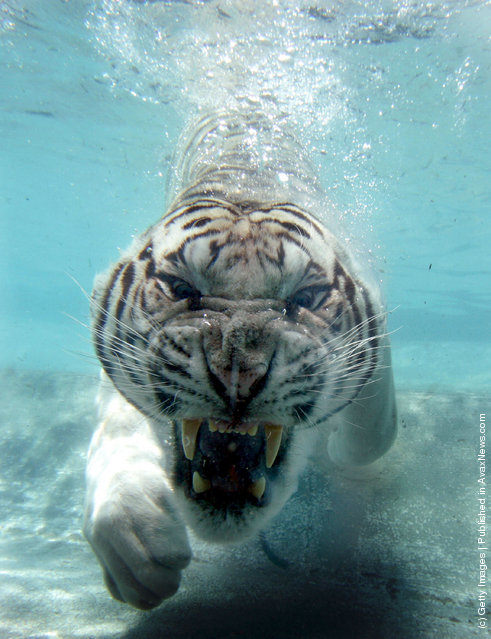
Odin, a five year-old White Bengal Tiger dives for a piece of meat thrown to him by a trainer during a big cat show at Six Flags Discovery Kingdom June 1, 2007 in Vallejo, California. Unlike most cats that are afraid of water, Odin loves diving in the pool to retrieve bits of meat fed to him by his trainers. (Photo by Justin Sullivan/Getty Images)
Details
25 Apr 2011 10:32:00


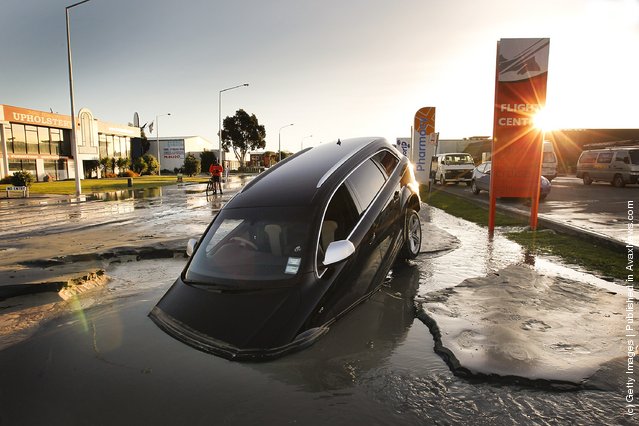
A car stands in water on Ferry Road after two magnitude 6.0 and 5.5 earthquakes struck on June 13, 2011 in Christchurch, New Zealand. The aftershocks have followed four months after the major eathquake which hit the city on February 22, 2011 resulting in the deaths of 181 people. (Photo by Martin Hunter/Getty Images)
Details
14 Jun 2011 09:54:00