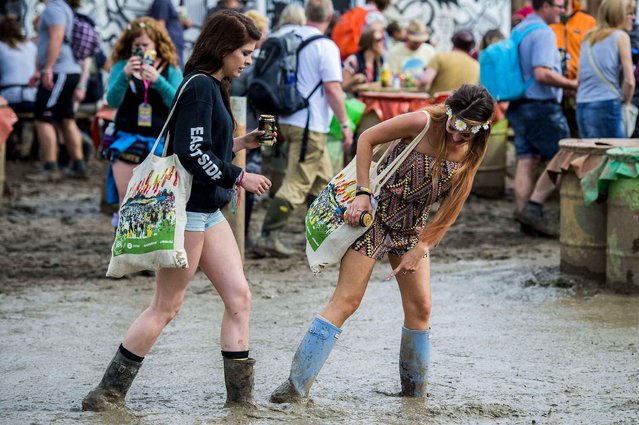
Festival goers arrive for the Glastonbury festival at Worthy Farm, in Somerset, England, Thursday, June 23, 2016. (Photo by Guy Bell/Rex Features/Shutterstock)
A fighter of Libyan forces allied with the U.N.-backed government runs for cover during a battle with Islamic State fighters in Sirte, Libya, July 31, 2016. (Photo by Goran Tomasevic/Reuters)
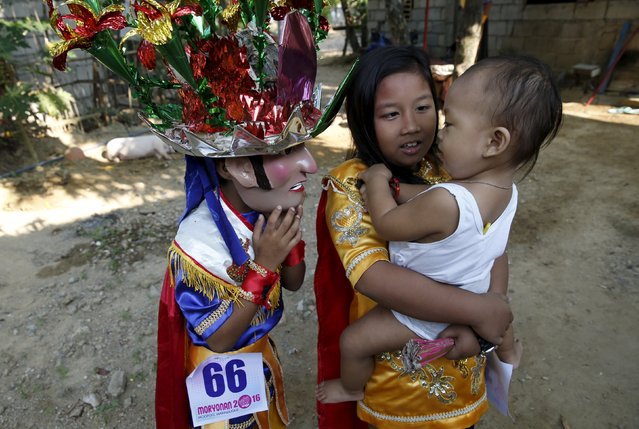
Penitent Jerry Mazon, 9, wears his “Morions” mask while playing with his baby brother during Holy Week celebrations in Mogpog, Marinduque in central Philippines March 22, 2016. (Photo by Erik De Castro/Reuters)
A man climbs up a wooden pole to get a prize during celebration of Maslenitsa, or Pancake Week, a pagan holiday marking the end of winter, near Rumyantsevo, Moscow region, Russia, February 26, 2017. (Photo by Sergei Karpukhin/Reuters)
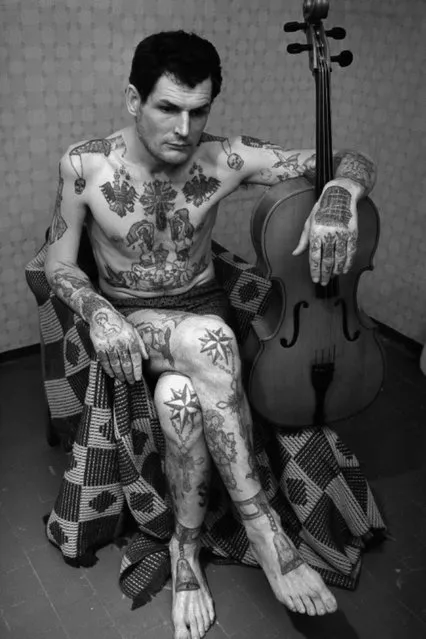
Tattoos are commonly used among criminals to show gang membership and record the wearer's personal history—such as his or her skills, specialties, accomplishments and convictions. They are also used as a means of personal expression. Certain designs have developed recognized coded meanings. The code systems can be quite complex and because of the nature of what they encode, the tattoo designs are not widely recognized.
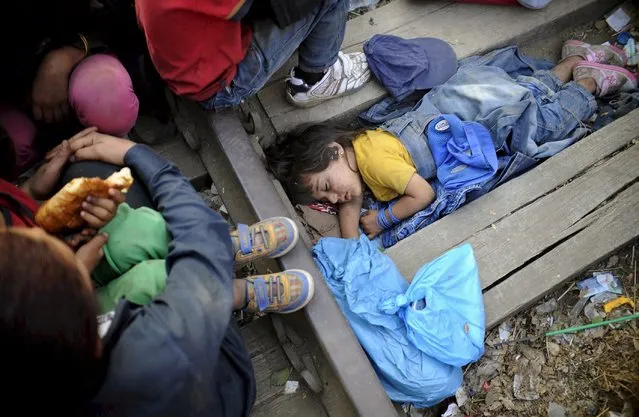
Four-year-old Rashida from Kobani, Syria, part of a new group of more than a thousand immigrants, sleeps as they wait at border line of Macedonia and Greece to enter into Macedonia near Gevgelija railway station August 20, 2015. (Photo by Ognen Teofilovski/Reuters)
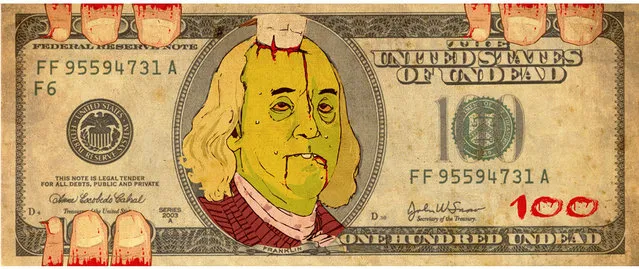
Though we have “In God we trust” written on our banknotes, we didn’t go as far as putting Jesus on them. Martin Joubert, however, decided to correct this injustice and placed the face of Jesus on one of his 100 dollar designs. Though some may view it as sacrilege, Jesus surely wouldn’t mind seeing his face on the banknote of one of the most pious nations in the world. In our opinion, however, the monopoly man is the most appropriate substitute for the Ben Franklin. (Photo by Martin Joubert)
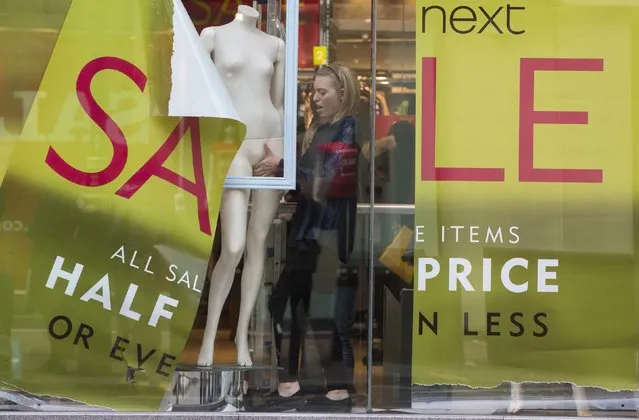
A shop assistant creates a window display in a Next store in central London December 30, 2014. British clothing retailer Next's sales rose 2.9 percent in the run up to Christmas mostly due to online and catalogue purchases, hitting the upper end of its predictions and it said full-year profit would rise by about 11.5 percent. (Photo by Neil Hall/Reuters)