Loading...
Done
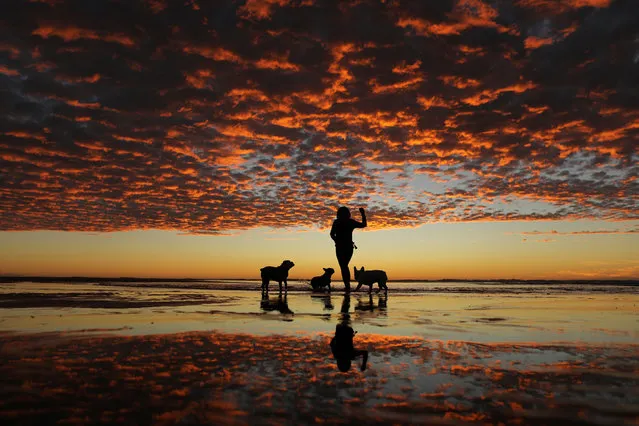
A woman plays with her three dogs at the beach after sunset in Del Mar, California, USA on November 10, 2017. (Photo by Mike Blake/Reuters)

A woman plays with her three dogs at the beach after sunset in Del Mar, California, USA on November 10, 2017. (Photo by Mike Blake/Reuters)
Details
09 Dec 2017 02:28:00
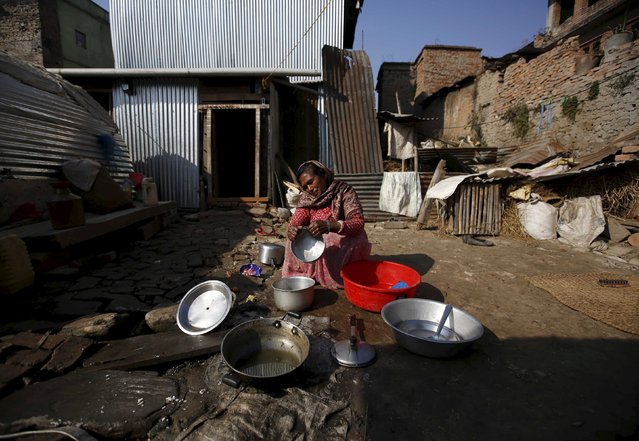
A woman washes her dishes outside the temporary shelter built near the houses damaged during an earthquake earlier this year, in Bhaktapur, Nepal December 28, 2015. (Photo by Navesh Chitrakar/Reuters)

A woman washes her dishes outside the temporary shelter built near the houses damaged during an earthquake earlier this year, in Bhaktapur, Nepal December 28, 2015. (Photo by Navesh Chitrakar/Reuters)
Details
30 Dec 2015 08:01:00
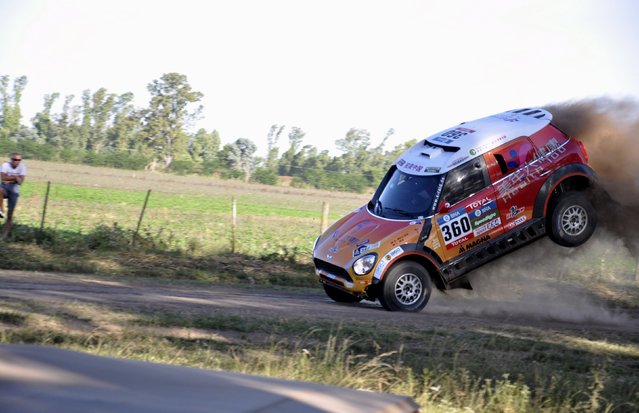
Guo Meiling of China jumps her Mini into the road during the 38th Dakar Rally in Arrecifes, Argentina, January 2, 2016. (Photo by Reuters/Stringer)

Guo Meiling of China jumps her Mini into the road during the 38th Dakar Rally in Arrecifes, Argentina, January 2, 2016. (Photo by Reuters/Stringer)
Details
05 Jan 2016 08:03:00
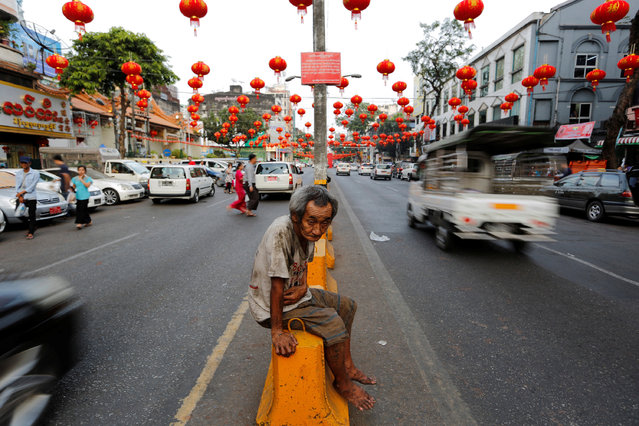
A man sits under lanterns and decorations on a street ahead of the Chinese Lunar New Year in Chinatown Yangon, Myanmar January 23, 2017. (Photo by Soe Zeya Tun/Reuters)

A man sits under lanterns and decorations on a street ahead of the Chinese Lunar New Year in Chinatown Yangon, Myanmar January 23, 2017. (Photo by Soe Zeya Tun/Reuters)
Details
25 Jan 2017 11:32:00
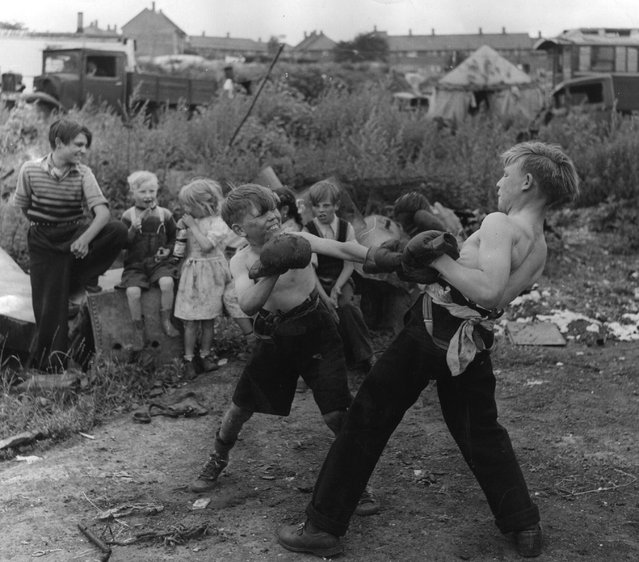
The unromantic gypsies. Children boxing in a gypsy camp in Kent, England on July 1, 1951. Like all boys these gypsy lads like to try their hand at boxing. Encouraged by their friends they fight it out on Corke's Meadow. Few Romanies now live a life of wandering romance. Most are like the three hundred squatters of Corke's Meadow, Kent, which is part of a “gypsy problem” that involves about 100,000 today. Of those about 25,000 can be rightly called gypsies, the rest are Mumpers and Posh-rats and Hobos. Corke's Meadow has both kinds. “Picture Post” cameraman Bert Hardy photographs the Corke's Meadow gypsies in their encampment. (Photo by Hulton-Deutsch Collection/Corbis via Getty Images)

The unromantic gypsies. Children boxing in a gypsy camp in Kent, England on July 1, 1951. Like all boys these gypsy lads like to try their hand at boxing. Encouraged by their friends they fight it out on Corke's Meadow. Few Romanies now live a life of wandering romance. Most are like the three hundred squatters of Corke's Meadow, Kent, which is part of a “gypsy problem” that involves about 100,000 today. Of those about 25,000 can be rightly called gypsies, the rest are Mumpers and Posh-rats and Hobos. Corke's Meadow has both kinds. “Picture Post” cameraman Bert Hardy photographs the Corke's Meadow gypsies in their encampment. (Photo by Hulton-Deutsch Collection/Corbis via Getty Images)
Details
12 Mar 2017 00:01:00
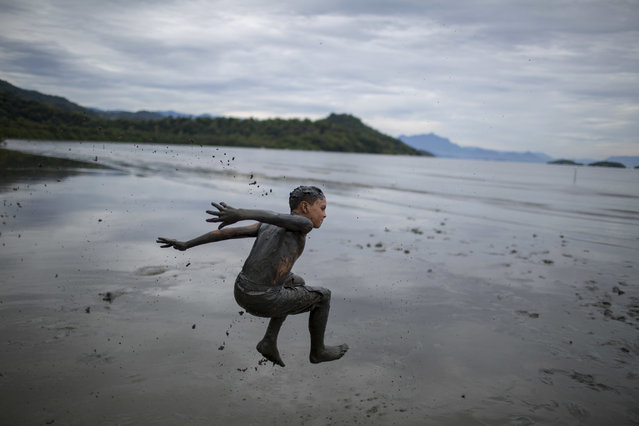
A boy jumps into a pool of mud during the traditional “Bloco da Lama” or “Mud Street” carnival party, in Paraty, Brazil, Saturday, February 25, 2017. Legend has it the “bloco” was born in 1986 after local teens hiking in a nearby mangrove forest smeared themselves with mud to discourage mosquitoes and then wandered through Paraty. The party grew year after year, but revelers eventually were banned from parading in the colonial downtown after shopkeepers complained pristine white walls were stained with the hard-to-remove mud. (Photo by Mauro Pimentel/AP Photo)

A boy jumps into a pool of mud during the traditional “Bloco da Lama” or “Mud Street” carnival party, in Paraty, Brazil, Saturday, February 25, 2017. Legend has it the “bloco” was born in 1986 after local teens hiking in a nearby mangrove forest smeared themselves with mud to discourage mosquitoes and then wandered through Paraty. The party grew year after year, but revelers eventually were banned from parading in the colonial downtown after shopkeepers complained pristine white walls were stained with the hard-to-remove mud. (Photo by Mauro Pimentel/AP Photo)
Details
28 Mar 2017 09:07:00
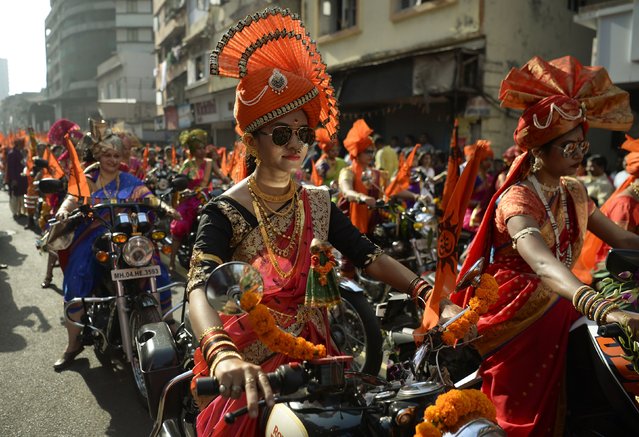
Indian women dressed in traditional attire drive motorcycles as they take part in a procession celebrating “Gudhi Padwa” or the Maharashtrian New Year in Mumbai on March 28, 2017. Gudhi Padwa is the Hindu New Year for people in India's Maharashtra state and marks the end of a harvest and the beginning of a new one. (Photo by Punit Paranjpe/AFP Photo)

Indian women dressed in traditional attire drive motorcycles as they take part in a procession celebrating “Gudhi Padwa” or the Maharashtrian New Year in Mumbai on March 28, 2017. Gudhi Padwa is the Hindu New Year for people in India's Maharashtra state and marks the end of a harvest and the beginning of a new one. (Photo by Punit Paranjpe/AFP Photo)
Details
29 Mar 2017 09:39:00
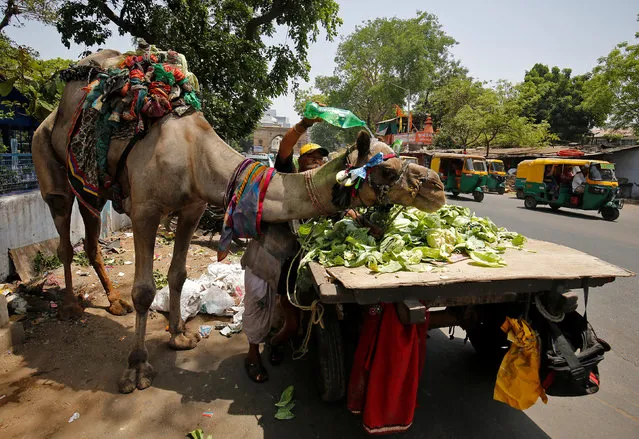
A man pours water on his camel on a hot summer day in Ahmedabad, India, May 18, 2017. (Photo by Amit Dave/Reuters)

A man pours water on his camel on a hot summer day in Ahmedabad, India, May 18, 2017. (Photo by Amit Dave/Reuters)
Details
22 May 2017 07:21:00