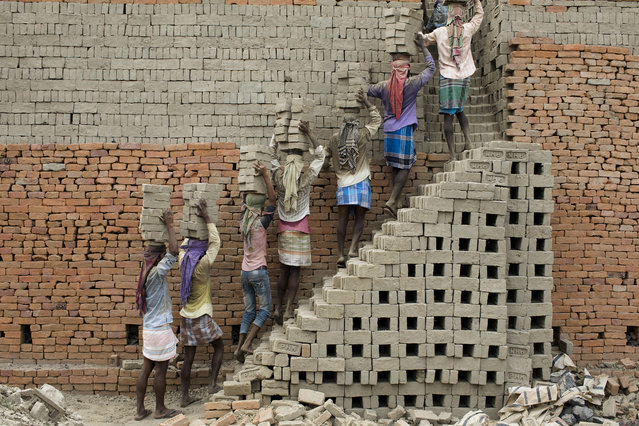
Indian labourers carry clay bricks to a brick kiln in Farakka, in the Indian state of West Bengal, on April 3, 2019. (Photo by Xavier Galiana/AFP Photo)
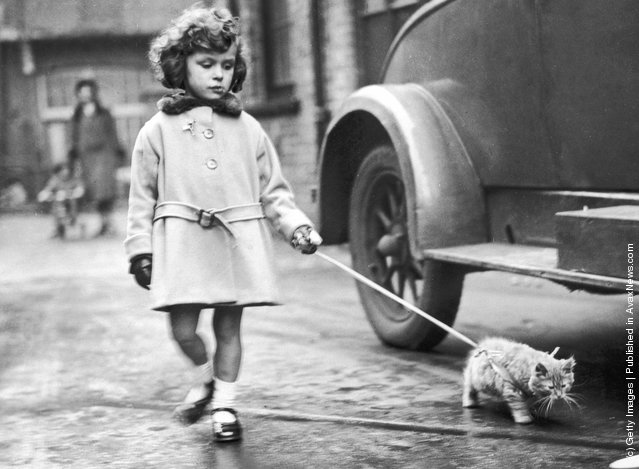
A young exhibitor arrives with her kitten on a lead at the National Cat Club show at Crystal Palace, London. (Photo by Fox Photos/Getty Images). 2nd December 1931
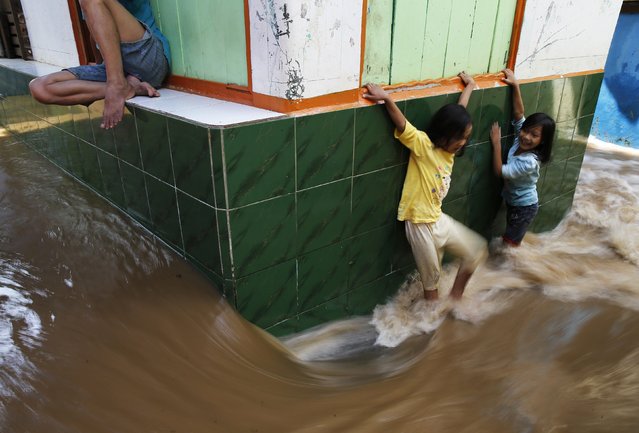
Children try to walk through a flooded street at Kampung Melayu residential area in Jakarta, December 23, 2014. Torrential rains that have continued in Indonesia in recent days have widened the number of flooded areas that include Jakarta and Bandung, a local newspaper said on Tuesday. (Photo by Reuters/Beawiharta)
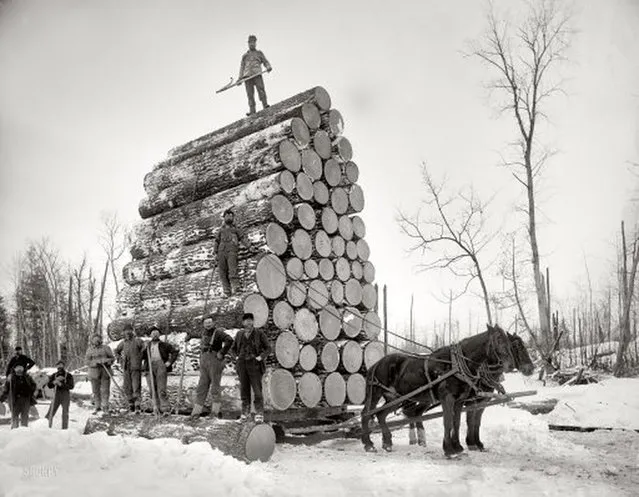
This picture was taken in the 1890's and shows a group of loggers hauling a heavy load. It is hard to even picture how they got the logs stacked that high. It is also hard to imagine how they keep it from tipping over.
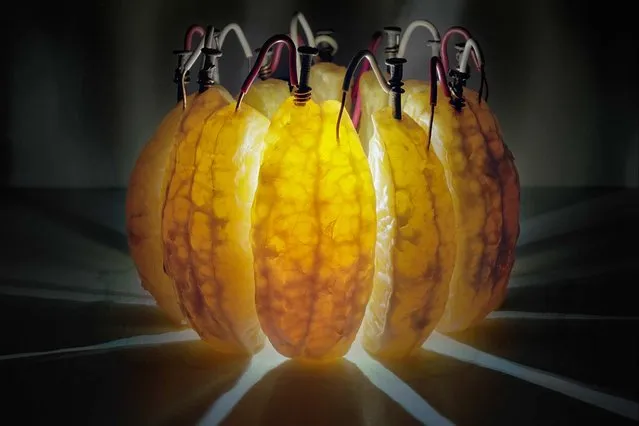
Wedges of an orange generate enough current and electrical juice – 3.5 volts – to power an LED. The fruit’s citric acid helps electrons flow from galvanized nails to copper wire in this 14-hour exposure. This image was published in September’s Visions of Earth, a trio of photos that appear in each issue of National Geographic. (Photo by Caleb Charland/National Geographic)
Rougine, a 19-year-old female Arab fighter among the Syrian Democratic Forces, made up of US-backed Kurdish and Arab fighters, stands in fatigues embracing another colleague near the village of al-Torshan, 20 km on the outskirts of Raqa on February 6, 2017. (Photo by Delil Souleiman/AFP Photo)
A student participates in celebrations ahead of the Janmashtami festival, which marks the birth anniversary of Lord Krishna in Mumbai, India, August 23, 2016. (Photo by Danish Siddiqui/Reuters)
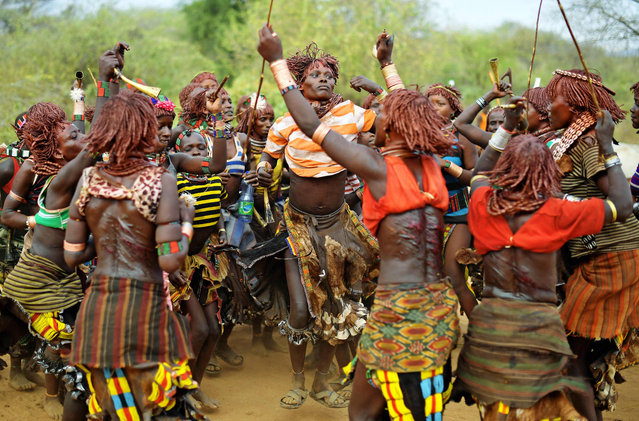
Hamar women dance before a bull jumping ceremony in Ethiopia's southern Omo Valley region near Turmi on September 19, 2016. The Hamar are a Nilotic ethnic group in Ethiopia. The construction of the Gibe III dam, the third largest hydroelectric plant in Africa, and large areas of very “thirsty” cotton and sugar plantations and factories along the Omo river are impacting heavily on the lives of tribes living in the Omo Valley who depend on the river for their survival and way of life. (Photo by Carl De Souza/AFP Photo)