Loading...
Done
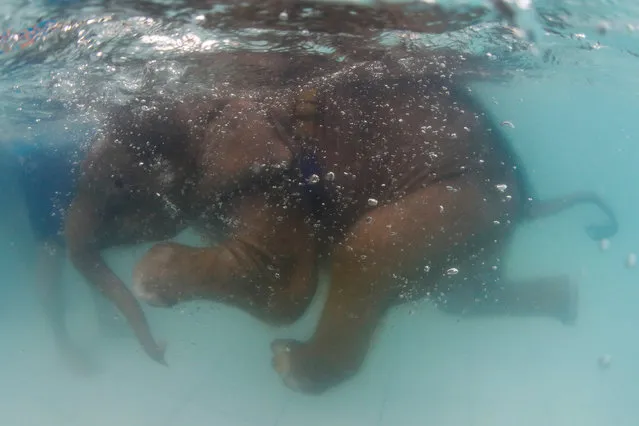
Five-month-old baby elephant Fah Jam swims during a hydrotherapy treatment as part of a lengthy rehabilitation process to heal her injured front left foot at a rehabilitation center in Pattaya, Thailand January 5, 2017. The baby elephant was injured at three months old when she got stuck in an animal snare put up by villagers to prevent elephant intrusions in Chanthaburi province. (Photo by Athit Perawongmetha/Reuters)

Five-month-old baby elephant Fah Jam swims during a hydrotherapy treatment as part of a lengthy rehabilitation process to heal her injured front left foot at a rehabilitation center in Pattaya, Thailand January 5, 2017. The baby elephant was injured at three months old when she got stuck in an animal snare put up by villagers to prevent elephant intrusions in Chanthaburi province. (Photo by Athit Perawongmetha/Reuters)
Details
30 Dec 2017 06:14:00
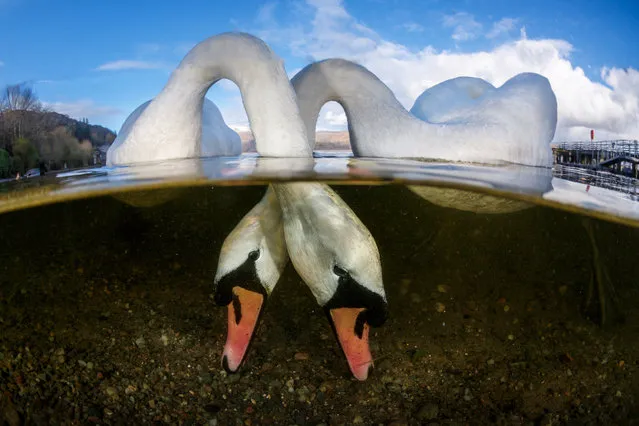
British underwater photographer of the year – winner. “Love Birds” by Grant Thomas (UK). Location: Luss Pier, Loch Lomond, Scotland. Thomas’s initial idea was to frame a split shot of one swan feeding below the surface of the water but when he noticed how comfortable they were around him he was confident, with some patience, he could get that magical shot of the two. (Photo by Grant Thomas/UPY 2018)

British underwater photographer of the year – winner. “Love Birds” by Grant Thomas (UK). Location: Luss Pier, Loch Lomond, Scotland. Thomas’s initial idea was to frame a split shot of one swan feeding below the surface of the water but when he noticed how comfortable they were around him he was confident, with some patience, he could get that magical shot of the two. (Photo by Grant Thomas/UPY 2018)
Details
16 Feb 2018 00:02:00
This undated photo provided by NOAA in May 2018 shows aurora australis near the South Pole Atmospheric Research Observatory in Antarctica. When a hole in the ozone formed over Antarctica, countries around the world in 1987 agreed to phase out several types of ozone-depleting chemicals called chlorofluorocarbons (CFCs). Production was banned, emissions fell and the hole shriveled. But according to a study released on Wednesday, May 16, 2018, scientists say since 2013, there’s more of a banned CFC going into the atmosphere. (Photo by Patrick Cullis/NOAA via AP Photo)

This undated photo provided by NOAA in May 2018 shows aurora australis near the South Pole Atmospheric Research Observatory in Antarctica. When a hole in the ozone formed over Antarctica, countries around the world in 1987 agreed to phase out several types of ozone-depleting chemicals called chlorofluorocarbons (CFCs). Production was banned, emissions fell and the hole shriveled. But according to a study released on Wednesday, May 16, 2018, scientists say since 2013, there’s more of a banned CFC going into the atmosphere. (Photo by Patrick Cullis/NOAA via AP Photo)
Details
15 Aug 2018 00:05:00
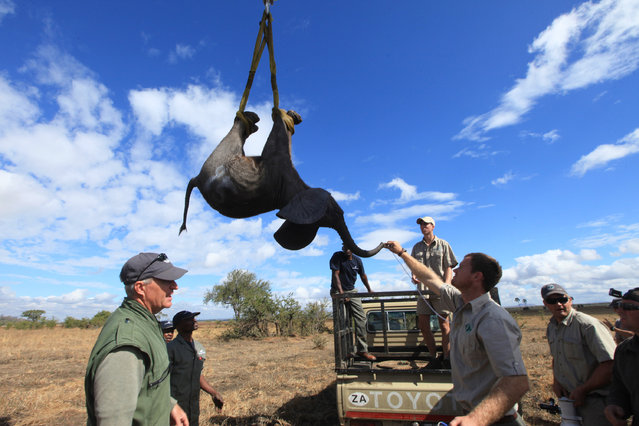
In this Tuesday July 12, 2016 photo, an elephant is lifted by a crane in an upside down position in Lilongwe, Malawi, in the first step of an assisted migration of 500 of the threatened species. African Parks, which manages three Malawian reserves is moving the 500 elephants from Liwonde National Park, this month and next, and again next year when vehicles can maneuver on the rugged terrain during Southern Africa's dry winter. (Photo by Tsvangirayi Mukwazhi/AP Photo)

In this Tuesday July 12, 2016 photo, an elephant is lifted by a crane in an upside down position in Lilongwe, Malawi, in the first step of an assisted migration of 500 of the threatened species. African Parks, which manages three Malawian reserves is moving the 500 elephants from Liwonde National Park, this month and next, and again next year when vehicles can maneuver on the rugged terrain during Southern Africa's dry winter. (Photo by Tsvangirayi Mukwazhi/AP Photo)
Details
20 Jul 2016 10:19:00
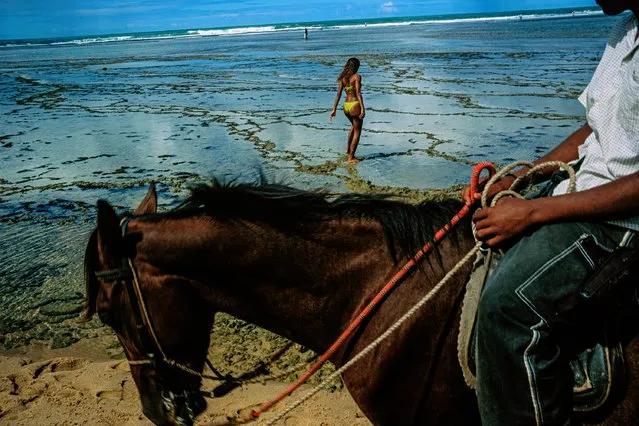
Praia du Forte, Bahia. “This was the lead picture for a National Geographic story on Bahia, because it was both mysterious as well as a “geography” picture showing where the slaves arrived from Nigeria. Beach pictures seem like they should be easy to take, but for me they are actually quite difficult. Too easy to fall into cliche. When I saw the kid coming on the horse, I quickly ran to see if I could make something with a woman in a bikini that was not a bikini shot”. (Photo by David Alan Harvey/The Guardian)

Praia du Forte, Bahia. “This was the lead picture for a National Geographic story on Bahia, because it was both mysterious as well as a “geography” picture showing where the slaves arrived from Nigeria. Beach pictures seem like they should be easy to take, but for me they are actually quite difficult. Too easy to fall into cliche. When I saw the kid coming on the horse, I quickly ran to see if I could make something with a woman in a bikini that was not a bikini shot”. (Photo by David Alan Harvey/The Guardian)
Details
20 Aug 2016 11:35:00
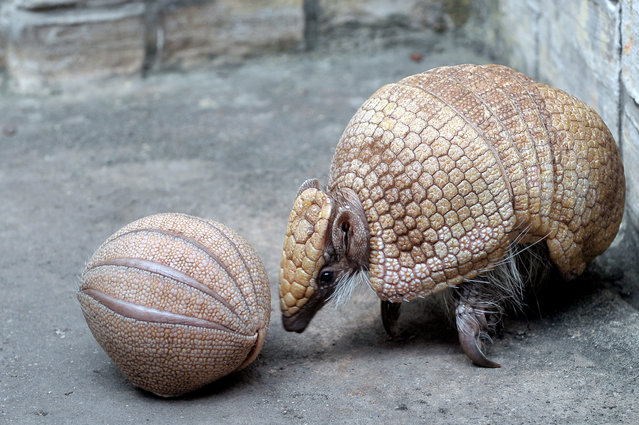
A four-week old southern three-banded armadillo (Tolypeutes matacus) is rolled up into a ball next to its mother in the tropical house of Budapest Zoo in Budapest, Hungary on May 3, 2019. The South American insect-eating mammal and its close relative, the Brasilian three-banded armadillo (Tolypeutes tricinctus) are the only two species of armadillos capable of rolling into a complete ball to defend themselves when feeling threatened. (Photo by Attila Kovács/EPA/EFE)

A four-week old southern three-banded armadillo (Tolypeutes matacus) is rolled up into a ball next to its mother in the tropical house of Budapest Zoo in Budapest, Hungary on May 3, 2019. The South American insect-eating mammal and its close relative, the Brasilian three-banded armadillo (Tolypeutes tricinctus) are the only two species of armadillos capable of rolling into a complete ball to defend themselves when feeling threatened. (Photo by Attila Kovács/EPA/EFE)
Details
05 May 2019 00:03:00
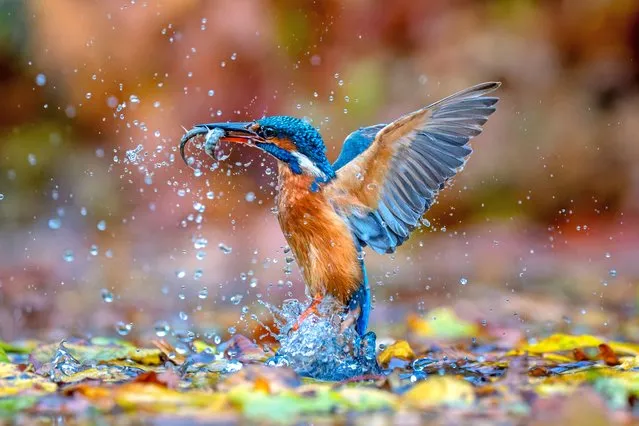
A kingfisher dives into the leafy water of the River Alde near Rendham, Suffolk in the second decade of November 2022 and catches two fish. Kingfishers must be able to see the fish they want to catch before making their dive, so for this bird to be successful when leaves covered the surface of the water shows its true skill for survival. (Photo by Ivor Ottley/Animal News Agency)

A kingfisher dives into the leafy water of the River Alde near Rendham, Suffolk in the second decade of November 2022 and catches two fish. Kingfishers must be able to see the fish they want to catch before making their dive, so for this bird to be successful when leaves covered the surface of the water shows its true skill for survival. (Photo by Ivor Ottley/Animal News Agency)
Details
20 Nov 2022 05:49:00
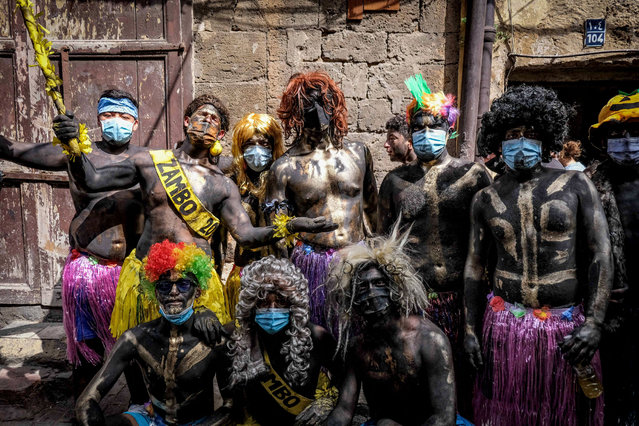
Carnival participants dressed in costume and wearing body paint pose for a group picture during the annual Zambo carnival held in Lebanon's northern city of Tripoli on March 14, 2021, marking the last period of excess on the eve of the Christian Greek Orthodox lent. The inspiration of the annual Zambo celebration is unclear, despite it being a tradition that stretches back over a century to when an emigrant to Brazil returned to his native Tripoli bringing the carnival with him. (Photo by Ibrahim Chalhoub/AFP Photo)

Carnival participants dressed in costume and wearing body paint pose for a group picture during the annual Zambo carnival held in Lebanon's northern city of Tripoli on March 14, 2021, marking the last period of excess on the eve of the Christian Greek Orthodox lent. The inspiration of the annual Zambo celebration is unclear, despite it being a tradition that stretches back over a century to when an emigrant to Brazil returned to his native Tripoli bringing the carnival with him. (Photo by Ibrahim Chalhoub/AFP Photo)
Details
27 Mar 2021 08:59:00