Loading...
Done
Photographers: Douglas Fisher

“Douglas Fisher has worked in the photographic industry for more than 25 years, starting out at 19 as an assistant before establishing his own studio, just two years later. Here, Douglas would go on to be among the first to champion the emerging worlds of digital photography and CGI, identifying early the transformative impact they would bring to advertising and high end photography”. – Tim Mitchell

Photo: «Carlsberg Launch». (Photo by Douglas Fisher)
Details
29 Jan 2012 12:34:00
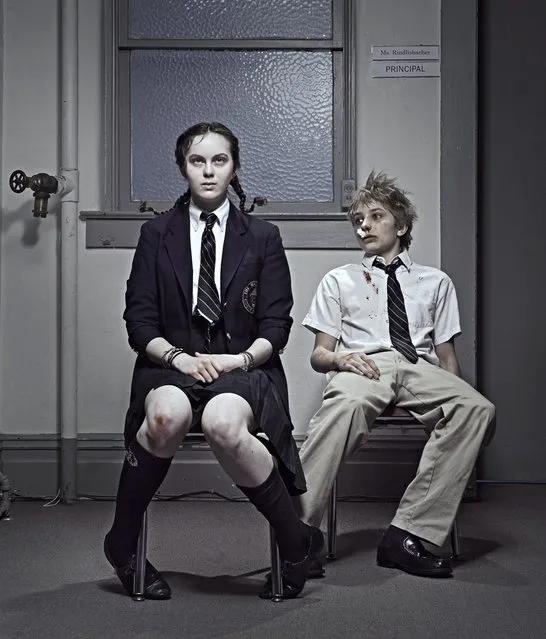
Catholic School Characters By David Stoker

“David Stoker creates images that tell a story. Rich and atmospheric, his images stop a moment in time letting the viewer decide, or wonder, just what each character is doing. David's work has been recognized in the 2011 Communication Arts Photo Annual, Communication Arts Fresh online, Graphis 100 Best in Photography 2012, PDN’s Photo Annual (2009, 2011), Luezer's Archive, and the International Photography Awards (IPA's – 2009, 2010)”.
Details
30 Apr 2012 10:54:00
Vanessa: Hunts Point, Bronx

Vanessa: Hunts Point, Bronx

Vanessa, thirty-five, had three children with an abusive husband. She “lost her mind, started doing heroin”, after losing the children, who were taken away and given to her mother. The drugs led to homelessness and prostitution. She grew up on Arthur Avenue in the Bronx, but now spends her time in Hunts Point, “trying to survive everyday. Just doing whatever it takes”.
Details
13 May 2012 10:13:00
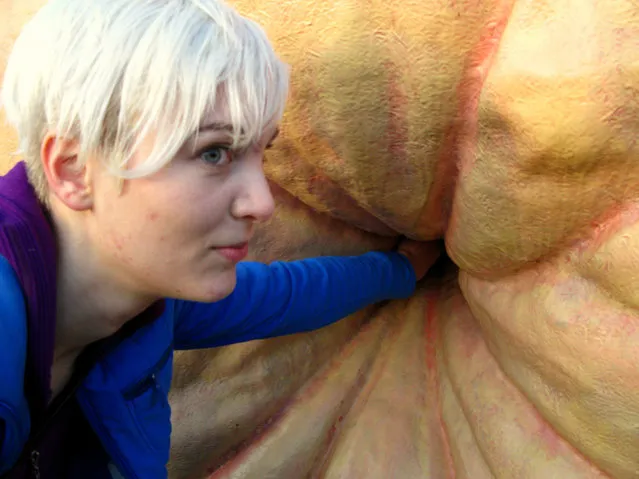
Belgian Hotel CasAnus

Hotel CasAnus has all the elements of a great weekend getaway. It's just shaped like a giant human colon. On a small island, nestled between Antwerp and Ghent in Flanders, Belgium, this quaint structure is designed like a humongous intestinal tract, complete with an anus replica.
Originally an art sculpture created by the Dutch designer Joep Van Lieshout, CasAnus is now a part of the Verbeke Foundation art park, one of Western Europe’s edgiest art venues.
Details
01 Jun 2015 04:45:00
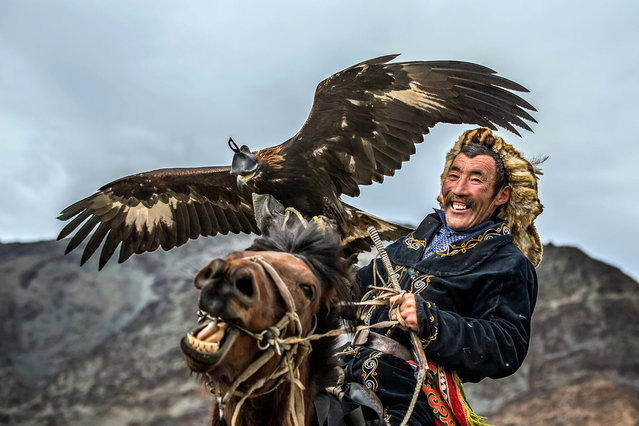
He said: "The photos were taken during the 17th Golden Eagle Festival in the Bayan-Ulgii province in Altai Mountains of Western Mongolia and the festival is just amazing”. (Photo by Batzaya Choijiljav/Caters News)

With their wings at full length, these beautiful golden eagles soar through the skies in a glorious training session to hunt their prey. Others sit on the arms of their owners and trainers. Batzaya Choijiljav, 41, from Mongolia has taken these magnificent pictures at the annual traditional Kazakhs festival, October 2015. (Photo by Batzaya Choijiljav/Caters News)
Details
06 Nov 2015 08:04:00
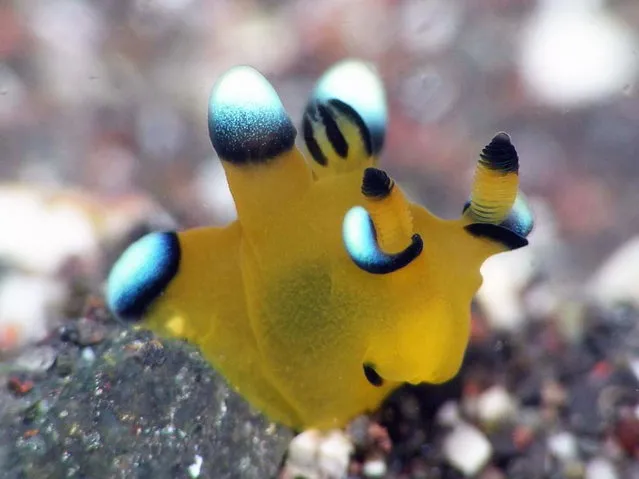
Thecacera Pacifica AKA Pikachu

If you ever wanted to meet a live Pikachu, you might have a hard time finding one. However, there is a creature on this Earth that kind of looks like one. That creature’s name is Thecacera pacifica and it is a species of a sea slug. These little critters can be found in the Indian Ocean from African coast to Indonesia and Vanuatu. Their vibrant orange and blue colors look gorgeous, making it look like some sort of anemone. Also, as you might have guessed from the striking colors of the sea slug, just like most of anemones, this creature is very toxic. Thus, keeping it as a pet isn’t an option.

Details
19 Dec 2014 12:51:00
A photograph of a dog taken from underneath on December 2016 in VA, Canada. (Photo by The Underdogs Project/Barcroft Images)

A photograph of a dog taken from underneath on December 2016 in VA, Canada. Forget the cats, itÌs just raining dogs! A creative duo have come up with an innovative way to raise money for animal welfare; photographing dogs as youÌve never seen them before. Professional photographer Jason Kenzie and designer Tania Ryan have created a unique set of images from the underside of dogs, named The Underdogs Project. The project will be featured as a 2017 calendar, with each month belonging to a quirky canine. (Photo by The Underdogs Project/Barcroft Images)
Details
20 Dec 2016 12:32:00
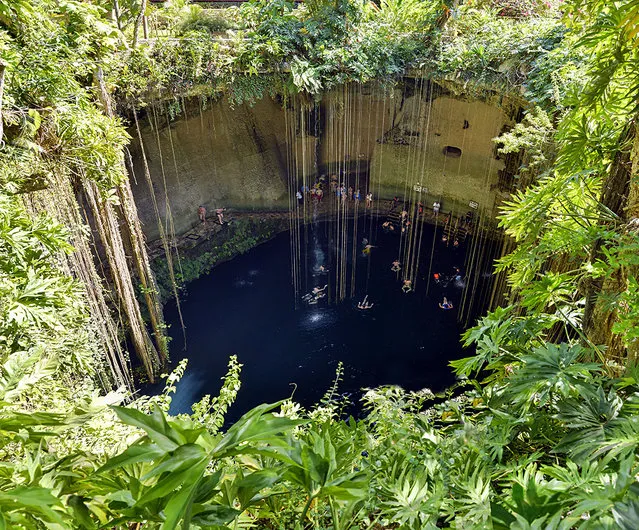
Cenote In Mexico

A cenote is a natural phenomenon, a sinkhole in the Earth’s surface. The Yucatan Peninsula in Mexico has an estimated 7,000 cenotes because it is primarily made up of porous limestone. For millions of years, rainfall slowly ate away at the limestone and a huge system of underground caves and caverns was formed. Many filled with water from rain or from the underground water table. When the roof of a water filled cave collapses, a cenote is born. The water found in a cenote may be fresh water, salt water, or both. Structurally it may be completely open, like a lake, almost completely closed with just a small opening at the top, or somewhere in between.
Details
06 Oct 2013 09:45:00