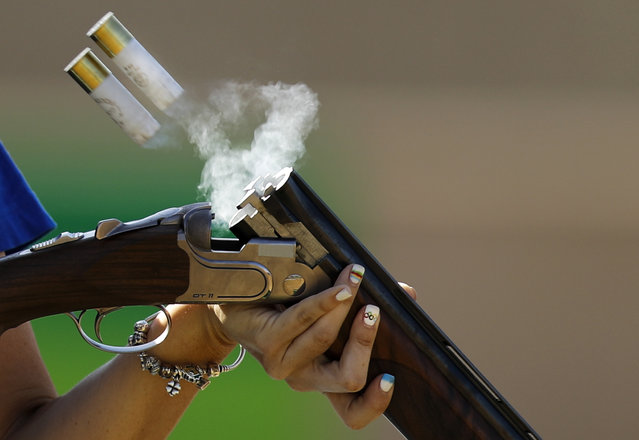
Alessandra Perilli, of San Marino, competes during the trap women's qualification at the 2016 Summer Olympics in Rio de Janeiro, Brazil, Sunday, August 7, 2016. (Photo by Hassan Ammar/AP Photo)
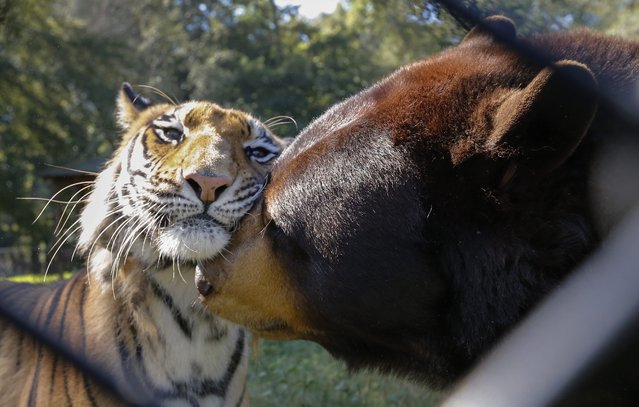
Baloo (R), a North American Black Bear, rubs snouts with his companion Shere Hkhan, a Bengal tiger, inside their shared enclosure at Noah's Ark animal sanctuary in Locust Grove, Georgia, USA, 28 August 2014. According to the facility, the pair and a lion named Leo, were confiscated at a young age from a drug dealer's basement in Atlanta, Georgia. Noah's Ark cares for about 100 different species of animals on a 250 acre farm since 1990. (Photo by Erik S. Lesser/EPA)
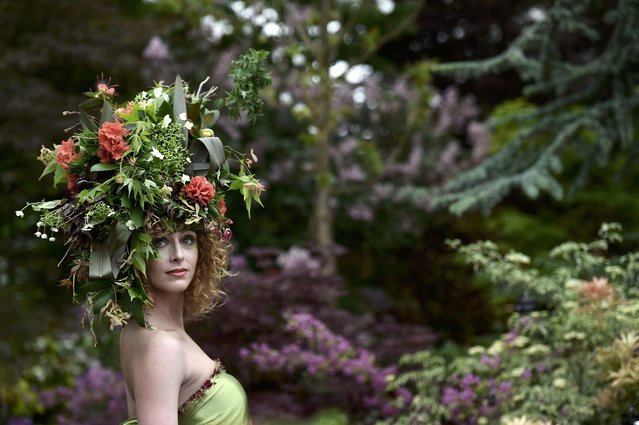
A model wears a floral head dress as she promotes a chain of garden centres at the Royal Horticultural Soceity's Chelsea Flower Show in London, Britain, May 18, 2015. (Photo by Toby Melville/Reuters)
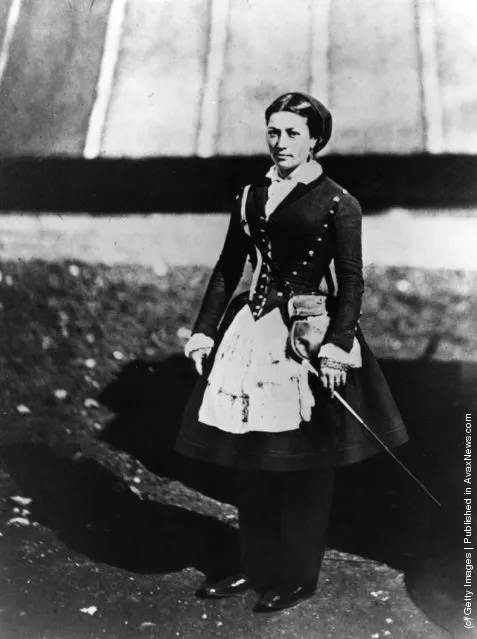
“The Crimean War (October 1853 – February 1856) was a conflict fought between the Russian Empire and an alliance of the French Empire, the British Empire, the Ottoman Empire, and the Kingdom of Sardinia. The war was part of a long-running contest between the major European powers for influence over territories of the declining Ottoman Empire. Most of the conflict took place on the Crimean Peninsula, but there were smaller campaigns in western Anatolia, Caucasus, the Baltic Sea, the Pacific Ocean and the White Sea”. – Wikipedia
Photo: A vivandiere, a female soldier selling provisions and spirits, with the Allied forces during the Crimean War. (Photo by Hulton Archive/Getty Images)
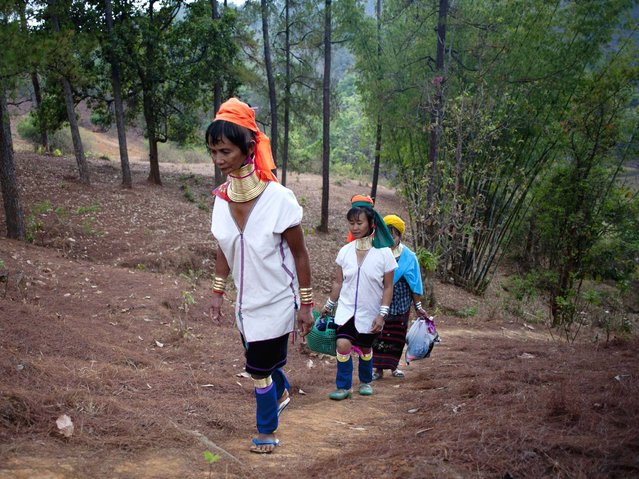
This photo taken on April 16, 2014 shows ethnic Kayan women wearing traditional clothes and bronze rings around tbeir neck in Panpet village, Demoso township in Kayah state, eastern Myanmar. Some ethnic Kayan women, also known as Padaung, begin wearing the bronze rings on their neck and legs from a young age. Usually they start wearing six to ten rings when they are five to ten-years-old and then they put on one more ring a year for years after then. (Photo by Ye Aung Thu/AFP Photo)
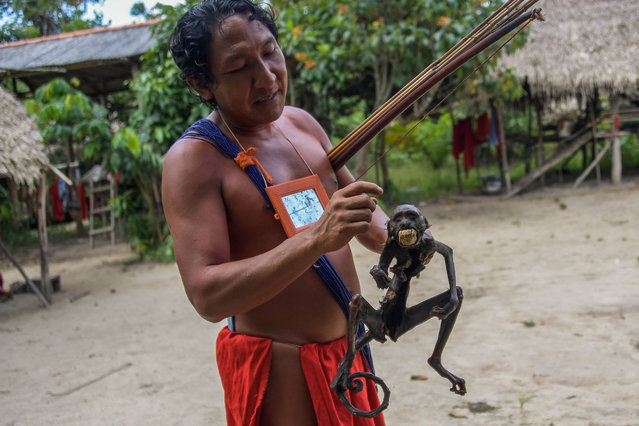
Chieftain Japarupi Waiapi shows a roasted monkey -part of Waiapi's diet, also based in Manioc and fruits- at the reserve in Amapa state in Brazil on October 13, 2017. When Waiapis walks into the Amazon forest surrounding their village, they do not see trees, but a kind of shopping mall providing medicine, food, shelter, tools and weapons all under the eye of multiple spirits. (Photo by Apu Gomes/AFP Photo)
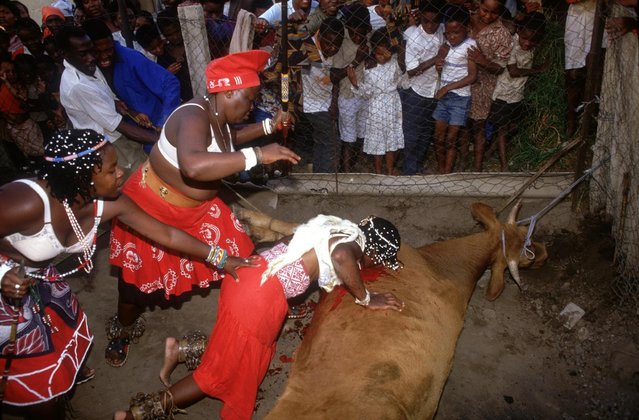
South African Sangomas are wizards and witches who are supposedly chosen by their ancestors to follow a traditional training and go through a rite of passage after which they become Sangomas and can cure and help people. They are so respected and trusted that western medical authorities have actually advised the government of South Africa to develop its cooperation with Sangomas in order to improve hygiene and health among the population. (Photo by Patrick Durand/Sygma via Getty Images)
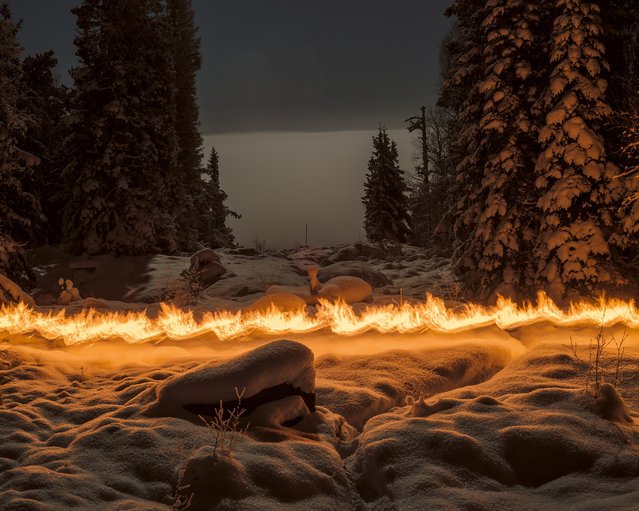
Border between Sweden and Norway at Moldusen. An approximately 20-meter wide clearing in the forest separates the two Scandinavian nations, consequently cutting Finnskogen in two. Grue Finnskog 2016. (Photo by Terje Abusdal/The Washington Post)