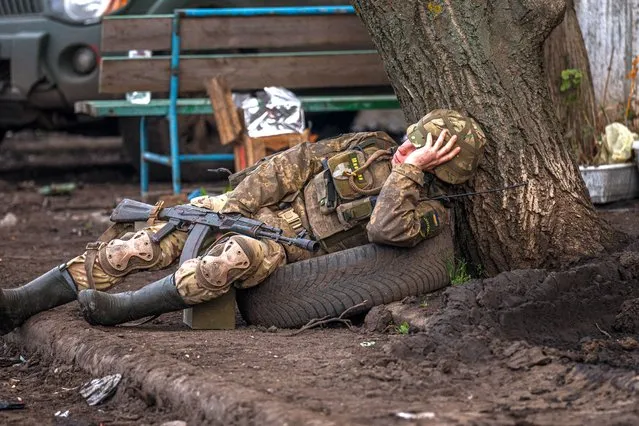
A Ukrainian serviceman takes a rest near the town of Bakhmut, in the Donetsk region on April 28, 2023, amid the Russian invasion on Ukraine. (Photo by Dimitar Dilkoff/AFP Photo)
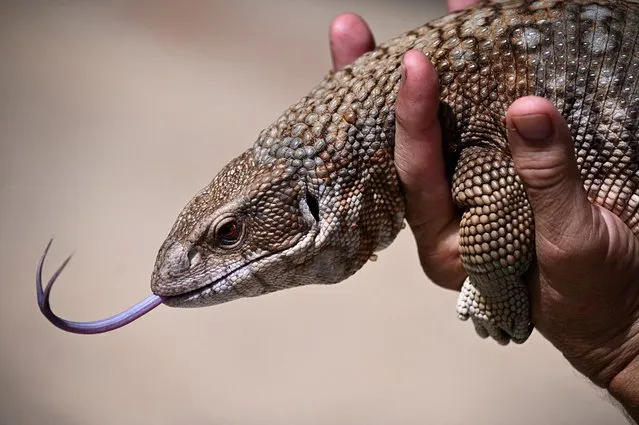
A man holds a Savannah monitor in the petting zoo “La Casita del Avestruz” (The ostrich's little house), in Caracas, Venezuela on January 28, 2024. (Photo by Gaby Oraa/Reuters)
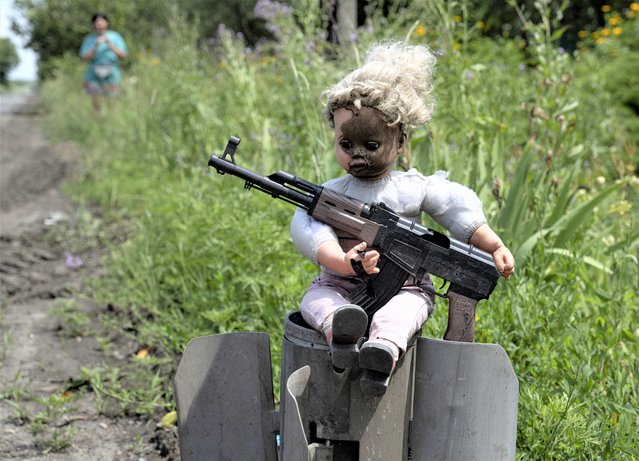
A doll holding a replica of a AK47 gun is set on a tailpiece of a rocket on a roadside in a village near the town of Avdiivka, Donetsk region, on June 28, 2023, amid the Russian invasion of Ukraine. (Photo by Genya Savilov/AFP Photo)
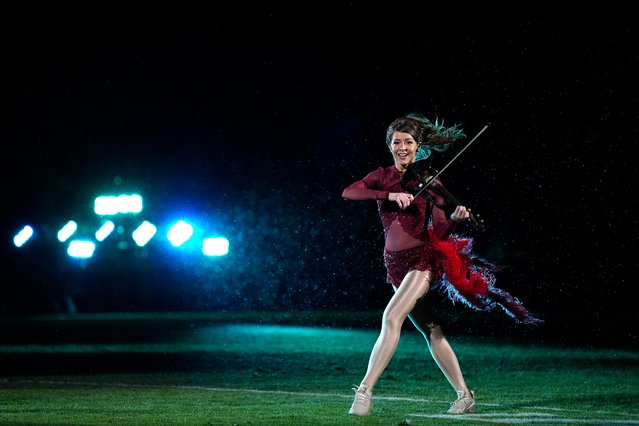
Artist Lindsey Stirling performs at halftime of a NFL game between the Miami Dolphins and Green Bay Packers at Lambeau Field on November 28, 2024 in Green Bay, Wisconsin. (Photo by Patrick McDermott/Getty Images)
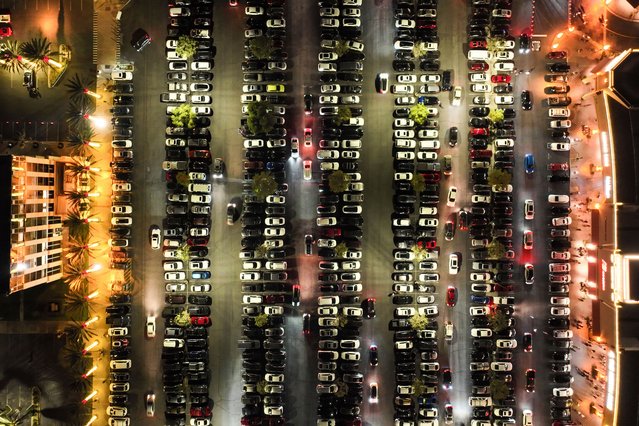
An aerial view shows a packed parking lot at Citadel Outlets in Commerce, Calif., Thursday, November 28, 2024, as early Black Friday shoppers arrive at the mall. (Photo by Jae C. Hong/AP Photo)
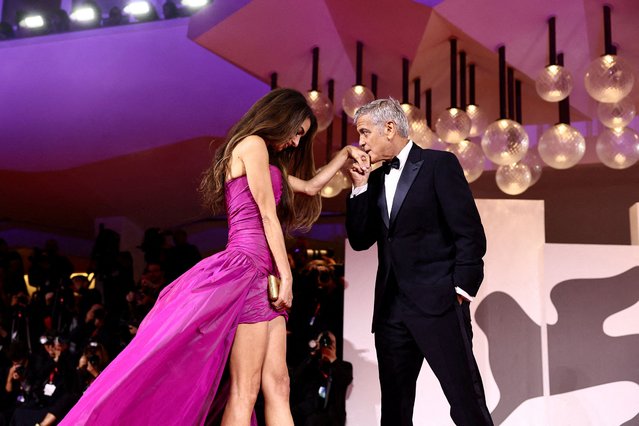
Cast member George Clooney kisses the hand of his wife Amal Clooney on the red carpet for the screening of ”Jay Kelly” on August 28, 2025. (Photo by Yara Nardi/Reuters)
Contestants compete during their model physique competition to mark International Olympic Day at the Myanmar Convention Center in Yangon, Myanmar, Saturday, June 28, 2025. (Photo by Thein Zaw/AP Photo)
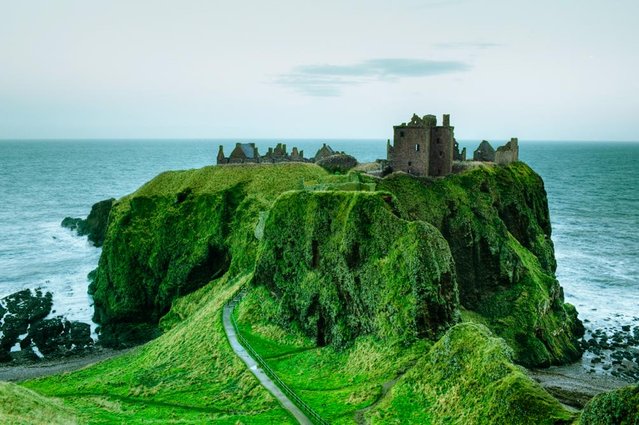
Dunnottar Castleis a ruined medieval fortress located upon a rocky headland on the north-east coast of Scotland, about 3 kilometres (1.9 mi) south of Stonehaven. The surviving buildings are largely of the 15th and 16th centuries, but the site is believed to have been fortified in the Early Middle Ages. Dunnottar has played a prominent role in the history of Scotland through to the 18th-century Jacobite risings because of its strategic location and the strength of its situation. Dunnottar is best known as the place where the Honours of Scotland, the Scottish crown jewels, were hidden from Oliver Cromwell's invading army in the 17th century. The property of the Keiths from the 14th century, and the seat of the Earl Marischal, Dunnottar declined after the last Earl forfeited his titles by taking part in the Jacobite rebellion of 1715. The castle was restored in the 20th century and is now open to the public.