Loading...
Done
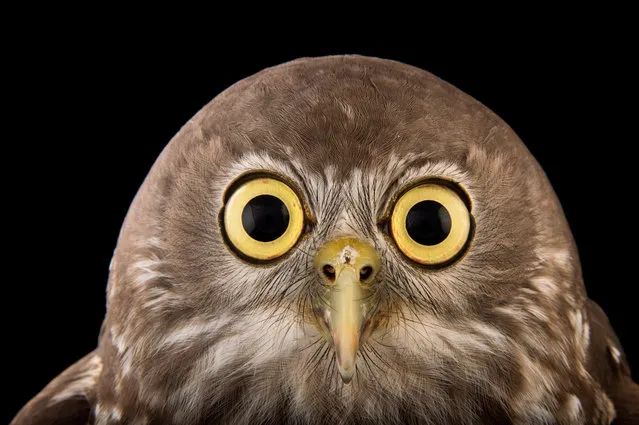
The National Geographic Photo Ark is a travelling exhibition of photographer Joel Sartore’s quest to create a photo archive of biodiversity around the world. So far, Sartore has captured studio portraits of more than 6,000 species – a number that he hopes to double. On 1 July, the ark will open at Melbourne zoo – the first time it has been exhibited in the southern hemisphere. More than 50 portraits will be on display, including many of Australian endangered animals being protected by programs at the zoo itself. These captions have been edited from text supplied by Melbourne zoo. Here: Barking owl. So-named because its call sounds like a barking dog, these birds are native to Australia, Indonesia and Papua New Guinea. In Victoria they are listed as an endangered species, and in 2003 there were estimated to be fewer than 50 breeding pairs. The main threat to the species in Victoria is loss of habitat, especially large trees with hollows in which they can nest and on which many of their prey depend. Apart from a bark, they may utter a chilling scream when they feel threatened. (Photo by Joel Sartore/National Geographic Photo Ark/The Guardian)

The National Geographic Photo Ark is a travelling exhibition of photographer Joel Sartore’s quest to create a photo archive of biodiversity around the world. So far, Sartore has captured studio portraits of more than 6,000 species – a number that he hopes to double. On 1 July, the ark will open at Melbourne zoo – the first time it has been exhibited in the southern hemisphere. More than 50 portraits will be on display, including many of Australian endangered animals being protected by programs at the zoo itself. These captions have been edited from text supplied by Melbourne zoo. Here: Barking owl. (Photo by Joel Sartore/National Geographic Photo Ark/The Guardian)
Details
01 Jul 2017 07:45:00
A small section of the expanding remains of the Veil Nebula, a massive star that exploded about 8,000 years ago. The entire nebula is 110 light-years across, covering six full moons on the sky as seen from Earth, and resides about 2,100 light-years away in the constellation Cygnus, the Swan. (Photo by Reuters/NASA/ESA/Hubble)

A small section of the expanding remains of the Veil Nebula, a massive star that exploded about 8,000 years ago. The entire nebula is 110 light-years across, covering six full moons on the sky as seen from Earth, and resides about 2,100 light-years away in the constellation Cygnus, the Swan. (Photo by Reuters/NASA/ESA/Hubble)
Details
29 Feb 2016 11:30:00

A refugee sits in front of a Greek riot police cordon during a protest at the Greek-Macedonian border, near the Greek village of Idomeni, March 1, 2016. (Photo by Alexandros Avramidis/Reuters)

A refugee sits in front of a Greek riot police cordon during a protest at the Greek-Macedonian border, near the Greek village of Idomeni, March 1, 2016. (Photo by Alexandros Avramidis/Reuters)
Details
02 Mar 2016 13:19:00
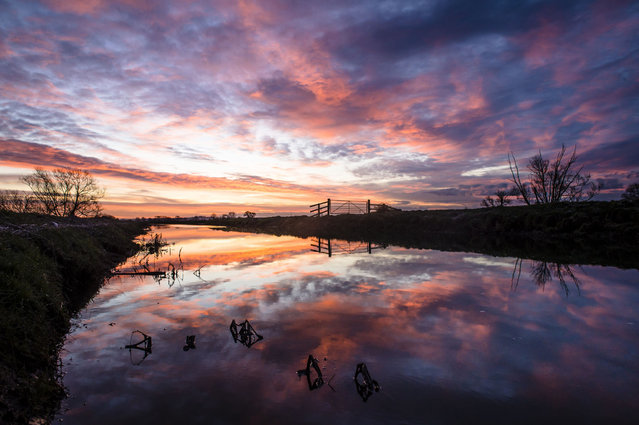
The sun rises over the River Brue on the Somerset Levels as temperatures in parts of the south west drop below freezing, on January, 20, 2015. (Photo by Ben Birchall/PA Wire)

The sun rises over the River Brue on the Somerset Levels as temperatures in parts of the south west drop below freezing, on January, 20, 2015. (Photo by Ben Birchall/PA Wire)
Details
10 Feb 2015 12:42:00
A man hugs a child at the Santuario de Nuestra Senora de Guadalupe during a celebration on the Virgin of Guadalupe Day in Guatemala City, December 12, 2015. According to Catholic believers, December 12 marks the anniversary of the apparition of the Virgin of Guadalupe at the Cerro del Tepeyac in Mexico. (Photo by Jorge Dan Lopez/Reuters)

A man hugs a child at the Santuario de Nuestra Senora de Guadalupe during a celebration on the Virgin of Guadalupe Day in Guatemala City, December 12, 2015. According to Catholic believers, December 12 marks the anniversary of the apparition of the Virgin of Guadalupe at the Cerro del Tepeyac in Mexico. (Photo by Jorge Dan Lopez/Reuters)
Details
14 Dec 2015 10:39:00
Bathing suit models are shown listening to the radio on the beach, circa 1940's. (Photo by Bettmann Archive/Getty Images)

Bathing suit models are shown listening to the radio on the beach, circa 1940's. (Photo by Bettmann Archive/Getty Images)
Details
11 Jul 2016 12:44:00
Supporters of the United Democratic Party (UDP) opposition alliance presidential candidate, Adama Barrow attend a campaign rally in Buffer zone, Gambia November 29, 2016. (Photo by Thierry Gouegnon/Reuters)

Supporters of the United Democratic Party (UDP) opposition alliance presidential candidate, Adama Barrow attend a campaign rally in Buffer zone, Gambia November 29, 2016. (Photo by Thierry Gouegnon/Reuters)
Details
01 Dec 2016 13:04:00
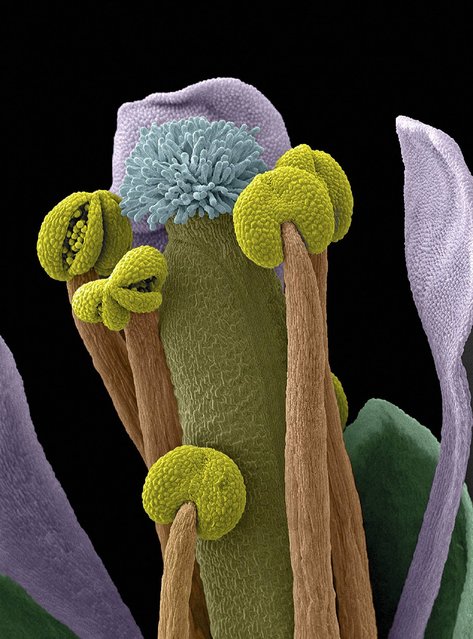
Scanning electron micrograph (SEM) of an Arabidopsis thaliana flower, also commonly known as thale cress. Some of the anthers are open, revealing pollen grains ready for dispersal. Arabidopsis was the first plant to have its entire genome sequenced and is widely used as a model organism in molecular and plant biology. Horizontal width of image is 1200 microns. Magnification 100x. (Photo by Stefan Eberhard/Wellcome Images)

Beautiful, strange and occasionally alarming pictures from the shortlist for this year’s Wellcome image awards – which celebrate the very best in science photography and imaging – from an x-ray of a bat to a micrograph of a kidney stone. The exhibition opens on 12 March at three science centres and the Museum of Science and Industry in Manchester. Photo: Scanning electron micrograph (SEM) of an Arabidopsis thaliana flower, also commonly known as thale cress. Some of the anthers are open, revealing pollen grains ready for dispersal. Arabidopsis was the first plant to have its entire genome sequenced and is widely used as a model organism in molecular and plant biology. Horizontal width of image is 1200 microns. Magnification 100x. (Photo by Stefan Eberhard/Wellcome Images)
Details
11 Mar 2014 05:58:00