Loading...
Done
An Afghan vendor waits for customers at his stall selling plastic cans in a market in Mazar-i-Sharif on June 15, 2025. (Photo by Atif Aryan/AFP Photo)

An Afghan vendor waits for customers at his stall selling plastic cans in a market in Mazar-i-Sharif on June 15, 2025. (Photo by Atif Aryan/AFP Photo)
Details
29 Aug 2025 03:06:00
Art Styles By Brano Hlavac

Brano Hlavac aka Gartier Atelier is another one of those artists whose work can be difficult to pinpoint. His artwork jumps from style to style, but it's not such a bad thing considering how well it shows off his talents.
Details
20 Apr 2013 09:33:00
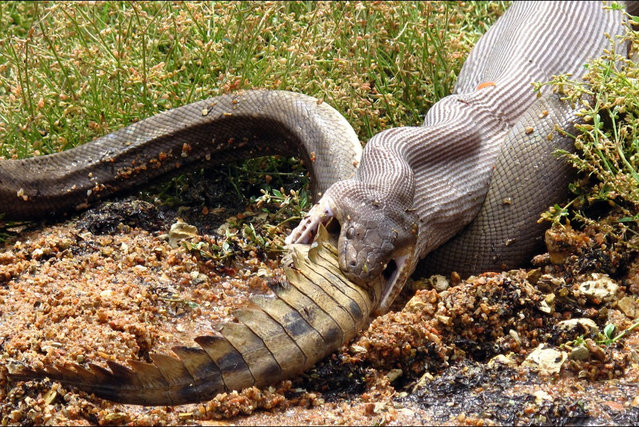
Python Meets A Crocodile See What Happened Next

What happens in the wild is sometimes hard to imagine. Sometimes other animals can be others prey. In this case, here is a python and a crocodile who come across each other in Australia. This is a bit graphic, so beware.
Details
28 Mar 2014 09:56:00
The Thorny Dragon Or Thorny Devil

The thorny dragon or thorny devil (Moloch horridus) is an Australian lizard, also known as the mountain devil, the thorny lizard, or the moloch. This is the sole species of genus Moloch. The thorny devil grows up to 20 cm (8.0 in) in length, and it can live up to 20 years.
Details
23 Jul 2014 20:20:00
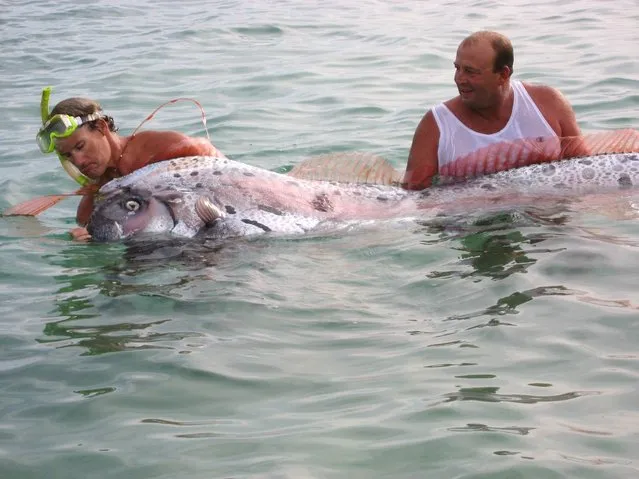
Regalecus Glesne

“The king of herrings or giant oarfish, an oarfish of the family Regalecidae, is the world's longest bony fish. Its total length has been documented to reach 17 m (56 ft), and it can weigh up to 300 kg (661 lb)”. – Wikipedia
Details
23 May 2012 13:38:00
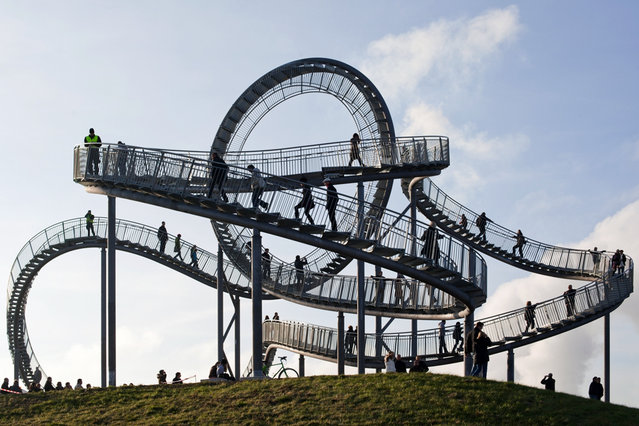
Walkable Roller-Coaster In Germany

“Tiger and Turtle–Magic Mountain” by German art duo Heike Mutter and Ulrich Genth is a walkable sculpture shaped like a roller coaster. Visitors can stroll along the track (except for the loop sections). The 69 foot tall sculpture is located in Wanheim Duisburg, Germany.
Details
18 Aug 2015 10:37:00
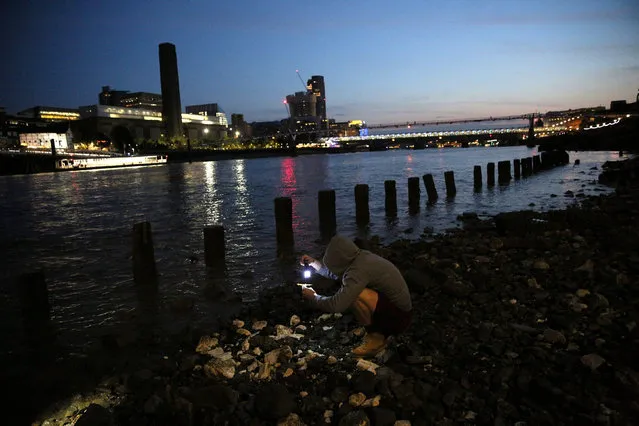
A mudlark uses a torch to look for items on the bank of the River Thames in London, Britain June 06, 2016. Mudlarking is believed to trace its origins to the 18th and 19th century, when scavengers searched the Thames' shores for items to sell. These days, history and archaeology fans are the ones hoping to find old relics such as coins, ceramics, artifacts or everyday items from across centuries. They wait for the low tide and then scour specific areas of exposed shores. "If you're in a field you could be out all day long, with the river you're restricted to about two or three hours," mudlark Nick Stevens said. While many just use the naked eye for their searches, others rely on metal detectors for which a permit from the Port of London Authority is needed. Digging also requires consent. (Photo by Neil Hall/Reuters)

A mudlark uses a torch to look for items on the bank of the River Thames in London, Britain June 06, 2016. Mudlarking is believed to trace its origins to the 18th and 19th century, when scavengers searched the Thames' shores for items to sell. These days, history and archaeology fans are the ones hoping to find old relics such as coins, ceramics, artifacts or everyday items from across centuries. their finds with the Portable Antiquities Scheme. Any item over 300 years old must be recorded. (Photo by Neil Hall/Reuters)

Details
27 Aug 2016 10:43:00
In this Saturday, March 3, 2018, photo, a contestant gets ready to throw a hatchet at a wooden bull's-eye at the Kick Axe Throwing venue in the Brooklyn borough of New York. (Photo by Mary Altaffer/AP Photo)

In this Saturday, March 3, 2018, photo, a contestant gets ready to throw a hatchet at a wooden bull's-eye at the Kick Axe Throwing venue in the Brooklyn borough of New York. Kick Axe Throwing is the first bar in New York City to pick up on a nationwide trend of ax throwing, a growing sport that some enthusiasts hope will take off the way bowling did in the last century. (Photo by Mary Altaffer/AP Photo)
Details
22 Mar 2018 00:05:00