Loading...
Done
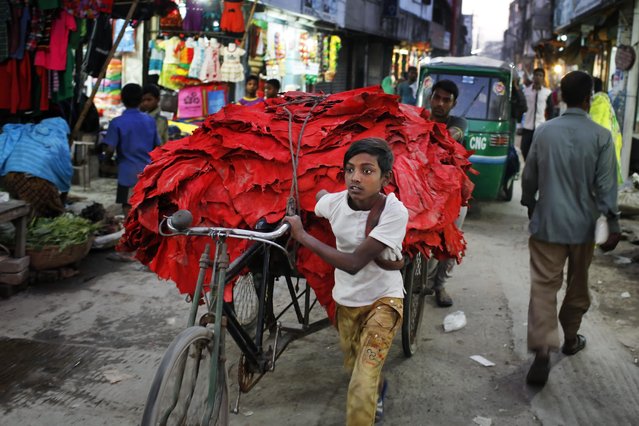
In this Thursday, February 9, 2017 photo, a Bangladeshi boy pulls a rickshaw loaded with strips of leather at the highly polluted Hazaribagh tannery area in Dhaka, Bangladesh. Hazardous, heavily polluting tanneries with workers as young as 14 supplied leather to companies that make shoes and handbags for Western brands, a nonprofit group that investigates supply chains says. (Photo by A.M. Ahad/AP Photo)

In this Thursday, February 9, 2017 photo, a Bangladeshi boy pulls a rickshaw loaded with strips of leather at the highly polluted Hazaribagh tannery area in Dhaka, Bangladesh. Hazardous, heavily polluting tanneries with workers as young as 14 supplied leather to companies that make shoes and handbags for Western brands, a nonprofit group that investigates supply chains says. (Photo by A.M. Ahad/AP Photo)
Details
25 Mar 2017 08:02:00
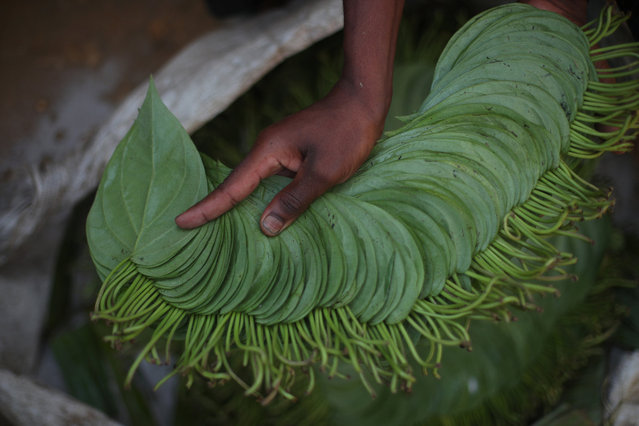
Faruk, 17, a Rohingya refugee trader holds betel leaves which are on sale at a stall in Palong Khali refugee camp near Cox's Bazar, Bangladesh, November 3, 2017. He left his village in Myanmar when the military opened fire towards the Rohingya. “I buy this betel leaf from Palong Khali market, in one bundle there are 160 pieces, I buy it for 80 taka and I sell it for 100 taka. Bangladeshi's and I sell for the same rate in the camp. Outside in the local market it is 80 taka per bundle. My problem is that I don't have money so I can't buy anything to eat, I can't buy fish to eat”, he said. (Photo by Hannah McKay/Reuters)

Faruk, 17, a Rohingya refugee trader holds betel leaves which are on sale at a stall in Palong Khali refugee camp near Cox's Bazar, Bangladesh, November 3, 2017. He left his village in Myanmar when the military opened fire towards the Rohingya. “I buy this betel leaf from Palong Khali market, in one bundle there are 160 pieces, I buy it for 80 taka and I sell it for 100 taka (1 Bangladeshi Taka = 0.012 US Dollar). Bangladeshi's and I sell for the same rate in the camp. Outside in the local market it is 80 taka per bundle. My problem is that I don't have money so I can't buy anything to eat, I can't buy fish to eat”, he said. (Photo by Hannah McKay/Reuters)
Details
27 Nov 2017 08:54:00
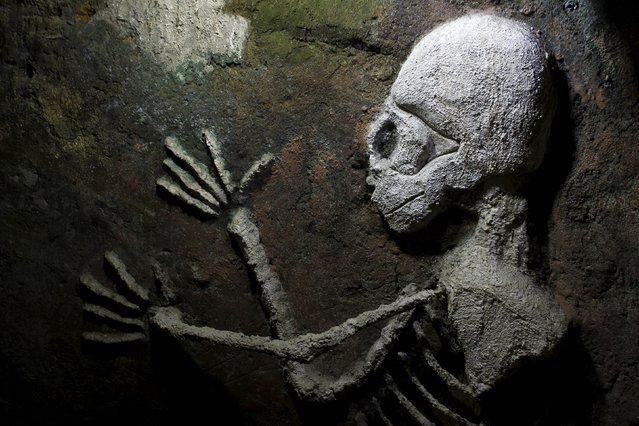
A figure of a skeleton is seen painted in a hallway of the house built underground by Manuel Barrantes in San Isidro de Perez Zeledon, Costa Rica, March 14, 2016. (Photo by Juan Carlos Ulate/Reuters)

A figure of a skeleton is seen painted in a hallway of the house built underground by Manuel Barrantes in San Isidro de Perez Zeledon, Costa Rica, March 14, 2016. Barrantes started digging through red soil and volcanic rock on his farm 12 years ago to build his subterranean house, between 15 and 63 feet (4.57 and 19.2m) underground. The dwelling, which Barrantes says provides a peaceful and comfortable home for him and his family away from noise pollution and the effects of climate change, now covers about 2,000 square feet (185.8 square metres). (Photo by Juan Carlos Ulate/Reuters)
Details
17 Mar 2016 15:34:00
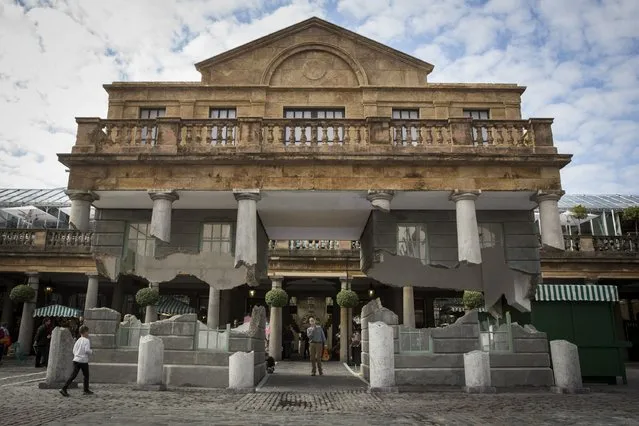
An installation entitled “Take my lightning but don't steal my thunder” by British artist Alex Chinneck stands in Covent Garden on October 2, 2014 in London, England.  The installation is intended to cast the illusion that a 40-foot section of the Covent Garden's 184-year old market building is floating. “Take my lightning but don't steal my thunder” will be on display from 2nd to 24th October 2014. (Photo by Rob Stothard/Getty Images)

An installation entitled “Take my lightning but don't steal my thunder” by British artist Alex Chinneck stands in Covent Garden on October 2, 2014 in London, England. The installation is intended to cast the illusion that a 40-foot section of the Covent Garden's 184-year old market building is floating. “Take my lightning but don't steal my thunder” will be on display from 2nd to 24th October 2014. (Photo by Rob Stothard/Getty Images)
Details
03 Oct 2014 11:40:00
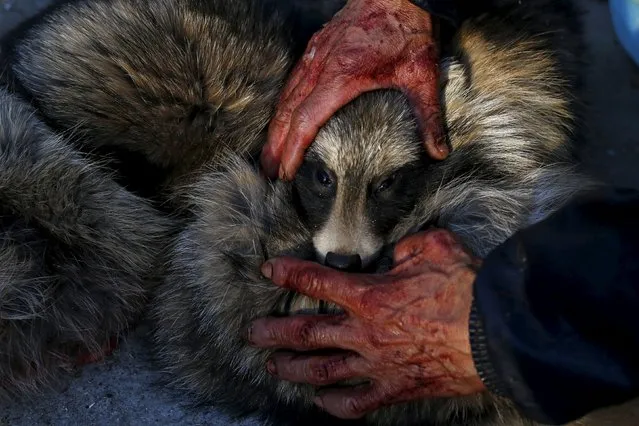
A worker holds the head of a fox while killing it with electricity for its fur at a fox farm in Nanzhuang village, Shandong province, China, December 11, 2015. There are over 60 households in the village still raising foxes, raccoon dogs and other animals for the fur trade. China is the world's largest fur producer and exporter, according to state media. (Photo by William Hong/Reuters)

A worker holds the head of a fox while killing it with electricity for its fur at a fox farm in Nanzhuang village, Shandong province, China, December 11, 2015. There are over 60 households in the village still raising foxes, raccoon dogs and other animals for the fur trade. China is the world's largest fur producer and exporter, according to state media. (Photo by William Hong/Reuters)
Details
16 Dec 2015 08:03:00
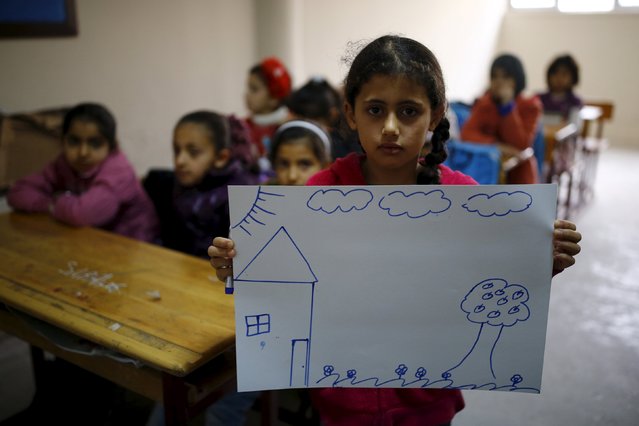
Syrian refugee girl Nur El-Huda, 9, shows a drawing of her home in Syria, in her classroom in Yayladagi refugee camp in Hatay province near the Turkish-Syrian border, Turkey, December 16, 2015. (Photo by Umit Bektas/Reuters)

Syrian refugee girl Nur El-Huda, 9, shows a drawing of her home in Syria, in her classroom in Yayladagi refugee camp in Hatay province near the Turkish-Syrian border, Turkey, December 16, 2015. Syria's conflict has left hundreds of thousands dead, pushed millions more into exile, and had a profound effect on children who lost their homes or got caught up in the bloodletting. The drawings of young refugees living in Turkey show their memories of home and hopes for its future. The pictures also point to the mental scars borne by 2.3 million Syrian refugees living in Turkey, more than half of them children. (Photo by Umit Bektas/Reuters)
Details
16 Jan 2016 08:05:00
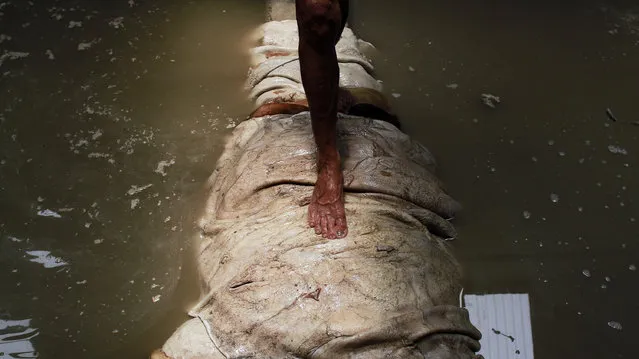
A man walks across a vat of water used to wash the hide. (Photo by Rezza Estily/JG Photo)

Sukaregang in Garut district, West Java, has long been a bustling center for Indonesia's leather trade, with some shops producing and selling various goods – including bags, shoes and jackets – since the 1940s. The industrial area is also a major supplier for high-end brands from across the globe, catering to the fashion, auto and motor-sports industry. Here: a man walks across a vat of water used to wash the hide. (Photo by Rezza Estily/JG Photo)
Details
31 Mar 2015 13:29:00


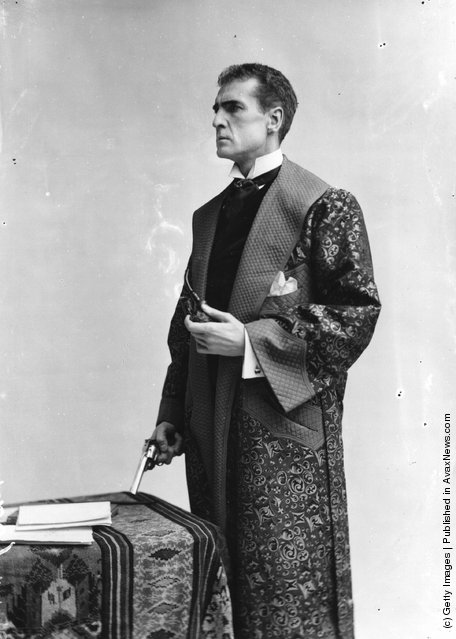
“The Guinness World Records has consistently listed Sherlock Holmes as the “most portrayed movie character” with 75 actors playing the part in over 211 films. Holmes' first screen appearance was in the Mutoscope film Sherlock Holmes Baffled in 1900, albeit in a barely-recognisable form”. – Wikipedia

Photo: William Gillette as the lead in a stage production of “Sherlock Holmes”, at the Lyceum Theatre. Playwright: William Gillette, Arthur Conan Doyle (Photo by Hulton Archive/Getty Images). 9th September 1901
Details
20 Jun 2011 10:55:00