Loading...
Done
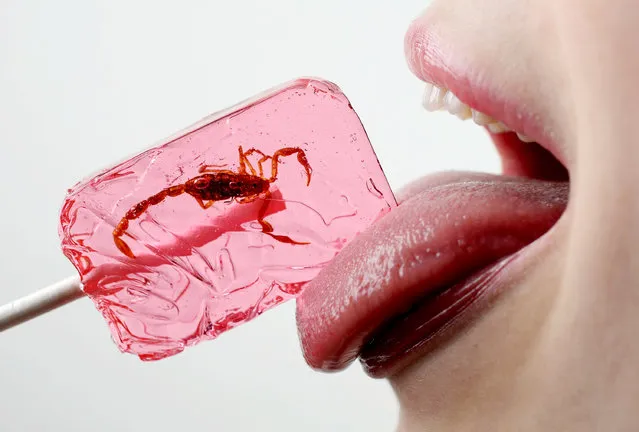
In this photo illustration a young girl licks a lollipop in which a scorpion is suspended on May 7, 2014 in Berlin, Germany. An increasing numbers of advocates worldwide are promoting insects as a viable source of food for humans, citing the high protein value, abundance and low cost. (Photo Illustration by Sean Gallup/Getty Images)

In this photo illustration a young girl licks a lollipop in which a scorpion is suspended on May 7, 2014 in Berlin, Germany. An increasing numbers of advocates worldwide are promoting insects as a viable source of food for humans, citing the high protein value, abundance and low cost. (Photo Illustration by Sean Gallup/Getty Images)
Details
14 May 2014 10:35:00
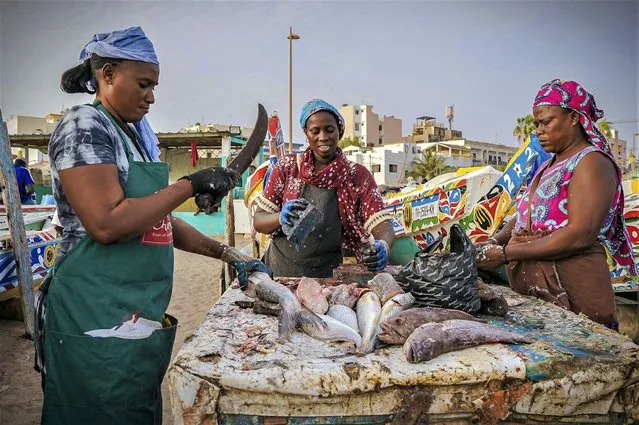
Fishmongers cut and clean fish at the Soumbedioune fish market in Dakar, Senegal, May 31, 2022. In Senegal, fish and seafood represent more than 40% of the animal protein intake in the diet. According to a U.S. report, one in six people work in the fisheries sector. (Photo by Grace Ekpu/AP Photo)

Fishmongers cut and clean fish at the Soumbedioune fish market in Dakar, Senegal, May 31, 2022. In Senegal, fish and seafood represent more than 40% of the animal protein intake in the diet. According to a U.S. report, one in six people work in the fisheries sector. (Photo by Grace Ekpu/AP Photo)

Details
04 Jul 2023 02:04:00
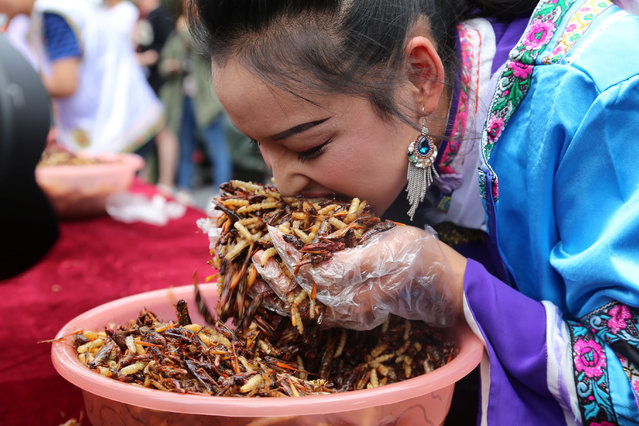
A woman participates in an insect-eating competition at a scenic spot in Lijiang, Yunnan province, China June 25, 2017. (Photo by Reuters/Stringer)

A woman participates in an insect-eating competition at a scenic spot in Lijiang, Yunnan province, China June 25, 2017. Insects have been a part of Yunnan cuisine for centuries, long before their potential as sustainable sources of protein caught the eye of the Western world. Bee larvae, grasshoppers and cicadas are just some items found on menus in the region. (Photo by Reuters/Stringer)
Details
13 Jul 2017 07:41:00
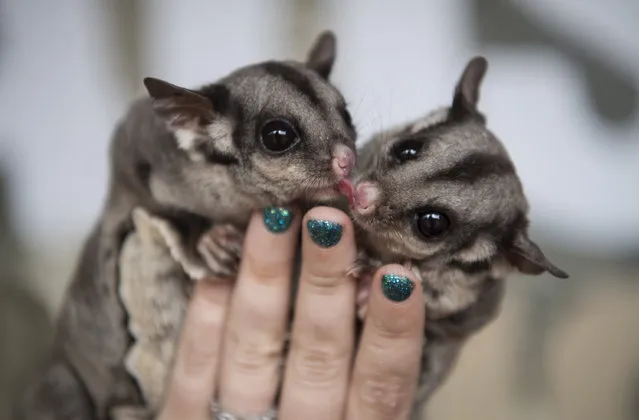
Sugar gliders, Candy and Popcorn, enjoy their favourite food, Nectar, at Wild Life Sydney Zoo on February 14, 2017 in Sydney, Australia. The treat made up of honey, high protein baby cereal and egg yolks is the human equivalent to chocolate to the Sugar Gliders. St. Valentine's Day or the Feast of Saint Valentine began as a celebration of the early Christian Saint Valentinus. From the 18th Century onwards it has steadily transformed into a celebration of romantic love and sentiment in many countries around the world. (Photo by James D. Morgan/Getty Images)

Sugar gliders, Candy and Popcorn, enjoy their favourite food, Nectar, at Wild Life Sydney Zoo on February 14, 2017 in Sydney, Australia. The treat made up of honey, high protein baby cereal and egg yolks is the human equivalent to chocolate to the Sugar Gliders. St. Valentine's Day or the Feast of Saint Valentine began as a celebration of the early Christian Saint Valentinus. From the 18th Century onwards it has steadily transformed into a celebration of romantic love and sentiment in many countries around the world. (Photo by James D. Morgan/Getty Images)
Details
19 Feb 2017 00:00:00
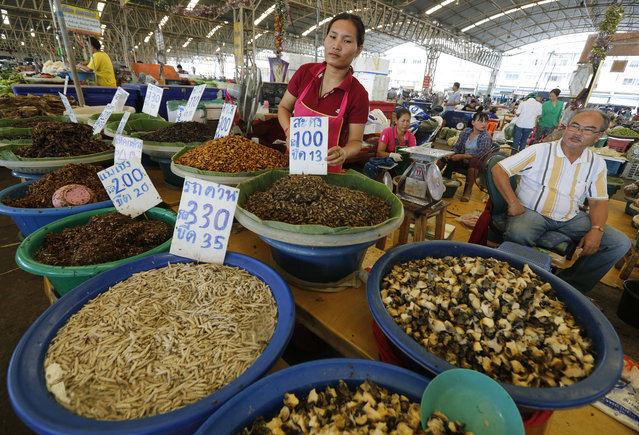
Thai vendors stand next to edible insects for sale at Talad Thai market in Pathum Thani province on the outskirts of Bangkok, Thailand, 15 July 2013. Insects have long been on the menu in Thailand, but academics and the United Nation's Food and Agriculture Organization (FAO) officials are hoping they will become a more common global source of protein and nutrients to meet the need for growing world food requirements in the future. (Photo by Narong Sangnak/EPA)

Thai vendors stand next to edible insects for sale at Talad Thai market in Pathum Thani province on the outskirts of Bangkok, Thailand, 15 July 2013. Insects have long been on the menu in Thailand, but academics and the United Nation's Food and Agriculture Organization (FAO) officials are hoping they will become a more common global source of protein and nutrients to meet the need for growing world food requirements in the future. (Photo by Narong Sangnak/EPA)
Details
22 May 2014 08:51:00
A giant biodegradable landart painting entitled “Vers l'equilibre” (Towards balance) by French-Swiss artist Saype is pictured near the summit of the Grand Chamossaire mountain, above the alpine resort of Villars-sur-Ollon, Switzerland, Wednesday, July 06, 2022. Extending over an area of 2500 square meters, this fresco was created using biodegradable pigments made out of charcoal, chalk, water and milk proteins. (Photo by Valentin Flauraud/Keystone via AP Photo)

A giant biodegradable landart painting entitled “Vers l'equilibre” (Towards balance) by French-Swiss artist Saype is pictured near the summit of the Grand Chamossaire mountain, above the alpine resort of Villars-sur-Ollon, Switzerland, Wednesday, July 06, 2022. Extending over an area of 2500 square meters, this fresco was created using biodegradable pigments made out of charcoal, chalk, water and milk proteins. (Photo by Valentin Flauraud/Keystone via AP Photo)
Details
10 Aug 2022 05:26:00


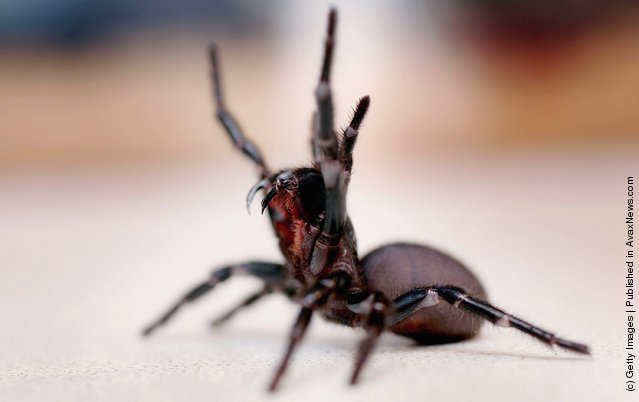
A Funnel Web spider is pictured at the Australian Reptile Park January 23, 2006 in Sydney, Australia. The Funnel Web is one of Australia's deadliest animals, with a venom that is packed with at least 40 different toxic proteins. A bite from a Funnel Web causes massive electrical over-load in the body's nervous system. Finally, fatalities occur from either heart attack or a pulmonary oedema, where the capillaries around the lungs begin to leak fluid and the patient effectively drowns. Death can come as quickly as two hours after a bite if no medical treatment is sought. Due to advances in anti-venom, there has been no death from a Funnel Web bite in Australia since 1980. Australia is home to some of the most deadly and poisonous animals on earth. (Photo by Ian Waldie/Getty Images)
Details
25 Apr 2011 07:49:00
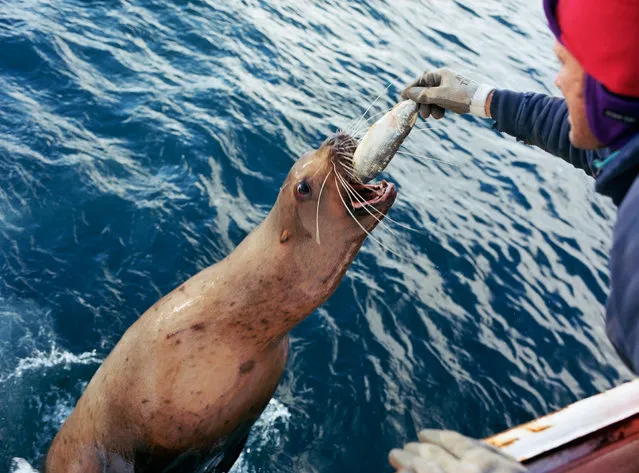
Before heading up to Alaska, the ship loads up with 3 months worth of food. Even so, it's hardly necessary. The ship's cook is constantly steaming fresh crab legs and seafood caught during the day. The hard labour of fishing requires a diet heavy in fat, protein, and omega-3s. Here, a sea lion gets a bite of the grub. (Photo by Corey Arnold)

In 2002 photographer Corey Arnold left behind a poor economy in San Francisco and headed up to Alaska to try his luck at his longtime passion of fishing. Arnold, who had worked summers during college on a salmon boat in Alaska, signed onto the f/v Rollo, a crabbing boat that fishes in the dangerous Bering Sea. While working long, strenuous hours on the Rollo, Arnold often stole away with the captain’s permission to grab his camera and photograph the crew and the ship. Arnold eventually put together “Fish Work: Bering Sea”, a documentation of his seven adventurous and dicey crab seasons aboard the Rollo. (Photo by Corey Arnold)
Details
20 Aug 2014 10:05:00