Loading...
Done
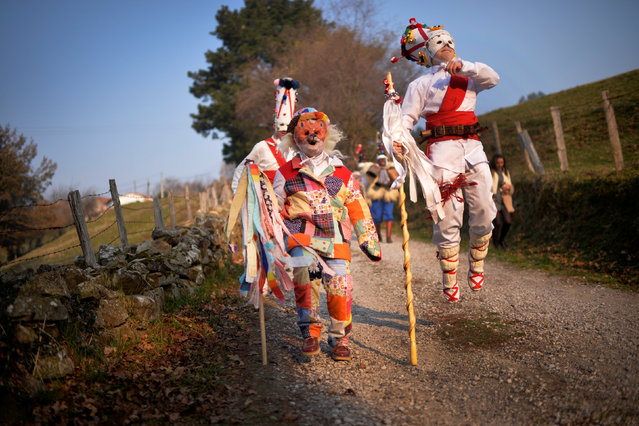
A villager jumps during “Los Sidros y Las Comedias”, a traditional festival in Spain's northern village of Valdesoto, January 8, 2017. (Photo by Eloy Alonso/Reuters)

A villager jumps during “Los Sidros y Las Comedias”, a traditional festival in Spain's northern village of Valdesoto, January 8, 2017. (Photo by Eloy Alonso/Reuters)
Details
10 Jan 2017 13:31:00
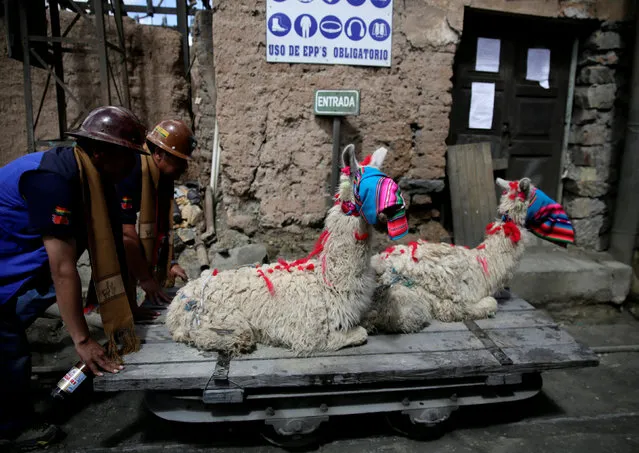
Independent miners transport llamas to sacrifice them for good fortune during the year as part of Andean carnival celebrations, outside the Mina Itos on the outskirts of Oruro, Bolivia February 24, 2017. (Photo by David Mercado/Reuters)

Independent miners transport llamas to sacrifice them for good fortune during the year as part of Andean carnival celebrations, outside the Mina Itos on the outskirts of Oruro, Bolivia February 24, 2017. (Photo by David Mercado/Reuters)
Details
26 Feb 2017 00:03:00
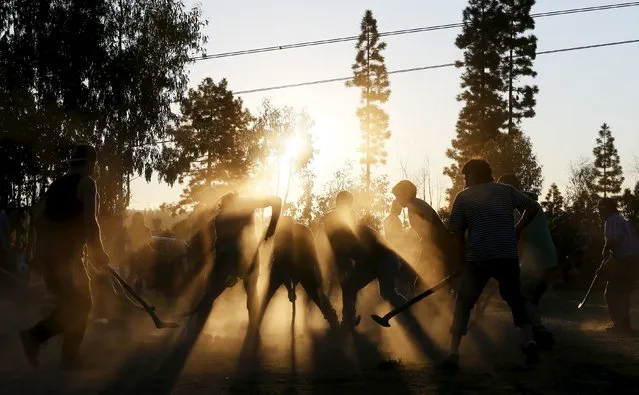
People play "Palin", a traditional ritual and ancestral Mapuche game played with curved sticks called "Chuecas" and a wooden ball, during a meet on Dia de la Raza (Day of the Races), also known as Columbus Day in Vina del Mar, Chile October 11, 2015. (Photo by Rodrigo Garrido/Reuters)

People play "Palin", a traditional ritual and ancestral Mapuche game played with curved sticks called "Chuecas" and a wooden ball, during a meet on Dia de la Raza (Day of the Races), also known as Columbus Day in Vina del Mar, Chile October 11, 2015. (Photo by Rodrigo Garrido/Reuters)
Details
15 Oct 2015 08:01:00
Spa in Slumbarave’s Hotel Metropolis, Shangri-La, Glastonbury, 2009. (Photo by Barry Lewis/The Guardian)

Award-winning photographer Barry Lewis has been picturing the weird and wonderful late-night Glastonbury experience for more than a decade. Shangri-La is a festival of contemporary performing arts held each year at Glastonbury festival, and Barry Lewis has documented its denizens. Here: Spa in Slumbarave’s Hotel Metropolis, Shangri-La, Glastonbury, 2009. (Photo by Barry Lewis/The Guardian)
Details
20 Jun 2017 07:08:00
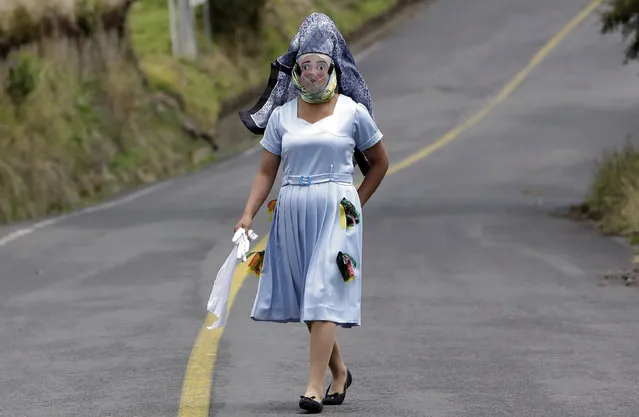
A woman dressed for la “La Diablada” festival, walks down a road in Pillaro, Ecuador, Friday, January 6, 2017. Local legend holds that anyone who adopts a costume for the celebration and wears it at the event six years in a row will have good luckDolores Ochoa

A woman dressed for la “La Diablada” festival, walks down a road in Pillaro, Ecuador, Friday, January 6, 2017. Local legend holds that anyone who adopts a costume for the celebration and wears it at the event six years in a row will have good luck. (Photo by Dolores Ochoa/AP Photo)
Details
08 Jan 2017 11:57:00
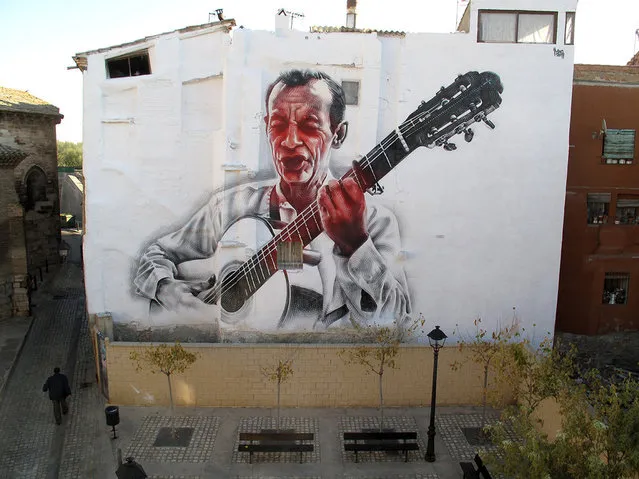
Street Art By El Mac

Born in Los Angeles in 1980 to an engineer and an artist, Mac has been creating and studying art independently since childhood. He was inspired at a young age by classic European painters such as Caravaggio, and Vermeer and Art Nouveau symbolists such as Klimt and Mucha. This was mixed with the more contemporary influences of graffiti and photorealism, as well as as the Chicano & Mexican culture he grew up around.
Details
16 May 2013 10:42:00
Dancers take part in “La Vijanera”, a winter masquerade at the beginning of carnival season in Europe, in Silio, northern Spain, January 8, 2017. (Photo by Vincent West/Reuters)

Dancers take part in “La Vijanera”, a winter masquerade at the beginning of carnival season in Europe, in Silio, northern Spain, January 8, 2017. (Photo by Vincent West/Reuters)
Details
09 Jan 2017 12:10:00

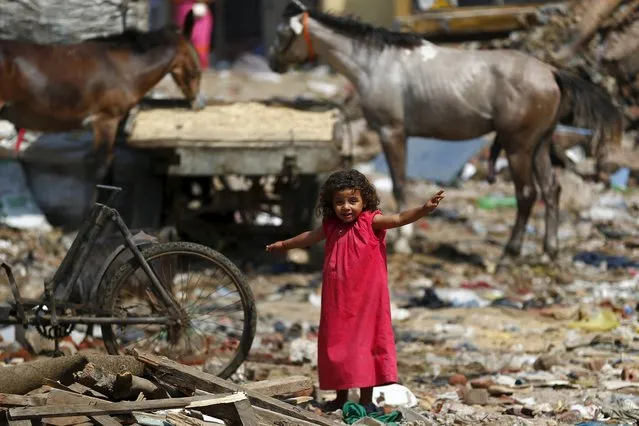
A girl plays in the Eshash el-Sudan slum in the Dokki neighbourhood of Giza, south of Cairo, Egypt September 2, 2015. (Photo by Amr Abdallah Dalsh/Reuters)

A girl plays in the Eshash el-Sudan slum in the Dokki neighbourhood of Giza, south of Cairo, Egypt September 2, 2015. Residents of the slum clashed with police in late August, when about 50 ramshackle huts were destroyed and at least 20 people were injured by teargas, local media reported, as authorities attempt to clear the area and rehouse residents. The slum dwellers, some of whom have called Eshash el-Sudan home for 50 years, say there are not enough apartments built nearby to house them. The residents of the slum eke out a living by disposing of rubbish or baking bread. Schooling is too expensive for most of their children, who play with salvaged rubbish amid shacks made out of discarded wood and leather. (Photo by Amr Abdallah Dalsh/Reuters)
Details
11 Sep 2015 12:47:00