Loading...
Done
Actress Oh In-Hae and director Ahn Sang-Su

Actress Oh In-Hae and director Ahn Sang-Su arrives for the opening ceremony of the 16th Busan International Film Festival (BIFF) during the press conference at the Busan Cinema Center on October 6, 2011 in Busan, South Korea. The biggest film festival in Asia showcases 307 films from 70 countries and runs from October 6-14. (Photo by Chung Sung-Jun/Getty Images)
Details
08 Oct 2011 14:21:00
Everly Base, six, sees the funny side of a TV carol-singing performance with her classmates in which her father had dared her to cross her eyes while she sang in Yate, Gloucestershire, UK on December 19, 2024. (Photo by Tom Wren/South West News Service)

Everly Base, six, sees the funny side of a TV carol-singing performance with her classmates in which her father had dared her to cross her eyes while she sang in Yate, Gloucestershire, UK on December 19, 2024. (Photo by Tom Wren/South West News Service)
Details
01 Jan 2025 03:03:00
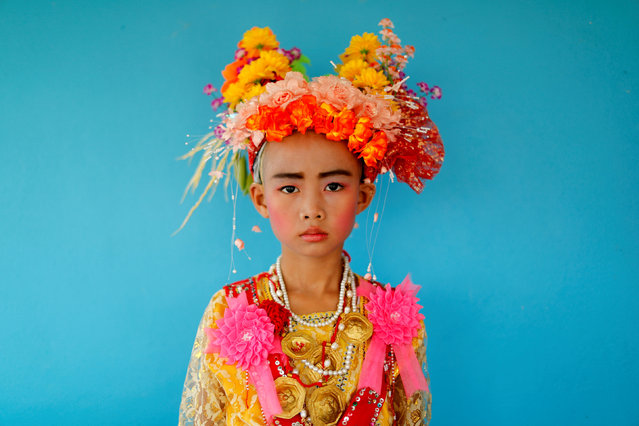
Danusorn Sdisaithaworn, 10, poses for a portrait during an annual Poy Sang Long celebration, a traditional rite of passage for boys to be initiated as Buddhist novices, while he visits a relative's house outside Mae Hong Son, Thailand, April 4, 2018. (Photo by Jorge Silva/Reuters)

Danusorn Sdisaithaworn, 10, poses for a portrait during an annual Poy Sang Long celebration, a traditional rite of passage for boys to be initiated as Buddhist novices, while he visits a relative's house outside Mae Hong Son, Thailand, April 4, 2018. (Photo by Jorge Silva/Reuters)
Details
08 May 2018 00:03:00
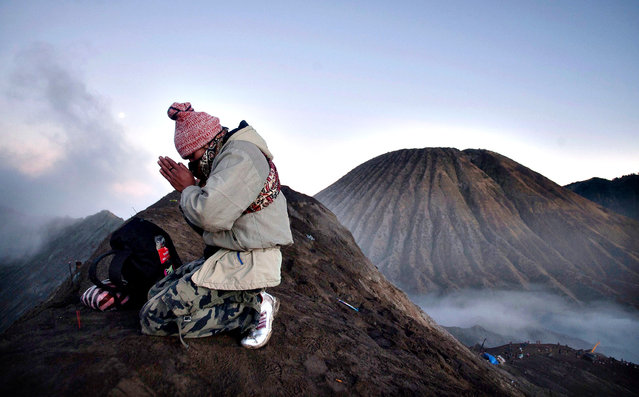
A Tengger tribesman prays at Mount Bromo during the annual Kasada ceremony in East Java on August 12, 2014. The Kasada ceremony is a festival held every 14th day of the Kasada month in the traditional Hindu lunar calender to honour Sang Hyang Widhi (God Almighty) and is based on the legend of Roro Anteng and Joko Seger from the Majapahit Kingdom, from which their Tengger tribe name originates. (Photo by Juni Kriswanto/AFP Photo)

A Tengger tribesman prays at Mount Bromo during the annual Kasada ceremony in East Java on August 12, 2014. The Kasada ceremony is a festival held every 14th day of the Kasada month in the traditional Hindu lunar calender to honour Sang Hyang Widhi (God Almighty) and is based on the legend of Roro Anteng and Joko Seger from the Majapahit Kingdom, from which their Tengger tribe name originates. Hundreds of worshippers from the Tengger tribe offer food and livestock as a symbolic sacrifice which they throw into the crater for the blessings of safety and prosperity to their familyies and community. (Photo by Juni Kriswanto/AFP Photo)
Details
16 Aug 2014 11:19:00
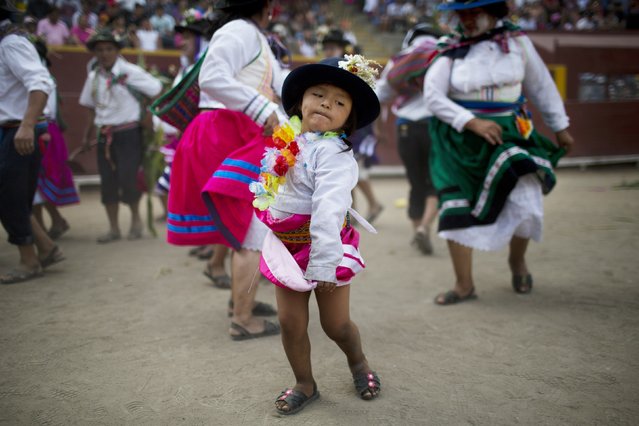
In this Sunday, March 29, 2015 photo, a young performer from the Parinacochas district of Ayacuhco dances in the Vencedores de Ayacucho dance festival, in the Acho bullring in Lima, Peru. The performers sang in the Quechua language, portraying the planting of corn and potatoes. From very young children to elderly people dressed as farmers, tigers, and foxes, as well as members of auto-defense groups, soldiers and police officers, to portray the violence that tore apart their families and communities. (Photo by Rodrigo Abd/AP Photo)

In this Sunday, March 29, 2015 photo, a young performer from the Parinacochas district of Ayacuhco dances in the Vencedores de Ayacucho dance festival, in the Acho bullring in Lima, Peru. The performers sang in the Quechua language, portraying the planting of corn and potatoes. From very young children to elderly people dressed as farmers, tigers, and foxes, as well as members of auto-defense groups, soldiers and police officers, to portray the violence that tore apart their families and communities. (Photo by Rodrigo Abd/AP Photo)
Details
01 Apr 2015 12:07:00
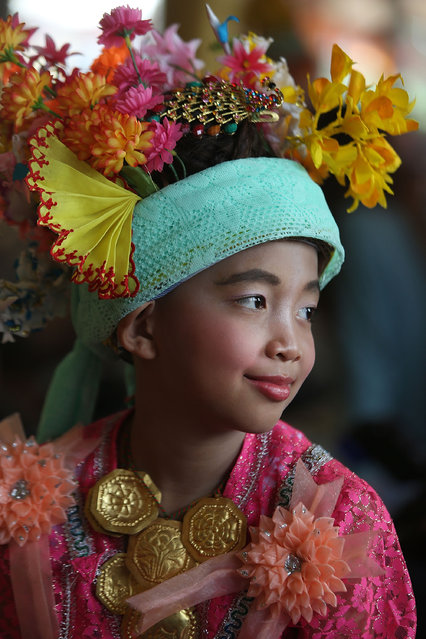
A Tai Yai boy waits for a ceremony to begin at Wat Don Chedi on April 7, 2014 in Mae Hong Son, Thailand. Poy Sang Long is a Buddhist novice ordination ceremony of the Shan people or Tai Yai, an ethnic group of Shan State in Myanmar and northern Thailand. Young boys aged between 7 and 14 are ordained as novices to learn the Buddhist doctrines. It's believed that they will gain merit for their parents by ordaining. (Photo by Taylor Weidman/Getty Images)

A Tai Yai boy waits for a ceremony to begin at Wat Don Chedi on April 7, 2014 in Mae Hong Son, Thailand. Poy Sang Long is a Buddhist novice ordination ceremony of the Shan people or Tai Yai, an ethnic group of Shan State in Myanmar and northern Thailand. Young boys aged between 7 and 14 are ordained as novices to learn the Buddhist doctrines. It's believed that they will gain merit for their parents by ordaining. (Photo by Taylor Weidman/Getty Images)
Details
09 Apr 2014 08:06:00
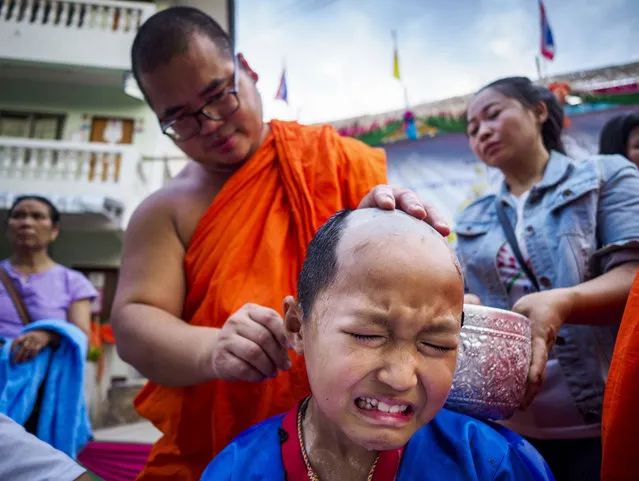
Shan boys pray before they have their heads shaved in anticipation of their ordination in the Poy Song Long Ceremony at Wat Pa Pao in Chiang Mai, Thailand on April 3, 2018. Poy Sang Long (“The Festival of the Crystal Sons”) is a ceremony that marks a rite of passage among the Buddhist Shan people in Myanmar and northern Thailand. Boys between seven and fourteen years of age are ordained as Buddhist novices during a three day ceremony. Before the ceremony starts the boys have their heads shaved. (Photo by Jack Kurtz/ZUMA Wire/Rex Features/Shutterstock)

Shan boys pray before they have their heads shaved in anticipation of their ordination in the Poy Song Long Ceremony at Wat Pa Pao in Chiang Mai, Thailand on April 3, 2018. Poy Sang Long (“The Festival of the Crystal Sons”) is a ceremony that marks a rite of passage among the Buddhist Shan people in Myanmar and northern Thailand. Boys between seven and fourteen years of age are ordained as Buddhist novices during a three day ceremony. Before the ceremony starts the boys have their heads shaved. (Photo by Jack Kurtz/ZUMA Wire/Rex Features/Shutterstock)
Details
06 Apr 2018 07:59:00


South Korean bee farmer Ahn Sang-Kyu protests Japan's claim of sovereignty over disputed islets May 2, 2006 in Seoul, South Korea. Ahn, a local bee farmer, released over 140,000 bees and attracted them to his body to protest Japan's sovereignty claims over a tiny group of islands located off the east coast of South Korea, called the Dokdo islets by the Koreans and Takeshima by the Japanese. The volcanic islets located about 90 kilometres east of South Korea's Ullung Island, have been a source of diplomatic friction between South Korea and Japan for years. (Photo by Chung Sung-Jun/Getty Images)
Details
05 May 2011 10:32:00