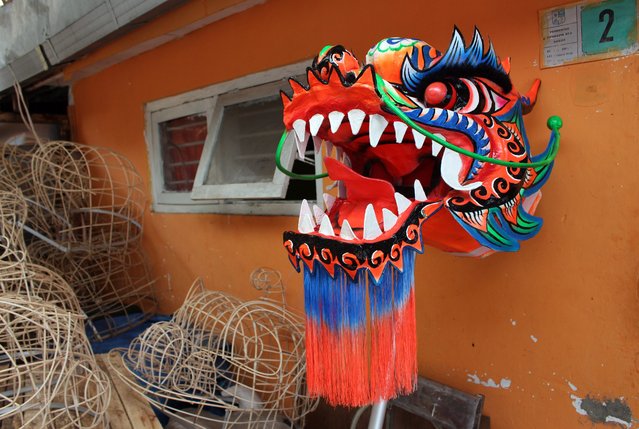
A dragon mask for the upcoming Lunar New Year hangs on the wall at Lily Hambali's and lion masks and custome maker in Bogor, Indonesia, 02 February 2015. The Chinese Lunar New Year, known here as Imlek, is only three weeks away. The whole city is getting decked out to celebrate the event on 19 February 2015. (Photo by Adi Weda/EPA)
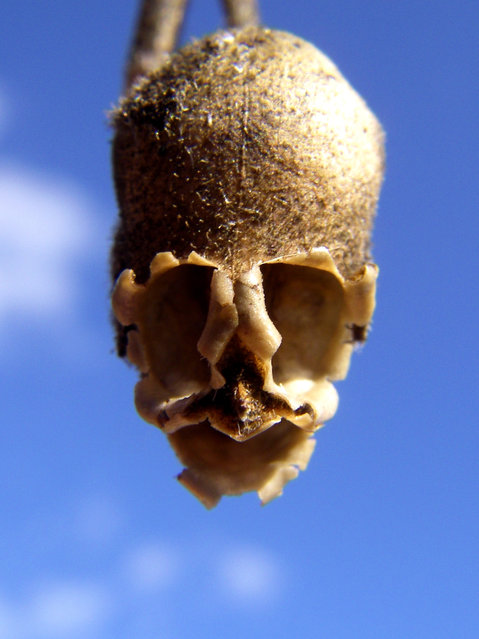
Yes this is not a real dragon’s skull but it is still pretty creepy. This weird little plant is called a Snapdragon or Dragon flower or, if you want to sound even smarter, The Antirrhinum. Once the flower has died, the seed pod begins to look like the skulls you see here. Apart from being creepy as hell and alleged protectors of the garden, if you wore this about your body you would appear to be more “fascinating and gracious”. Though I imagine if anyone actually did find this on you, fascinating and gracious are not the only things they will think about you.
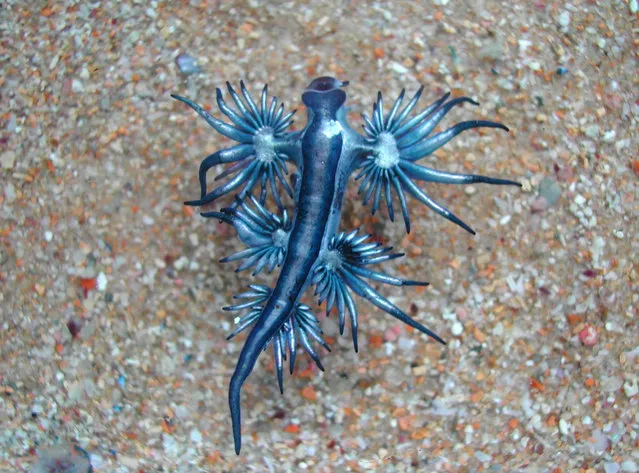
Glaucus atlanticus (common names sea swallow, blue glaucus, blue sea slug and blue ocean slug) is a species of small-sized blue sea slug, a pelagic aeolid nudibranch, a marine gastropod mollusk in the family Glaucidae. This is the only species in the genus Glaucus, but is closely related to Glaucilla marginata, which sometimes is included in Glaucus.
People board a train at the West Railway Station on January 7, 2012 in Beijing, China. China's railways are bracing themselves as millions of migrant labourers are set to leave cities for their native villages to celebrate the Chinese New Year. (Photo by Lintao Zhang/Getty Images)
This combination photo of images released by HBO shows Emilia Clarke portraying Daenerys Targaryen in “Game of Thrones”. The final season of the popular series premieres on April 14. (Photo by HBO via AP Photo)
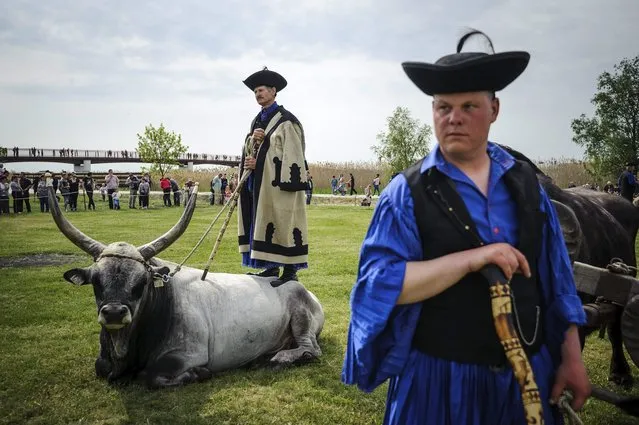
A herdsman stands on the back of a grey bull during a ceremony of driving sheep from their winter habitat to their summer pasture in the puszta or Hungarian steppe of Hortobagy, 183 kms east of Budapest, Hungary, 23 April 2016. Sheep are traditionally driven to their summer pasture at around St. George's Day in the Hortobagy region, because livestock breeding people traditionally consider St. George's Day the beginning of spring. (Photo by Zsolt Czegledi/EPA)
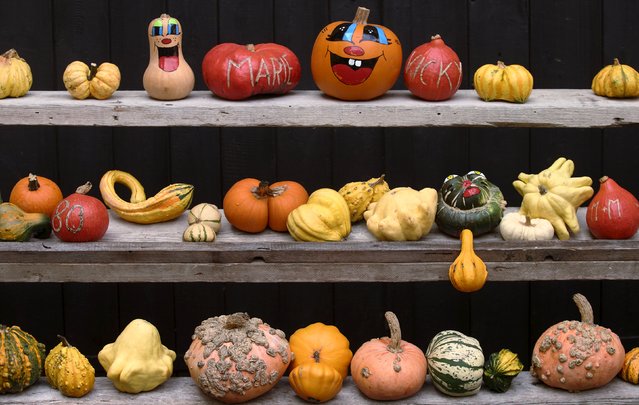
Various kinds of pumpkins, out of some 400 on display grown this season, are seen on sale at Franzlbauer farm in Hintersdorf, Austria, October 27, 2015. (Photo by Heinz-Peter Bader/Reuters)