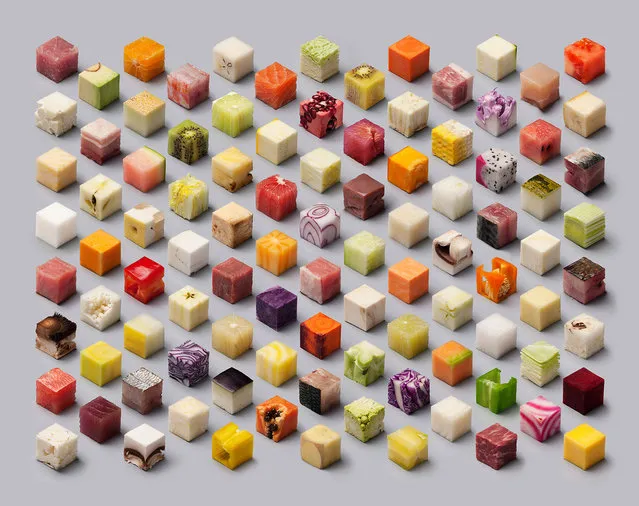
Dutch artists Lernert and Sander cut raw food into 98 perfect 2.5 x 2.5 x 2.5 cm cubes, creating a tantalizing geometric display. This viral photo was commissioned by Dutch newspaper de Volkskrant for their their food-themed documentary photography special.
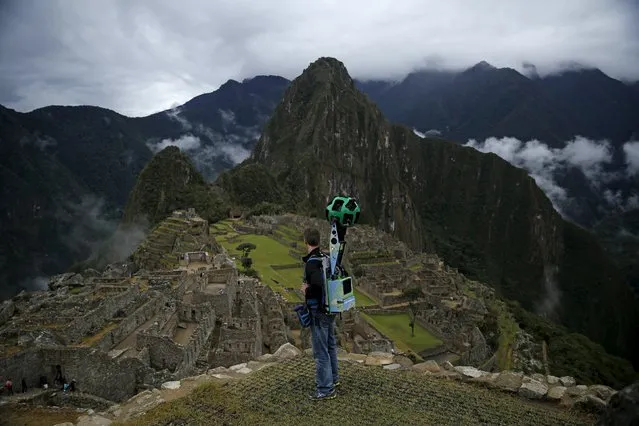
Daniel Filip, Tech Lead Manager for Google Maps, carries the Trekker, a 15-camera device, while mapping the Inca citadel of Machu Picchu for Google Street View in Cuzco, Peru, August 11, 2015. (Photo by Pilar Olivares/Reuters)
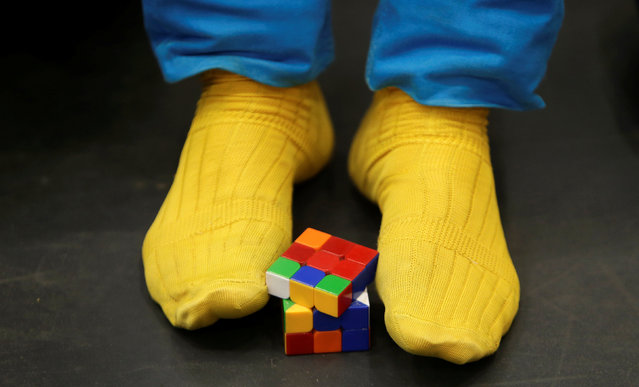
A competitor solves a Rubik's cube using his feet as he prepares for the Rubik's Cube European Championship in Prague, Czech Republic, July 15, 2016. (Photo by David W. Cerny/Reuters)
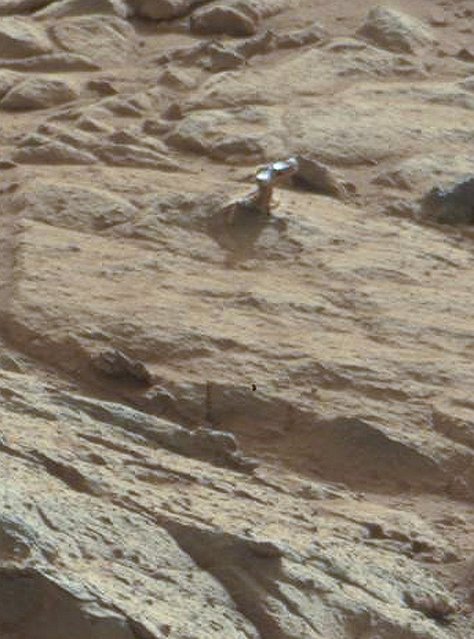
“The Curiosity Mars rover has imaged a small metallic-looking protuberance on a rock. Visible (in the image below the green lines point to it), the protuberance appears to have a high albedo and even projects a shadow on the rock below...”
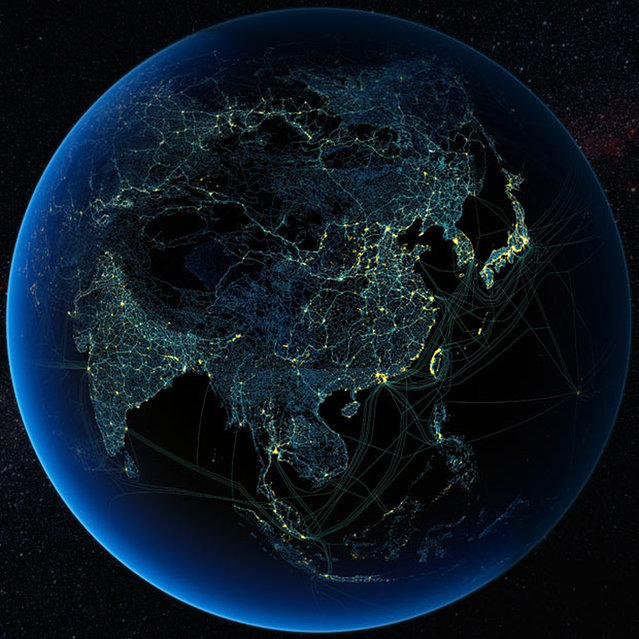
Defined according to wikipedia it is “a recent and informal geologic chronological term that serves to mark the evidence and extent of human activities that have had a significant global impact on the Earth’s ecosystems. The term was coined by ecologist Eugene Stoermer but has been widely popularized by the Nobel Prize-winning atmospheric chemist Paul Crutzen.”
The images here where created by Felix Pharand-Deschenes depicting how various human influences, from road and rail, to internet cables and airlines create significant patterns covering the Earth. What can we learn from these patterns in how they are influencing the environment
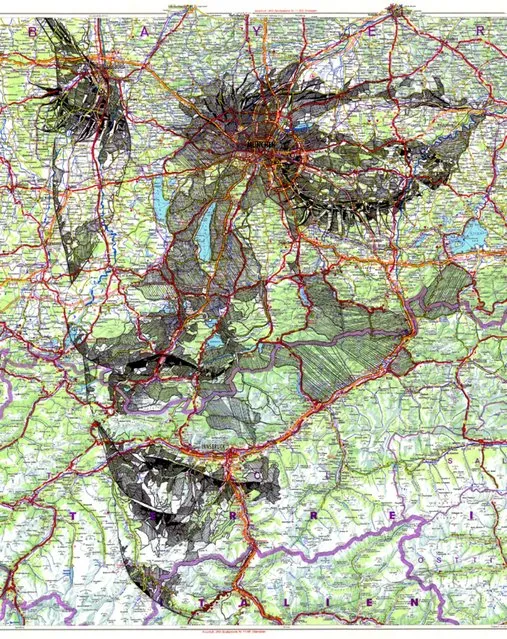
A talented artist has created breathtaking intimate portraits by using detailed maps of the world as his canvas. Cardiff-based illustrator, Ed Fairburn, combines the patchwork of roads, terrains and rivers to for his unique sketches. Photo: Ink on a 1977 road map of Germany. (Photo by Ed Fairburn/Rex Features)