Loading...
Done
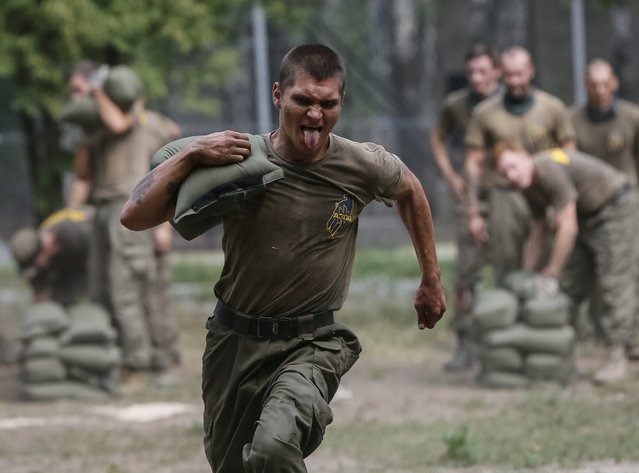
A new volunteer for the Ukrainian interior ministry's “Azov” battalion takes part in tests before heading to frontlines in eastern Ukraine, at the battalion's training centre in Kiev, Ukraine, August 14, 2015. (Photo by Gleb Garanich/Reuters)

A new volunteer for the Ukrainian interior ministry's “Azov” battalion takes part in tests before heading to frontlines in eastern Ukraine, at the battalion's training centre in Kiev, Ukraine, August 14, 2015. (Photo by Gleb Garanich/Reuters)
Details
15 Aug 2015 11:19:00
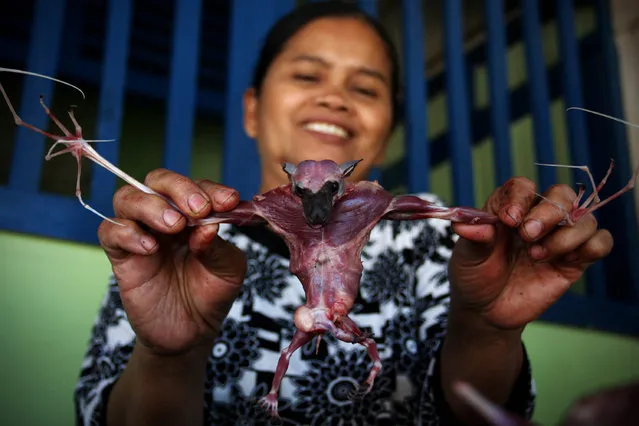
Bat seller Sukarwati shows a skinned bat on July 30, 2009 in Yogyakarta, Indonesia. Sukarwati and her family have hunted bats in the Imogiri region for generations, capturing more than 800 bats per month. The Sukarwati family believe that the meat from the bat heals asthma and respiratory problems and it is a great honour for them knowing that the meat that they provide will help ease people's health ailments

Bat seller Sukarwati shows a skinned bat on July 30, 2009 in Yogyakarta, Indonesia. Sukarwati and her family have hunted bats in the Imogiri region for generations, capturing more than 800 bats per month. The Sukarwati family believe that the meat from the bat heals asthma and respiratory problems and it is a great honour for them knowing that the meat that they provide will help ease people's health ailments. (Photo by Ulet Ifansasti)
Details
20 Sep 2012 08:57:00
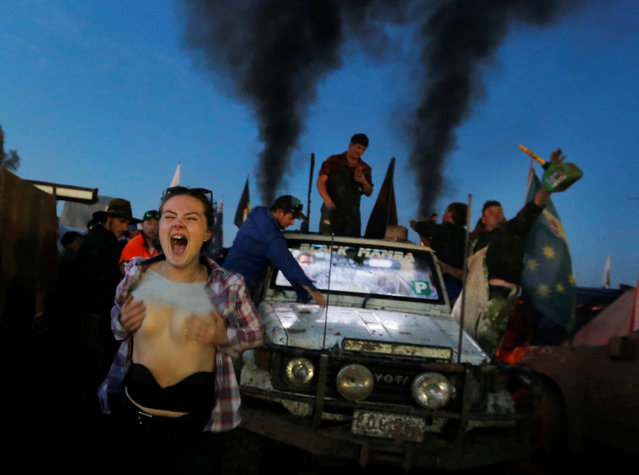
Mel Harris shouts whilst a pick up truck belches smoke on the final night of the Deni Ute Muster in Deniliquin, New South Wales, Australia, October 1, 2016. (Photo by Jason Reed/Reuters)

Mel Harris shouts whilst a pick up truck belches smoke on the final night of the Deni Ute Muster in Deniliquin, New South Wales, Australia, October 1, 2016. In the small rural town of Deniliquin, on the edge of Australia's vast outback, around 20,000 “ute” lovers gathered in the mud to champion a national treasure deemed surplus to requirements by the big car manufacturers. (Photo by Jason Reed/Reuters)
Details
13 Oct 2016 11:17:00
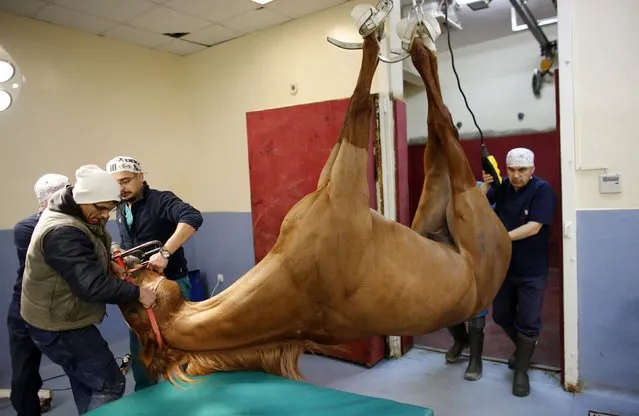
A racehorse is hoisted up before its operation at Veliefendi equine hospital in Istanbul March 3, 2015. (Photo by Murad Sezer/Reuters)

A racehorse is hoisted up before its operation at Veliefendi equine hospital in Istanbul March 3, 2015. A state-of-the-art hospital for hundreds of horses run by the Jockey Club of Turkey at Istanbul's Veliefendi racecourse is the country's oldest and biggest. Grooms and trainers at the equine clinic work with vets and nurses while owners hope their prize runners, often worth hundreds of thousands of dollars, will recover quickly and then run faster still. (Photo by Murad Sezer/Reuters)
Details
10 Apr 2015 07:12:00
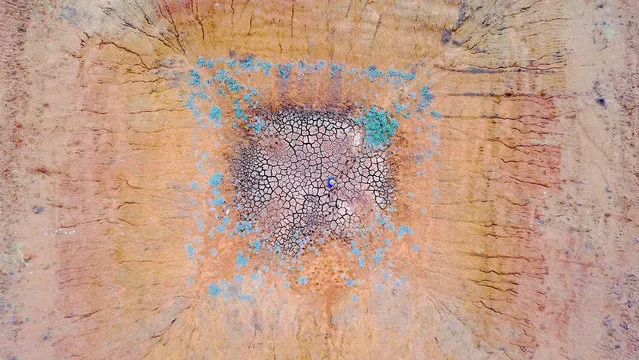
Farmer Ash Whitney stands in the middle of a dried-up dam in a drought-effected paddock on his property located west of the town of Gunnedah in New South Wales, Australia, June 3, 2018. “I have been here all my life, and this drought is feeling like it will be around a while”, said Whitney. (Photo by David Gray/Reuters)

Farmer Ash Whitney stands in the middle of a dried-up dam in a drought-effected paddock on his property located west of the town of Gunnedah in New South Wales, Australia, June 3, 2018. “I have been here all my life, and this drought is feeling like it will be around a while”, said Whitney. (Photo by David Gray/Reuters)
Details
07 Aug 2018 00:05:00
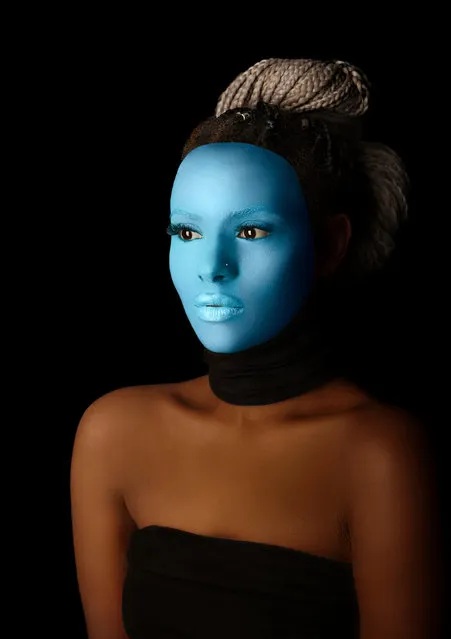
Brtukan. “Being a girl of colour in a society where the majority of the people are white, I have had to get used to all the different ways people approach me. From being asked what kind of rap music you listen to and how you wash your hair, to getting told, “you don’t sound black”, “you’re pretty for a black girl” or “you’re not that black so it’s OK”, as if being black is such a bad thing”. (Photo by Lisa Minogue/The Guardian)

As part of FLAIR Melbourne – a Flinders Lane art festival – Melbourne’s Lisa Minogue presents stylised photographic portraits of Australian women of colour, their faces painted vibrantly to accentuate their individuality and encourage the viewer to study each face more closely. Minogue asked each woman the same question: “What do the words “coloured girl” mean to you?”. (Photo by Lisa Minogue/The Guardian)
Details
17 Aug 2016 11:16:00
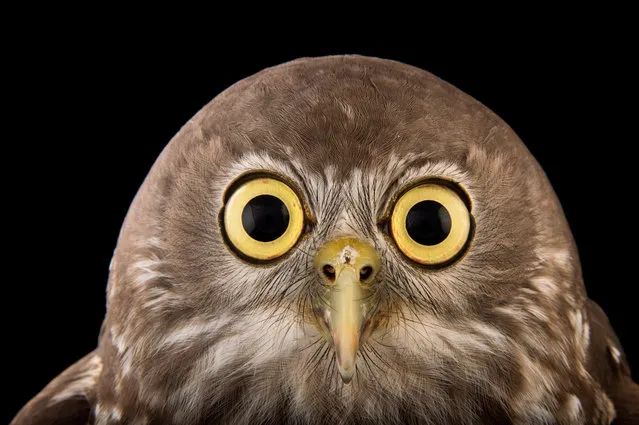
The National Geographic Photo Ark is a travelling exhibition of photographer Joel Sartore’s quest to create a photo archive of biodiversity around the world. So far, Sartore has captured studio portraits of more than 6,000 species – a number that he hopes to double. On 1 July, the ark will open at Melbourne zoo – the first time it has been exhibited in the southern hemisphere. More than 50 portraits will be on display, including many of Australian endangered animals being protected by programs at the zoo itself. These captions have been edited from text supplied by Melbourne zoo. Here: Barking owl. So-named because its call sounds like a barking dog, these birds are native to Australia, Indonesia and Papua New Guinea. In Victoria they are listed as an endangered species, and in 2003 there were estimated to be fewer than 50 breeding pairs. The main threat to the species in Victoria is loss of habitat, especially large trees with hollows in which they can nest and on which many of their prey depend. Apart from a bark, they may utter a chilling scream when they feel threatened. (Photo by Joel Sartore/National Geographic Photo Ark/The Guardian)

The National Geographic Photo Ark is a travelling exhibition of photographer Joel Sartore’s quest to create a photo archive of biodiversity around the world. So far, Sartore has captured studio portraits of more than 6,000 species – a number that he hopes to double. On 1 July, the ark will open at Melbourne zoo – the first time it has been exhibited in the southern hemisphere. More than 50 portraits will be on display, including many of Australian endangered animals being protected by programs at the zoo itself. These captions have been edited from text supplied by Melbourne zoo. Here: Barking owl. (Photo by Joel Sartore/National Geographic Photo Ark/The Guardian)
Details
01 Jul 2017 07:45:00


A rare white kiwi chick is seen only days after being hatched on May 22, 2011 in Wellington, New Zealand. The all-white kiwi, named “Manukura” is suspected to be the first white chick born in captivity. The chick is the thirteenth of fourteen baby kiwis hatched at the wildlife centre this season. (Photo by Mike Heydon/Jet Productions NZ Limited via Getty Images)
Details
24 May 2011 09:07:00