Loading...
Done
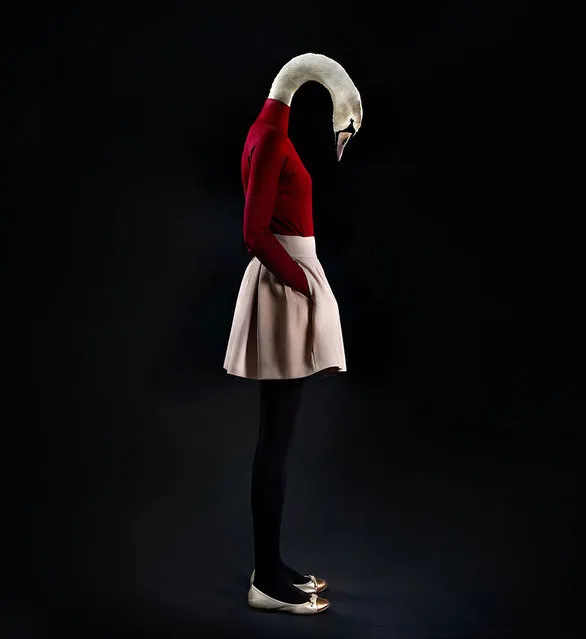
Animals Dressed By Miguel Vallinas

A Spanish photographer has created a collection of pictures featuring animals dressed in human clothing. Miguel Vallinas who is based in Madrid, has called the project Segundas Pieles which means Second Skins. But rather than just creating a collection of funny pictures, Vallinas tries to imagine which clothes the animals would choose for themselves if they could.
Details
16 Oct 2013 10:28:00
Paper Coffee Cup Art By Miguel Cardona

San Francisco-based design professor Miguel Cardona is selling his custom-drawn “Sketchcups” at Café Sophie for US$20 a piece to benefit Project Night Night, a charity that donates baby blankets, books, and toys to children in homeless shelters. Cardona discusses the project in an interview with Coolhunting. If you'd like to purchase or commission one of Cadona's pieces for yourself, you can do so for US$30 at his Sketchcups Store.
Details
31 Mar 2014 11:55:00
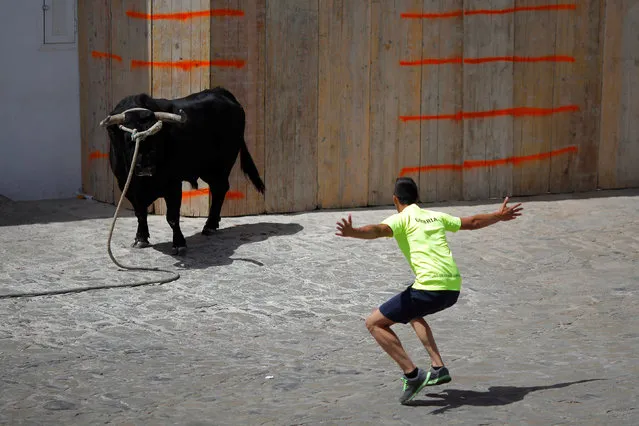
A runner tries to get the attention of a bull, named Santon, during the “Toro de Cuerda” (Bull on Rope) festival at Plaza de Espana square in Grazalema, southern Spain, July 18, 2016. (Photo by Jon Nazca/Reuters)

A runner tries to get the attention of a bull, named Santon, during the “Toro de Cuerda” (Bull on Rope) festival at Plaza de Espana square in Grazalema, southern Spain, July 18, 2016. Three bulls restrained by a rope are allowed to run through the streets of the village during the annual festival. (Photo by Jon Nazca/Reuters)
Details
19 Jul 2016 12:53:00
De Markies – The Mobile Home

The mobile home “De Markies” was an entry in the “Temporary Living” competition 1985 and was conceived as a mobile home. Onthe road it measures 2.00 m by 4.50 m, and once it has arrived at its destination its floorspace can be increased threefold in a matter of seconds. “De Markies” was awarded the Public Prize at the Rotterdam Design Prize 1996. For further information please visit Bothlink.
Details
29 Jul 2013 12:16:00
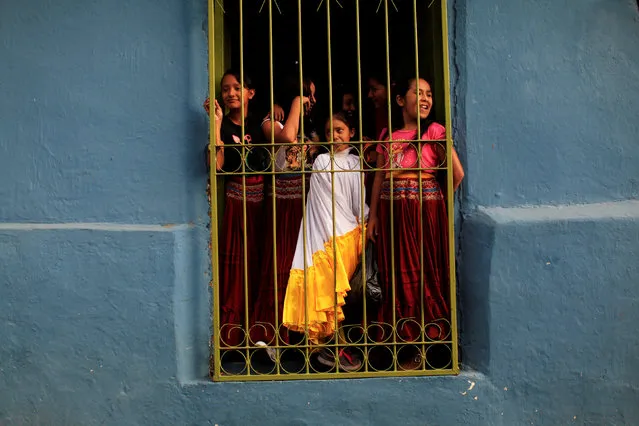
Girls watch a procession during the “Fiesta de las Palancas” celebration to ask for blessings and abundance during the new year in Panchimalco, El Salvador, January 5, 2017. (Photo by Jose Cabezas/Reuters)

Girls watch a procession during the “Fiesta de las Palancas” celebration to ask for blessings and abundance during the new year in Panchimalco, El Salvador, January 5, 2017. (Photo by Jose Cabezas/Reuters)
Details
08 Jan 2017 13:56:00
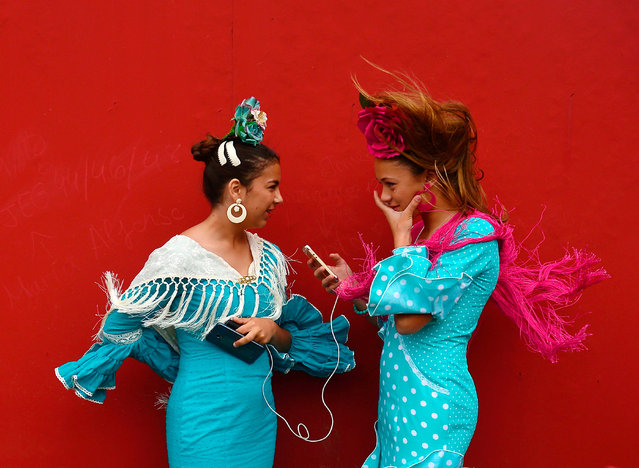
Two girls wearing traditional Sevillian dresses talk during the “Feria de Abril” (April Fair) in Sevilla on April 30, 2017. The fair dates back to 1847 when it was originally organized as a livestock fair but has turned into a week of flamenco dancing, music and bullfighting. (Photo by Cristina Quicler/AFP Photo)

Two girls wearing traditional Sevillian dresses talk during the “Feria de Abril” (April Fair) in Sevilla on April 30, 2017. The fair dates back to 1847 when it was originally organized as a livestock fair but has turned into a week of flamenco dancing, music and bullfighting. (Photo by Cristina Quicler/AFP Photo)
Details
06 May 2017 07:31:00
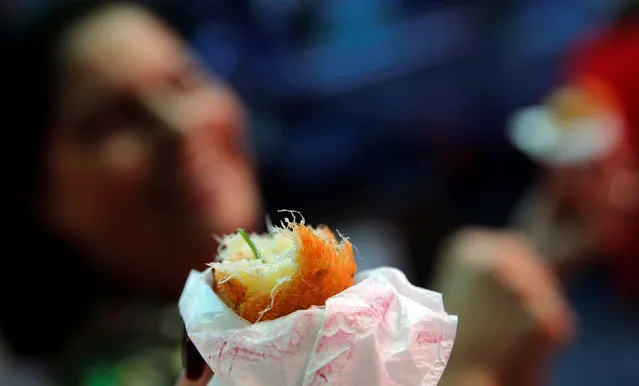
A view of traditional bolinhos de bacalhau (fried codfish balls) in Rio de Janeiro, Brazil, May 7, 2016. (Photo by Sergio Moraes/Reuters)

If the most popular foods of Rio de Janeiro have one thing in common, it is their informality. You can find fine restaurants in the city, but they do not set Rio apart from other places. What does set it apart, and what invariably brings its residents, known as "Cariocas," together is the unpretentious food they eat in bright, loud, crowded bars and restaurants, on busy street corners, or after a day at the beach. Here: A view of traditional bolinhos de bacalhau (fried codfish balls) in Rio de Janeiro, Brazil, May 7, 2016. (Photo by Sergio Moraes/Reuters)
Details
05 Aug 2016 13:20:00
A catholic faithful smeared in burnt oil, takes part in the opening of the ten-day celebration of the Santo Domingo de Guzman festival in Managua, on August 1, 2019. (Photo by Inti Ocon/AFP Photo)

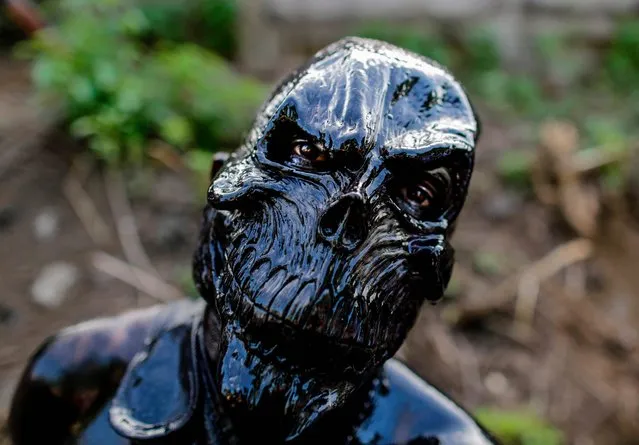
A catholic faithful smeared in burnt oil, takes part in the opening of the ten-day celebration of the Santo Domingo de Guzman festival in Managua, on August 1, 2019. In Central America the black devil, or El Cadejo, is an evil dog-like spirit with glowing red eyes that locals believe eats new born puppies. (Photo by Inti Ocon/AFP Photo)
Details
06 Aug 2019 00:01:00