Loading...
Done
Chernobyl

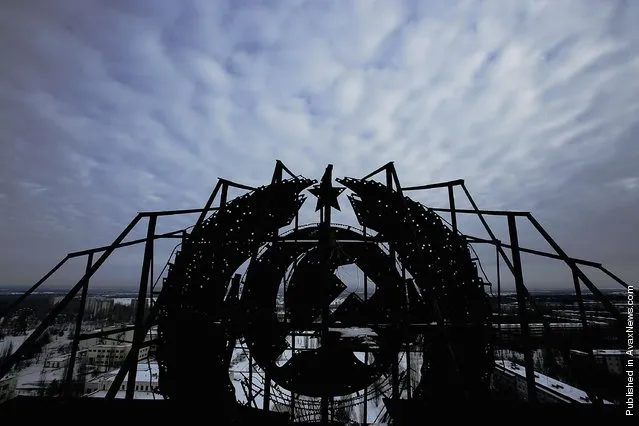
Scaffolding holding a remnant of the Soviet Union, the hammer and sickle, is seen on a rooftop of an abandoned building in the town of Pripyat on January 25, 2006 near Chernobyl, Ukraine. The town of Pripyat, deserted since the 1986 catastrophe, once housed 30,000 people, the majority of being workers from the Chernobyl Nuclear Power Plant. Days after the catastrophe the inhabitants were relocated to other locations in the Soviet Union. The town of Pripyat has remained uninhabited since. Prypyat and the surrounding area will not be safe for human habitation for several centuries. Scientists estimate that the most dangerous radioactive elements will take up to 900 years to decay sufficiently to render the area safe.
Details
14 Mar 2011 10:20:00
Simon – a friendly fox, who often approaches tourists in the exclusion zone, asking for food. (Photo by Vladimir Mitgutin/Caters News Agency)

This fascinating photo series looks at the bleak isolation of Chernobyl as never before. Employing infrared filters, photographer Vladimir Mitgutin is able to bring out details of decay – an abandoned bus, a radar system, an amusement park, a doll, a sports hall, a piano – frozen in time. Here: Simon – a friendly fox, who often approaches tourists in the exclusion zone, asking for food. (Photo by Vladimir Mitgutin/Caters News Agency)
Details
12 Feb 2018 00:02:00
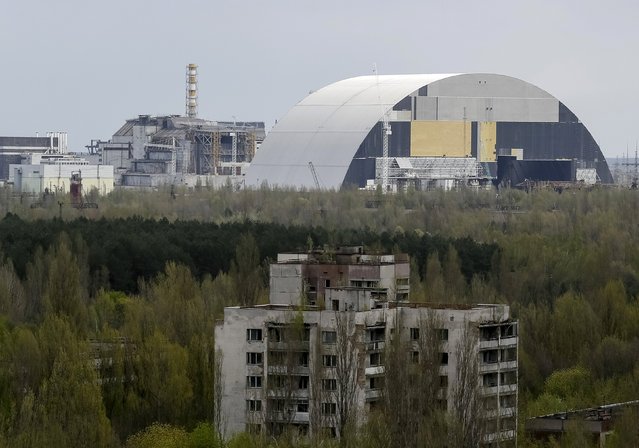
A containment shelter for the damaged fourth reactor (L) and the New Safe Confinement (NSC) structure (R) at the Chernobyl Nuclear Power Plant are seen from Ukraine's abandoned town of Pripyat, Ukraine, April 22, 2016. (Photo by Gleb Garanich/Reuters)

A containment shelter for the damaged fourth reactor (L) and the New Safe Confinement (NSC) structure (R) at the Chernobyl Nuclear Power Plant are seen from Ukraine's abandoned town of Pripyat, Ukraine, April 22, 2016. (Photo by Gleb Garanich/Reuters)
Details
23 Apr 2016 13:30:00
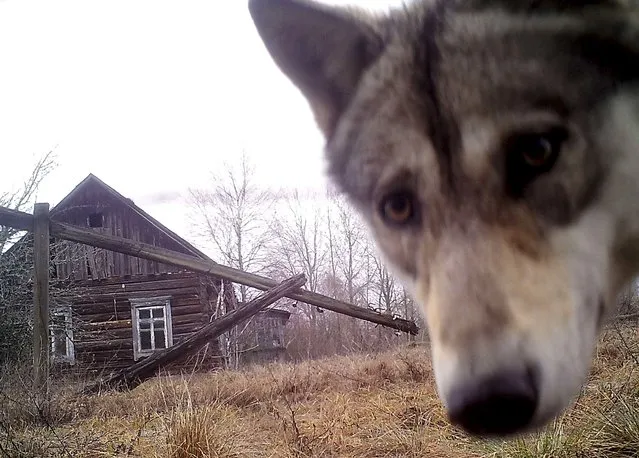
A wolf looks into the camera at the 30 km (19 miles) exclusion zone around the Chernobyl nuclear reactor in the abandoned village of Orevichi, Belarus, March 2, 2016. (Photo by Vasily Fedosenko/Reuters)

A wolf looks into the camera at the 30 km (19 miles) exclusion zone around the Chernobyl nuclear reactor in the abandoned village of Orevichi, Belarus, March 2, 2016. What happens to the environment when humans disappear? Thirty years after the Chernobyl nuclear disaster, booming populations of wolf, elk and other wildlife in the vast contaminated zone in Belarus and Ukraine provide a clue. (Photo by Vasily Fedosenko/Reuters)
Details
08 Apr 2016 15:13:00
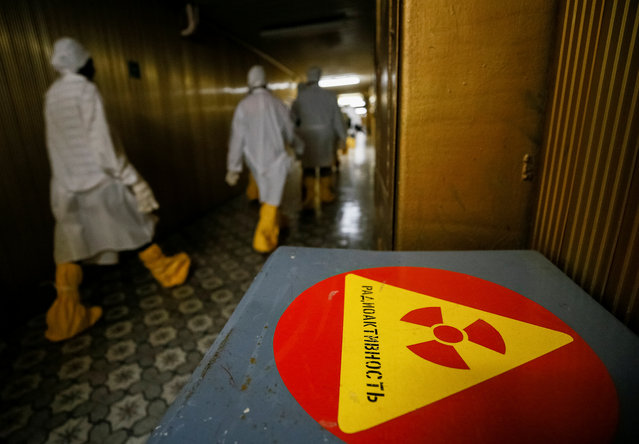
Journalists walk through the corridor of the stopped third reactor at the Chernobyl nuclear power plant in Chernobyl, Ukraine April 20, 2018. (Photo by Gleb Garanich/Reuters)

Journalists walk through the corridor of the stopped third reactor at the Chernobyl nuclear power plant in Chernobyl, Ukraine April 20, 2018. (Photo by Gleb Garanich/Reuters)
Details
25 Apr 2018 00:03:00
Prehistoric By Alex Solis

A small series by illustration Alex Solis remembering those things that used to rule the world.
Details
16 Jul 2015 09:04:00
Line Art By Alex Konahin

Latvia-based graphic artist and illustrator Alex Konahin recently completed work on a new series of ornate. The illustrations were made using pens and india ink in his distinctive style that makes used of ornate scrolls and intricate floral designs.
Details
12 Dec 2013 12:43:00
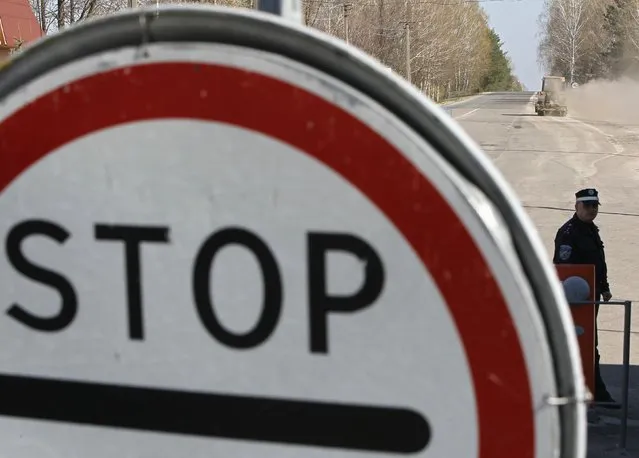
A guard stands at Dityatki checkpoint, marking a 30 km (18-mile) zone around the Chernobyl nuclear power plant April 23, 2013. Ukraine will mark the 27th anniversary of the Chernobyl disaster, the world's worst civil nuclear accident, on April 26. (Photo by Gleb Garanich/Reuters)

A guard stands at Dityatki checkpoint, marking a 30 km (18-mile) zone around the Chernobyl nuclear power plant April 23, 2013. Ukraine will mark the 27th anniversary of the Chernobyl disaster, the world's worst civil nuclear accident, on April 26. (Photo by Gleb Garanich/Reuters)
Details
27 Apr 2013 09:27:00