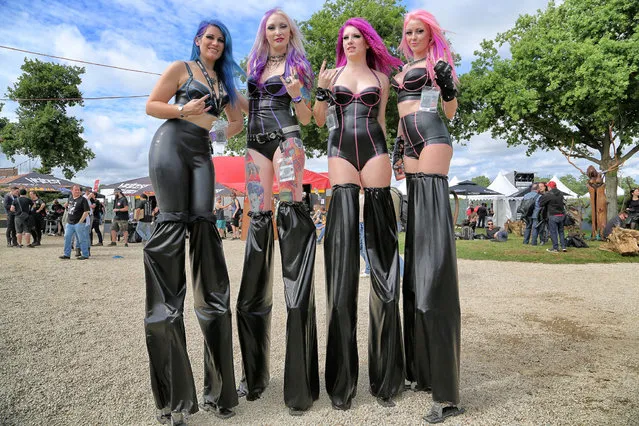
A festival goer cools down with fresh water while taking part in the Hellfest metal music festival on June 17, 2022 in Clisson, western France. (Photo by Loic Venance/AFP Photo)
“Hellfest is an annual music festival which takes place in Clisson, France in mid-June. It is held within the Val de Moine sport complex in Clisson, approximately 35 km south-east of the city of Nantes, and approximately 400 km south-west of the nation's capital Paris. Billed as an “extreme music festival”, the programme features a variety of heavy metal, hard rock, punk and hardcore acts”. – Wikipedia. Photo: HellFest 2013. (Photo by Cesar Hernandez)
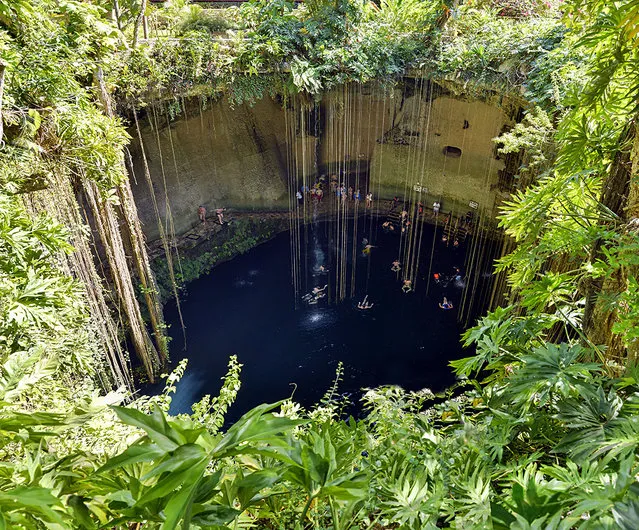
A cenote is a natural phenomenon, a sinkhole in the Earth’s surface. The Yucatan Peninsula in Mexico has an estimated 7,000 cenotes because it is primarily made up of porous limestone. For millions of years, rainfall slowly ate away at the limestone and a huge system of underground caves and caverns was formed. Many filled with water from rain or from the underground water table. When the roof of a water filled cave collapses, a cenote is born. The water found in a cenote may be fresh water, salt water, or both. Structurally it may be completely open, like a lake, almost completely closed with just a small opening at the top, or somewhere in between.
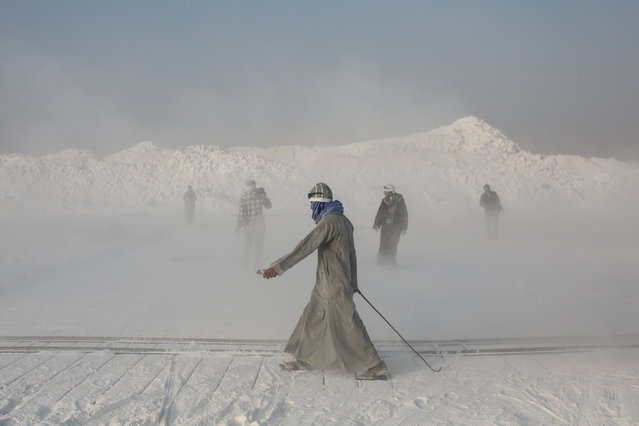
In this Wednesday, March 18, 2015 photo, limestone quarry workers walk through a cloud of dust spewed into the air by rotor blades of the stone-cutting machinery in the desert of Minya, southern Egypt. Around 45,000 people, including children, work in an estimated 1,500 quarries, digging out stones that later will be used in construction or powdered to be used by pharmaceutical and ceramic companies. (Photo by Mosa'ab Elshamy/AP Photo)
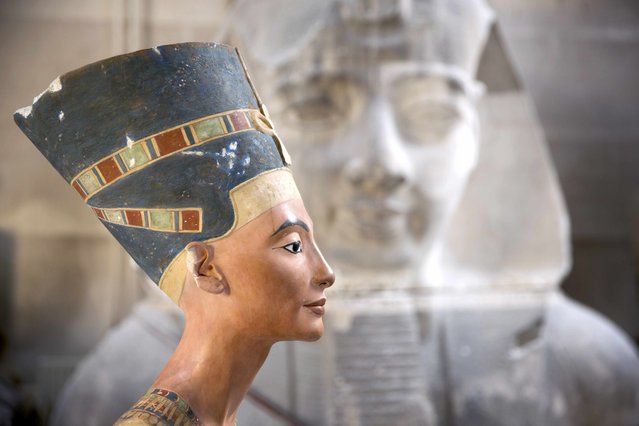
A replica of the bust of Nefertiti stands in the Replica Workshop of the National Museum of Berlin in Berlin, October 2, 2015. The workshop plans to produce 10 to 20 replicas a year, which like the original are made of a limestone core with gypsum finish. Each one will cost 8,900 euros (9,934 US Dollars). (Photo by Axel Schmidt/Reuters)
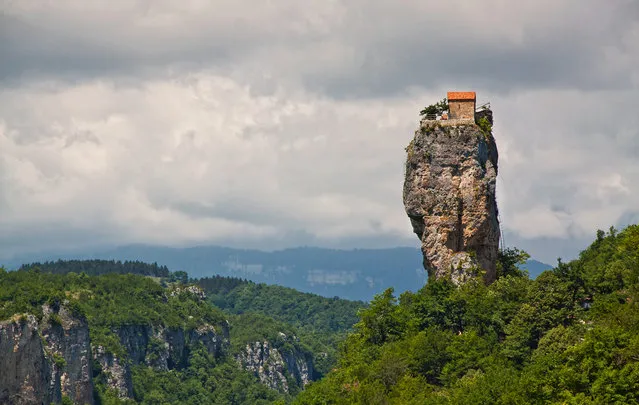
The Katskhi pillar is a natural limestone monolith located at the village of Katskhi in western Georgian region of Imereti, near the town of Chiatura. It is approximately 40 metres (130 ft) high, and overlooks the small river valley of Katskhura, a right affluent of the Q'virila.
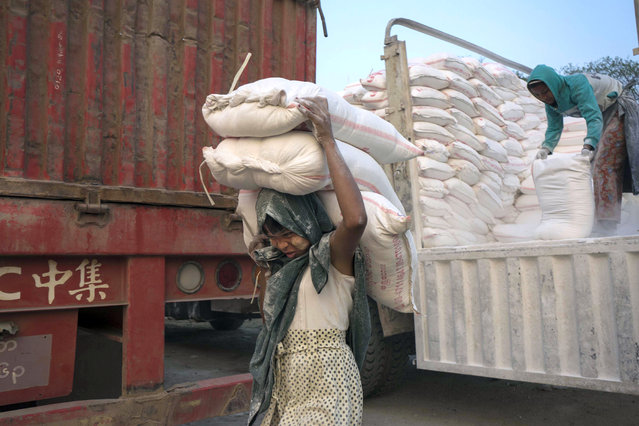
A 14 year-old Myanmar girl carries three bags of powdered-limestone to load in to a boat on the bank of Ayeyarwaddy River, on International Women's Day in Mandalay, Myanmar, Tuesday, March 8, 2016. Migrant workers living along Ayeyarwaddy riverbank earn bout 5000 Kyats (US Dollar 4) a day for loading and unloading goods. (Photro by Hkun Lat/AP Photo)
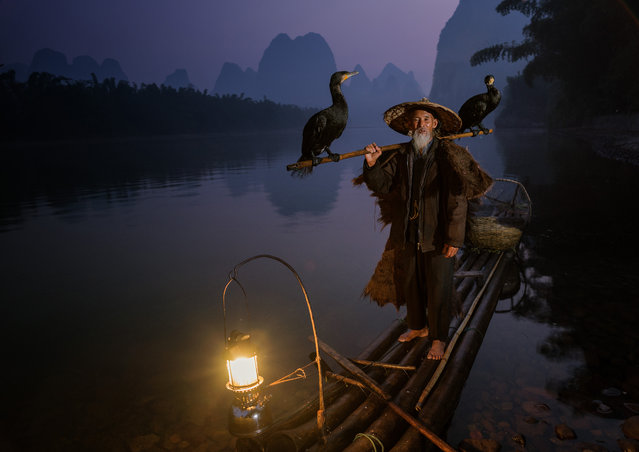
“On the Li River near Xingping in China, Cormorant fishermen work the waterways before dawn amidst the spectacular limestone towers of the Karst landscape. The birds are trained to fetch fish from the inky depths but not swallow them. The fisherman accepts the fish from the birds who dive back for more. Here, still before dawn, the fisherman and his birds head for home”. (Photo and caption by Neville Jones/2014 Sony World Photography Awards)