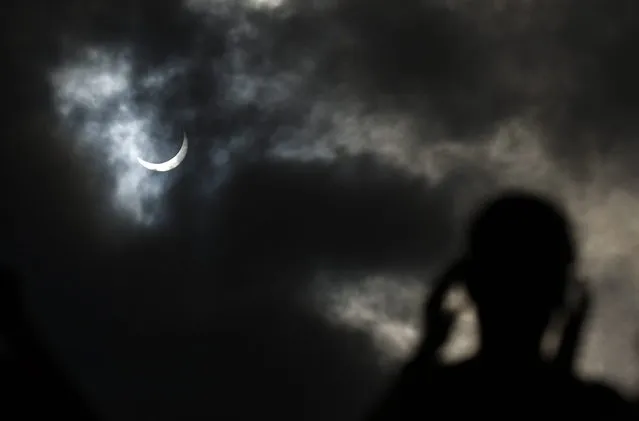
A tourist watches as the moon passing in front of the sun as it approaches a full solar eclipse in the northern Australian city of Cairns November 14, 2012. (Photo by Tim Wimborne/Reuters)
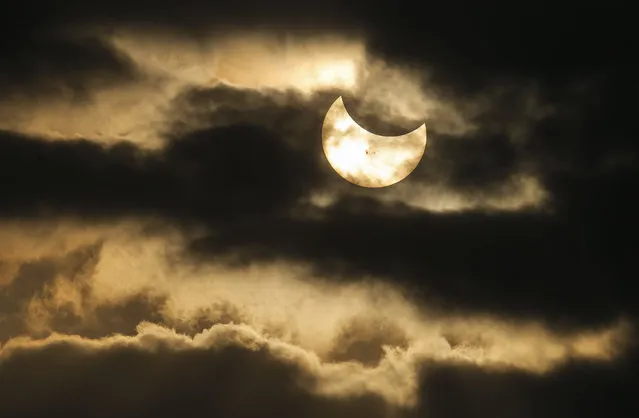
A partial solar eclipse is seen in a break in the clouds during rush hour in downtown Wichita Kan., Thursday, October 23, 2014. A partial eclipse occurs when the moon covers a portion of the sun as seen from the Earth. (AP Photo/The Wichita Eagle, Travis Heying)
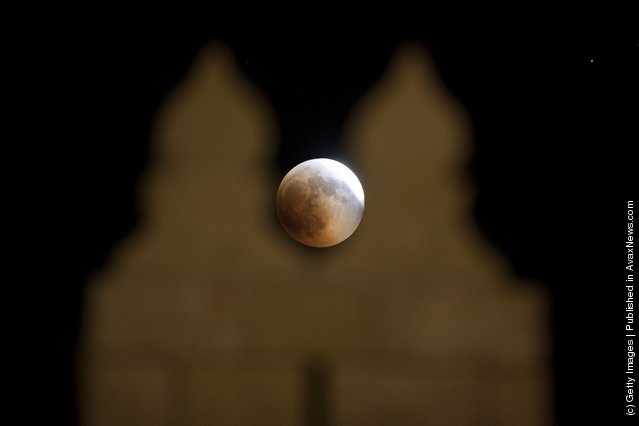
A total lunar eclipse is seen through the old city walls on June 15, 2011 in Jerusalem, Israel. The longest lunar eclipse for a decade took place tonight. A lunar eclipse comes when the sun, Earth and moon line up and Earth's shadow falls on the moon. (Photo by Uriel Sinai/Getty Images)
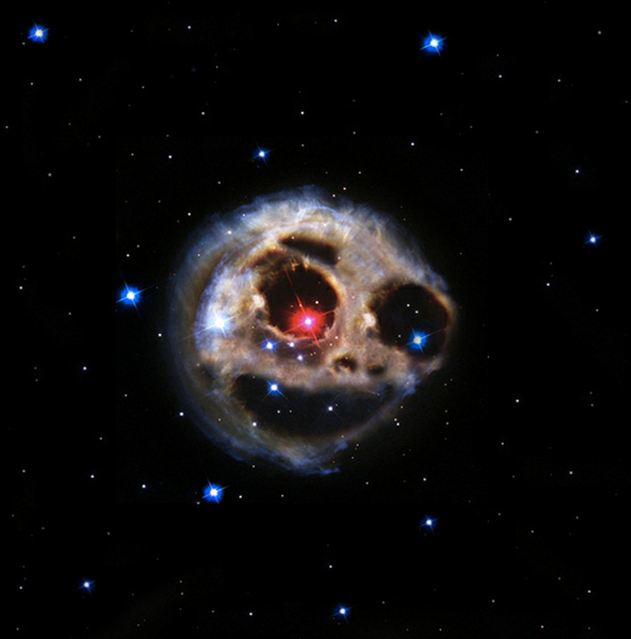
Looking up at the sky and forming images from the stars has been going on for just about as long as human life has existed, but that was only what could be seen from the Earth. Digital illustrator Chris Keegan has taken constellations to a whole new level with the use of images from NASA’s Chandra X-ray Observatory.
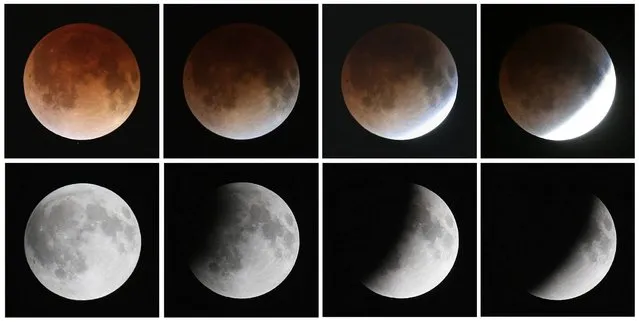
This composite image shows a sequence, from bottom left to top left, of the moon's transition during a total lunar eclipse on April 15, 2014 in Miami, Florida. People in most of north and south America should be able to witness this year's first total lunar eclipse, which will cause a “blood moon” and is the first of four in a rare Tetrad of eclipses over the next two years. (Photo by Joe Raedle/Getty Images)
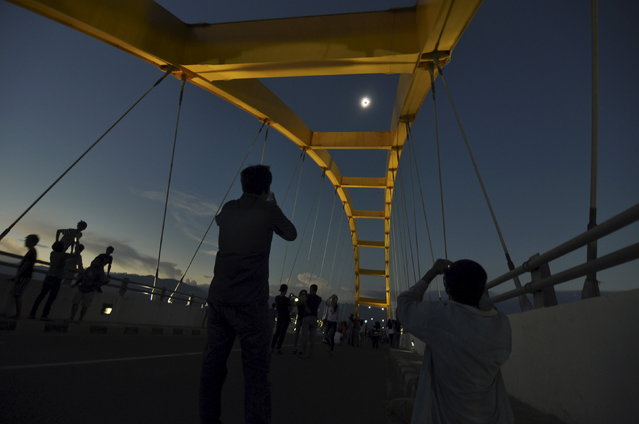
People watch a total solar eclipse from the Bay Bridge in Palu, Central Sulawesi, Indonesia March 9, 2016 in this photo taken by Antara Foto. The rare astronomical event is being witnessed Wednesday along a narrow path that stretches across 12 provinces encompassing three times zones and about 40 million people. (Photo by Mohamad Hamzah/Reuters/Antara Foto)
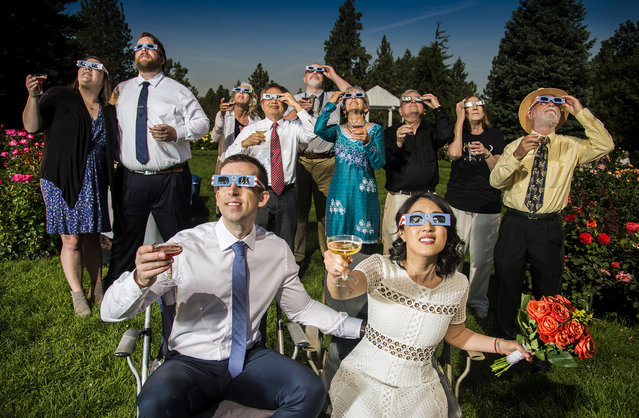
After their wedding ceremony, groom and bride, Nathan Mauger, Connie Young with family and friends, toast to the solar eclipse from the Rose Garden in Manito Park, Monday, August 21, 2017, in Spokane, Wash. (Photo by Colin Mulvany/The Spokesman-Review via AP Photo)
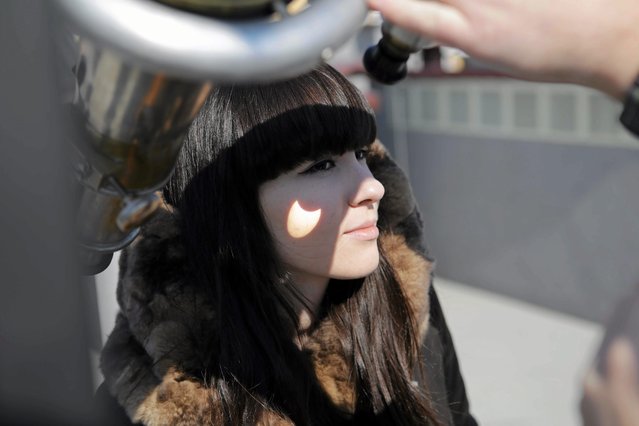
The shadow of a partial eclipse is cast on to the cheek of a student on the roof of the Jana Dlugosza Academy in Czestochowa, Poland March 20, 2015. (Photo by Grzegorz Skowronek/Reuters/Agencja Gazeta)