First time gun owner, Jessie Palmieri holds a target she shot with a H&K VP9 9mm gun at the Ringmasters of Utah gun range, in Springville, Utah on December 18, 2015. (Photo by George Frey/Reuters)
A machine assembles powder, cartridges and bullets tips together to make 300 AAC Blackouts at Barnes Bullets in Mona, Utah, January 6, 2015. (Photo by George Frey/Reuters)
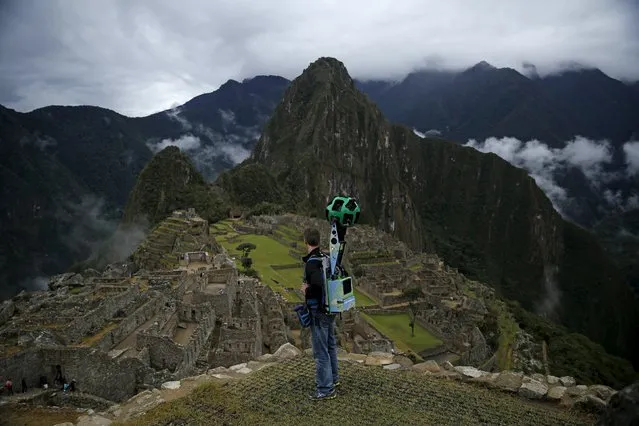
Daniel Filip, Tech Lead Manager for Google Maps, carries the Trekker, a 15-camera device, while mapping the Inca citadel of Machu Picchu for Google Street View in Cuzco, Peru, August 11, 2015. (Photo by Pilar Olivares/Reuters)
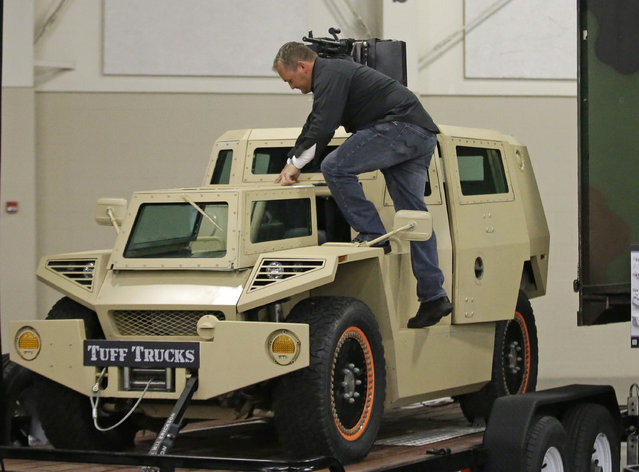
Sam Warren climbs in to a prototype combat vehicle during the PrepperCon expo Friday, April 24, 2015, in Sandy, Utah. Hundreds of survivalists and “preppers” are gathering in the Salt Lake City suburb of Sandy for the first annual PrepperCon, featuring demonstrations of underground bunkers, food storage, and armored vehicles. (Photo by Rick Bowmer/AP Photo)
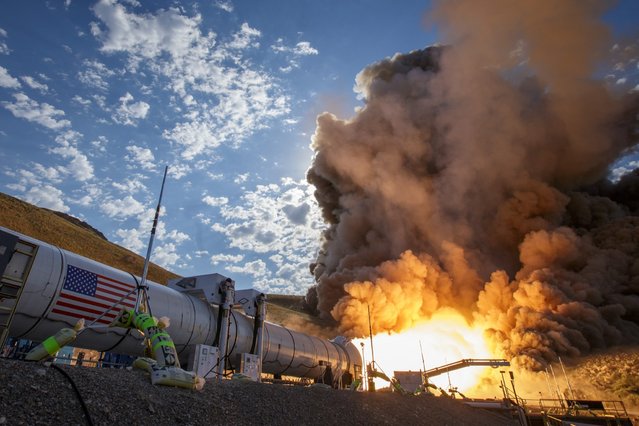
The second and final qualification motor (QM-2) test for the Space Launch System's booster, June 28, 2016, at Orbital ATK Propulsion Systems test facilities in Promontory, Utah. During the Space Launch System flight the boosters will provide more than 75 percent of the thrust needed to escape the gravitational pull of the Earth, the first step on NASA's Journey to Mars. (Photo by Bill Ingalls/NASA)
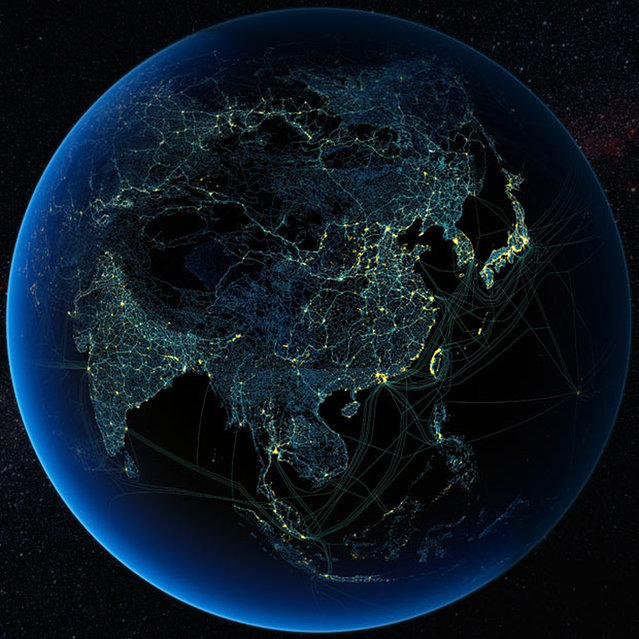
Defined according to wikipedia it is “a recent and informal geologic chronological term that serves to mark the evidence and extent of human activities that have had a significant global impact on the Earth’s ecosystems. The term was coined by ecologist Eugene Stoermer but has been widely popularized by the Nobel Prize-winning atmospheric chemist Paul Crutzen.”
The images here where created by Felix Pharand-Deschenes depicting how various human influences, from road and rail, to internet cables and airlines create significant patterns covering the Earth. What can we learn from these patterns in how they are influencing the environment