Loading...
Done
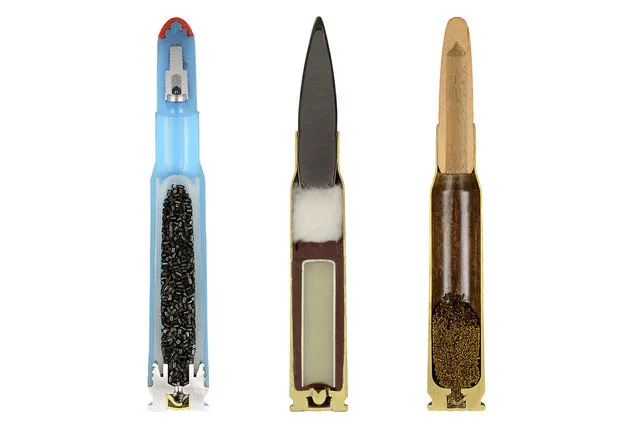
Cross Sections Of Bullets By Sabine Pearlman

Sabine Pearlman‘s photographs find beauty in the destructive engineering of ammunition with this series of cross-sections of bullets cartridges from a Swiss bunker. They reveal the complexity inside each case. This series, which consists of 900 specimens, was photographed inside a WWII bunker in Switzerland. Pearlman says that she is intrigued by the beautiful complexity of the ammo set against its destructive purpose, at once showing off humanity’s ability to create and destroy.
Details
27 Jun 2013 12:42:00
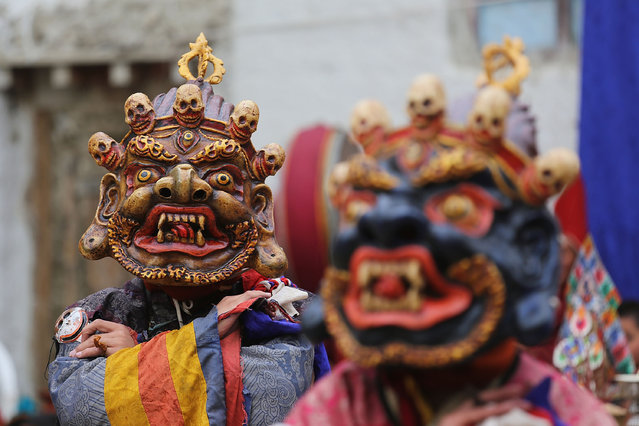
Elaborately dressed monks costumed as wrathful guardian spirits perform ceremonial dances during the Tenchi Festival on May 25, 2014 in Lo Manthang, Nepal. The Tenchi Festival takes place annually in Lo Manthang, the capital of Upper Mustang and the former Tibetan Kingdom of Lo. Each spring, monks perform ceremonies, rites, and dances during the Tenchi Festival to dispel evils and demons from the former kingdom. (Photo by Taylor Weidman/Getty Images)

Elaborately dressed monks costumed as wrathful guardian spirits perform ceremonial dances during the Tenchi Festival on May 25, 2014 in Lo Manthang, Nepal. The Tenchi Festival takes place annually in Lo Manthang, the capital of Upper Mustang and the former Tibetan Kingdom of Lo. Each spring, monks perform ceremonies, rites, and dances during the Tenchi Festival to dispel evils and demons from the former kingdom. (Photo by Taylor Weidman/Getty Images)
Details
04 Jul 2014 10:36:00
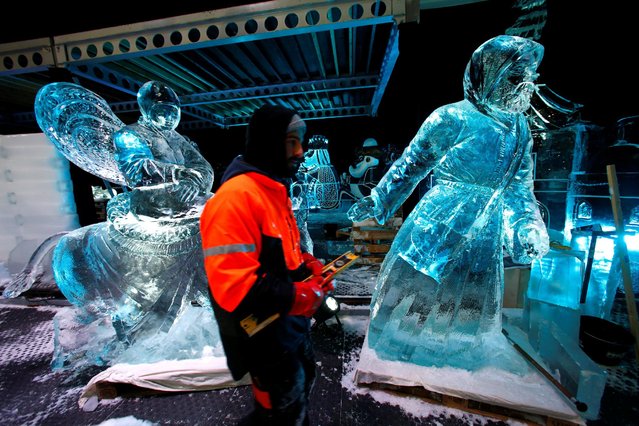
A sculptor walks past ice sculptures at the Snow and Ice Sculpture Festival “Eiswelt Mainz” in Mainz, Germany, November 22, 2016. (Photo by Ralph Orlowski/Reuters)

A sculptor walks past ice sculptures at the Snow and Ice Sculpture Festival “Eiswelt Mainz” in Mainz, Germany, November 22, 2016. (Photo by Ralph Orlowski/Reuters)
Details
23 Nov 2016 11:36:00
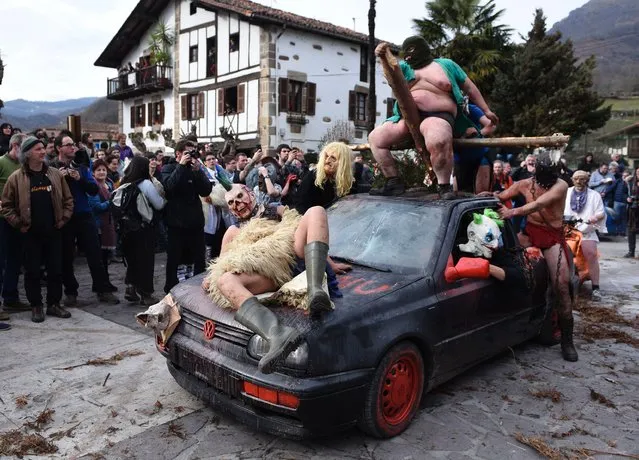
Disguised participants strike poses on a car during the ancient carnival of Ituren, in the northern Spanish Navarra province on January 30, 2017. The yearly three day festivities, revolving mainly around agriculture and principally sheep hearding, run on the last Sunday, Monday and Tuesday of January where Navarra Valley locals from two villages dress up and participate in a variety of activites as they perform a pilgrimage through each village. (Photo by Ander Gillenea/AFP Photo)

Disguised participants strike poses on a car during the ancient carnival of Ituren, in the northern Spanish Navarra province on January 30, 2017. The yearly three day festivities, revolving mainly around agriculture and principally sheep hearding, run on the last Sunday, Monday and Tuesday of January where Navarra Valley locals from two villages dress up and participate in a variety of activites as they perform a pilgrimage through each village. (Photo by Ander Gillenea/AFP Photo)
Details
31 Jan 2017 10:00:00
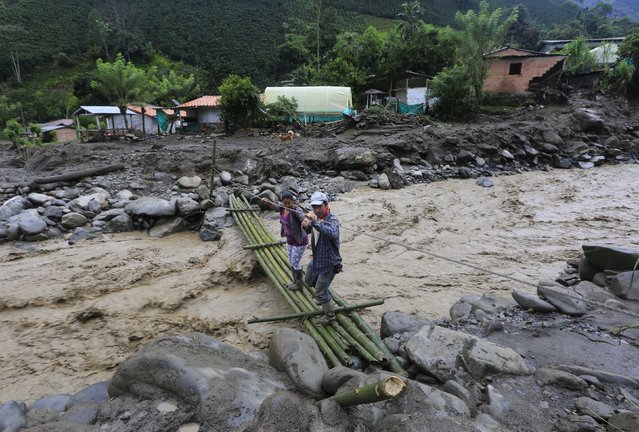
Residents cross over an improvised bridge after a landslide sent mud and water crashing onto homes close to the municipality of Salgar in Antioquia department, Colombia May 19, 2015. (Photo by Jose Miguel Gomez/Reuters)

Residents cross over an improvised bridge after a landslide sent mud and water crashing onto homes close to the municipality of Salgar in Antioquia department, Colombia May 19, 2015. A landslide sent mud and water crashing onto homes in a town in Colombia's northwest mountains on Monday, killing at least 50 people and injuring dozens, officials said. (Photo by Jose Miguel Gomez/Reuters)
Details
20 May 2015 09:15:00
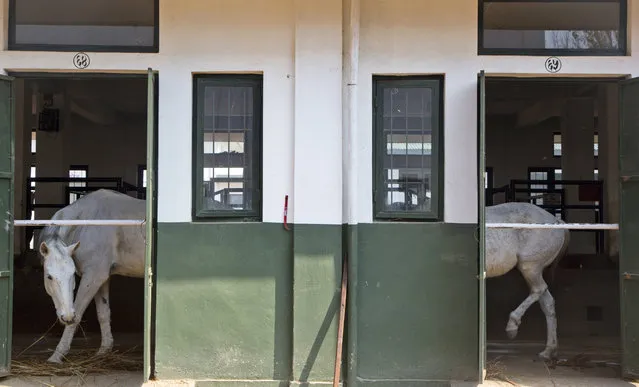
In this April 3, 2019, photo, horses from Nepal cavalry rest in a stable after morning practice for Ghode Jatra festival in Kathmandu, Nepal. (Photo by Niranjan Shrestha/AP Photo)

In this April 3, 2019, photo, horses from Nepal cavalry rest in a stable after morning practice for Ghode Jatra festival in Kathmandu, Nepal. The “Ghode Jatra” is an annual horse festival celebrated on the Nepal Cavalry grounds in Kathmandu, which marks the defeat of a Hindu demon. (Photo by Niranjan Shrestha/AP Photo)
Details
09 Apr 2019 00:03:00
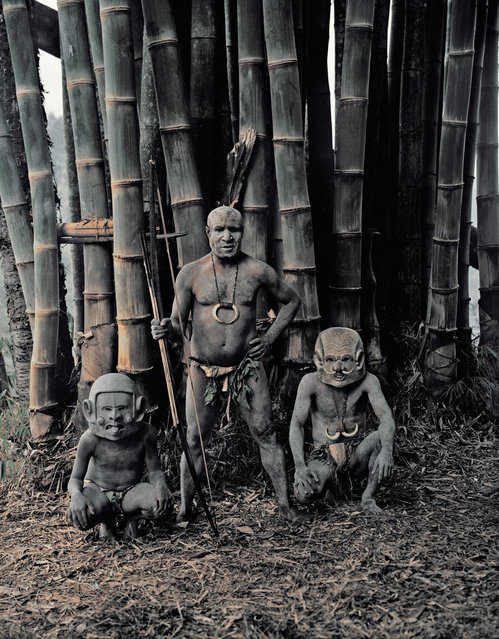
“Asaro from the Eastern Highlands”. The mudmen could not cover their faces with mud because the people of Papua New Guinea thought that the mud from the Asaro river was poisonous. So instead of covering their faces with this alleged poison, they made masks from pebbles that they heated and water from the waterfall, with unusual designs such as long or very short ears either going down to the chin or sticking up at the top, long joined eyebrows attached to the top of the ears, horns and sideways mouths. (Jimmy Nelson)

“Asaro from the Eastern Highlands”. The mudmen could not cover their faces with mud because the people of Papua New Guinea thought that the mud from the Asaro river was poisonous. So instead of covering their faces with this alleged poison, they made masks from pebbles that they heated and water from the waterfall, with unusual designs such as long or very short ears either going down to the chin or sticking up at the top, long joined eyebrows attached to the top of the ears, horns and sideways mouths. (Photo and caption by Jimmy Nelson)
Details
20 Oct 2013 08:54:00
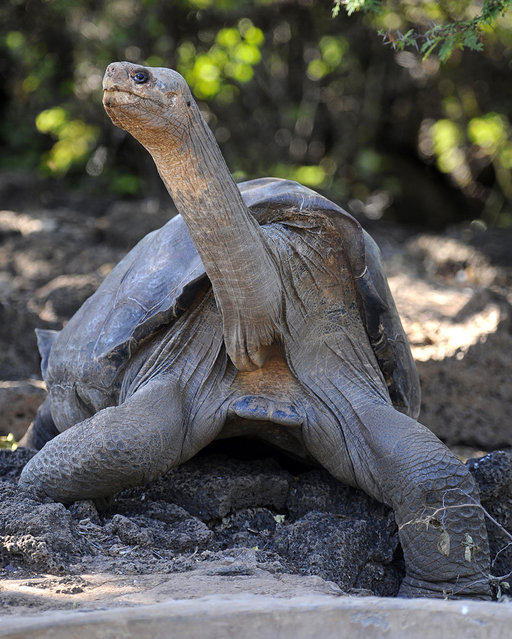
Lonesome George

“The last known individual of the subspecies was a male named Lonesome George (Spanish: El Solitario Jorge/George), who died on 24 June 2012. In his last years, he was known as the rarest creature in the world. George served as a potent symbol for conservation efforts in the Galápagos and internationally”. – Wikipedia. (Photo by Rodrigo Buendia/AFP)
Details
26 Jun 2012 14:05:00