Loading...
Done
Arctic Hare

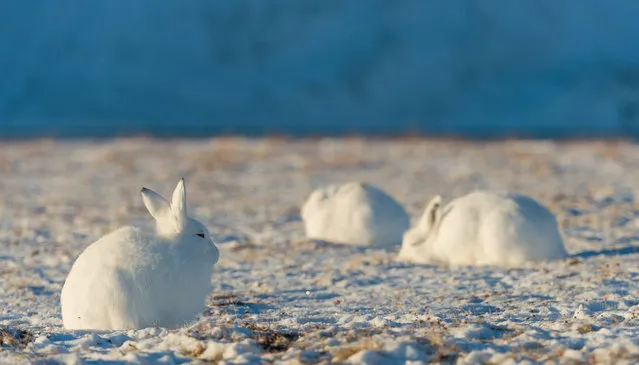
The arctic hare, or polar rabbit, is a species of hare which is adapted largely to polar and mountainous habitats. The arctic hare survives with a thick coat of fur and usually digs holes in the ground or under snow to keep warm and sleep. Arctic hares look like rabbits but have shorter ears, are taller when standing, and, unlike rabbits, can thrive in cold climates. They can travel together with many other hares, sometimes huddling with dozens or more, but are usually found alone, taking, in some cases, more than one partner. The arctic hare can run up to 60 kilometres per hour (40 mph). Its predators include the arctic wolf, arctic fox, and ermine.
Details
17 Mar 2014 13:56:00


A devotee of the Hare Krishna faith poses for a photograph during the festival of Rathayatra on June 12, 2011 in London, England. Rathayatra, or Chariot festival, features three huge, wooden chariots pulled by hand across Central London accompanied by constant singing, chanting, drums, cymbals and dancing. (Photo by Matthew Lloyd/Getty Images)
Details
13 Jun 2011 09:09:00
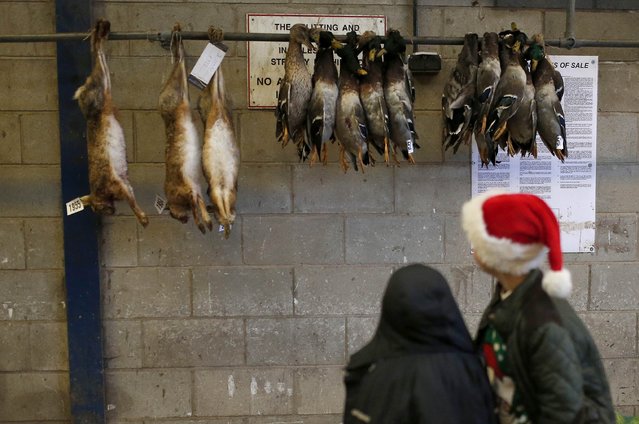
Children look at Hares and Ducks ahead of the Turkey and dressed poultry auction at Chelford Market, northern England December 22, 2014. (Photo by Phil Noble/Reuters)

Children look at Hares and Ducks ahead of the Turkey and dressed poultry auction at Chelford Market, northern England December 22, 2014. (Photo by Phil Noble/Reuters)
Details
23 Dec 2014 13:24:00
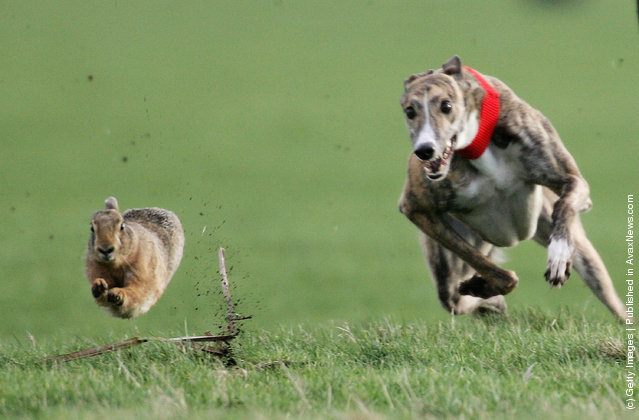
Greyhounds race after a Hare at the last Waterloo Cup Hare coursing event

“The Waterloo Cup was a coursing event. The three day event was run annually at Great Altcar in Lancashire, England from 1836 to 2005 and it used to attract tens of thousands of spectators to watch and gamble on the coursing matches. It was founded by William Philip Molyneux, 2nd Earl of Sefton, and, originally, was supported by his patronage”. – Wikipedia

Photo: A Greyhound races after Hare at the last Waterloo Cup Hare coursing event, February 14, 2005, near Liverpool, England. (Photo by Christopher Furlong/Getty Images)
Details
18 Feb 2012 11:26:00
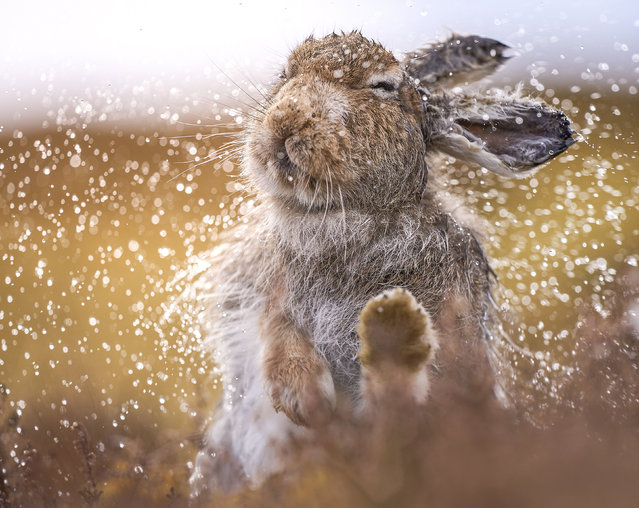
A mountain hare shakes off rain from its fur, in Findhorn Valley, Moray, Scotland in the second decade of August 2024. In summer, the hare’s coat is a grey-brown colour with a tinge of blue, making them hard to spot against the heather moorland. In winter, it changes to almost completely white for camouflage in the snow. (Photo by Will Hall/Solent News)

A mountain hare shakes off rain from its fur, in Findhorn Valley, Moray, Scotland in the second decade of August 2024. In summer, the hare’s coat is a grey-brown colour with a tinge of blue, making them hard to spot against the heather moorland. In winter, it changes to almost completely white for camouflage in the snow. (Photo by Will Hall/Solent News)
Details
25 Aug 2024 03:50:00
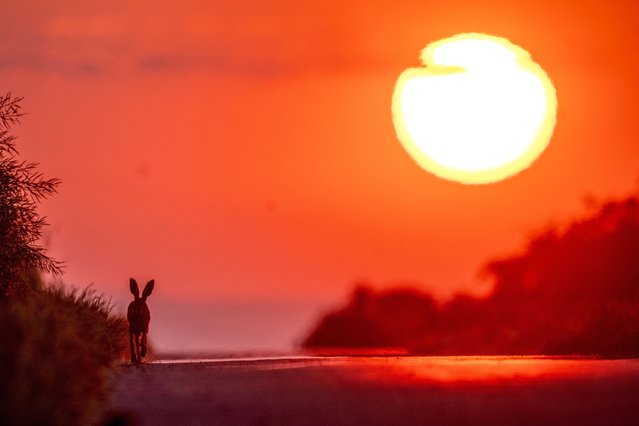
A hare runs on a small road as the sun rises in Frankfurt, Germany, Monday, June 12, 2023. (Photo by Michael Probst/AP Photo)

A hare runs on a small road as the sun rises in Frankfurt, Germany, Monday, June 12, 2023. (Photo by Michael Probst/AP Photo)
Details
31 Jul 2023 03:21:00
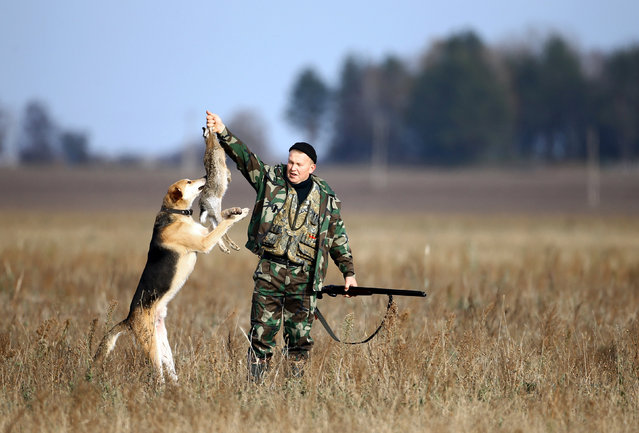
A hunter holds a hare he just killed during a hunt in a field near the village of Novosyolki, Belarus November 5, 2016. (Photo by Vasily Fedosenko/Reuters)

A hunter holds a hare he just killed during a hunt in a field near the village of Novosyolki, Belarus November 5, 2016. (Photo by Vasily Fedosenko/Reuters)
Details
07 Nov 2016 11:59:00
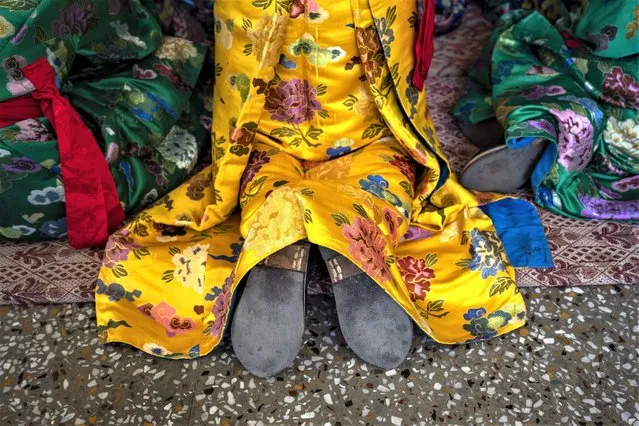
An exile Tibetan artisan waits to perform a traditional dance after an early morning prayer session to usher in the Year of the Water Hare in Dharamshala, India, Tuesday, February 21, 2023. (Photo by Ashwini Bhatia/AP Photo)

An exile Tibetan artisan waits to perform a traditional dance after an early morning prayer session to usher in the Year of the Water Hare in Dharamshala, India, Tuesday, February 21, 2023. (Photo by Ashwini Bhatia/AP Photo)
Details
09 Mar 2023 03:53:00