Loading...
Done
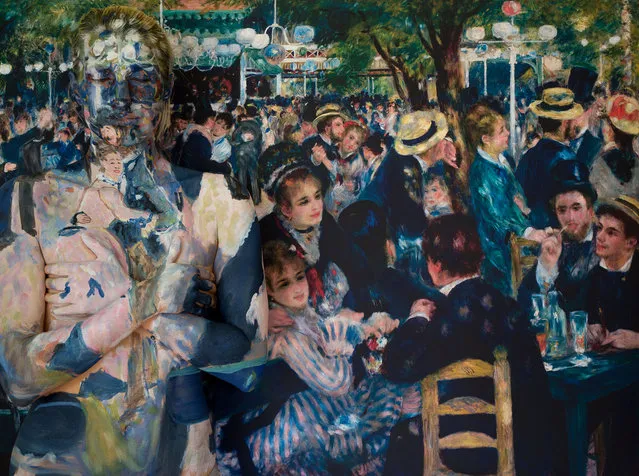
Titled 8,100,000 after the price paid for Bal du moulin de la Galette. (Photo by Trina Merry/Caters News)

An innovative artist has camouflaged nude bodies by painting them into the worlds most expensive artworks. New York body artist, Trina Merry picked the 20 top dearest paintings, then photographed naked models disguised as part of the piece. Here: Titled 8,100,000 after the price paid for Bal du moulin de la Galette. (Photo by Trina Merry/Caters News)
Details
03 Jun 2017 06:36:00
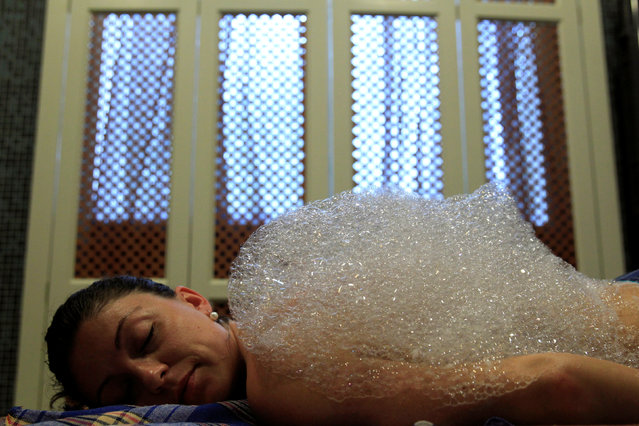
A woman is having a massage at the Lukacs Bath in Budapest, Hungary June 28, 2016. (Photo by Bernadett Szabo/Reuters)

A woman is having a massage at the Lukacs Bath in Budapest, Hungary June 28, 2016. Hungary's capital owes its popularity as a tourist destination partly to its numerous hot springs and bathing culture which have drawn visitors to the area since Roman times. Bath houses range from large, ornate 19th-century buildings like the Gellert and the Szechenyi to tiny Ottoman Turkish-era hamams, some of them more than 500 years old. (Photo by Bernadett Szabo/Reuters)
Details
20 Jul 2016 10:05:00
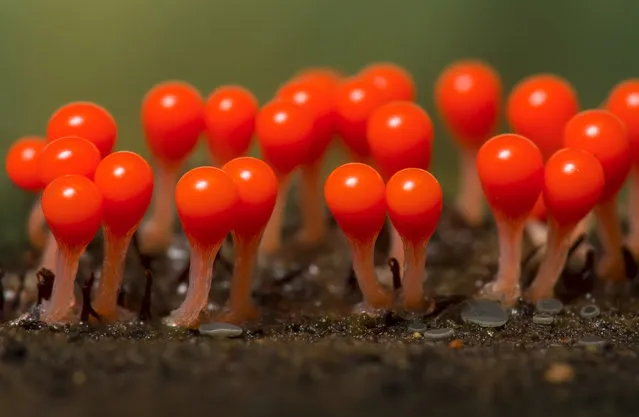
These may look like alien creatures from another planet, but the odd organisms are, in fact, colorful, microscopic life forms found in our forests. The bizarre slime molds, known as mycetozoa or fungus animals, were captured by geologist Valeriya Zvereva. (Photo by Valeriya Zvereva/Caters News)

These may look like alien creatures from another planet, but the odd organisms are, in fact, colorful, microscopic life forms found in our forests. The bizarre slime molds, known as mycetozoa or fungus animals, were captured by geologist Valeriya Zvereva. She spent months documenting the common life forms that are found beneath our feet – but are rarely seen. Incredibly, the organisms can move and hunt for other microscopic life forms on which to feed. Zvereva, who is from Moscow, used a special macro lens to capture the vibrant and up-close shots, which show off the organisms’ unlikely beauty. (Photo by Valeriya Zvereva/Caters News)
Details
20 Apr 2015 13:27:00
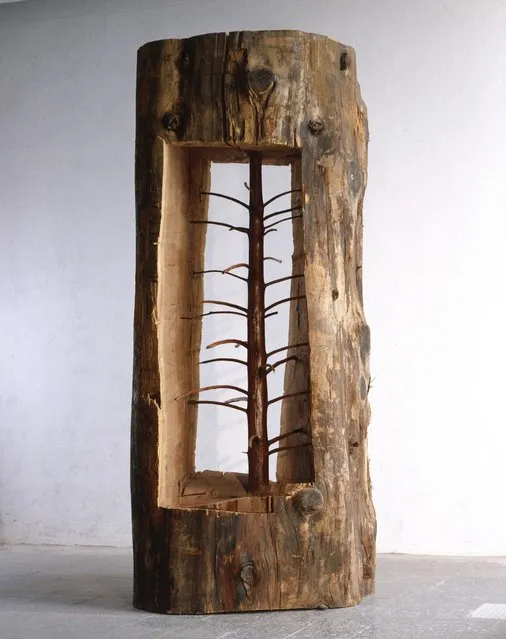
The Hidden Life Within By Giuseppe Penone

“My artwork shows, with the language of sculpture, the essence of matter and tries to reveal with the work, the hidden life within.”
Giuseppe Penone

Details
30 Aug 2015 10:07:00
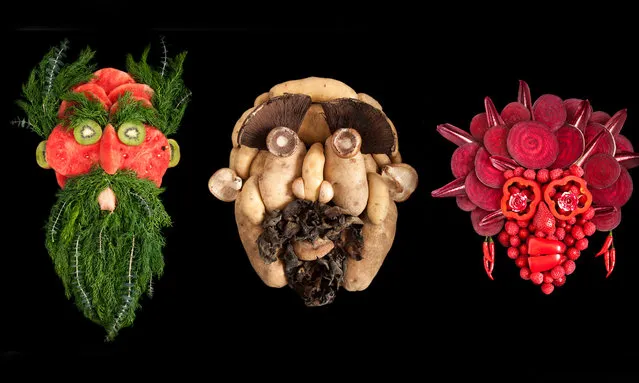
Photographer Emily Dryden and sculptor/actor Zahydé Pietri combine theatricality and organic produce to compose the photographs for their series Fresh Faces. The portraits are made from a wide range of fruit and vegetables and aim to highlight humanity’s diversity – Pietri is from Puerto Rico and Dryden is from New York. Each face has its own name and identity: “We have stories for them, which you can see in the expressions”, says Dryden, “but we decided to keep them to ourselves. We didn’t want to spoil that”. (Photo by Emily Dryden and Zahydé Pietri/The Guardian)

Photographer Emily Dryden and sculptor/actor Zahydé Pietri combine theatricality and organic produce to compose the photographs for their series Fresh Faces. The portraits are made from a wide range of fruit and vegetables and aim to highlight humanity’s diversity – Pietri is from Puerto Rico and Dryden is from New York. Each face has its own name and identity: “We have stories for them, which you can see in the expressions”, says Dryden, “but we decided to keep them to ourselves. We didn’t want to spoil that”. (Photo by Emily Dryden and Zahydé Pietri/The Guardian)
Details
25 Jul 2016 11:08:00
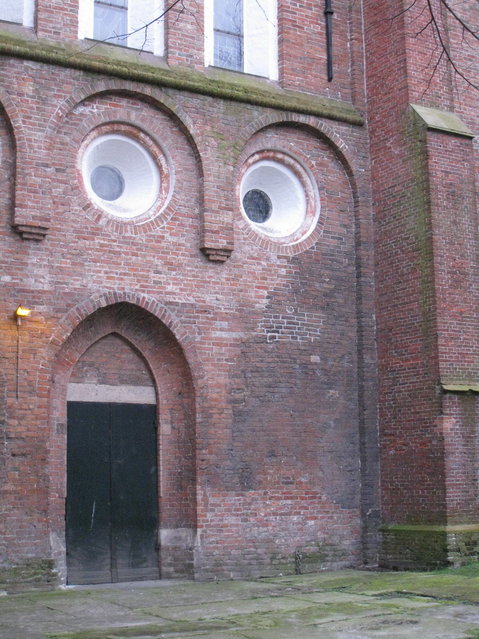
The OMG Wall (Groningen, Groningen, NL). (Photo by Wout)

The “OMG Wall” (Groningen, NL). (Photo by Wout)
Details
07 Jun 2013 11:56:00
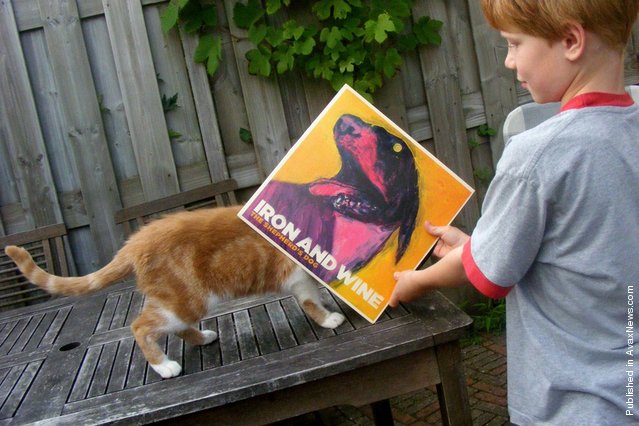
Sleeveface

“Sleeveface is an internet phenomenon wherein one or more persons obscure or augment body parts with record sleeve(s), causing an illusion. Sleeveface has become popular on social networking sites”. – Wikipedia

Photo: “Doggy Style” (Photo by Samuel and Marco van Bergen via SleeveFace.com)
Details
26 Apr 2012 14:26:00
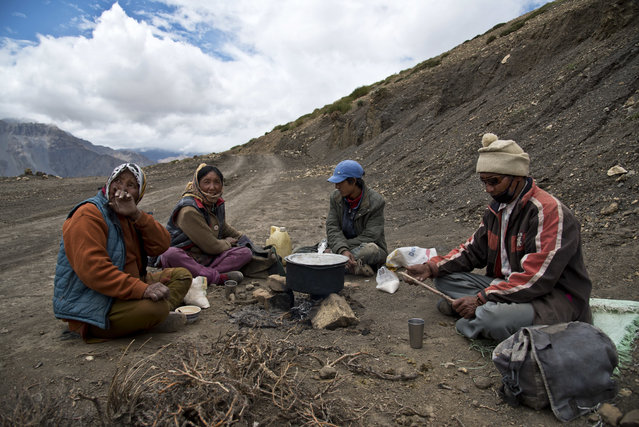
In this August 17, 2016, photo, from left to right, Chhering Chodom, 60, Tashi Yangzom, 50, Lobsang Chhering, 27, and Dorje Tandup, 58, drink milk tea on the side of the road. For centuries, the sleepy valley nestled in the Indian Himalayas remained a hidden Buddhist enclave forbidden to outsiders. Enduring the harsh year-round conditions of the high mountain desert, the people of Spiti Valley lived by a simple communal code – share the Earth's bounty, be hospitable to neighbors, and eschew greed and temptation at all turns. That's all starting to change, for better or worse. Since India began allowing its own citizens as well as outsiders to visit the valley in the early 1990s, tourism and trade have boomed. And the marks of modernization, such as solar panels, asphalt roads and concrete buildings, have begun to appear around some of the villages that dot the remote landscape at altitudes above 4,000 meters (13,000 feet). (Photo by Thomas Cytrynowicz/AP Photo)

In this August 17, 2016, photo, from left to right, Chhering Chodom, 60, Tashi Yangzom, 50, Lobsang Chhering, 27, and Dorje Tandup, 58, drink milk tea on the side of the road. For centuries, the sleepy valley nestled in the Indian Himalayas remained a hidden Buddhist enclave forbidden to outsiders. Enduring the harsh year-round conditions of the high mountain desert, the people of Spiti Valley lived by a simple communal code – share the Earth's bounty, be hospitable to neighbors, and eschew greed and temptation at all turns. That's all starting to change, for better or worse. (Photo by Thomas Cytrynowicz/AP Photo)
Details
15 Sep 2016 09:22:00