Loading...
Done
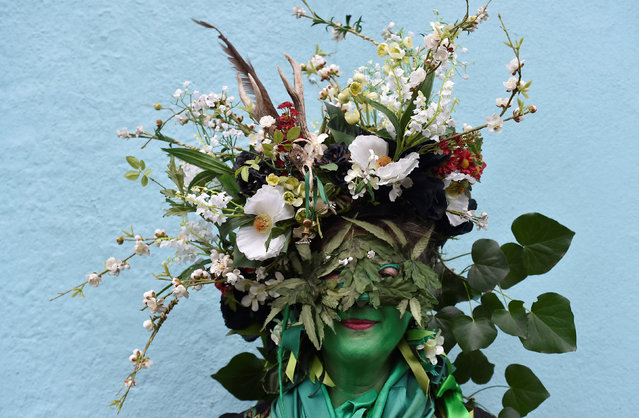
A participant takes part in the annual Jack In The Green parade involving hundreds of costumed revellers joining a four hour procession culminating in the traditional “slaying” of a Jack character to “unleash the spirit of summer” on the May Day week end, in Hastings, southern Britain, May 2, 2016. (Photo by Toby Melville/Reuters)

A participant takes part in the annual Jack In The Green parade involving hundreds of costumed revellers joining a four hour procession culminating in the traditional “slaying” of a Jack character to “unleash the spirit of summer” on the May Day week end, in Hastings, southern Britain, May 2, 2016. (Photo by Toby Melville/Reuters)
Details
03 May 2016 13:07:00
Portraits by Jack Davison

Born 29 December 1990 in Cambridge, UK. Lives and works between London and Essex. Spending the first 6 months of 2013 living in America, currently residing in New York. (Photo by Jack Davison)
Details
24 Apr 2013 11:24:00
D-Day memory lane

World War II veteran Jack W. Schlegel, 91 years-old, from Mount Tremper, New York, of the 508th Parachute Infantry Division of the 82nd Airborne who parachuted near Sainte-Mere-Eglise on June 6,1944, poses with American and French flags as he visits the American War cemetery in Colleville-sur-Mer, on the Normandy coast June 2, 2014. REUTERS/Pascal Rossignol
Details
04 Jun 2014 19:12:00
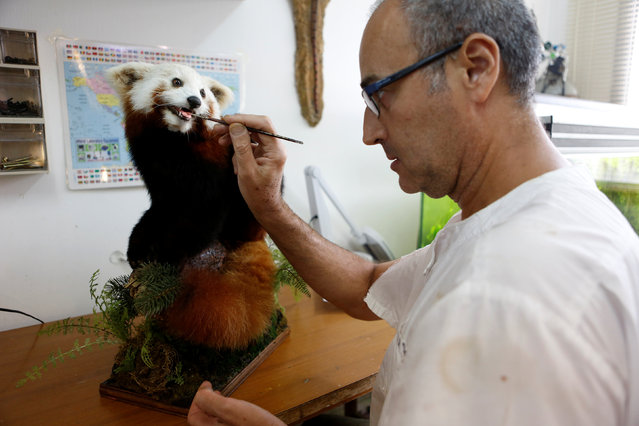
Igor Gavrilov, the main taxidermist of the Zoological centre at Tel Aviv University, works on a taxidermied animal, part of a collection which will be housed at the Steinhardt Museum of Natural History, a new Israeli natural history museum set to open next year in Tel Aviv, Israel June 8, 2016. Legions of insects, sea creatures and ancient fossils are lining up in a new museum shaped liked a giant Noah's Ark, telling the story of a crucial evolutionary byway across Israel. Experts say all humans and other animals had to pass through Israel on their first journey out of Africa into Europe and Asia. (Photo by Nir Elias/Reuters)

Igor Gavrilov, the main taxidermist of the Zoological centre at Tel Aviv University, works on a taxidermied animal, part of a collection which will be housed at the Steinhardt Museum of Natural History, a new Israeli natural history museum set to open next year in Tel Aviv, Israel June 8, 2016. Legions of insects, sea creatures and ancient fossils are lining up in a new museum shaped liked a giant Noah's Ark, telling the story of a crucial evolutionary byway across Israel. (Photo by Nir Elias/Reuters)
Details
25 Aug 2016 09:42:00
Blooms

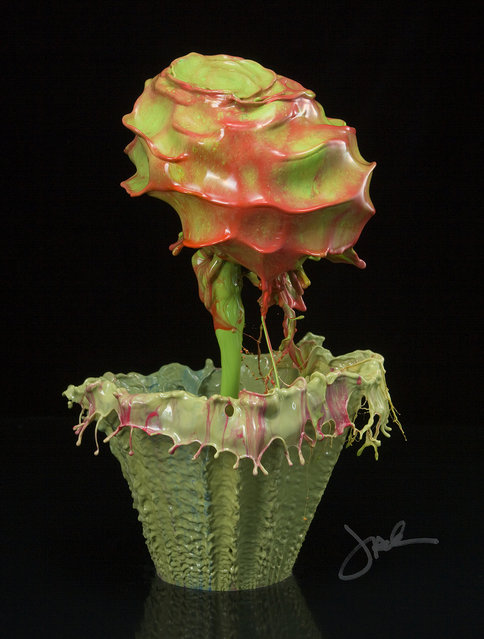
At first glance, these incredible images look like still-life portraits of flowers. But far from being drawn in the traditional way, they are created by photographing fast-moving droplets of paint as they fall through the air. Artist Jack Long, 53, spends months painstakingly planning and testing each work before capturing them with a high-speed camera.
Details
13 Jul 2012 11:17:00
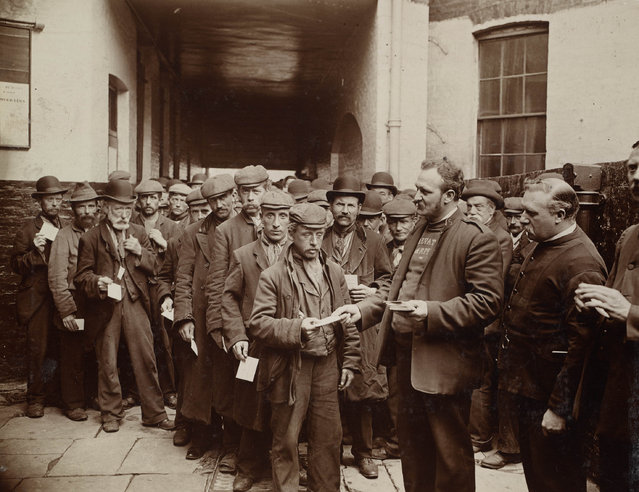
Salvation Army barracks in London during Sunday morning rush – men who had been given tickets during the night queuing for free breakfast, 1902. (Photo by Jack London/Courtesy of Contrasto)

Jack London was a prolific photographer in addition to his writing. Here: Salvation Army barracks in London during Sunday morning rush – men who had been given tickets during the night queuing for free breakfast, 1902. (Photo by Jack London/Courtesy of Contrasto)
Details
14 Sep 2016 10:51:00
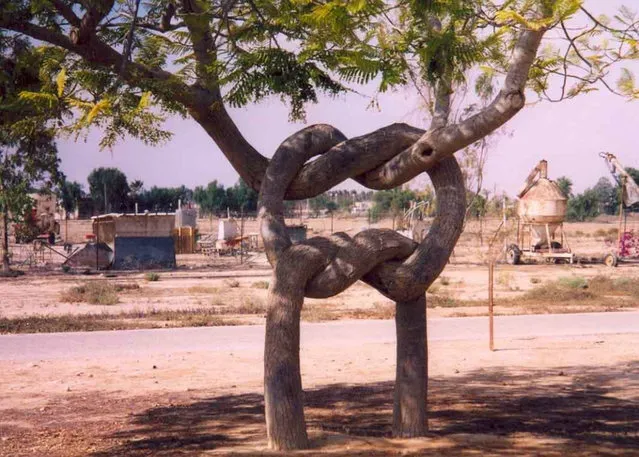
The Weird Shaped Trees Of Axel Erlandson

Axel Erlandson (December 15, 1884 – April 28, 1964) was a Swedish American farmer who shaped trees as a hobby, and opened a horticultural attraction in 1947 advertised as "See the World's Strangest Trees Here," and named "The Tree Circus."
The trees appeared in the column of Robert Ripley's Believe It or Not! twelve times. Erlandson sold his attraction shortly before his death. The trees were moved to Gilroy Gardens in 1985.
Details
20 Sep 2013 11:38:00
Guitar-Shaped Forest In Argentina By Pedro Martin Ureta

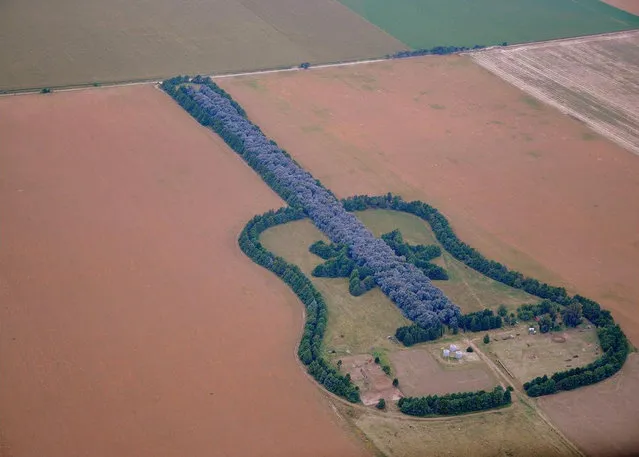
In the remote Argentine Pampas you can find an incredible forest formed in the shape of a guitar. More than 35 years ago, Pedro Ureta unexpectedly lost his wife to a brain aneurysm. Devastated by the loss of his love, he decided to create a shrine to her memory in their field that could only be seen above-head from an airplane. Ureta chose a guitar because it was his late wife’s most loved instrument.

Details
16 Oct 2014 20:32:00