Loading...
Done
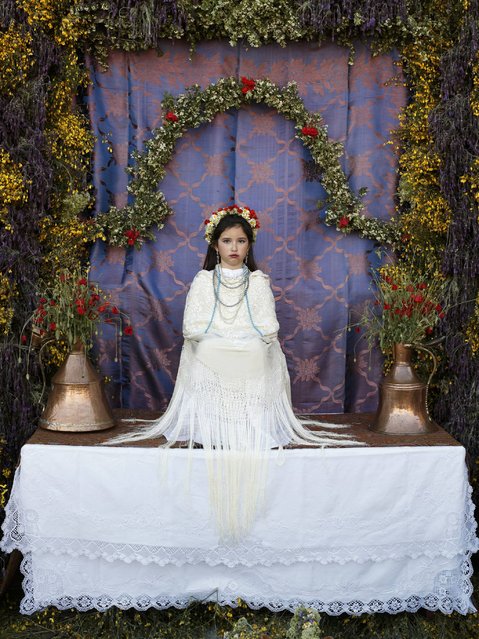
A “Maya” girl sits in an altar during the traditional celebration of “Las Mayas” on the streets in Colmenar Viejo, near Madrid, Spain, Friday, May 2, 2014. (Photo by Daniel Ochoa de Olza/AP Photo)

A “Maya” girl sits in an altar during the traditional celebration of “Las Mayas” on the streets in Colmenar Viejo, near Madrid, Spain, Friday, May 2, 2014. The festivity of the Maya comes from pagan rites and dates from the medieval age, appearing in ancient documents, it takes place every year in the beginning of May and celebrates the beginning off the spring. A girl between 7 and 11years is chosen as “Maya” and should sit still, serious, and quiet for a couple of hours in an altar on the street decorated with flowers and plants, afterwards they walk to the church with their family where they attend a ceremony. (Photo by Daniel Ochoa de Olza/AP Photo)
Details
13 May 2014 10:17:00
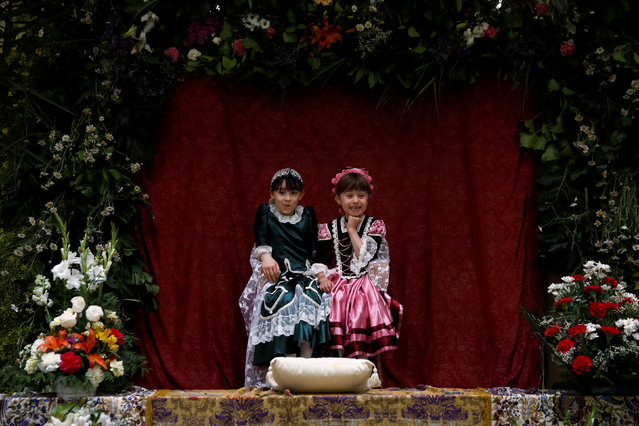
“Maya” girl Ines de la Paloma, 9, (L), sits with her friend Nuria Sanchez Caballero, 6, at an altar during “Las Mayas” festivity in Madrid, Spain, May 8, 2016. “Las Mayas” festival is held annually at the beginning of May to celebrate the awakening of nature in Spring. Young girls are chosen to become “Mayas” and sit at altars decorated with flowers so that people can admire them. The “Mayas” are dressed in traditional costumes, often displaying shawls and a wreath of flowers on their heads. (Photo by Susana Vera/Reuters)

“Maya” girl Ines de la Paloma, 9, (L), sits with her friend Nuria Sanchez Caballero, 6, at an altar during “Las Mayas” festivity in Madrid, Spain, May 8, 2016. “Las Mayas” festival is held annually at the beginning of May to celebrate the awakening of nature in Spring. Young girls are chosen to become “Mayas” and sit at altars decorated with flowers so that people can admire them. (Photo by Susana Vera/Reuters)
Details
11 May 2016 11:36:00
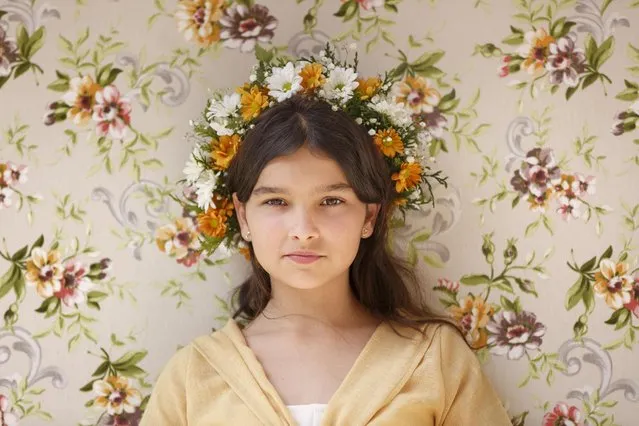
A “Maya” girl sits in an altar during the traditional celebration of “Las Mayas” on the streets in Madrid, Spain Sunday, May 10, 2015. The festivity of the Maya comes from pagan rites and dates from the medieval age, appearing in ancient documents. It takes place every year in the beginning of May and celebrates the beginning of the spring. (Photo by Daniel Ochoa de Olza/AP Photo)

A “Maya” girl sits in an altar during the traditional celebration of “Las Mayas” on the streets in Madrid, Spain Sunday, May 10, 2015. The festivity of the Maya comes from pagan rites and dates from the medieval age, appearing in ancient documents. It takes place every year in the beginning of May and celebrates the beginning of the spring. Girls between 7 and 11 years old are chosen as “Maya” and should sit still, serious and quiet for a couple of hours in altars on the street decorated with flowers and plants and afterwards they walk to the church with their family where they attend a ceremony. (Photo by Daniel Ochoa de Olza/AP Photo)
Details
14 May 2015 11:12:00
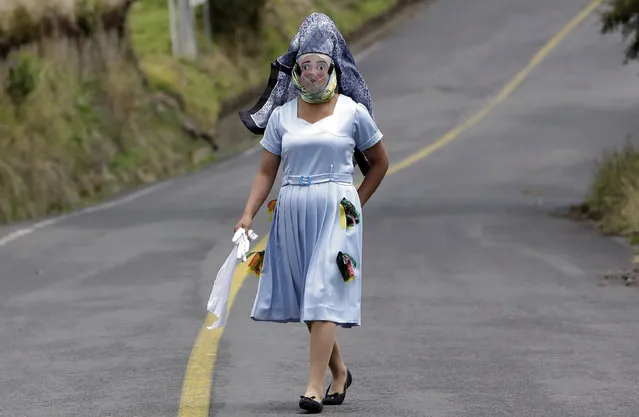
A woman dressed for la “La Diablada” festival, walks down a road in Pillaro, Ecuador, Friday, January 6, 2017. Local legend holds that anyone who adopts a costume for the celebration and wears it at the event six years in a row will have good luckDolores Ochoa

A woman dressed for la “La Diablada” festival, walks down a road in Pillaro, Ecuador, Friday, January 6, 2017. Local legend holds that anyone who adopts a costume for the celebration and wears it at the event six years in a row will have good luck. (Photo by Dolores Ochoa/AP Photo)
Details
08 Jan 2017 11:57:00
Spa in Slumbarave’s Hotel Metropolis, Shangri-La, Glastonbury, 2009. (Photo by Barry Lewis/The Guardian)

Award-winning photographer Barry Lewis has been picturing the weird and wonderful late-night Glastonbury experience for more than a decade. Shangri-La is a festival of contemporary performing arts held each year at Glastonbury festival, and Barry Lewis has documented its denizens. Here: Spa in Slumbarave’s Hotel Metropolis, Shangri-La, Glastonbury, 2009. (Photo by Barry Lewis/The Guardian)
Details
20 Jun 2017 07:08:00
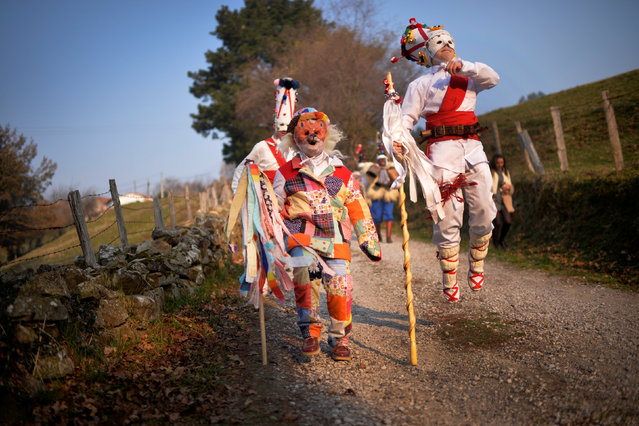
Dancers take part in “La Vijanera”, a winter masquerade at the beginning of carnival season in Europe, in Silio, northern Spain, January 8, 2017. (Photo by Vincent West/Reuters)

Dancers take part in “La Vijanera”, a winter masquerade at the beginning of carnival season in Europe, in Silio, northern Spain, January 8, 2017. (Photo by Vincent West/Reuters)
Details
09 Jan 2017 12:10:00
A young girl makes a “tomato angel” on a tomato covered street during the traditional tomato fight “Tomatina” during the fiestas in Bunol, Spain, 28 August 2013. This year's Tomatina is the first pay festival after Bunol's City Hall sold 15,000 tickets to take part in the tomato throwing. A total of 20,000 people, including 5,000 residents, will throw over 130,000 kg tomatoes. Local authorities decided to sell tickets this year to avoid the overcrowding in previous years in which over 50,000 people took part in the event. (Photo by Biel Alino/EPA)

A young girl makes a “tomato angel” on a tomato covered street during the traditional tomato fight “Tomatina” during the fiestas in Bunol, Spain, 28 August 2013. This year's Tomatina is the first pay festival after Bunol's City Hall sold 15,000 tickets to take part in the tomato throwing. A total of 20,000 people, including 5,000 residents, will throw over 130,000 kg tomatoes. Local authorities decided to sell tickets this year to avoid the overcrowding in previous years in which over 50,000 people took part in the event. (Photo by Biel Alino/EPA)
Details
29 Aug 2013 11:24:00
Audrey Tautou attend 'La Delicatesse' Paris Premiere

Audrey Tautou attends “La Delicatesse” Paris Premiere on December 13, 2011 in Paris, France. (Photo by Pascal Le Segretain/Getty Images)
Details
14 Dec 2011 12:59:00