Crowd members attempt to keep dry with umbrellas and ponchos prior to the 2012 Sydney Gay & Lesbian Mardi Gras Parade on March 3, 2012 in Sydney, Australia. (Photo by Brendon Thorne/Getty Images)
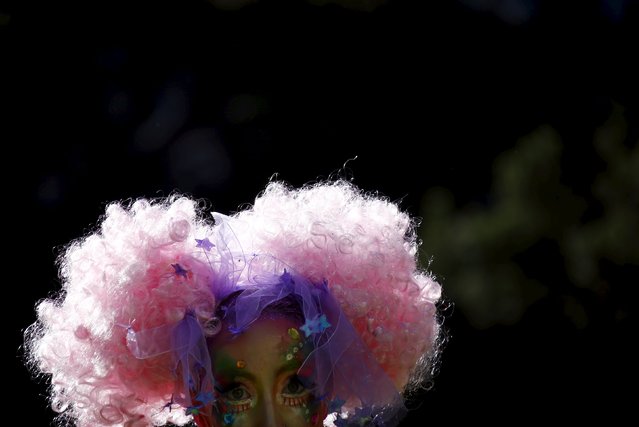
A performer dressed in costume prepares to participate in the Gay and Lesbian Mardi Gras parade in Sydney, Australia, March 5, 2016. The Sydney Mardi Gras parade began in 1978 as a march and commemoration of the 1969 Stonewall Riots of New York. It is an annual event promoting awareness of gay, lesbian, bisexual and transgender issues and themes. (Photo by David Gray/Reuters)
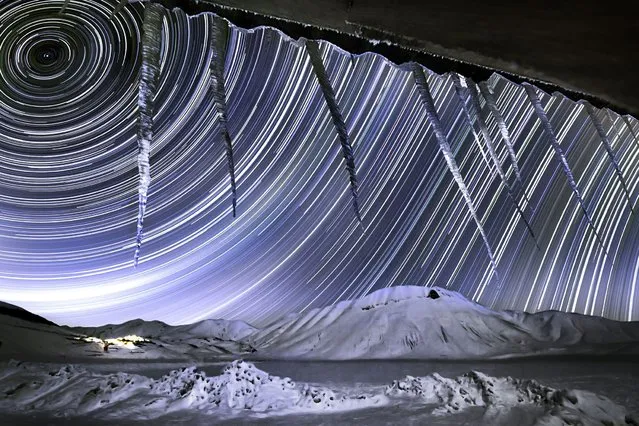
Photographer Maurizio Pignotti, 46, spends all night in freezing temperatures painstakingly shooting the breathtaking crystal-clear stars. He uses a technique where he merges together anywhere between 80 and 450 shots to create what he describes as a “rainbow of stars”. Space-lover Maurizio, captures the star trails on the borders of the Adriatic Sea – including the Sibillini Mountains National Park, the Conero National Park, and the Gargano National Park. (Photo by Maurizio Pignotti/Caters News)
A life-size robot named “Mark 1”, built by product and graphic designer Ricky Ma, 42, is seen in Hong Kong, China March 31, 2016. Ma, a robot enthusiast, spent a year-and-a half and more than HK$400,000 ($51,000) to create the humanoid robot, which is modelled after a Hollywood star, to fulfil his childhood dream. The eyes of the robot include face and color tracking functions. (Photo by Bobby Yip/Reuters)
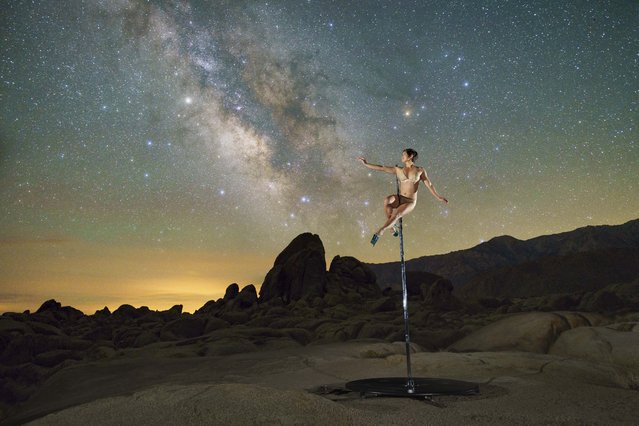
These stunning images show a group of aerial artists lighting up the night sky. Taken by photographer Casey Grimley, 37, the photos show pole dancers and aerial artists at various locations in Southern California, including the famed Joshua Tree National Park. (Photo by Casey Grimley/Caters News Agency)
These images show a heart-warming moment between a loving couple as they’re lit up under a stunning starry night sky. Taken on the Crimean Peninsula, the images show couples posed up beneath a glorious midnight skyscape. (Photo by Andrei Sheliakin/Caters News Agency)
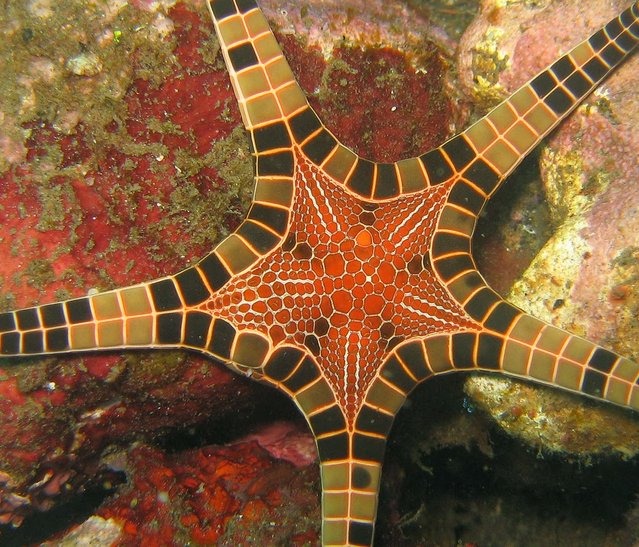
Iconaster longimanus, the icon star or double star, is a species of starfish in the family Goniasteridae. It is found in the west and central Indo-Pacific Ocean. The genus name comes from the Greek eikon, meaning portrait or image and possibly referring to the way the marginal plates frame the disc, and aster, meaning star. The specific name comes from the Latin longus manus and refers to the long, slender arms.
The Tibetan night sky was captured in these beautiful images showing the stunning buildings and statues in the Himalayan mountains. Grey Chow, 33, traveled for two hours to get to the Spiti Valley to capture the starry backdrop along the isolated, deserted roads. The senior project engineer was able to take amazingly clear images thanks to the limited amount of pollution at the 4,500-foot (1371m) altitude. (Photo by Grey Chow/Caters News Agency)