Loading...
Done
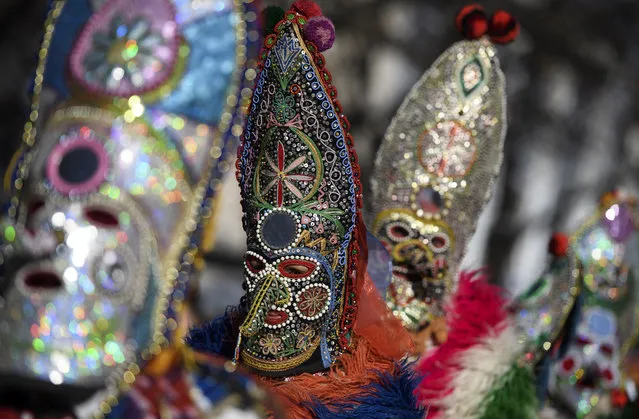
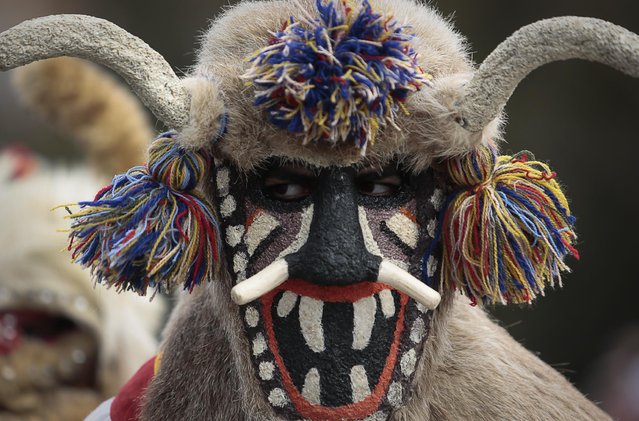
Mask dancers take part in a parade during the the International Festival of Masquerade Games “Surva” in the town of Pernik, some 30 km from Sofia, Bulgaria, January 31, 2016. (Photo by Vassil Donev/EPA)

Mask dancers take part in a parade during the the International Festival of Masquerade Games “Surva” in the town of Pernik, some 30 km from Sofia, Bulgaria, January 31, 2016. (Photo by Vassil Donev/EPA)
Details
01 Feb 2016 13:31:00
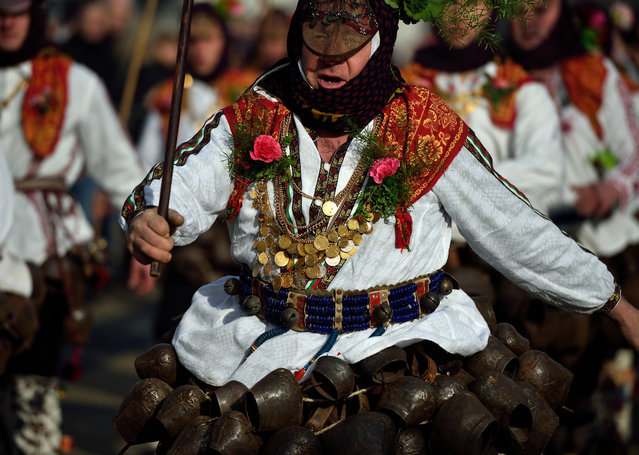
A masked Bulgarian dancer takes part in the second competition day of the 24th International Festival of Masquerade Games “Surva” in the town of Pernik, Bulgaria Saturday, January 31, 2015. (Photo by Valentina Petrova/AP Photo)

A masked Bulgarian dancer takes part in the second competition day of the 24th International Festival of Masquerade Games “Surva” in the town of Pernik, Bulgaria Saturday, January 31, 2015. Some 5,000 people are expected to take part in the three-day festival devoted to an ancient Bulgarian pagan rite. Surva is performed by costumed men, some in sheepskin, or other colorful garments, bells and masks, who walk around and dance to scare away the evil spirits, in hope to provide a good harvest, health, fertility, and happiness. (Photo by Valentina Petrova/AP Photo)
Details
01 Feb 2015 11:14:00
Mask dancers take part in a parade during the the International Festival of Masquerade Games “Surva” in the town of Pernik, some 30 km from Sofia, Bulgaria, 27 January 2019. In ancient times the old Thracians held the Kukeri Ritual Games in honor of god Dionysus – known as a god of wine and ecstasy. Even today these games are also known as the Dionysus' games. Among the Kukeri dancers' are many characters, including Dionysus and his satyrs as well as others from deep history such as the tsar, harachari, plyuvkachi, startzi, and pesyatzi. (Photo by Vassil Donev/EPA/EFE)

Mask dancers take part in a parade during the the International Festival of Masquerade Games “Surva” in the town of Pernik, some 30 km from Sofia, Bulgaria, 27 January 2019. In ancient times the old Thracians held the Kukeri Ritual Games in honor of god Dionysus – known as a god of wine and ecstasy. Even today these games are also known as the Dionysus' games. Among the Kukeri dancers' are many characters, including Dionysus and his satyrs as well as others from deep history such as the tsar, harachari, plyuvkachi, startzi, and pesyatzi. (Photo by Vassil Donev/EPA/EFE)
Details
31 Jan 2019 00:01:00
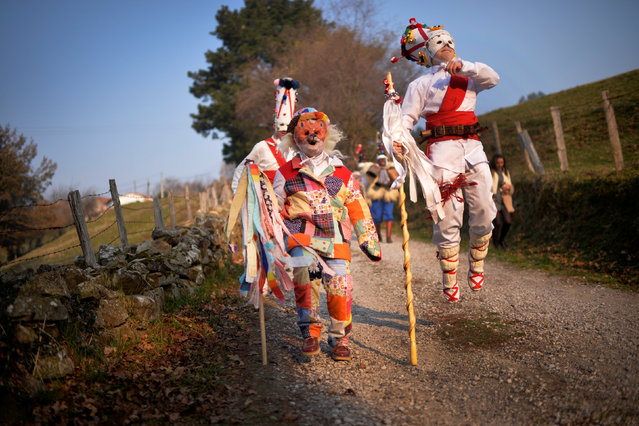
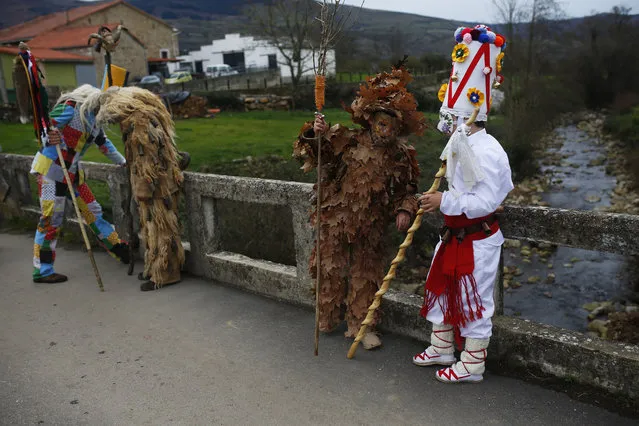
Dancers take part in “La Vijanera”, a winter masquerade at the beginning of carnival season in Europe, in Silio, northern Spain, January 8, 2017. (Photo by Vincent West/Reuters)

Dancers take part in “La Vijanera”, a winter masquerade at the beginning of carnival season in Europe, in Silio, northern Spain, January 8, 2017. (Photo by Vincent West/Reuters)
Details
09 Jan 2017 12:10:00
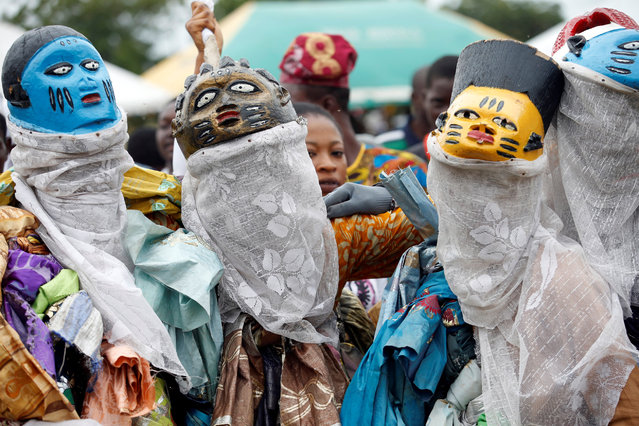
Masquerade performers participate in the annual Badagry cultural festival near the old slave port in Badagry, on the outskirts of Lagos, Nigeria August 27, 2016. (Photo by Akintunde Akinleye/Reuters)

Masquerade performers participate in the annual Badagry cultural festival near the old slave port in Badagry, on the outskirts of Lagos, Nigeria August 27, 2016. (Photo by Akintunde Akinleye/Reuters)
Details
29 Aug 2016 07:18:00
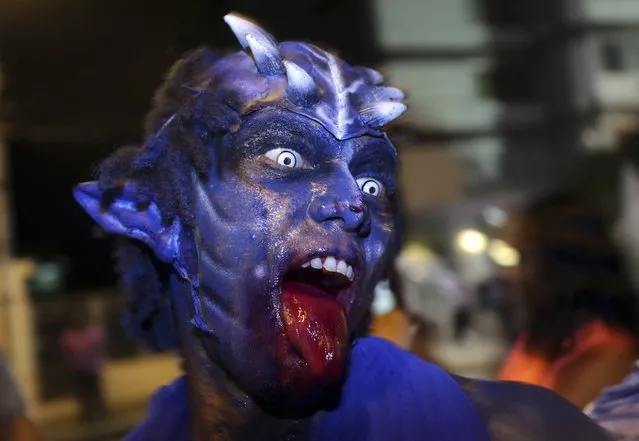
A masquerader from the Paramin Blue Devils parades before judges during the traditional mas competition held by the National Carnival Commission at Victoria Square, in the capital Port-of-Spain, February 12, 2015. (Photo by Andrea De Silva/Reuters)

A masquerader from the Paramin Blue Devils parades before judges during the traditional mas competition held by the National Carnival Commission at Victoria Square, in the capital Port-of-Spain, February 12, 2015. (Photo by Andrea De Silva/Reuters)
Details
14 Feb 2015 12:54:00
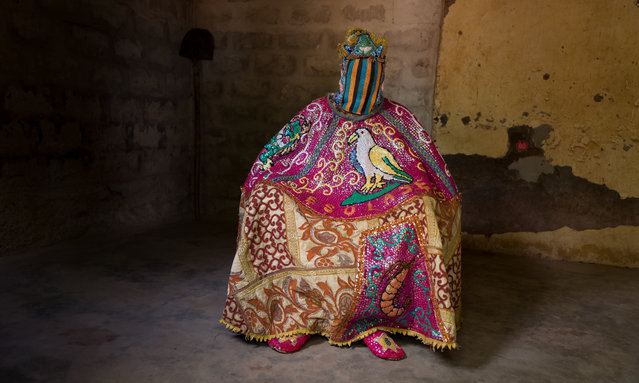
A member of an Egungun masquerade group, his identity obscured under his ornate costume in Ouidah, Benin on March 13, 2019. The exclusively male practitioners, found across Yoruba culture, use dance and spinning in the belief that they will summon the spirits of ancestors. (Photo by Massimo Rumi/Barcroft Images)

A member of an Egungun masquerade group, his identity obscured under his ornate costume in Ouidah, Benin on March 13, 2019. The exclusively male practitioners, found across Yoruba culture, use dance and spinning in the belief that they will summon the spirits of ancestors. (Photo by Massimo Rumi/Barcroft Images)
Details
26 Mar 2019 00:01:00
A masquerade dances to drums along the streets during the kankurang Festival in Janjanbureh on January 27, 2024. Listed as a UNESCO World Heritage Site since 2005, Kankurang, a combination of the Mandingo words “kango” and “Kurango”, literally translated as “voice” and “force”, ensures the transmission and teaching of the values and practices that form the basis of Mandingo cultural identity, a West African people whose historical home was the Mali empire. (Photo by Muhamadou Bittaye/AFP Photo)

A masquerade dances to drums along the streets during the kankurang Festival in Janjanbureh on January 27, 2024. Listed as a UNESCO World Heritage Site since 2005, Kankurang, a combination of the Mandingo words “kango” and “Kurango”, literally translated as “voice” and “force”, ensures the transmission and teaching of the values and practices that form the basis of Mandingo cultural identity, a West African people whose historical home was the Mali empire. (Photo by Muhamadou Bittaye/AFP Photo)
Details
13 Mar 2025 01:44:00