Loading...
Done
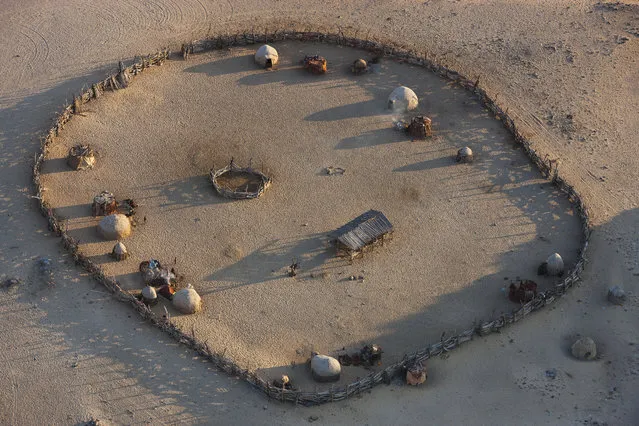
An aerial view of a livestock enclosure of the Himba people, in October, 2014, in the Namib Desert, Namibia. (Photo by Theo Allofs/Barcroft Media)

An aerial view of a livestock enclosure of the Himba people, in October, 2014, in the Namib Desert, Namibia. A photographer has captured a bird's eye view of the stunning Namib Desert from a paraglider. Theo Allofs travels the world taking stunning pictures of untouched landscapes from a unique perspective. Soaring 300 metres above ground, Theo shot the yellow sand dunes, dry red river beds and remote townships in Namibia. (Photo by Theo Allofs/Barcroft Media)
Details
24 Apr 2015 11:06:00
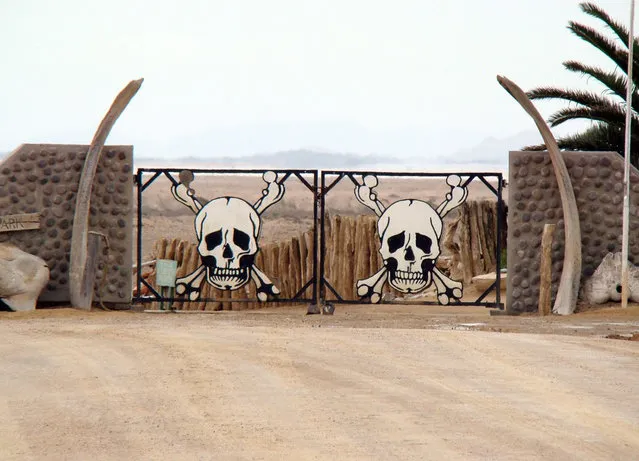
The Skeleton Coast, Namibia

The Skeleton Coast is the northern part of the Atlantic Ocean coast of Namibia and south of Angola from the Kunene River south to the Swakop River, although the name is sometimes used to describe the entire Namib Desert coast. The Bushmen of the Namibian interior called the region "The Land God Made in Anger", while Portuguese sailors once referred to it as "The Gates of Hell".
Details
23 Feb 2014 09:27:00
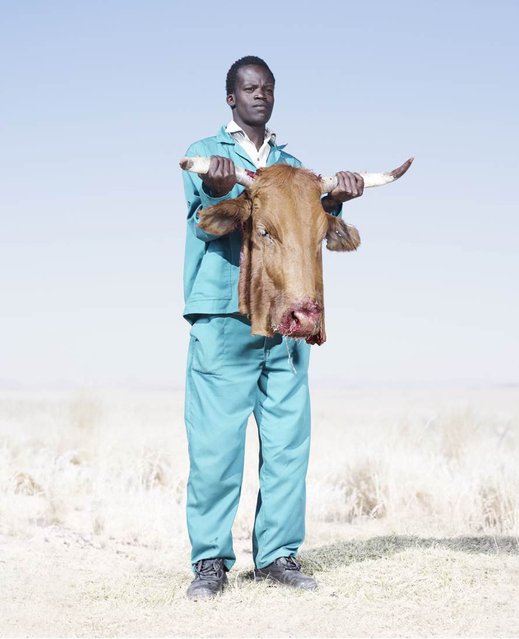
A Herero man holds the head of a freshly butchered cow, killed to supply meat for a funeral, 2012. (Photo by Jim Naughten, courtesy of Klompching Gallery, New York)

A Herero man holds the head of a freshly butchered cow, killed to supply meat for a funeral, 2012. (Photo by Jim Naughten, courtesy of Klompching Gallery, New York)
Details
04 May 2013 11:00:00
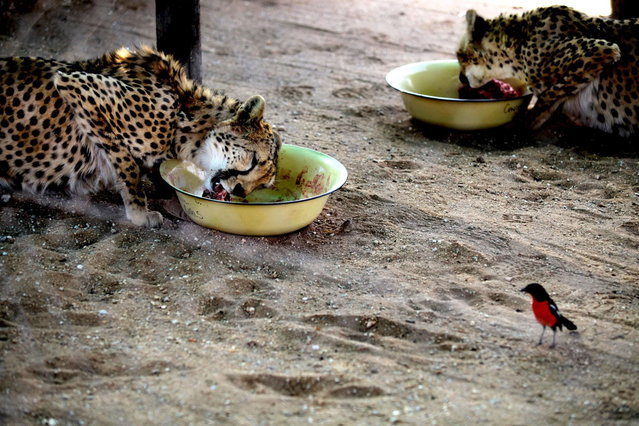
Young cheetahs eat meat at The Cheetah Conservation Fund (CCF) center in Otjiwarongo, Namibia, on August 13, 2013. The CCF started breeding Anatolian livestock dogs to promote cheetah-friendly farming after some 10,000 big cats – the current total worldwide population – were killed or moved off farms in the 1980s.  Up to 1,000 cheetahs were being killed a year, mostly by farmers who saw them as livestock killers. But the use of dogs has slashed losses for sheep and goat farmers and led to less retaliation against the vulnerable cheetah. (Photo by Jennifer Bruce/AFP Photo)

Young cheetahs eat meat at The Cheetah Conservation Fund (CCF) center in Otjiwarongo, Namibia, on August 13, 2013. The CCF started breeding Anatolian livestock dogs to promote cheetah-friendly farming after some 10,000 big cats – the current total worldwide population – were killed or moved off farms in the 1980s. Up to 1,000 cheetahs were being killed a year, mostly by farmers who saw them as livestock killers. But the use of dogs has slashed losses for sheep and goat farmers and led to less retaliation against the vulnerable cheetah. (Photo by Jennifer Bruce/AFP Photo)
Details
29 Aug 2013 10:56:00
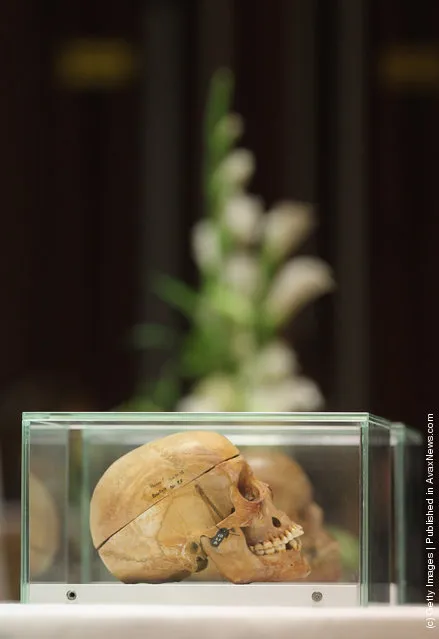
Charite Hospital Returns Herero Skulls To Namibia

Two of 20 skulls to be taken possession of by a delegation from Namibia stand on display at a ceremony at Charite hospital on September 30, 2011 in Berlin, Germany. The skulls are from Herero and Nama tribespeople taken by German colonial forces between 1904 and 1908, when the Germans violently suppressed an uprising in what was then German Southwest Africa, which is today's Namibia, and in the process killed tens of thousand of Herero and Nama. German scientists at the time took the skulls back to Berlin to demonstrate the racial superiority of Europeans over black Africans. Many Namibians demand a formal apology from the German government. (Photo by Sean Gallup/Getty Images)
Details
02 Oct 2011 11:42:00
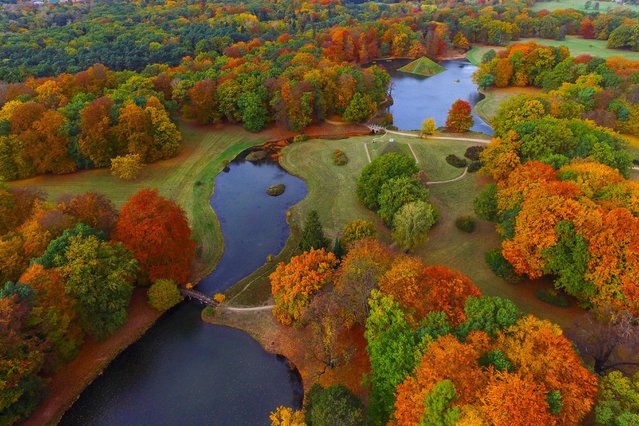
An aerial view taken with a drone shows the autumnally colored Fuerst-Pueckler-Park near Cottbus, eastern Germany, Saturday, October 29, 2016. The park, composed with great sensitivity in the 19th century by Prince Hermann von Pueckler-Muskau, is considered as one of the last great German landscape gardens. (Photo by Patrick Pleul/DPA via AP Photo)

An aerial view taken with a drone shows the autumnally colored Fuerst-Pueckler-Park near Cottbus, eastern Germany, Saturday, October 29, 2016. The park, composed with great sensitivity in the 19th century by Prince Hermann von Pueckler-Muskau, is considered as one of the last great German landscape gardens. (Photo by Patrick Pleul/DPA via AP Photo)
Details
18 Jan 2017 08:01:00
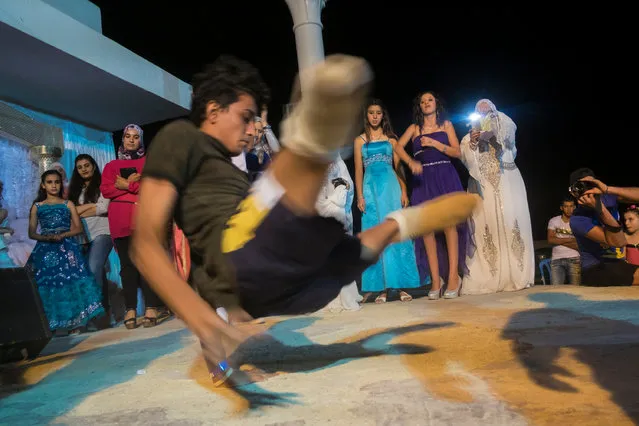
He performs his moves during the wedding celebrations, with his prosthetic limbs removed. (Photo by Yassine Alaoui Ismaili/The Guardian)

Street photographer Yassine Alaoui Ismaili follows 16-year-old Emeer Guesmi, aka B-boy Zulu Rema, as he trains and performs breakdance moves – all without the use of his legs. At a breakdance championship in Tunisia, Casablanca-based street photographer Yassine Alaoui Ismaili noticed an unusual competitor: Emeer Guesmi, dancing without the aid of his lower legs. He started following him as he trained and performed. (Photo by Yassine Alaoui Ismaili/The Guardian)
Details
23 Nov 2016 12:33:00
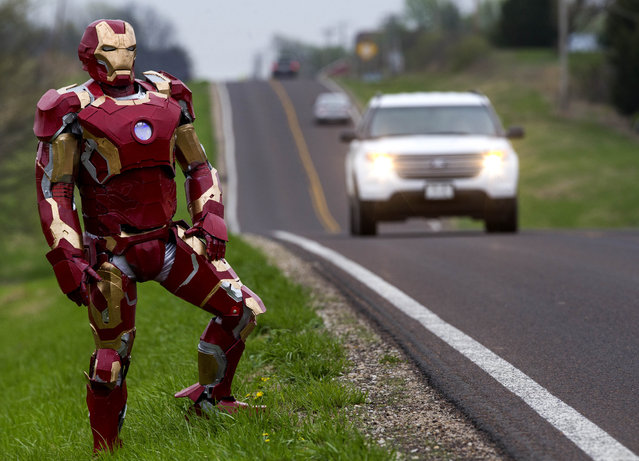
In this photo taken April 15, 2015, Clay Hielscher of Overbrook, Kan., poses for a photo in his home made Iron Man suit. (Photo by Chris Neal/AP Photo/The Topeka Capital-Journal)

In this photo taken April 15, 2015, Clay Hielscher of Overbrook, Kan., poses for a photo in his home made Iron Man suit. While he enjoys building the battlesuits of his favorite super hero, Hielscher said the real reason he is so passionate about his pastime is his 11-year-old daughter, Kyrianna. They design and construct the suits together. (Photo by Chris Neal/AP Photo/The Topeka Capital-Journal)
Details
16 May 2015 12:08:00