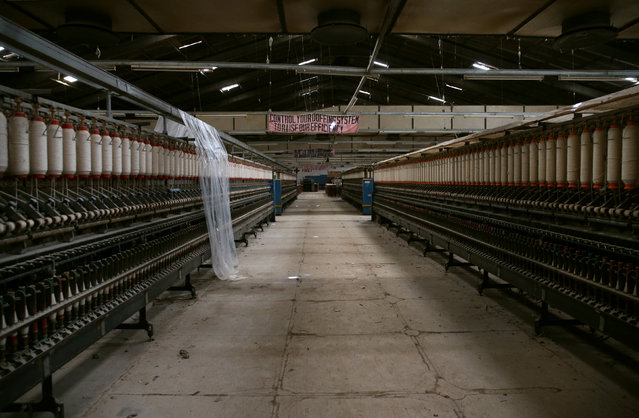
A production department of a textile factory is seen abandoned in Kaduna, Nigeria November 3, 2016. President Muhammadu Buhari hopes to revive the once flourishing textile and leather industries in northern Nigeria to end the country's dependence on oil exports and diversify Africa's biggest economy. (Photo by Afolabi Sotunde/Reuters)
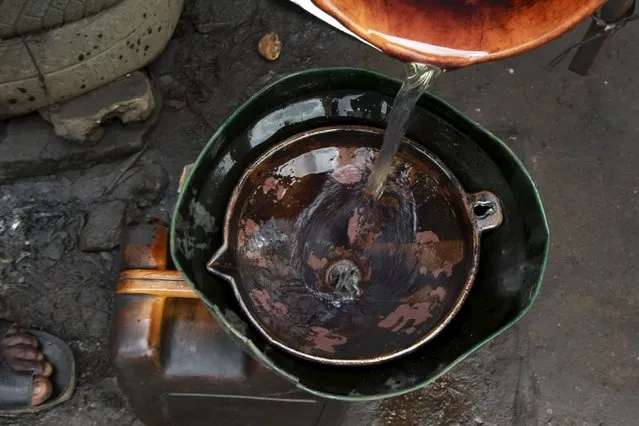
Diesel is poured into a container at theArea 10 shopping centre in Abuja, Nigeria May 25, 2015. Nigerian fuel marketers agreed to resume distribution on Monday after weeks of disruption led to chronic fuel shortages, bringing phone companies, banks and airlines to a standstill days before the inauguration of the country's new president. (Photo by Afolabi Sotunde/Reuters)
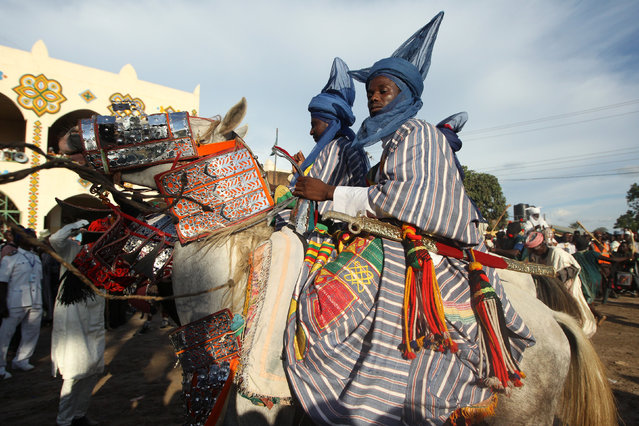
Horsemen take part in the Durbar festival parade in Zaria, Nigeria September 14, 2016. It is celebrated at the culmination of Muslim festivals Eid al-Fitr and Eid al-Adha. It begins with prayers, followed by a parade of the Emir and his entourage on horses, accompanied by music players, and ending at the Emir's palace. (Photo by Afolabi Sotunde/Reuters)
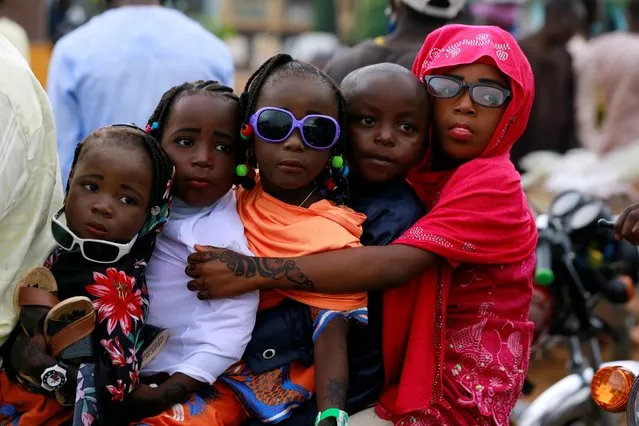
Children are seen on a bike after Muslims in Nigeria perform Eid prayer following the global outbreak of coronavirus disease (COVID-19) in Nasarawa on May 24, 2020. (Photo by Afolabi Sotunde/Reuters)
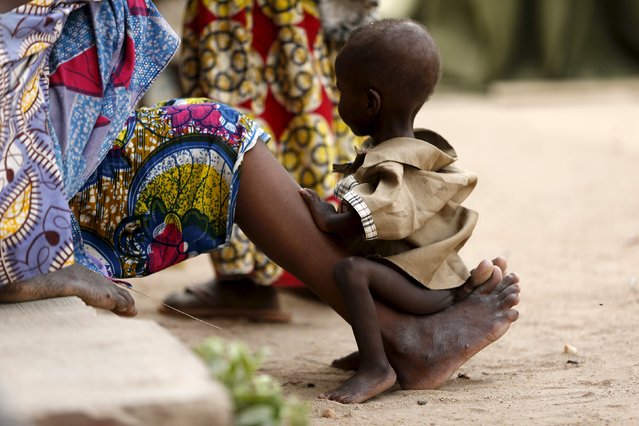
A child rescued from Boko Haram in Sambisa forest is seen at the Internally Displaced People's camp in Yola, Nigeria May 3, 2015. Hundreds of traumatised Nigerian women and children rescued from Boko Haram Islamists have been released into the care of authorities at a refugee camp in the eastern town of Yola, an army spokesman said. (Photo by Afolabi Sotunde/Reuters)
A boy carries sugar cane through a farm on the outskirt of Zaria in Nigeria's northern state of Kaduna November 15, 2016. (Photo by Akintunde Akinleye/Reuters)
An employee sorts waste at the Wecycler recycling centre in Ebutte Meta district in Lagos, Nigeria July 28, 2016. (Photo by Akintunde Akinleye/Reuters)