Loading...
Done
The new EVR system which allows the recording of television programmes which can then be watched at the owner's discretion. The new Teleplayer has been produced in partnership with Rank Bush Murphy Ltd and EVR and has enormous potential. 21st September 1970. (Photo by Central Press/Getty Images)

The new EVR system which allows the recording of television programmes which can then be watched at the owner's discretion. The new Teleplayer has been produced in partnership with Rank Bush Murphy Ltd and EVR and has enormous potential. 21st September 1970. (Photo by Central Press/Getty Images)
Details
27 Apr 2014 09:34:00
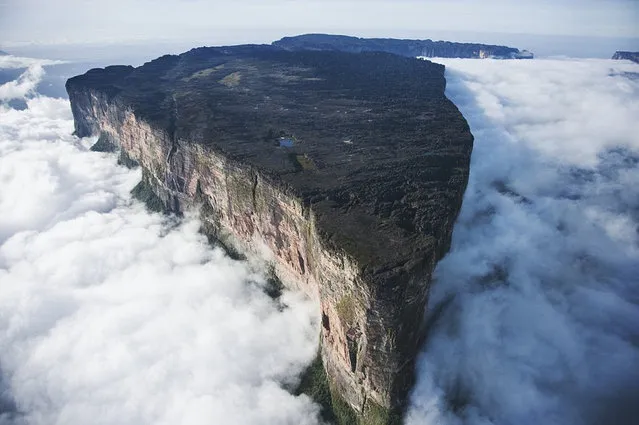
Mount Roraima

Mount Roraima (Spanish: Monte Roraima, also known as Tepuy Roraima and Cerro Roraima; Portuguese: Monte Roraima [ˈmõtʃi ʁoˈɾajmɐ]) is the highest of the Pakaraima chain of tepui plateau in South America. First described by the English explorer Sir Walter Raleigh in 1596, its 31 km2 summit area is defended by 400-metre-tall cliffs on all sides. The mountain includes the triple border point of Venezuela, Brazil and Guyana.
Details
11 Sep 2012 08:04:00
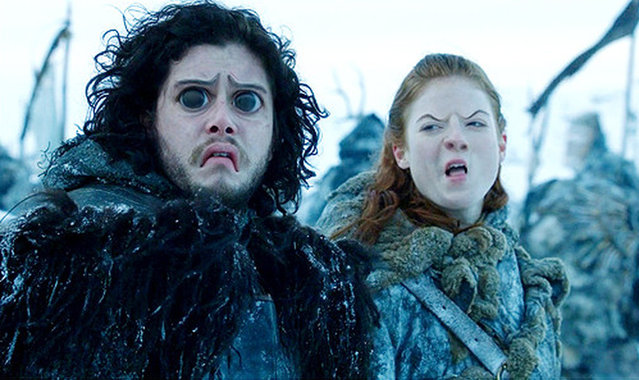
Terrible TV Art Part2

The blog Terrible TV Art is dedicating to Photoshopping the faces of TV and movie characters to cartoonish proportions.


See also: Terrible TV Art Part1
Details
12 Sep 2013 11:56:00
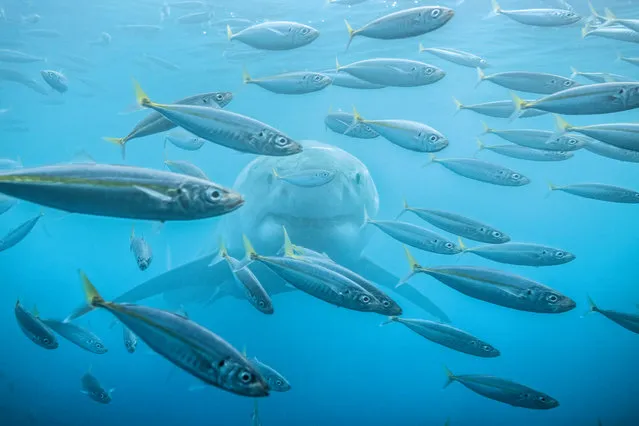
Under Exposed: Pekka Tuuri (Finland) – Great white shark, Isla Guadalupe, Mexico. Isla Guadalupe is the world capital when it comes to observing great white sharks, but cage diving seriously limits the possibilities to take ‘fresh’ pictures. When I took this, the water close to the surface was quite milky, making photography very challenging. From out of the ‘mist’, I saw this great white shark lurking behind a school of fusiliers. I quickly focused on the shark and set a wide aperture to get focus blur on the fish, along with a fast shutter to avoid excessive motion blur. (Photo by Pekka Tuuri/The Outdoor Photographer of the Year/The Guardian)

Under Exposed: Pekka Tuuri (Finland) – Great white shark, Isla Guadalupe, Mexico. “Isla Guadalupe is the world capital when it comes to observing great white sharks, but cage diving seriously limits the possibilities to take ‘fresh’ pictures. When I took this, the water close to the surface was quite milky, making photography very challenging. From out of the “mist”, I saw this great white shark lurking behind a school of fusiliers. I quickly focused on the shark and set a wide aperture to get focus blur on the fish, along with a fast shutter to avoid excessive motion blur”. (Photo by Pekka Tuuri/The Outdoor Photographer of the Year/The Guardian)
Details
25 Jan 2018 07:37:00
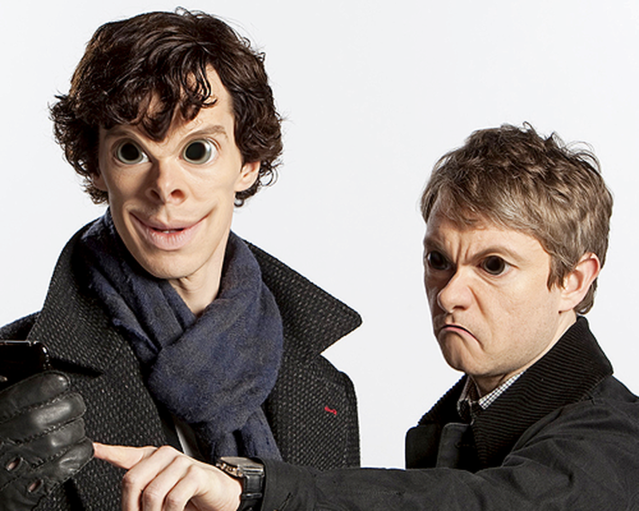
Terrible TV Art Part1

The blog Terrible TV Art is dedicating to Photoshopping the faces of TV and movie characters to cartoonish proportions.


See also: Terrible TV Art Part2
Details
11 Sep 2013 11:04:00
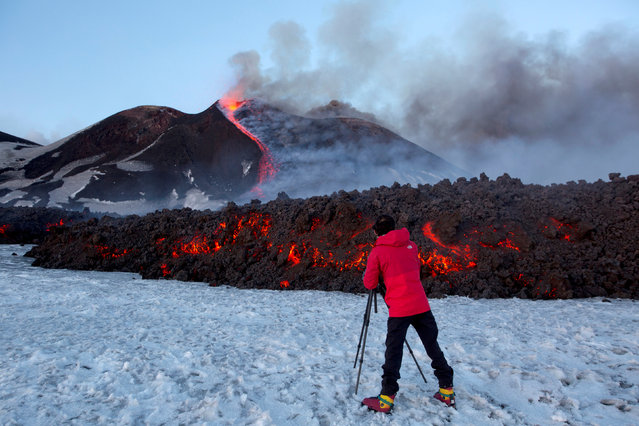
A tourist stands in front of Italy's Mount Etna as it spews lava during an eruption on the southern island of Sicily, Italy on March 1, 2017. (Photo by Antonio Parrinello/Reuters)

A tourist stands in front of Italy's Mount Etna as it spews lava during an eruption on the southern island of Sicily, Italy on March 1, 2017. (Photo by Antonio Parrinello/Reuters)
Details
03 Mar 2017 00:04:00
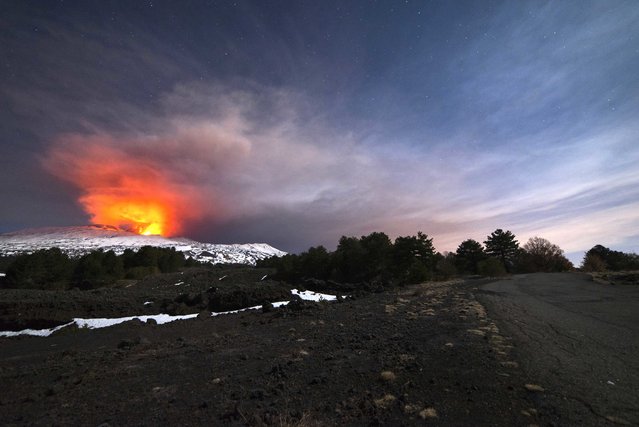
Mount Etna, Europe's most active volcano, is seen from the side of a road as it spews lava during an eruption in the early hours of Thursday, March 16, 2017. Sicily's Mount Etna volcano unleashed an explosion Thursday, hurling molten rocks and steam that rained down on tourists, journalists and a scientist who scrambled to escape the barrage. Ten people were reported injured. (Photo by Salvatore Allegra/AP Photo)

Mount Etna, Europe's most active volcano, is seen from the side of a road as it spews lava during an eruption in the early hours of Thursday, March 16, 2017. Sicily's Mount Etna volcano unleashed an explosion Thursday, hurling molten rocks and steam that rained down on tourists, journalists and a scientist who scrambled to escape the barrage. Ten people were reported injured. (Photo by Salvatore Allegra/AP Photo)
Details
18 Mar 2017 10:37:00
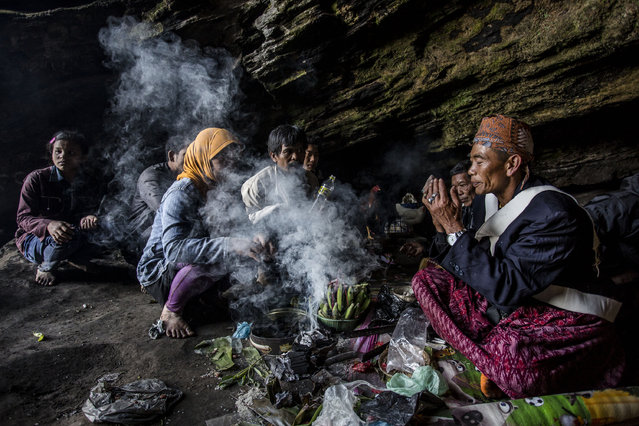
A Tenggerese shaman praying for worshippers at Widodaren cave during the Tenggerese Hindu Yadnya Kasada festival on July 31, 2015 in Probolinggo, East Java, Indonesia. The festival is the main festival of the Tenggerese people and lasts about a month. On the fourteenth day, the Tenggerese make the journey to Mount Bromo to make offerings of rice, fruits, vegetables, flowers and livestock to the mountain gods by throwing them into the volcano's caldera. (Photo by Ulet Ifansasti/Getty Images)

A Tenggerese shaman praying for worshippers at Widodaren cave during the Tenggerese Hindu Yadnya Kasada festival on July 31, 2015 in Probolinggo, East Java, Indonesia. The festival is the main festival of the Tenggerese people and lasts about a month. On the fourteenth day, the Tenggerese make the journey to Mount Bromo to make offerings of rice, fruits, vegetables, flowers and livestock to the mountain gods by throwing them into the volcano's caldera. The origin of the festival lies in the 15th century when a princess named Roro Anteng started the principality of Tengger with her husband Joko Seger, and the childless couple asked the mountain Gods for help in bearing children. The legend says the Gods granted them 24 children but on the provision that the 25th must be tossed into the volcano in sacrifice. The 25th child, Kesuma, was finally sacrificed in this way after initial refusal, and the tradition of throwing sacrifices into the caldera to appease the mountain Gods continues today. (Photo by Ulet Ifansasti/Getty Images)

Details
01 Aug 2015 12:07:00