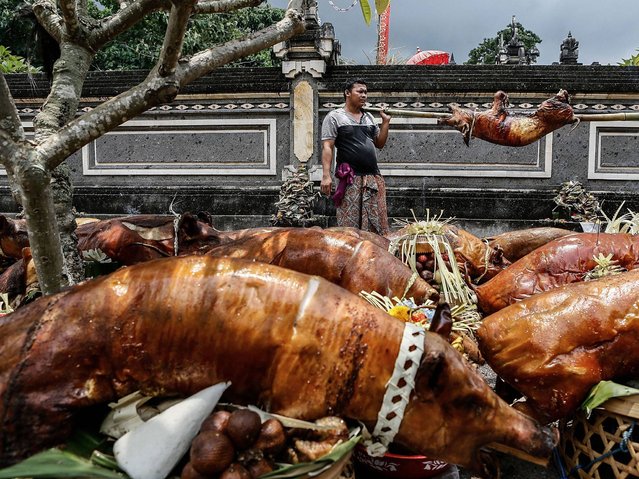
Villager search for a place for the roasted pigs in Dalem Temple at Timbrah Village on February 27, 2014 in Karangasem, Bali, Indonesia. Usaba Dalem is an annual ritual held by the people of Timbrah Village, during this ritual all the villagers will cook roasted pigs and carry them to Dalem Temple as an offering to God and an expression of gratitude for a successful harvest. (Photo by Putu Sayoga/Getty Images)
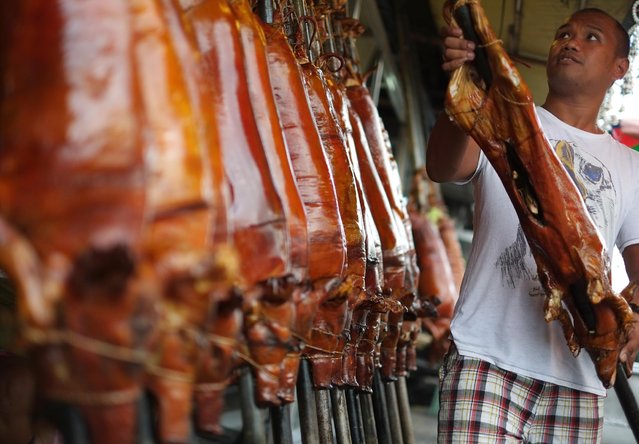
A Filipino worker arranges roasted pigs which they sell in suburban Quezon city, Philippines on Tuesday, December 23, 2014. Roasted pig is popular during Filipino celebrations and traditionally served during a Christmas eve dinner called “Noche Buena” in this predominantly Roman Catholic nation. (Photo by Aaron Favila/AP Photo)
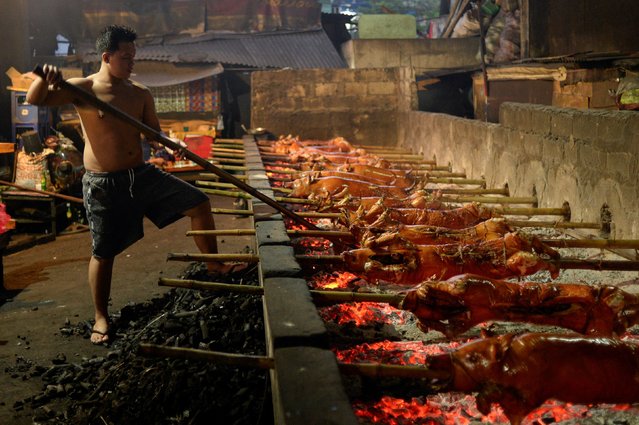
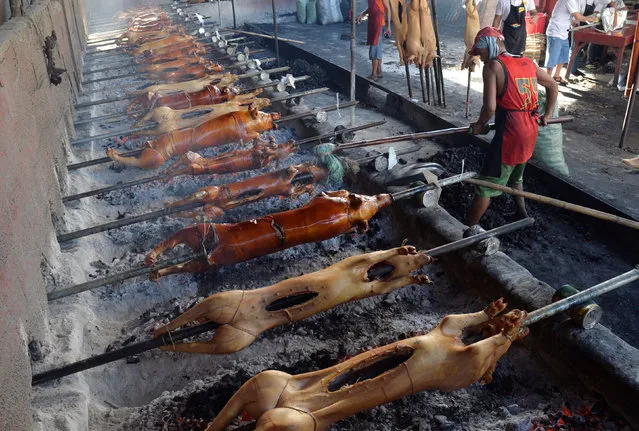
A worker roasts rows of freshly slaughtered pigs, known locally as “lechon” and famously served as main courses during the New Year revelry, at a store in Manila, Philippines, December 31, 2016. (Photo by Ezra Acayan/Reuters)
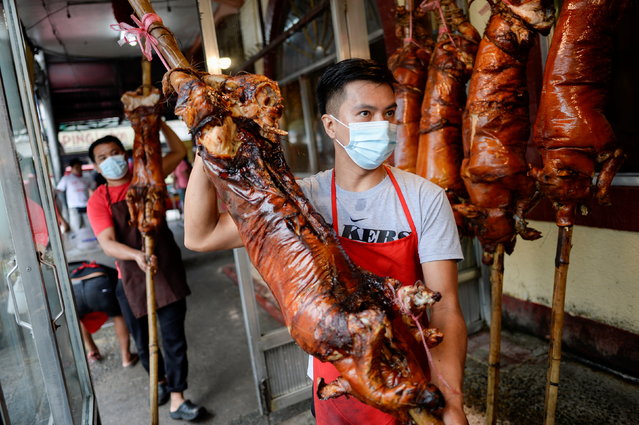
Workers wearing face masks as a protection against the coronavirus disease (COVID-19) carry roasted pigs, locally known as “lechon”, at a restaurant, in Quezon City, Metro Manila, Philippines, December 21, 2020. (Photo by Lisa Marie David/Reuters)
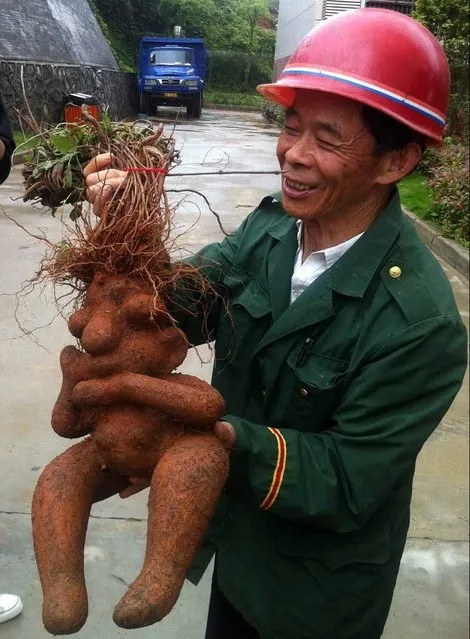
Two Chinese farmers got more than they bargained for when they pulled up the root of a fleece flower – and came face-to-face with the doppelganger of Homer Simpson, on May 17, 2013. The large root appears to have two bulging eyes and a prominent nose – giving it an uncanny resemblance to the famous cartoon character. With two offshoot roots shaped like arms, it even looks like it is pondering or confused – just what you would expect from the real Homer. (Photo by ImagineChina)
A farmer harvests the lotus roots at a lotus pond in the Lingjiaohu Village of Nanxian County, Yiyang City, Central China's Hunan Province on April 26, 2023. Farmers in Lingjiaohu Village of Nanxian County have recently been busy with harvesting lotus roots. (Photo by Xinhua News Agency/Rex Features/Shutterstock)