Loading...
Done
A Dutch Military Policeman, left inside, guards part of the reconstructed cockpit, right, and forward section of the fuselage after the Dutch Safety Board presented it's final report into what caused Malaysia Airlines Flight 17 to break up high over Eastern Ukraine last year, killing all 298 people on board, during a press conference in Gilze-Rijen, central Netherlands, Tuesday, October 13, 2015. (Photo by Peter Dejong/AP Photo)

A Dutch Military Policeman, left inside, guards part of the reconstructed cockpit, right, and forward section of the fuselage after the Dutch Safety Board presented it's final report into what caused Malaysia Airlines Flight 17 to break up high over Eastern Ukraine last year, killing all 298 people on board, during a press conference in Gilze-Rijen, central Netherlands, Tuesday, October 13, 2015. (Photo by Peter Dejong/AP Photo)
Details
16 Oct 2015 08:04:00
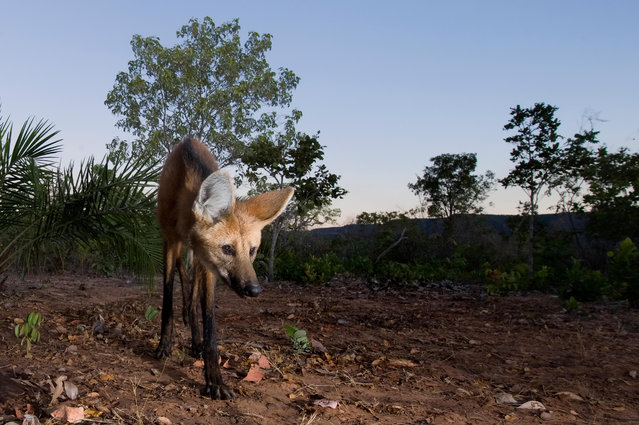
The maned wolf is among the large mammals in the Brazilian Cerrado that are threatened by the increasing conversion of grasslands into farmland for grazing and growing crops. (Photo by Ben Cranke/Nature Picture Library/Alamy Stock Photo)

Global wildlife populations will decline by 67% by 2020 unless urgent action is taken to reduce human impact on species and ecosystems, warns the biennial Living Planet Index report from WWF (World Wide Fund for Nature) and ZSL (Zoological Society of London). From elephants to eels, here are some of the wildlife populations most affected by human activity. Here: The maned wolf is among the large mammals in the Brazilian Cerrado that are threatened by the increasing conversion of grasslands into farmland for grazing and growing crops. (Photo by Ben Cranke/Nature Picture Library/Alamy Stock Photo)
Details
28 Oct 2016 10:47:00
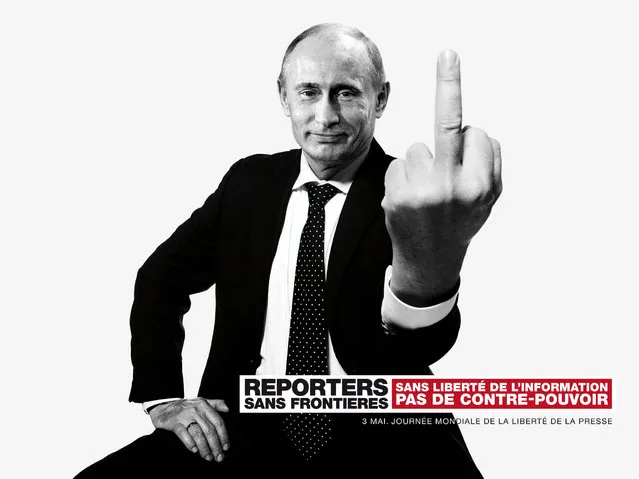
Reporters Without Borders exposes montages of world leaders, including Mahmoud Ahmadinejad (Iran), Xi Jinping (China) and Bashar al-Assad (Syria) and Vladimir Putin (Russia) in Paris, marking the 20th World Day of Freedom Media. (Photo by Vincent Bousserez/Reporters Without Borders)

“In honor of Friday’s World Press Freedom Day, the non-governmental organization Reporters sans frontières (Reporters Without Borders) launched a campaign depicting world-famous dictators giving everyone the finger, or the international equivalent thereof”. – Kay Steiger. (Photo by Vincent Bousserez/Reporters Without Borders)
Details
04 May 2013 11:10:00


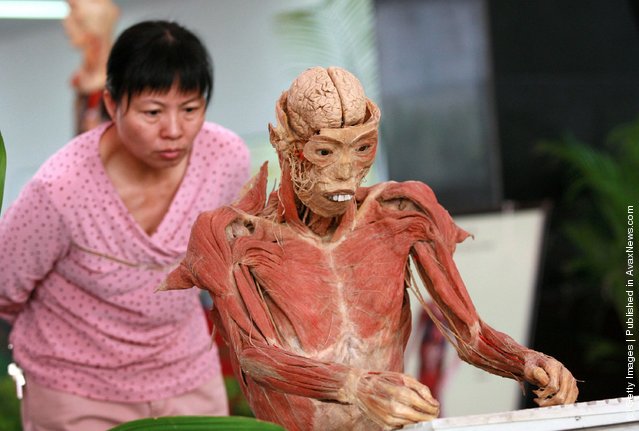
A visitor views a human body specimen during the “Human Body's Wonder Scientific Travelling Exhibition” at the Haikou Gymnasium April 30, 2006 in Haikou of Hainan Province, China. The exhibition displays 13 complete real human body specimens and about 300 pieces of small samples, such as organs, skin, etc with the purpose to promote science and help people know more about their bodies. (Photo by China Photos/Getty Images)
Details
18 Jun 2011 10:51:00
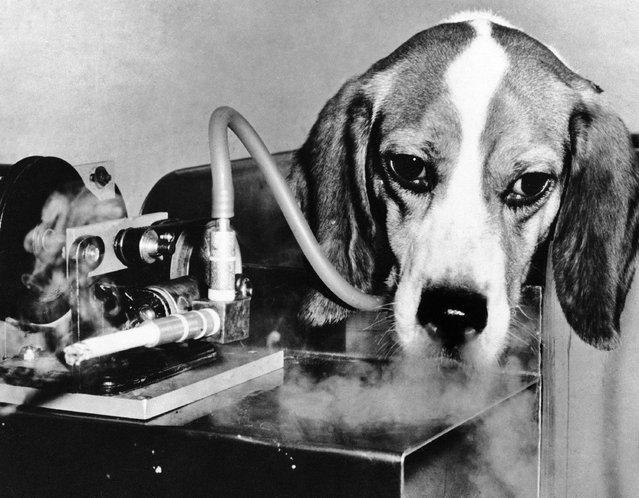
In this November 28, 1966 file photo, one of the 10 beagles involved in the first test of the Veterans Administration Hospital in East Orange, N.J. smokes a cigarette through a machine linked to its windpipe by a plastic tube to test any link between smoking and emphysema. (Photo by AP Photo)

In this November 28, 1966 file photo, one of the 10 beagles involved in the first test of the Veterans Administration Hospital in East Orange, N.J. smokes a cigarette through a machine linked to its windpipe by a plastic tube to test any link between smoking and emphysema. (Photo by AP Photo)
Details
05 Jan 2014 07:48:00


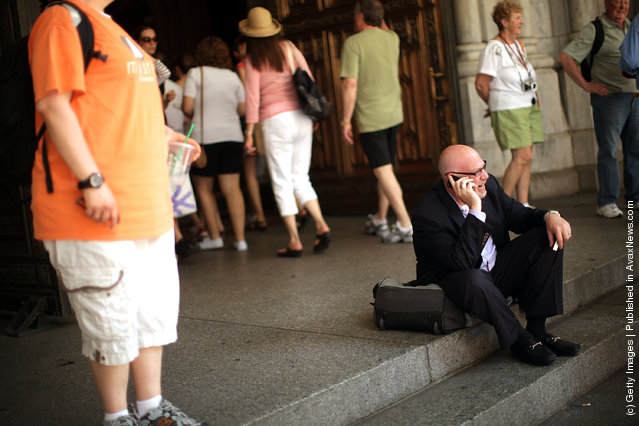
A man speaks on his mobile phone on May 31, 2011 in New York City. In a new report by 31 scientists meeting at the World Health Organization's International Agency for Research on Cancer (WHO/IARC) it was found that using a mobile phone may increase your risk for certain kinds of brain cancers. While further scientific work will be conducted, the group of scientists from 14 countries classified cell phones in the carcinogenic category 2B, which is similar to the pesticide DDT and gasoline engine exhaust. (Photo by Spencer Platt/Getty Images)
Details
01 Jun 2011 06:40:00
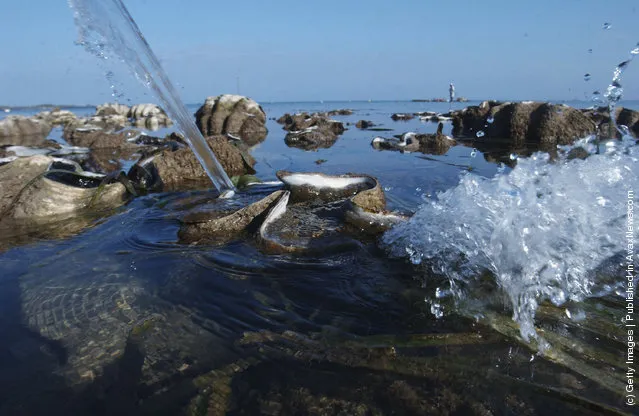
Tridacna Gigas, or Giant Clams

“The giant clam, Tridacna gigas (known as pā’ua in Cook Islands Māori), is the largest living bivalve mollusc. T. gigas is one of the most endangered clam species. It was mentioned as early as 1825 in scientific reports. One of a number of large clam species native to the shallow coral reefs of the South Pacific and Indian oceans, they can weigh more than 200 kilograms (440 lb) measure as much as 120 cm (47 in) across, and have an average lifespan in the wild of 100 years or more”. – Wikipedia

Photo: Tridacna Gigas, or Giant Clams spew water as a traditional fisherman passes by a small sanctuary on January 23, 2004 near Bolinao in the Northern Philippines. The clams, prime builders for coral reefs and providing shelter for spawning fish and other marine life, are exposed by low tides in the sanctuary. Overfishing and pollution throughout the country are not only threatening food security, but are also starting to choke one of the few working clam sanctuaries in the world. (Photo by David Greedy/Getty Images)
Details
01 Oct 2011 13:10:00
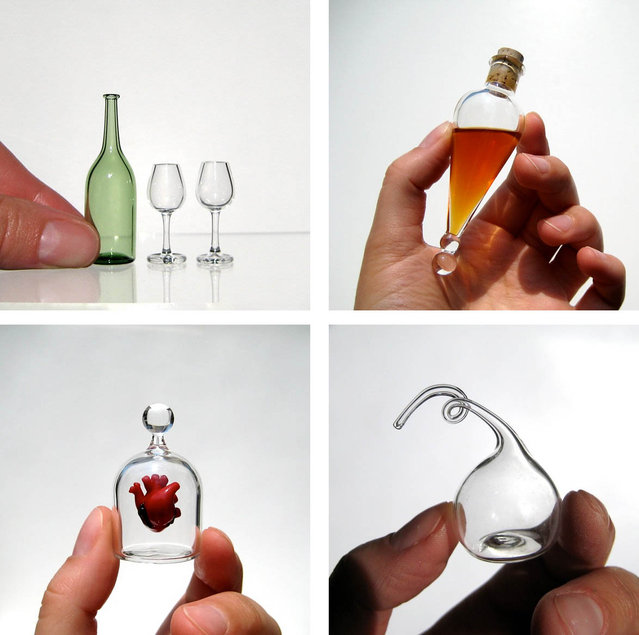
Glass Art By Kiva Ford

Glass artist Kiva Ford draws from his vast experience in scientific glassblowing to create perfect miniatures of wine glasses, beakers, and ribbon-striped vases, some scarcely an inch tall. A member of the American Scientific Glassblowers Society, Kiva creates instruments for scientists who require one-of-a-kind designs for various experiments. The same techniques and tools used for scientific equipment also apply to his artistic practice including the miniature works you see here, as well as larger sculptures, and ornate drinkware.
Details
21 Jul 2015 10:31:00