Loading...
Done


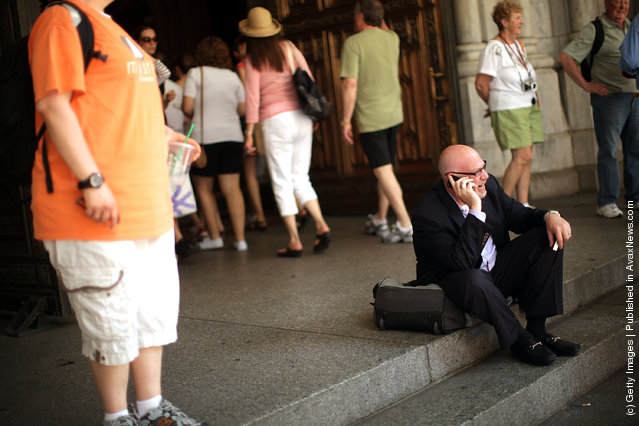
A man speaks on his mobile phone on May 31, 2011 in New York City. In a new report by 31 scientists meeting at the World Health Organization's International Agency for Research on Cancer (WHO/IARC) it was found that using a mobile phone may increase your risk for certain kinds of brain cancers. While further scientific work will be conducted, the group of scientists from 14 countries classified cell phones in the carcinogenic category 2B, which is similar to the pesticide DDT and gasoline engine exhaust. (Photo by Spencer Platt/Getty Images)
Details
01 Jun 2011 06:40:00
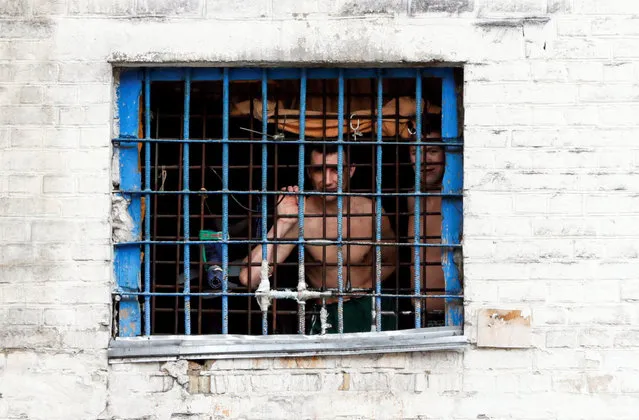
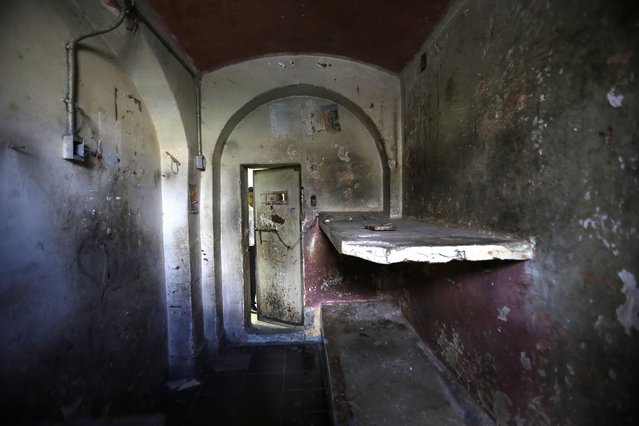
Detainees look out from a prison cell at a compound of the Lukyanivska detention centre in Kiev, Ukraine, July 19, 2016. (Photo by Valentyn Ogirenko/Reuters)

Detainees look out from a prison cell at a compound of the Lukyanivska detention centre in Kiev, Ukraine, July 19, 2016. (Photo by Valentyn Ogirenko/Reuters)
Details
20 Jul 2016 09:55:00
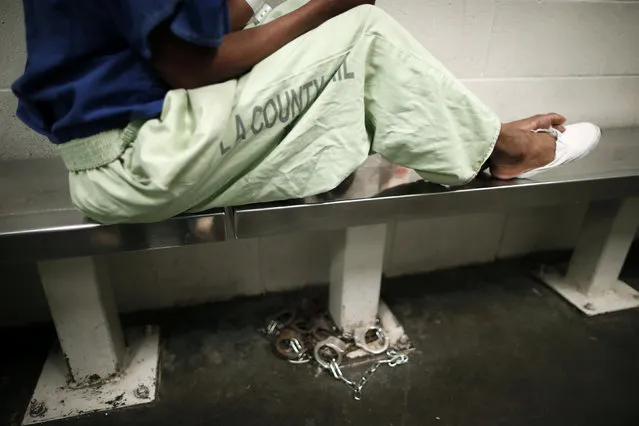
A woman sits in a cell at the Los Angeles County Women's jail in Lynwood, California April 26, 2013. (Photo by Lucy Nicholson/Reuters)

A woman sits in a cell at the Los Angeles County Women's jail in Lynwood, California April 26, 2013. (Photo by Lucy Nicholson/Reuters)
Details
16 Jul 2015 10:46:00
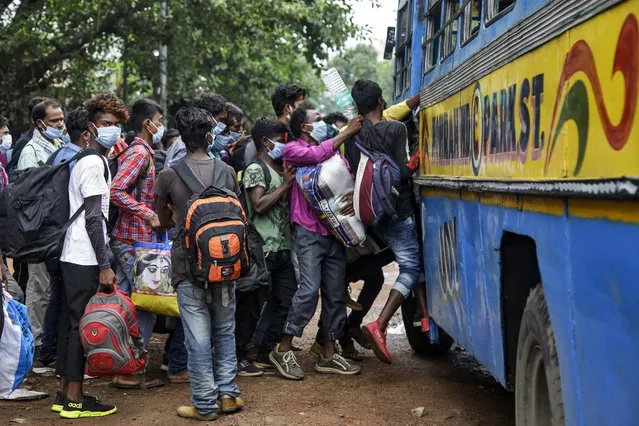
Commuters wearing face masks jostle for a ride on a bus discarding social distancing guidelines in Kolkata, India, Tuesday, July 21, 2020. With a surge in coronavirus cases in the past few weeks, state governments in India have been ordering focused lockdowns in high-risk areas to slow down the spread of infections. (Photo by Bikas Das/AP Photo)

Commuters wearing face masks jostle for a ride on a bus discarding social distancing guidelines in Kolkata, India, Tuesday, July 21, 2020. With a surge in coronavirus cases in the past few weeks, state governments in India have been ordering focused lockdowns in high-risk areas to slow down the spread of infections. (Photo by Bikas Das/AP Photo)
Details
31 Jul 2020 00:03:00
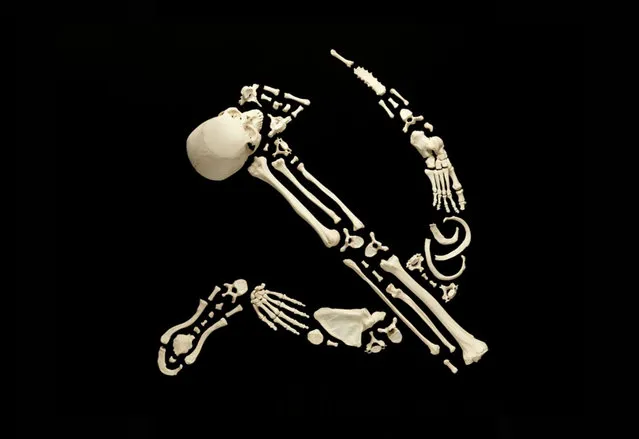
Human Bone

Hammer & Sickle

Francois Robert bought a skeleton from a school in the mid-90s, and started to creat this series of art works named "Stop the Violence" since 2007 after conceived a long time.
Details
11 Jun 2012 08:40:00
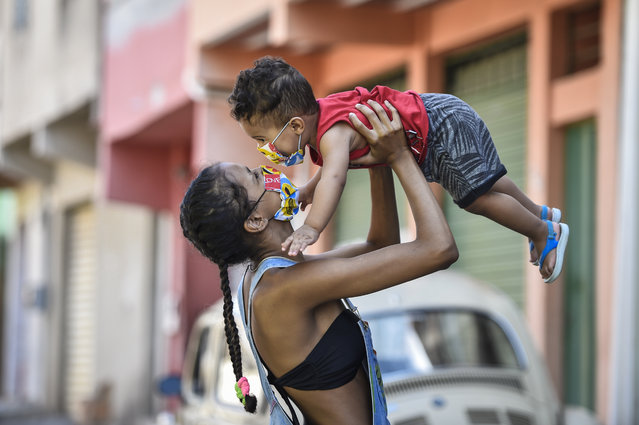
Carolaine Reis and her son Miguel Alves, residents of the Aglomerado da Serra favela, wear a protective mask against the spread of the new Coronavirus (COVID-19) made by the seamstresses of the Remexe Favelinha studio, in the Aglomerado da Serra favela, on April 13, 2020 in Belo Horizonte, Brazil. Facial masks follow the protocol and guidelines defined by the Ministry of Health. Around 6,000 masks have already been produced. The masks are being distributed to a part of the population and sold throughout the country, in the amount of 5 reais per unit. (Photo by Pedro Vilela/Getty Images)

Carolaine Reis and her son Miguel Alves, residents of the Aglomerado da Serra favela, wear a protective mask against the spread of the new Coronavirus (COVID-19) made by the seamstresses of the Remexe Favelinha studio, in the Aglomerado da Serra favela, on April 13, 2020 in Belo Horizonte, Brazil. Facial masks follow the protocol and guidelines defined by the Ministry of Health. Around 6,000 masks have already been produced. The masks are being distributed to a part of the population and sold throughout the country, in the amount of 5 reais per unit. (Photo by Pedro Vilela/Getty Images)
Details
16 Apr 2020 00:03:00
In this April 7, 2015 photo, a tourist peers through the door of a jail cell inside the now empty Garcia Moreno prison during a guided tour for the public in Quito, Ecuador. According to tour guides, this cell was nicknamed “Los Polillas”, or “The Moths”. Here, in a room designed to hold two prisoners, about 15 inmates with drug addictions were locked in overnight by the prison gangs that controlled daily life. The locked-in prisoners were also known to prostitute themselves to get access to drugs. (Photo by Dolores Ochoa/AP Photo)

In this April 7, 2015 photo, a tourist peers through the door of a jail cell inside the now empty Garcia Moreno prison during a guided tour for the public in Quito, Ecuador. According to tour guides, this cell was nicknamed “Los Polillas”, or “The Moths”. Here, in a room designed to hold two prisoners, about 15 inmates with drug addictions were locked in overnight by the prison gangs that controlled daily life. The locked-in prisoners were also known to prostitute themselves to get access to drugs. (Photo by Dolores Ochoa/AP Photo)
Details
03 May 2015 10:34:00
Russians play accordions as they walk near the building of the Federal Security Service (FSB, Soviet KGB successor) in Lubyanskaya Square to mark May Day in Moscow, Russia, Sunday, May 1, 2016. As in Soviet times, about one hundred thousand of cheerful workers paraded across Red Square despite a chilly rain, but instead of red flags with the Communist hammer and sickle, they waved the blue flags of the dominant Kremlin party and the Russian tricolor. (Photo by Alexander Zemlianichenko/AP Photo)

Russians play accordions as they walk near the building of the Federal Security Service (FSB, Soviet KGB successor) in Lubyanskaya Square to mark May Day in Moscow, Russia, Sunday, May 1, 2016. As in Soviet times, about one hundred thousand of cheerful workers paraded across Red Square despite a chilly rain, but instead of red flags with the Communist hammer and sickle, they waved the blue flags of the dominant Kremlin party and the Russian tricolor. (Photo by Alexander Zemlianichenko/AP Photo)
Details
02 May 2016 11:09:00