Loading...
Done
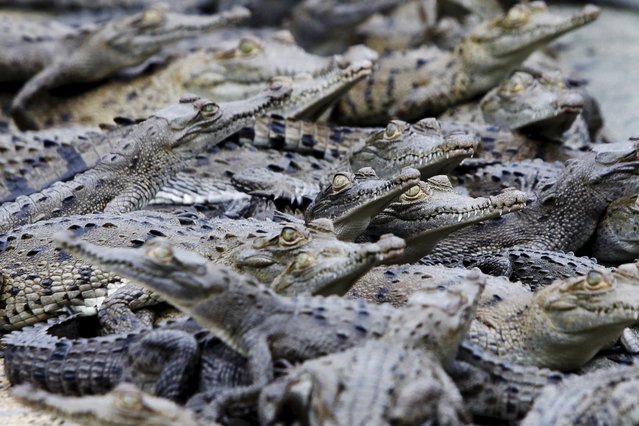
Young acutus crocodile are pictured at Panagator, a sustainable crocodile farm, on the outskirts of Panama City September 11, 2015. Gladys Vallarino, owner of the farm and of a specialty boutique shop selling items made from crocodiles, says the farm looks after more than 19,000 Acutus and Fuscus species of crocodiles and donates five percent of its crocodiles annually to the Panamanian authorities to be put into the wild. (Photo by Carlos Jasso/Reuters)

Young acutus crocodile are pictured at Panagator, a sustainable crocodile farm, on the outskirts of Panama City September 11, 2015. Gladys Vallarino, owner of the farm and of a specialty boutique shop selling items made from crocodiles, says the farm looks after more than 19,000 Acutus and Fuscus species of crocodiles and donates five percent of its crocodiles annually to the Panamanian authorities to be put into the wild, in accordance with the regulations of the CITES (Convention of International Trade in Endangered Species). The handmade fashion items sell for $200 to $3,000. (Photo by Carlos Jasso/Reuters)
Details
13 Sep 2015 13:00:00
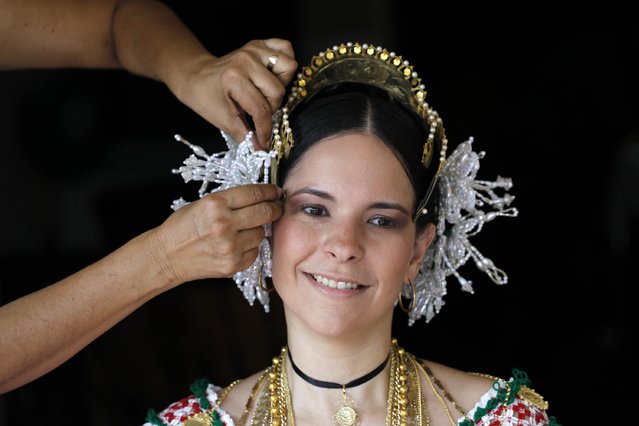
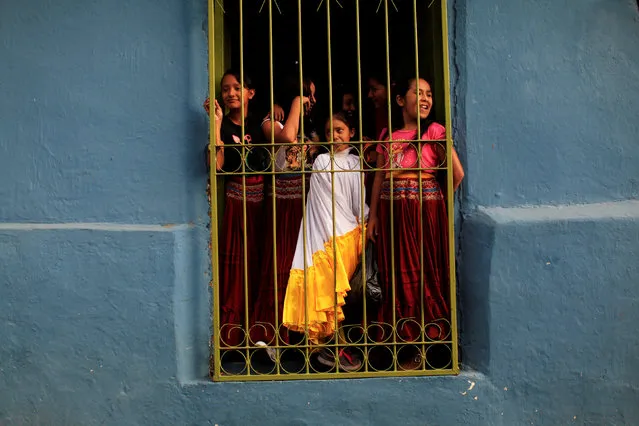
A woman is helped with adorning her hair with jewelry, part of the traditional clothing known as “Pollera”, before the annual Thousand Polleras parade in Las Tablas, in the province of Los Santos January 10, 2015. According to local residents, the Pollera dates back to the 18th century and was worn by the Spanish lower classes. (Photo by Carlos Jasso/Reuters)

A woman is helped with adorning her hair with jewelry, part of the traditional clothing known as “Pollera”, before the annual Thousand Polleras parade in Las Tablas, in the province of Los Santos January 10, 2015. According to local residents, the Pollera dates back to the 18th century and was worn by the Spanish lower classes. Today, it has become the Panamanian national costume. The dress is made entirely by hand and the jewellery worn is pure gold and worth thousands of dollars. (Photo by Carlos Jasso/Reuters)
Details
12 Jan 2015 15:46:00
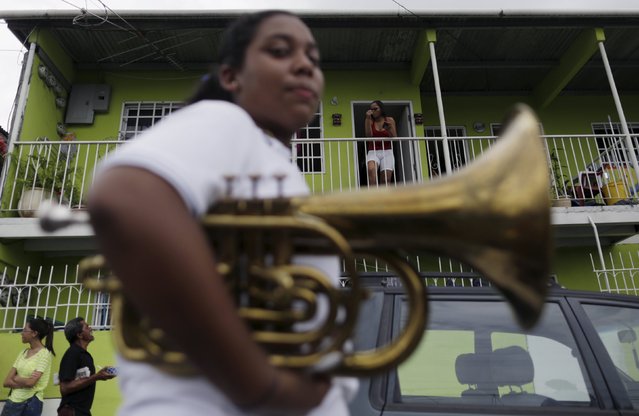
A resident looks at a parade marking the 496th anniversary of Panama City, Panama August 15, 2015. Modern-day Panama City includes the historical ruins of the original Panama Viejo settlement founded on August 15, 1519 by Spaniard Pedro Arias Davila, according to local media. (Photo by Carlos Jasso/Reuters)

A resident looks at a parade marking the 496th anniversary of Panama City, Panama August 15, 2015. Modern-day Panama City includes the historical ruins of the original Panama Viejo settlement founded on August 15, 1519 by Spaniard Pedro Arias Davila, according to local media. (Photo by Carlos Jasso/Reuters)
Details
17 Aug 2015 10:15:00
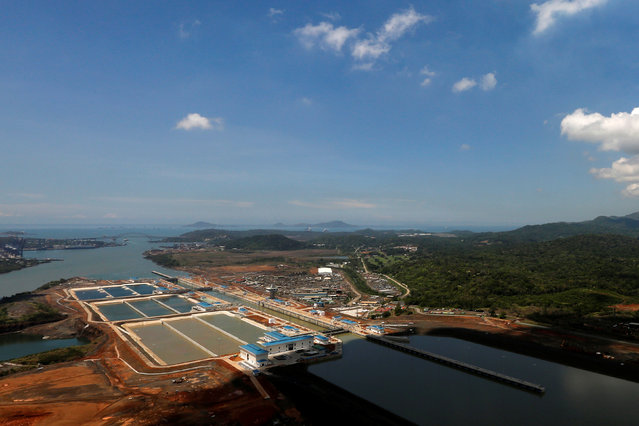
An aerial view of the new Panama Canal expansion project on the Atlantic side of the Panama Canal during an organized media tour by Italy's Salini Impregilo, one of the main sub contractors of the Panama Canal Expansion project, in Panama City May 11, 2016. The newly expanded Panama Canal will be inaugurated on June 26, 2016. (Photo by Carlos Jasso/Reuters)

An aerial view of the new Panama Canal expansion project on the Atlantic side of the Panama Canal during an organized media tour by Italy's Salini Impregilo, one of the main sub contractors of the Panama Canal Expansion project, in Panama City May 11, 2016. The newly expanded Panama Canal will be inaugurated on June 26, 2016. (Photo by Carlos Jasso/Reuters)
Details
13 May 2016 11:54:00
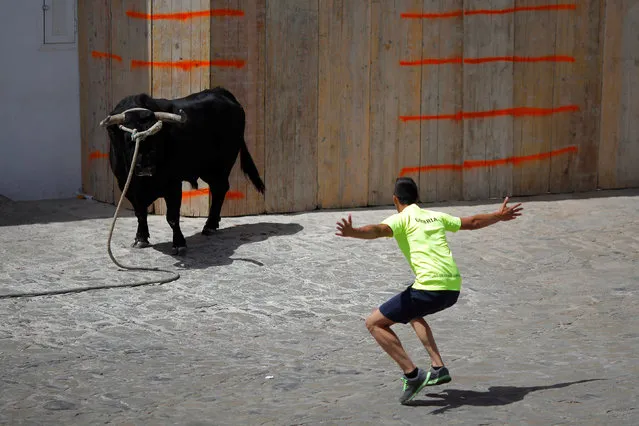
A runner tries to get the attention of a bull, named Santon, during the “Toro de Cuerda” (Bull on Rope) festival at Plaza de Espana square in Grazalema, southern Spain, July 18, 2016. (Photo by Jon Nazca/Reuters)

A runner tries to get the attention of a bull, named Santon, during the “Toro de Cuerda” (Bull on Rope) festival at Plaza de Espana square in Grazalema, southern Spain, July 18, 2016. Three bulls restrained by a rope are allowed to run through the streets of the village during the annual festival. (Photo by Jon Nazca/Reuters)
Details
19 Jul 2016 12:53:00
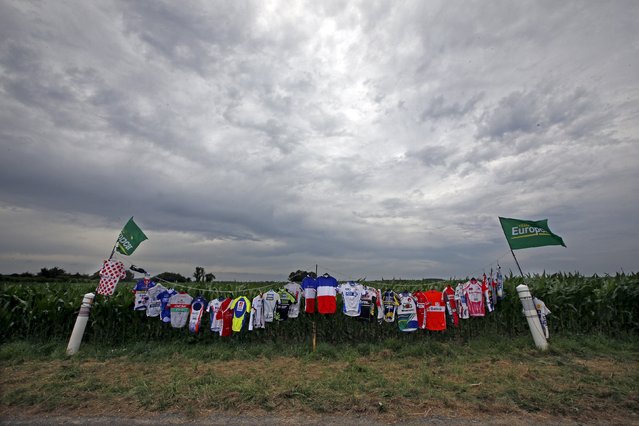
Cycling jerseys, part of a collection belonging to French cycling fan Gerald, hang from a line during the 4th stage of the Tour de France cycling race from Seraing in Belgium to Cambrai in France, July 7, 2015. (Photo by Eric Gaillard/Reuters)

Cycling jerseys, part of a collection belonging to French cycling fan Gerald, hang from a line during the 4th stage of the Tour de France cycling race from Seraing in Belgium to Cambrai in France, July 7, 2015. Photographing the Tour de France cycling race comes with highs and lows: the buzz from capturing just the right image, the tedium of long journeys, the painstaking set-up of equipment, the breath-taking scenery. Reuters photographers have worked not only to capture the thrills and spills on the roads and mountain passes. They have also shot a set of pictures showing their own quirky view from behind the scenes as they travelled through the Netherlands, Belgium and France. (Photo by Eric Gaillard/Reuters)
Details
25 Jul 2015 12:42:00
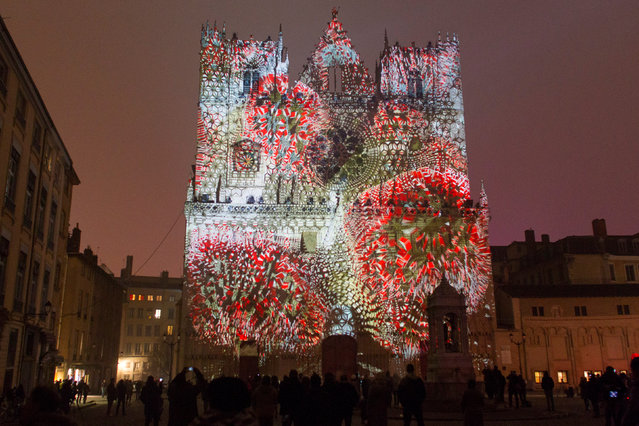
View of Evolutions installation by artist Yann Nguema at the Saint-Jean Cathedral during the rehearsal for the Festival of Lights (Fetes des Lumieres) in Central Lyon, France, late December 7, 2016. (Photo by Emmanuel Foudrot/Reuters)

View of Evolutions installation by artist Yann Nguema at the Saint-Jean Cathedral during the rehearsal for the Festival of Lights (Fetes des Lumieres) in Central Lyon, France, late December 7, 2016. (Photo by Emmanuel Foudrot/Reuters)
Details
09 Dec 2016 11:26:00
A catholic faithful smeared in burnt oil, takes part in the opening of the ten-day celebration of the Santo Domingo de Guzman festival in Managua, on August 1, 2019. (Photo by Inti Ocon/AFP Photo)

A catholic faithful smeared in burnt oil, takes part in the opening of the ten-day celebration of the Santo Domingo de Guzman festival in Managua, on August 1, 2019. In Central America the black devil, or El Cadejo, is an evil dog-like spirit with glowing red eyes that locals believe eats new born puppies. (Photo by Inti Ocon/AFP Photo)
Details
06 Aug 2019 00:01:00