Loading...
Done
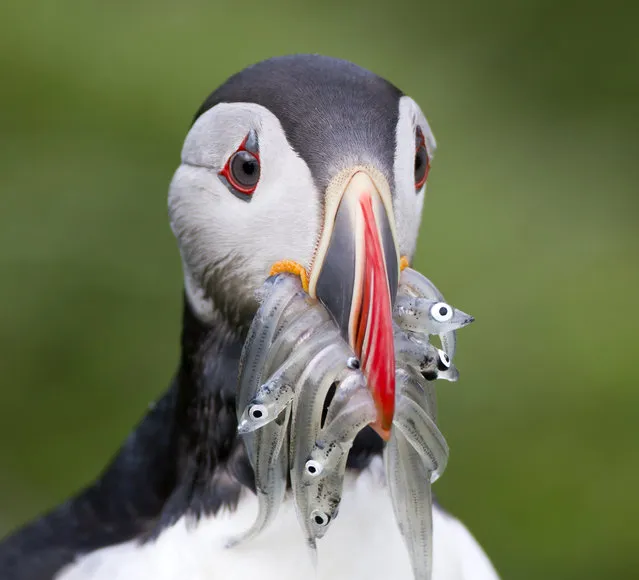
Atlantic Puffin Is AKA Puffins Or Puffin Birds

The Atlantic Puffin is definitely a curious-looking bird. The special coloring that this bird develops for the breeding season in the spring is very reminiscent of tropical birds. The bright colors of the beak and the markings around the eyes serve no particular advantage and have evolved as a result of sexual selection. However, Puffins don’t look that pretty all year round. They shed all these festive colors in partial moult after the breeding season is over. They lose the ornaments around their eyes, their face becomes darker, and their beak becomes very different. The natural habitat of these birds is the cold waters of the North Atlantic Ocean.
Details
12 Nov 2014 13:40:00
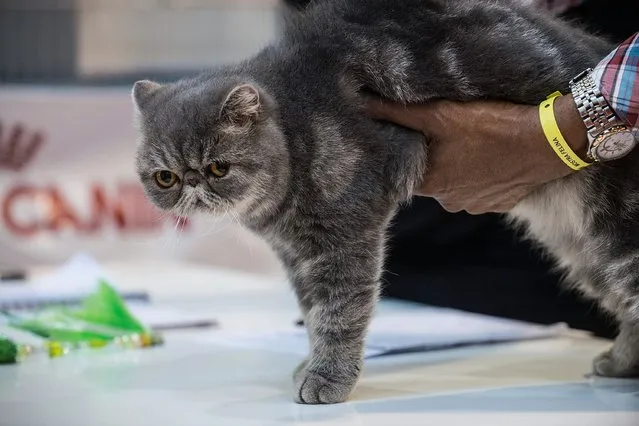
A cat is  examined by the jury during the first day of the Super Cat Show 2014, on November 8, 2014 in Rome, Italy. The Super Cat Show 2014, which takes place on the 8th and 9th of November, involves the participation of 800 cats of different breeds from all over the world. (Photo by Giorgio Cosulich/Getty Images)

A cat is examined by the jury during the first day of the Super Cat Show 2014, on November 8, 2014 in Rome, Italy. The Super Cat Show 2014, which takes place on the 8th and 9th of November, involves the participation of 800 cats of different breeds from all over the world. (Photo by Giorgio Cosulich/Getty Images)
Details
11 Nov 2014 12:06:00
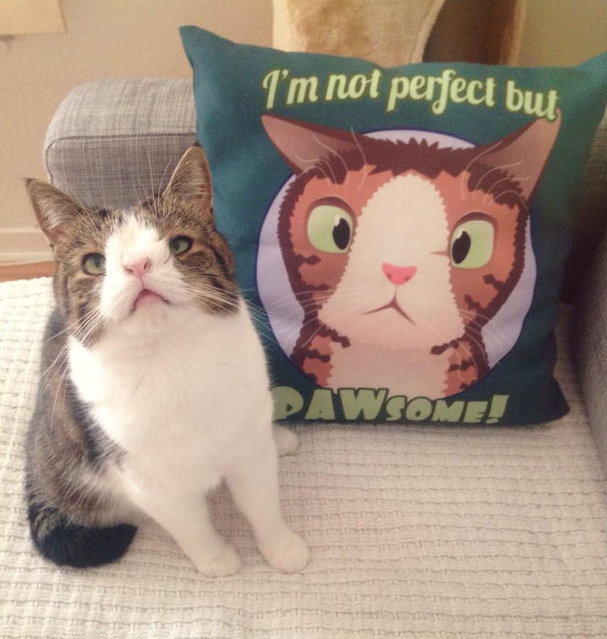
Monty The Cat Without A Nasal Bone

If you love someone very much, you care very little about their looks. The beauty of their soul is the thing that matters the most, changing your perception of them for the better. Monty the Cat is a vivid example of this fact. He was taken by his new owners from an animal shelter at the age of three, and became a proud member of their family. Due to a genetic anomaly Monty doesn’t have a nasal bridge, making his appearance rather unique. However, this peculiarity is what makes Monty special, and his new owners love him for it. Though he doesn’t realize that he’s any different from other cats, Monty knows that his owners love him very much.
Details
10 Nov 2014 13:49:00
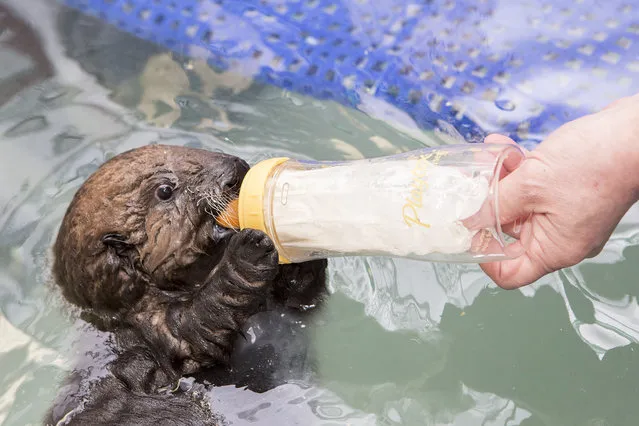
Weighing in at just under 6 pounds and at 22.6 inches long, the female pup arrived at Shedd in late October from Monterey Bay Aquarium in California, where she spent the first four weeks of her life being stabilized. (Photo by Brenna Hernandez/AP Photo)

Weighing in at just under 6 pounds and at 22.6 inches long, the female pup arrived at Shedd in late October from Monterey Bay Aquarium in California, where she spent the first four weeks of her life being stabilized. The pup has been doing well since her arrival, receiving continual care behind the scenes of Shedd’s Abbott Oceanarium. Currently referred to as “Pup 681”, Shedd’s animal care and veterinarian teams are providing the continual, round-the-clock care she needs to thrive. Photos used with permisson from Shedd Aquarium. (Photo by Brenna Hernandez/AP Photo)
Details
09 Nov 2014 09:35:00
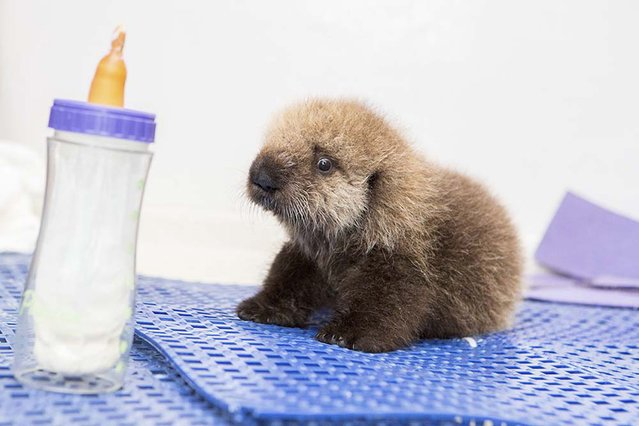
A five-week-old orphaned Southern Sea Otter pup rests on a rubber mat after arriving at the Shedd Aquarium's Abbott Oceanarium in Chicago, Illinois October 28, 2014 in this handout photo provided to Reuters on November 5, 2014. The stranded pup was found on September 30 on Coastways Beach in California and was rescued the next day to be brought back to health at the Monterey Bay Aquarium. (Photo by Brenna Hernandez/Reuters/Shedd Aquarium)

A five-week-old orphaned Southern Sea Otter pup rests on a rubber mat after arriving at the Shedd Aquarium's Abbott Oceanarium in Chicago, Illinois October 28, 2014 in this handout photo provided to Reuters on November 5, 2014. The stranded pup was found on September 30 on Coastways Beach in California and was rescued the next day to be brought back to health at the Monterey Bay Aquarium. Southern sea otters were listed as “threatened” under the U.S. Endangered Species Act in 1977. (Photo by Brenna Hernandez/Reuters/Shedd Aquarium)
Details
08 Nov 2014 13:15:00
In this October 7, 2014, photo, Fredrick Brower, center, helps cut up a bowhead whale caught by Inupiat subsistence hunters on a field near Barrow, Alaska. Drawing on tradition, and keeping within the closely monitored Aboriginal subsistence whaling guidelines, a bowhead whale is carved and divided by a crew armed with knives and hooks, and then shared according to custom. (Photo by Gregory Bull/AP Photo)

In this October 7, 2014, photo, Fredrick Brower, center, helps cut up a bowhead whale caught by Inupiat subsistence hunters on a field near Barrow, Alaska. Drawing on tradition, and keeping within the closely monitored Aboriginal subsistence whaling guidelines, a bowhead whale is carved and divided by a crew armed with knives and hooks, and then shared according to custom. (Photo by Gregory Bull/AP Photo)
Details
07 Nov 2014 12:58:00
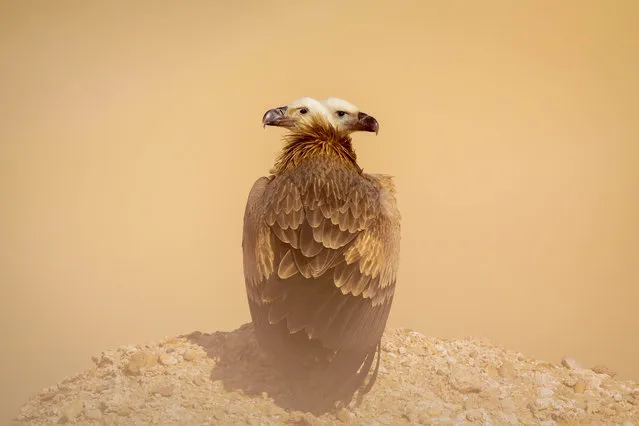
“Double head vulture”. On the day of windy days during raptors migration some people in my country start to catch these tired raptors, so in this day we go to photograph some raptors and we saw these tow tired vultures, so we start to drag them away from the hunters until they reach a good hidden place, to make them safe until they start a new journey. Photo location: Kuwait. (Photo and caption by Mohd Khorshed/National Geographic Photo Contest)

“Double head vulture”. On the day of windy days during raptors migration some people in my country start to catch these tired raptors, so in this day we go to photograph some raptors and we saw these tow tired vultures, so we start to drag them away from the hunters until they reach a good hidden place, to make them safe until they start a new journey. Photo location: Kuwait. (Photo and caption by Mohd Khorshed/National Geographic Photo Contest)
Details
06 Nov 2014 09:40:00
A man tries to stop two bulls from locking horns during a bullfight in the eastern emirate of Fujairah October 17, 2014. There are no matadors or picadors, but bulls locking horns with each other draw big crowds to bullfights in the United Arab Emirates (UAE). (Photo by Ahmed Jadallah/Reuters)

A man tries to stop two bulls from locking horns during a bullfight in the eastern emirate of Fujairah October 17, 2014. There are no matadors or picadors, but bulls locking horns with each other draw big crowds to bullfights in the United Arab Emirates (UAE). An hour's drive from the dancing water fountains of Dubai's glitzy downtown, hundreds of fans gather in Fujairah to watch bulls fighting, or perhaps more accurately head butting, with honour rather than money at stake. The UAE sport involves two bulls locking horns in a three-to-four minute Sumo-wrestling-like fight that usually ends with no bloodshed. (Photo by Ahmed Jadallah/Reuters)
Details
06 Nov 2014 09:26:00