Loading...
Done
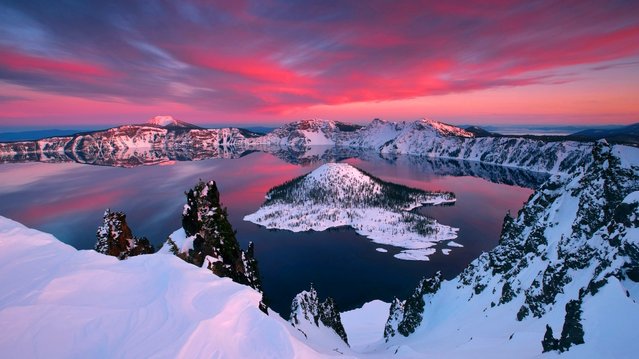
Crater Lake In Oregon

As you look at the majestic Crater Lake, located in south-central Oregon, United States, it is hard to imagine that thousands of years ago this place was one giant crater with scorching hot lava spilling over the sides. Those were the times of turmoil. Now, however, this place is the essence of tranquility. The lake that was formed, after the volcano died down, is amazingly clear due to the fact that the water isn’t moving at all. No rivers go in or out of the Crater Lake, and the water lost through evaporation is compensated by the rain and snowfall. This lake is also frighteningly deep – 1,943 feet (592 m) at its deepest point – making it the deepest lake in the United States. If you love nature and if you ever come to Oregon, this is truly a sight to behold.
Details
19 Nov 2014 14:14:00
An aerial view of open pits of CODELCO's Andina (L) and Anglo American's Los Bronces copper mines with Olivares glaciers in the background (top L) at Los Andes Mountain range, near Santiago city, November 17, 2014. The rock glaciers of the Chilean central zone, a huge source of water for the basins of the capital, are said to be threatened by the environmental impacts of hydroelectric and mining projects, according to environmental activists Greenpeace. (Photo by Ivan Alvarado/Reuters)

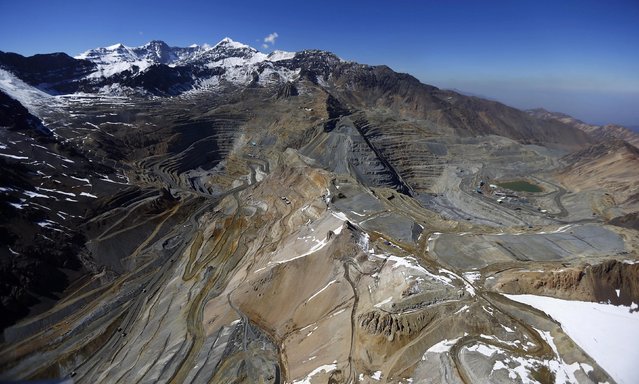
An aerial view of open pits of CODELCO's Andina (L) and Anglo American's Los Bronces copper mines with Olivares glaciers in the background (top L) at Los Andes Mountain range, near Santiago city, November 17, 2014. The rock glaciers of the Chilean central zone, a huge source of water for the basins of the capital, are said to be threatened by the environmental impacts of hydroelectric and mining projects, according to environmental activists Greenpeace. (Photo by Ivan Alvarado/Reuters)
Details
19 Nov 2014 14:06:00
It looks like an underwater tornado, but a diver was actually stuck in the middle of a huge school of fish. The fish swarmed around Mika Woyda in their thousands as she swam off the coast of Cabo Pulmo, Mexico. Before entering the water the couple, who live in Boulder, Colorado, had some shots in mind but never imagined what they would capture. Here: photographer Caine Delacy with his wife Mika Woyda. (Photo by Caine Delacy/Mika Woyda/Caters News)

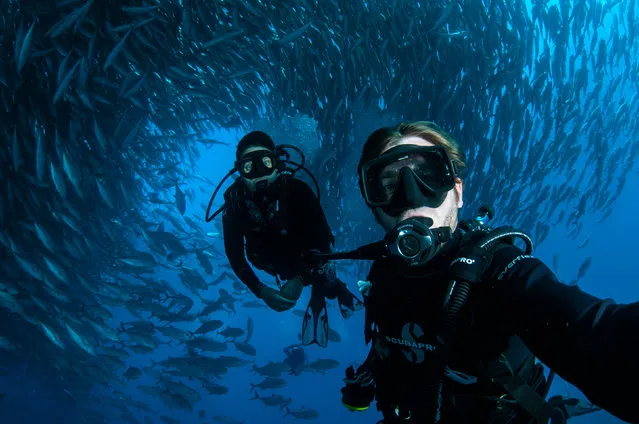
It looks like an underwater tornado, but a diver was actually stuck in the middle of a huge school of fish. The fish swarmed around Mika Woyda in their thousands as she swam off the coast of Cabo Pulmo, Mexico. Her husband Caine Delacy snapped the breath-taking images of Mika in scenes he revealed he had never witnessed in 20 years of diving. Before entering the water the couple, who live in Boulder, Colorado, had some shots in mind but never imagined what they would capture. Here: photographer Caine Delacy with his wife Mika Woyda. (Photo by Caine Delacy/Mika Woyda/Caters News)
Details
16 Nov 2014 12:39:00
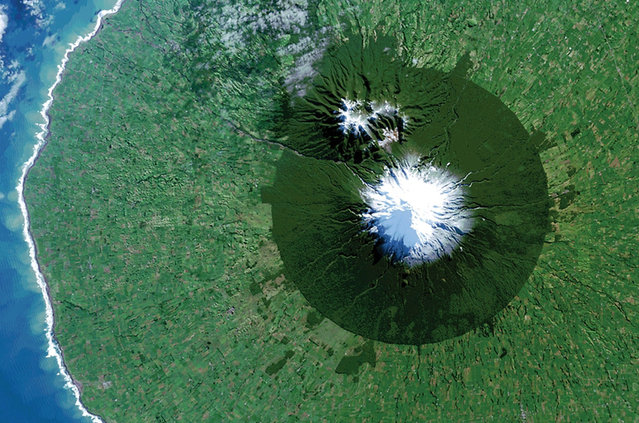
Egmont National Park in New Zealand with Mt. Taranaki at its center is seen in a Landsat 8 satellite image. (Photo by Reuters/NASA/USGS)

Egmont National Park in New Zealand with Mt. Taranaki at its center is seen in a Landsat 8 satellite image taken July 3, 2014 and released by NASA November 14, 2014. The image is from the book “Sanctuary: Exploring the World's Protected Areas from Space”, published by the Institute for Global Environmental Strategies with support from NASA, which was released this week. (Photo by Reuters/NASA/USGS)
Details
16 Nov 2014 12:15:00
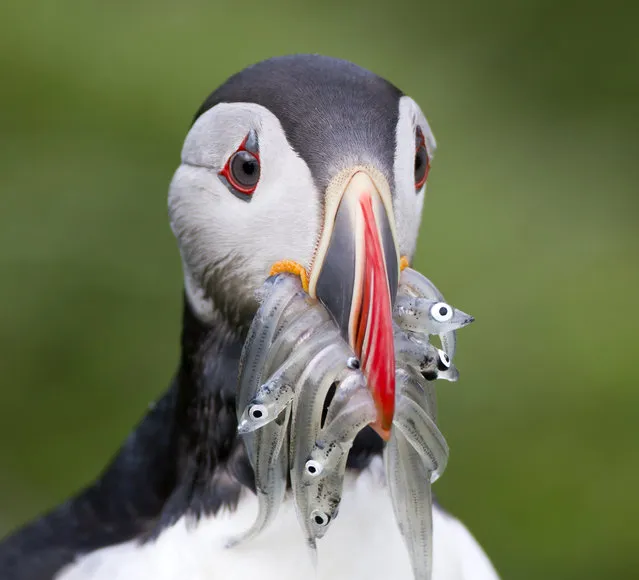
Atlantic Puffin Is AKA Puffins Or Puffin Birds

The Atlantic Puffin is definitely a curious-looking bird. The special coloring that this bird develops for the breeding season in the spring is very reminiscent of tropical birds. The bright colors of the beak and the markings around the eyes serve no particular advantage and have evolved as a result of sexual selection. However, Puffins don’t look that pretty all year round. They shed all these festive colors in partial moult after the breeding season is over. They lose the ornaments around their eyes, their face becomes darker, and their beak becomes very different. The natural habitat of these birds is the cold waters of the North Atlantic Ocean.
Details
12 Nov 2014 13:40:00
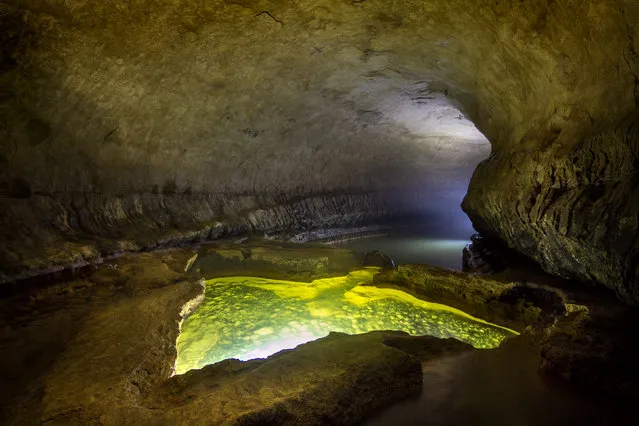
A large pool of water inside one of the tunnels. (Photo by Vladimir Mulde/Caters News)

These otherworldly images give a rare glimpse inside caves barely ever seen by the human eye. With its peculiar pools of water and strange colored sediments, the bizarre looking tunnels of the Shakuranskaya cave could be a set straight out of a science fiction film. Found in the disputed region of Abkhazia, around 75 miles outside of Sochi, Russia, it is rumored the incredible underground chambers were formed after a huge earthquake struck the area in 1892. After causing part of a nearby mountain to collapse into the Amtkel River, it is thought the dam-like affect has created a series of interconnecting underground tunnels. Here: a large pool of water inside one of the tunnels. (Photo by Vladimir Mulde/Caters News)
Details
07 Nov 2014 12:45:00
“Double head vulture”. On the day of windy days during raptors migration some people in my country start to catch these tired raptors, so in this day we go to photograph some raptors and we saw these tow tired vultures, so we start to drag them away from the hunters until they reach a good hidden place, to make them safe until they start a new journey. Photo location: Kuwait. (Photo and caption by Mohd Khorshed/National Geographic Photo Contest)

“Double head vulture”. On the day of windy days during raptors migration some people in my country start to catch these tired raptors, so in this day we go to photograph some raptors and we saw these tow tired vultures, so we start to drag them away from the hunters until they reach a good hidden place, to make them safe until they start a new journey. Photo location: Kuwait. (Photo and caption by Mohd Khorshed/National Geographic Photo Contest)
Details
06 Nov 2014 09:40:00
“Hippo Chase”. As we approached the camp the Selinda Reserve of northern Botswana our boat passed by a hippo resting in the water. I turned around to look back at the boat's wake and saw the hippo charging after us! The hippo must've been tired from an all-nighter because he was angry. (Photo and caption by Curtis Simmons/National Geographic Photo Contest)

“Hippo Chase”. As we approached the camp the Selinda Reserve of northern Botswana our boat passed by a hippo resting in the water. I turned around to look back at the boat's wake and saw the hippo charging after us! The hippo must've been tired from an all-nighter because he was angry. He rose way up out of the water three times trying to chase our boat! He was coming at us with such force that he created a wake of his own. Photo location: Selinda Reserve of northern Botswana. (Photo and caption by Curtis Simmons/National Geographic Photo Contest)
Details
06 Nov 2014 08:59:00