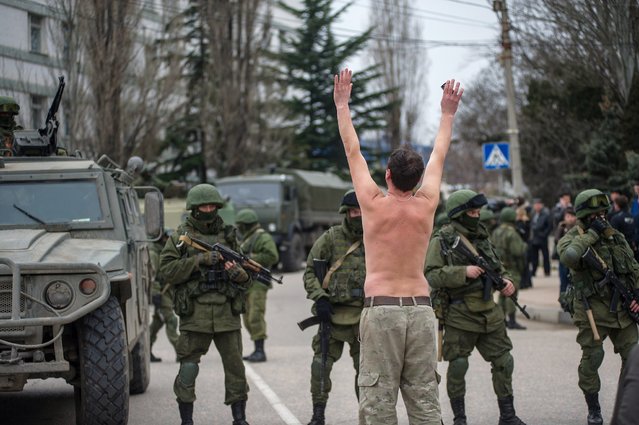
A Ukrainian man stands in protest in front of gunmen in unmarked uniforms as they stand guard in Balaklava, on the outskirts of Sevastopol, Ukraine, Saturday, March 1, 2014. (Photo by Andrew Lubimov/AP Photo)
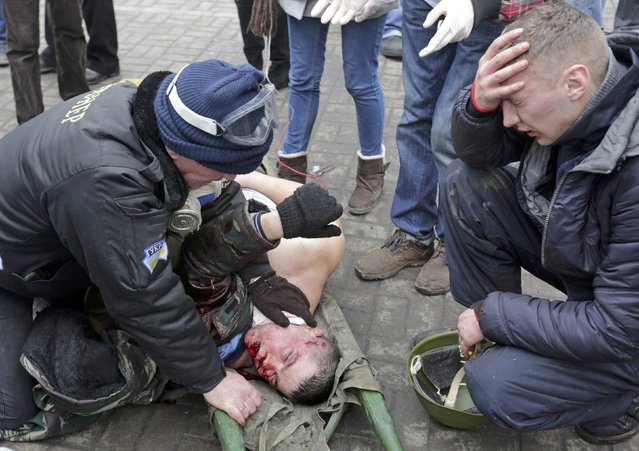
A wounded protester is attended before being rushed to a vehicle following violence in Independence Square in Kiev February 20, 2014. Ukrainian protesters seized back Kiev's Independence Square in fresh clashes with riot police on Thursday that left several injured and possibly two demonstrators dead. (Photo by Konstantin Chernichkin/Reuters)
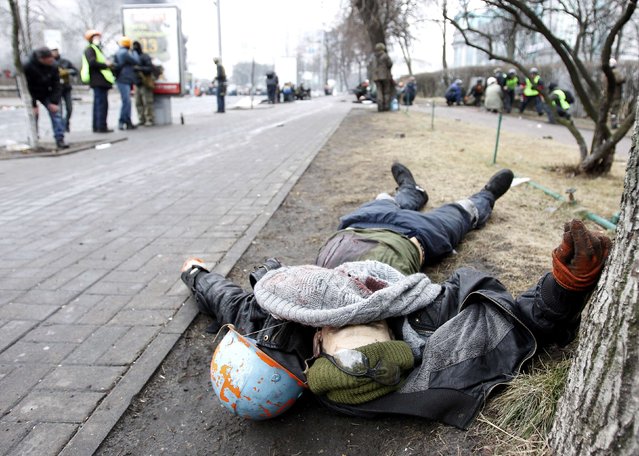
A dead body is seen on the ground after violence erupted in the Independence Square in Kiev February 20, 2014. Ukrainian protesters seized back Kiev's Independence Square in fresh clashes with riot police on Thursday that left several injured and possibly two demonstrators dead. (Photo by David Mdzinarishvili/Reuters)
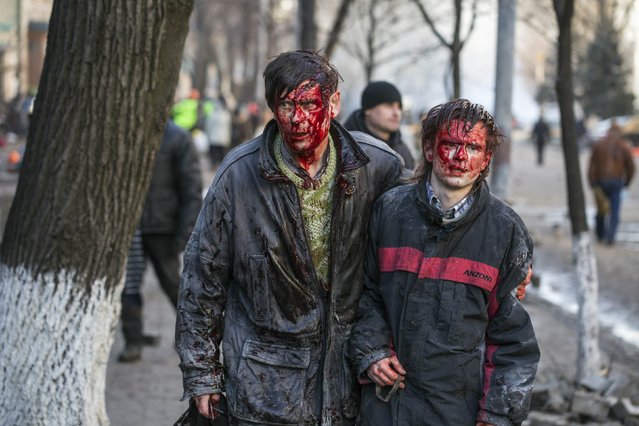
Wounded people walk after clashes with riot police in central Kiev February 18, 2014. Ukrainian riot police advanced on the heart of 12-week-old protests against President Viktor Yanukovich on Tuesday and security forces set a deadline to end disturbances after at least five protesters were reported killed in a day of clashes. (Photo by Vlad Sode/Reuters)
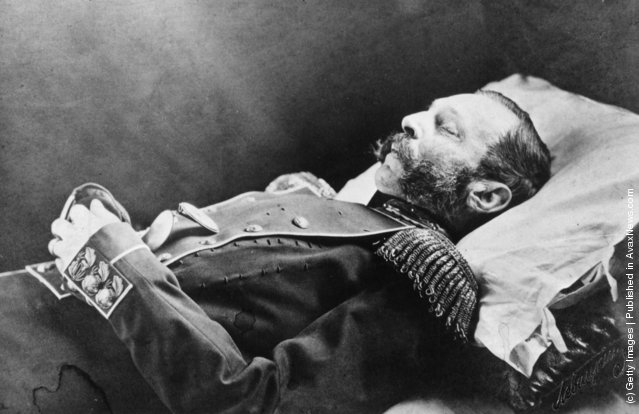
Tsar Alexander II (1818–1881) known as “The Liberator” lying in state. He was mortally wounded by an assassination attack in St Petersburg. (Photo by Hulton Archive/Getty Images). March 1881
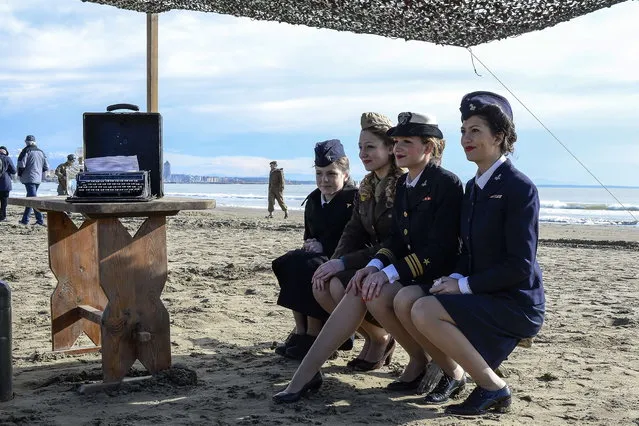
World War II enthusiasts take part in a re-enactament to mark the 70th anniversary of the Allied landings on Anzio beach, 52 km south of Rome, on January 25, 2014. (Photo by Andreas Solaro/AFP Photo)
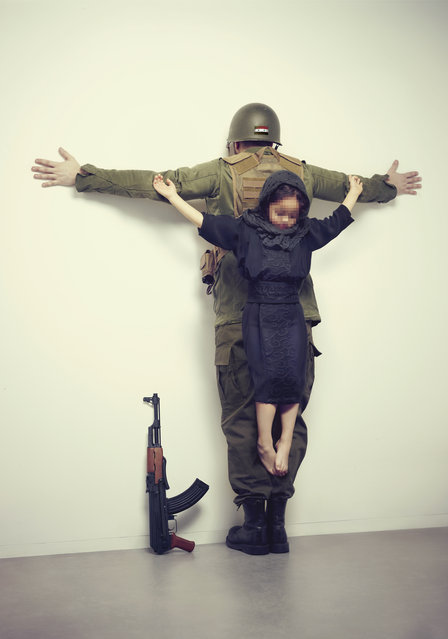
Erik Ravelo goes straight for the jugular in his series, Los Intocables (The Untouchables). Depicting children in one the most vulnerable poses of all time, Ravelo attempts to speak for those who cannot properly articulate their pain. The sick, twisted games that adults play can come at a cost to future generations and Ravelo’s series gives a voice to those children who get caught in the crossfire.