
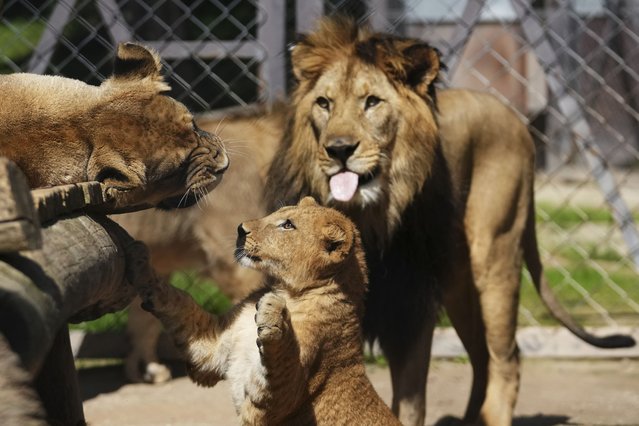
One of four Barbary lion cubs, that were born recently at the Safari Park Dvur Kralove, plays with parents, Wednesday, August 6, 2025, in Dvur Kralove, Czech Republic.(Photo by Petr David Josek/AP Photo)
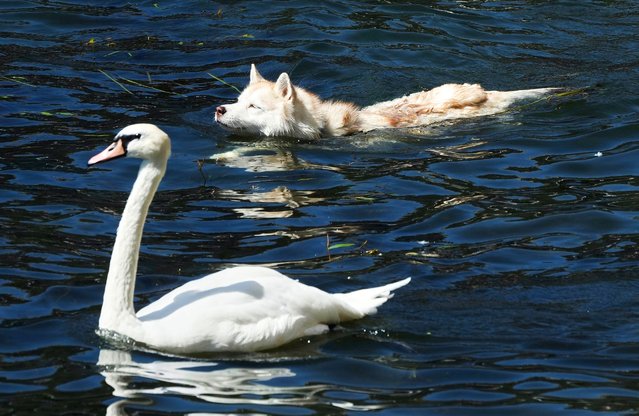
A dog swims next to a swan as he cools off in the Seine river in Paris, Thursday, August. 7, 2025. (Photo by Michel Euler/AP Photo)
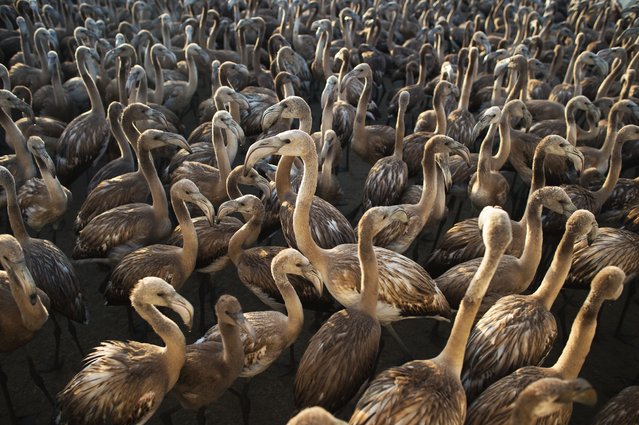
Flamingo chicks pictured inside a corral during the annual tagging of flamenco chicks at Fuente de Piedra Lagoon, following its suspension the previous year due to drought and climatic conditions, in Malaga, Spain, on 09 August, 2025. The ringing of flamingo chicks is a scientific activity carried out at Fuente de Piedra lagoon, with the collaboration of hundreds of volunteers. During the ringing process, various tasks are undertaken, including the capture, assessment, monitoring and identification of the chicks, in order to track and study the species evolution and reproduction. Fuente de Piedra Lagoon is the largest lagoon in Andalusia and the nature reserve with the largest breeding colony of flamingos. (Photo by Jesus Merida/Anadolu via Getty Images)
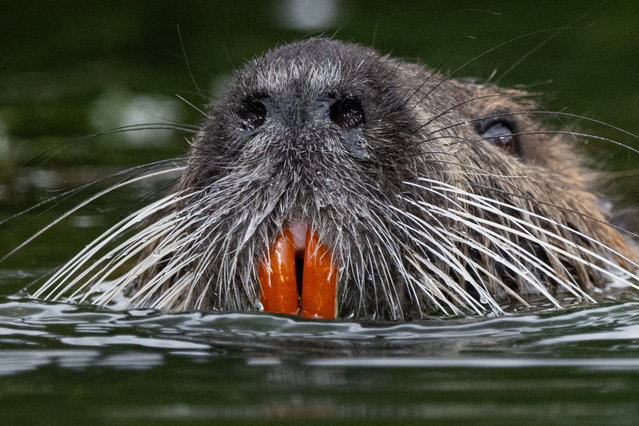
This photograph shows a Nutria, a herbivorous semiaquatic rodent, at a lake of the Bois de Boulogne, western Paris, on July 30, 2025. (Photo by Martin Lelievre/AFP Photo)
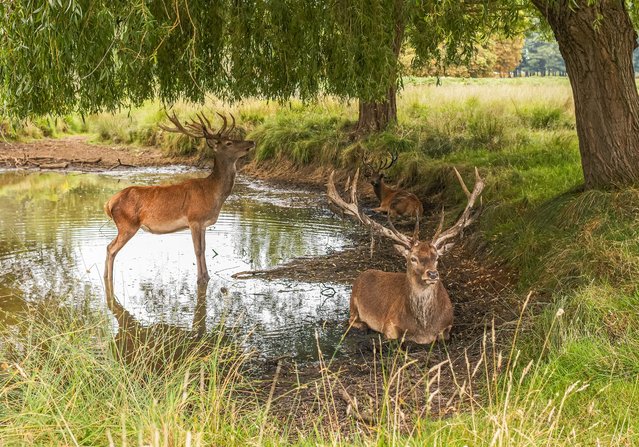
Deer cool off in Richmond Park, southwest London, UK on August 13, 2025. Temperatures in the south are expected to peak at 28°C on Thursday. (Photo by Alex Lentati/London News Pictures)
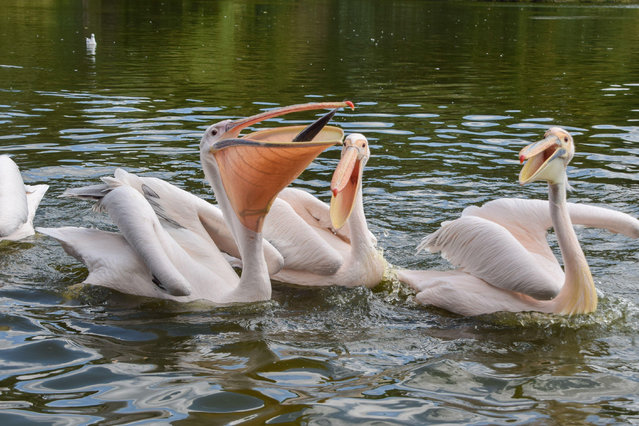
A pelican catches a fish in the lake in St James’s Park, London, UK in the first decade of August 2025. Six great white pelicans live in the park and are fed daily by park staff. (Photo by Vuk Valcic/Zuma Press, Inc/Alamy Live News)
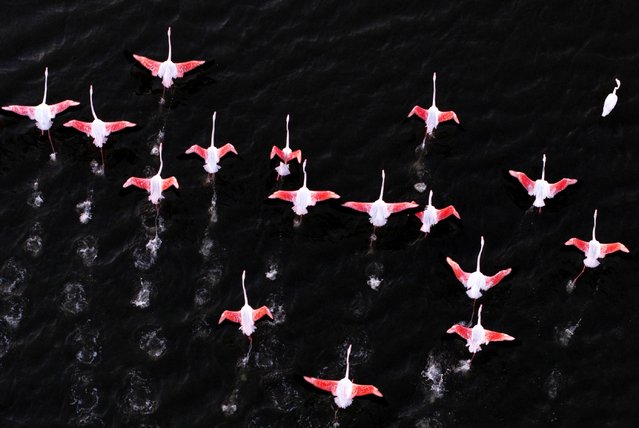
An aerial view of the flamingos fluttering their wings in the 40,000-hectare Gediz Delta, formed by the accumulation of silt carried by the Gediz River in the Izmir Bay on August 02, 2025 in Izmir, Turkiye. The delta, which is protected as an important bird area and an important nature area, hosts a wide biodiversity with its meadows and wetlands. Flamingos, which are among the inhabitants of the delta, meet their accommodation and feeding needs in the delta. (Photo by Mahmut Serdar Alakus/Anadolu via Getty Images)
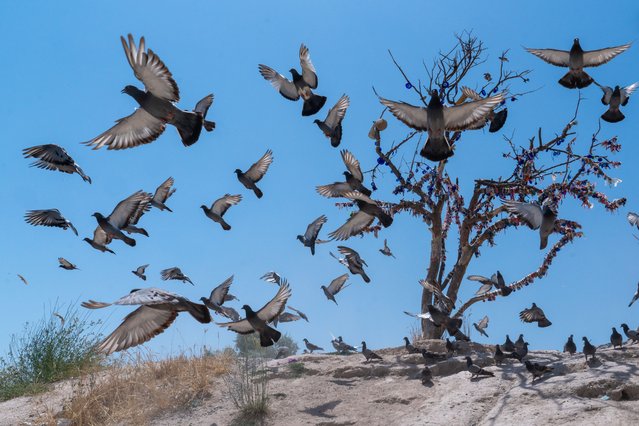
A view of pigeon houses carved into the rocks in the valleys of Cappadocia serve both as shelters for pigeons and as a source of natural fertilizer, contributing to local agriculture in Nevsehir, Turkiye on July 27, 2025. Concentrated in areas such as Ortahisar, Ushisar, Goreme, and Zemi Valley, these structures stand out with their architecture carved into sun-facing slopes. (Photo by Ayten Altintas/Anadolu via Getty Images)
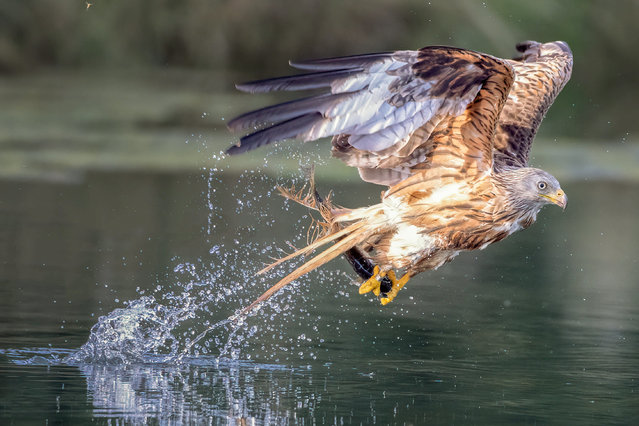
A red kite swoops down to snatch a live fish from the water in the first decade of August 2025 — a rare behaviour for this primarily scavenging bird, whose diet usually consists of carrion and earthworms. (Photo by Julie Yates/Solent News & Photo Agency)
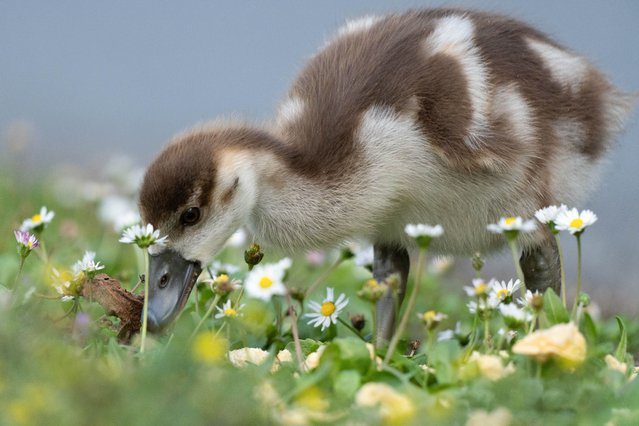
A gosling searches for food near the Main River in Frankfurt, Germany on July 27, 2025. (Photo by Matias Basualdo/ZUMA Press Wire/Rex Features/Shutterstock)
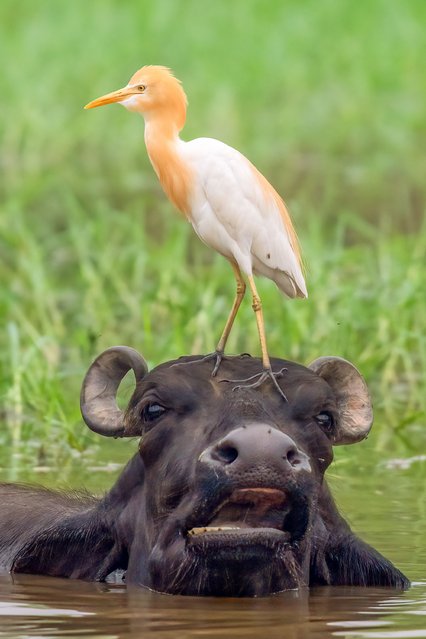
An egret lands on a buffalo’s head in Sukhna Lake, northern India, in the first decade of August 2025, to eat the flies and insects buzzing around it. (Photo by Anuj Jain/Solent News & Photo Agency)
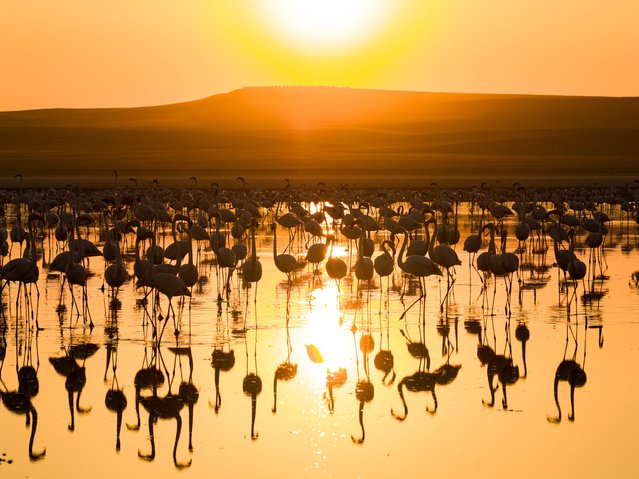
A view of flamingos feeding in the shallow water of Lake Duden during sunrise in Kulu district of Konya, Turkiye on August 04, 2025. (Photo by Lokman Vural Elibol/Anadolu via Getty Images)
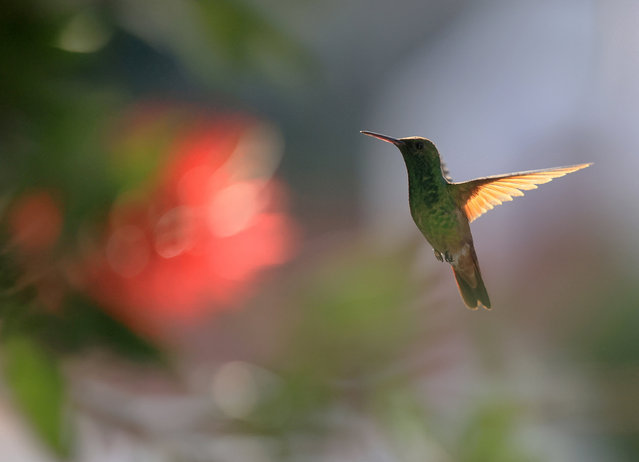
A hummingbird flutters around a flower in the summer light, framed by a window at sunset in Mexico City, on August 3, 2025. (Photo by Carlos Perez Gallardo/Reuters)
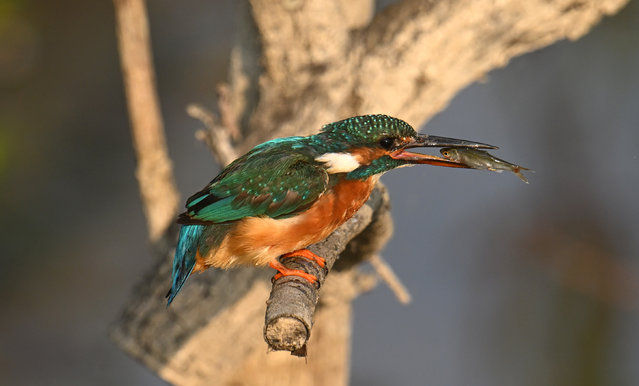
A Kingfisher is seen with a fish at Chard Reservoir on August 06, 2025 in Chard, United Kingdom. (Photo by Harry Trump/Getty Images)
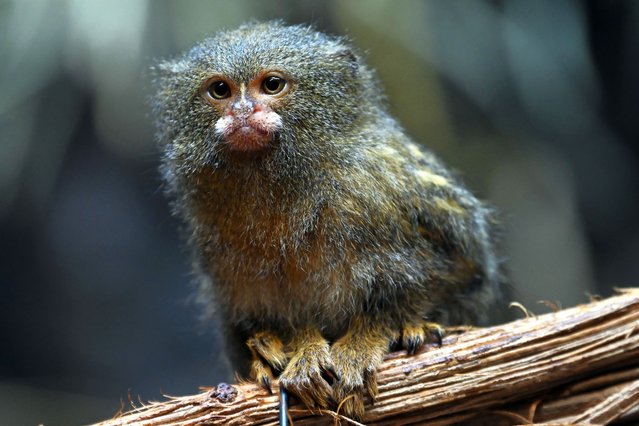
A western pygmy marmoset at an enclosure in the city’s zoo in Ústí nad Labem, Czech Republic on August 5, 2025. The pygmy marmoset (Callithrix pygmaea), which is found in the north-western Amazon rainforest, is the world’s smallest higher primate and can leap as far as 5 metres. (Photo by Slávek Růta/ZUMA Press Wire/Rex Features/Shutterstock)
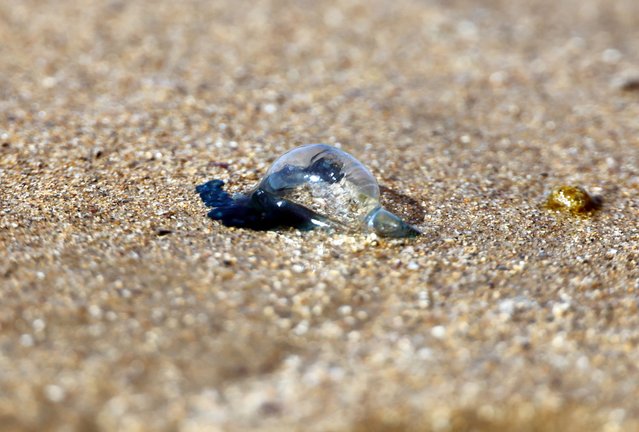
This photograph shows a Physalia physalis, a marine hydrozoan also known as the Portuguese man o' war or bluebottles, washed on the sand of a beach, in Hendaye, south-western France, on August 4, 2025. Beaches in the South of France have been closed to swimmers due to the invasion of these animals with venomous tentacles. (Photo by Thomas Coex/AFP Photo)
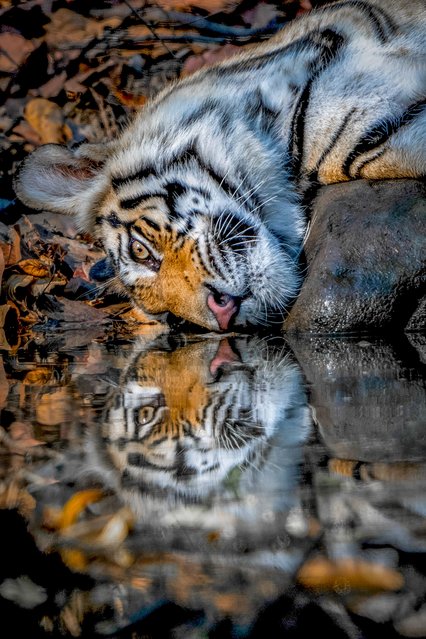
A young Bengal tiger takes some time to reflect in Bandhavgarh National Park, India in the first decade of August 2025. (Photo by Bircan Harper/Solent News & Photo Agency)
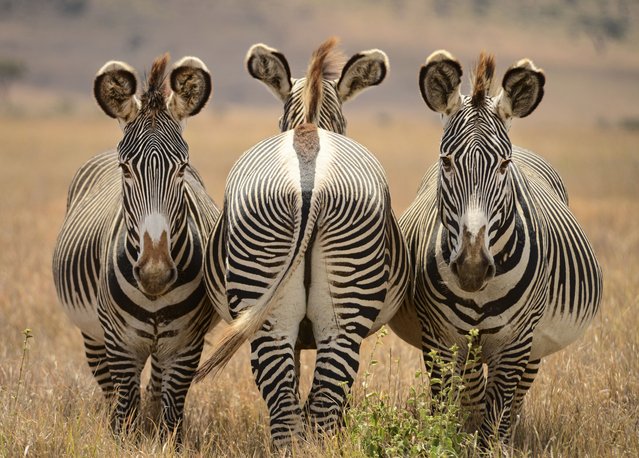
It doesn’t make for the most flattering photoshoot, but there is a reason these zebras at Lewa wildlife conservancy in Kenya in the second decade of August 2025 are stood head to tail: they use their tails to swat flies from each others’ faces. (Photo by Andrew Campbell/Solent News & Photo Agency)
17 Aug 2025 03:01:00,
post received
0 comments