

Dogs run during the Corgi Race festival in Vilnius, Lithuania, on Saturday, August 23, 2025. (Photo by Ints Kalnins/Reuters)
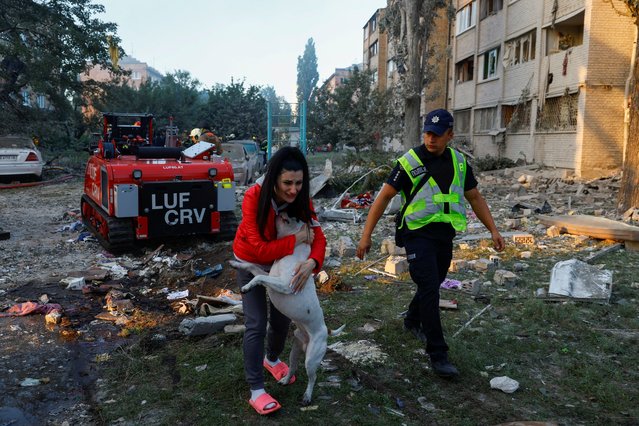
A woman reacts after reuniting with her dog at the site of a building which was hit by Russian missile and drone strikes, amid Russia's attack on Ukraine, in Kyiv, Ukraine on August 28, 2025. (Photo by Valentyn Ogirenko/Reuters)
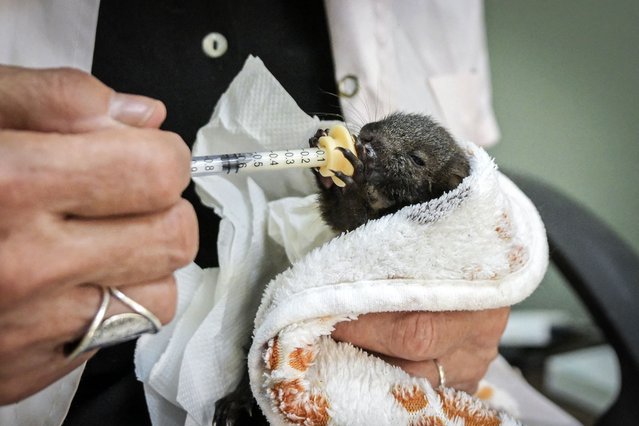
A member of the Greek wildlife protection group Anima feeds a baby squirel at an Athens animal clinic on August 26, 2025. The NGO has seen a surge in animal admissions – largely because of climate change, which scientists say is driving longer, more intense and more frequent heatwaves worldwide, fuelling wildfires and generating other dangers for wildlife. Greece this summer faced several major forest fires amid high temperatures, destroying many areas, especially around Athens and in the western Peloponnese. The government said around 450,000 acres (182,000 hectares) had burnt this year. (Photo by Aris Messinis/AFP Photo)

Emergency responders retrieve the dog from the protester A demonstrator and his dog climbed the clock tower at Kings Cross station, London, on Tuesday morning, September 2, 2025 with his dog and unveiled a banner calling for freedom in Iran. The actions attracted a large emergency service presence and resulted in delays to services. (Photo by Mike Ruane/Story Picture Agency)
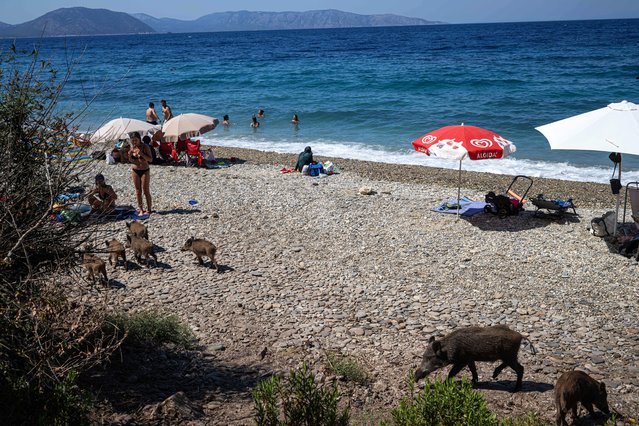
Pigs descend upon the coves in the Dilek Peninsula Buyuk Menderes Delta National Park, located in the Kusadasi district of Aydin, Turkiye on August 26, 2025. (Photo by Akin Celiktas/Anadolu via Getty Images)
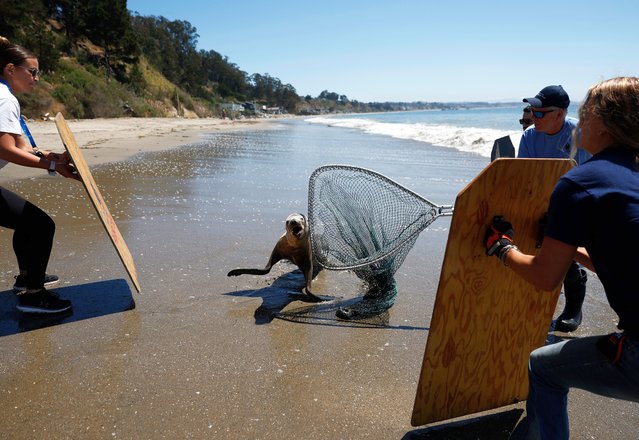
Marine Mammal Center volunteers attempt to corral a stranded California sea lion at New Brighton State Beach on August 20, 2025 in Capitola, California. The Marine Mammal Center is seeing an unprecedented surge of sick California sea lions, a vast majority infected with leptospirosis, a disease that can cause irreversible kidney damage. The Marine Mammal Center has seen over 100 sea lions with leptospirosis since July 1, and nearly two-thirds have not survived. (Photo by Justin Sullivan/Getty Images)
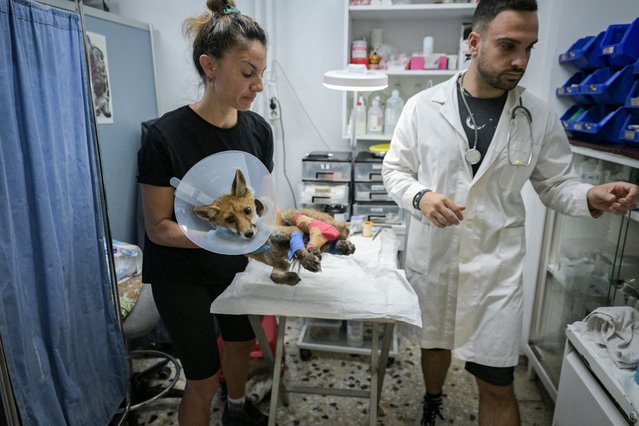
Members of the Greek wildlife protection group Anima treat an injured fox at an Athens animal clinic on August 26, 2025. The NGO has seen a surge in animal admissions – largely because of climate change, which scientists say is driving longer, more intense and more frequent heatwaves worldwide, fuelling wildfires and generating other dangers for wildlife. Greece this summer faced several major forest fires amid high temperatures, destroying many areas, especially around Athens and in the western Peloponnese. .The government said around 450,000 acres (182,000 hectares) had burnt this year. (Photo by Aris Messinis/AFP Photo)
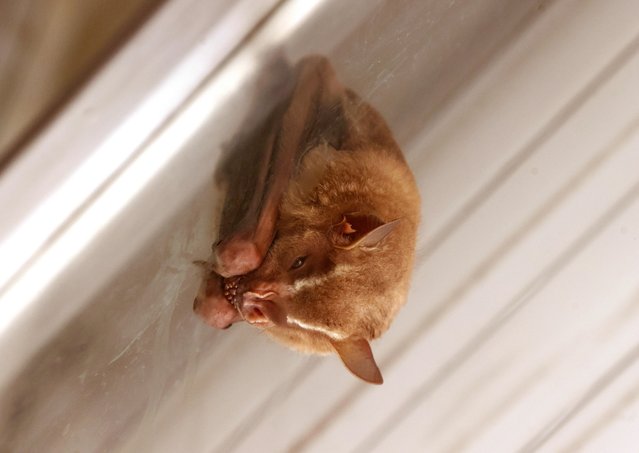
A leaf-nosed bat hangs upside down from the eaves of an apartment window in Ipanema, Rio de Janeiro on August 30, 2025. The city is home to more than 70 bat species that contribute to its delicate urban ecosystem. In the nearby Atlantic Forest, bats feed on fruit, nectar, and insects, aiding in seed dispersal and pollination. In urban areas, they are often spotted roosting in buildings, a reminder of how Rio's wildlife adapts to human-made habitats. (Photo by Bob Karp/ZUMA Press Wire/Rex Features/Shutterstock)
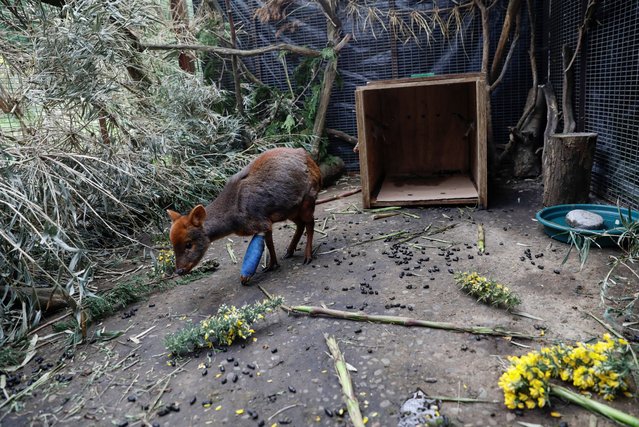
An injured pudu, the world's smallest deer, stands inside an enclosure at the Chiloe Silvestre wildlife centre, in Chiloe, Chile on August 31, 2025. (Photo by Amilix Fornerod/Reuters)
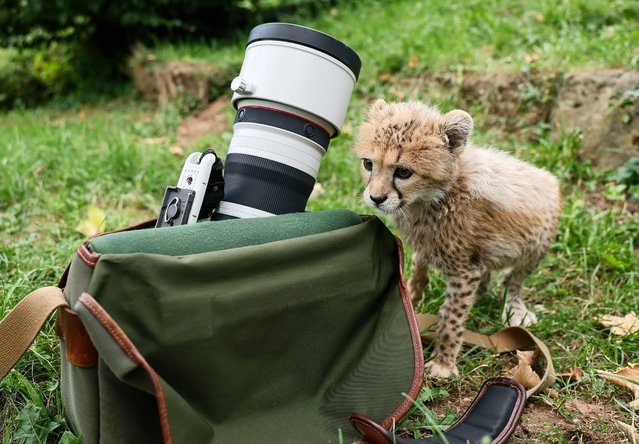
Sudan cheetah cub Assama inspects a camera bag in its enclosure at the Landau Zoo, in Landau, Germany, 03 September 2025. Assama, born in July as the only cub to a cheetah cat, was rejected by its mother, and is now being bottle-fed by its caretakers. (Photo by Ronald Wittek/EPA)
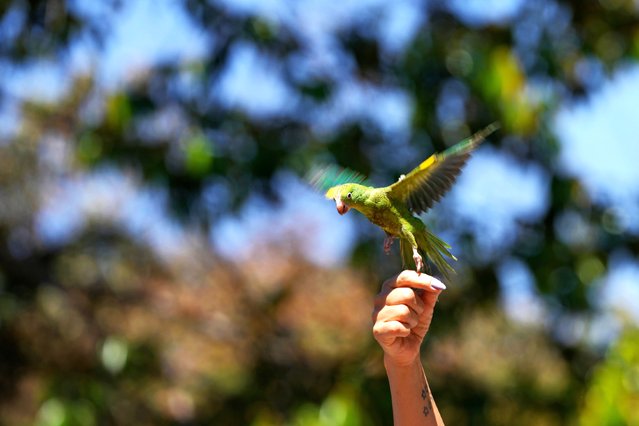
Brazilian First Lady Rosangela da Silva releases a parakeet during a reinsertion operation for recovered wild animals in the Chapada Imperial nature reserve in Brasilia, Brazil, Wednesday, August 27, 2025. (Photo by Eraldo Peres/AP Photo)
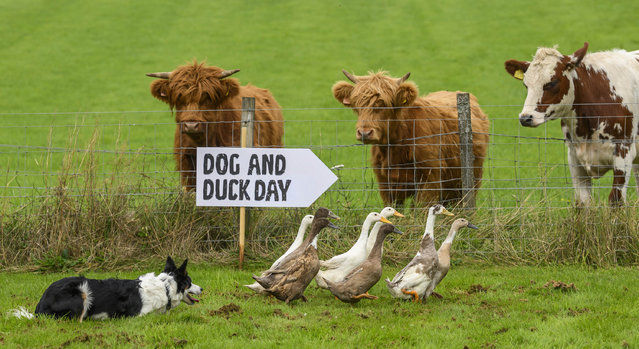
Mist the border collie keeps an eye on the Indian runner ducks in the Drakes of Hazard show at the National Museum of Rural Life in East Kilbride, central Scotland on September 5, 2025, as cows look on. The museum is hosting a free Dog and Duck Day on Sunday, September 13. (Photo by Phil Wilkinson)
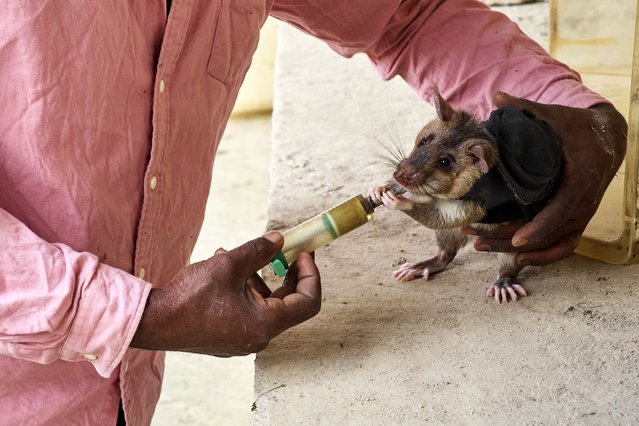
A rat is rewarded after a successful search and rescue training mission in simulated earthquake rubble at APOPO's facility in Morogoro, Tanzania, Tuesday, July 29, 2025. (Photo by Jack Denton/AP Photo)
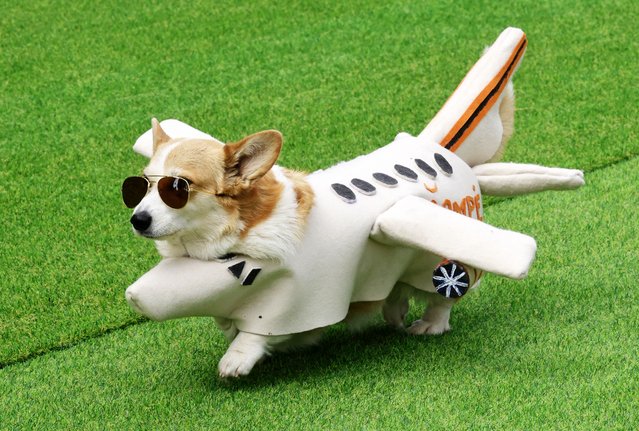
A corgi arrives for the costume contest as part of the Corgi Race Vilnius 2025 gathering in Vingis Park, Vilnius on August 23, 2025. For the fourth time, Vilnius hosts the two-day Corgi Race and costume contest inviting corgis from across Europe. (Photo by Petras Malukas/AFP Photo)
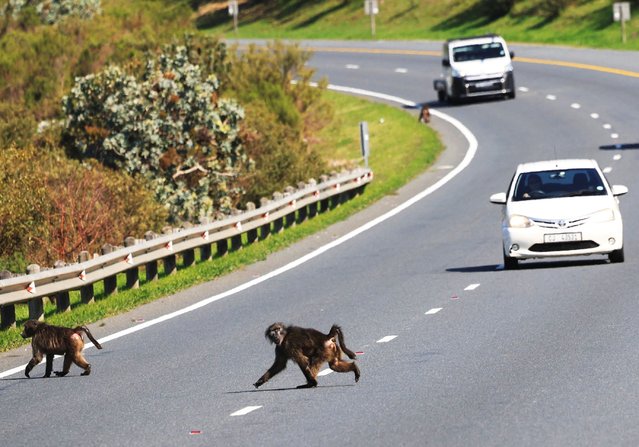
Baboons cross a busy highway near Worcester in Western Cape, South Africa, on September 3, 2025. (Photo by Esa Alexander/Reuters)
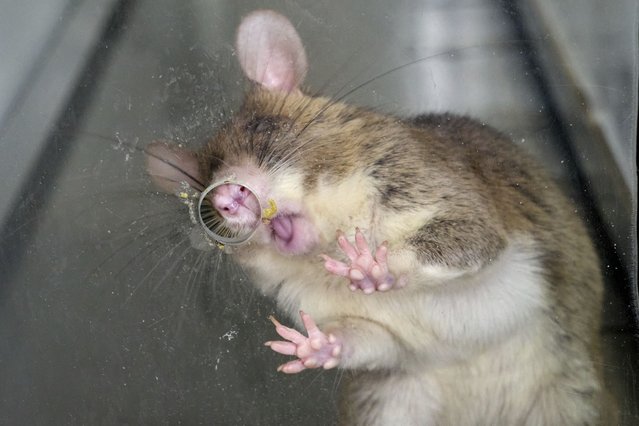
An African giant pouched rat being trained to detect tuberculosis licks a treat off glass in APOPO's laboratory in Morogoro, Tanzania, Tuesday, July 29, 2025. (Photo by Jack Denton/AP Photo)
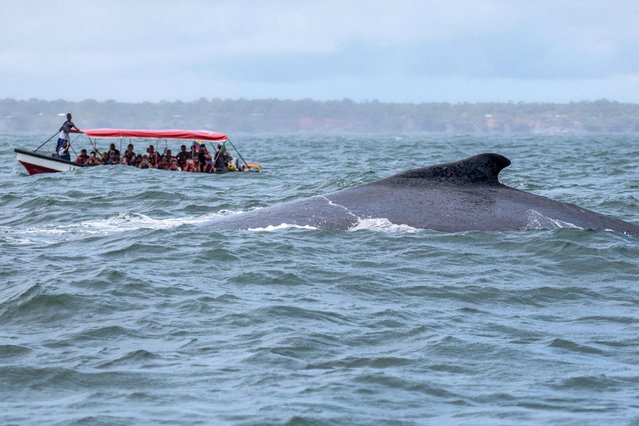
Tourists on a boat watch a humpback whale in the waters of the Pacific Ocean at Bahia Malaga Natural Park, Colombia, on August 29, 2025. Every year, between June and November, humpback whales undertake seasonal migration from the Antarctic Peninsula to the equatorial coast of Colombia to breed, feed, and rest. (Photo by Iusef Samir Rojas/AFP Photo)
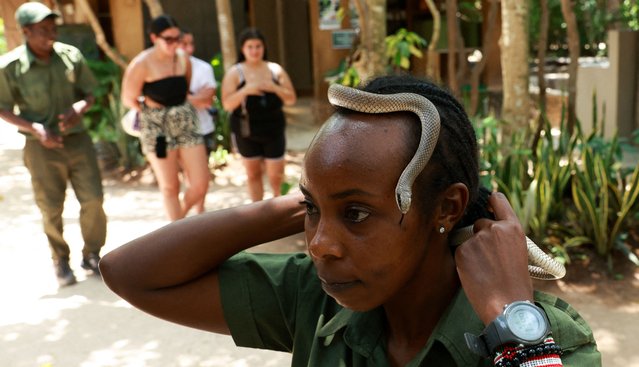
Snake handler Mary Mumbi interacts with a Rufous Beaked snake, her favourite snake, at the Watamu Snake Farm, in Malindi, Kilifi County, Kenya, on September 4, 2025. (Photo by Monicah Mwangi/Reuters)
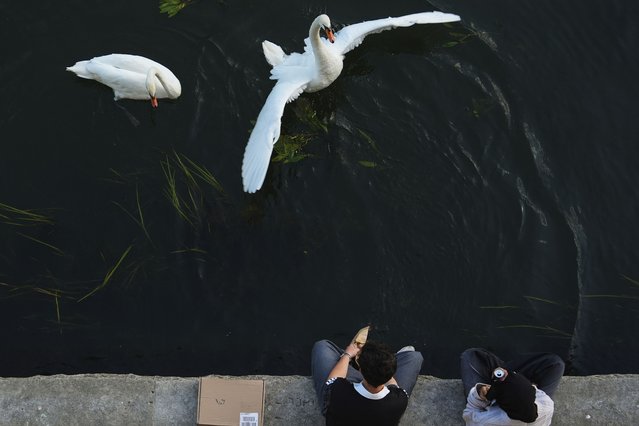
Swans approach people sitting along the Seine River at sunset, Thursday, August 28, 2025, in Paris. (Phoot by Julia Demaree Nikhinson/AP Photo)

Cloned Mabrokan at the 2025 Internatinal Hunting and Equestrian Exhibition on September 2, 2025. (Photo by Victor Besa/The National)
14 Sep 2025 02:49:00,
post received
0 comments