
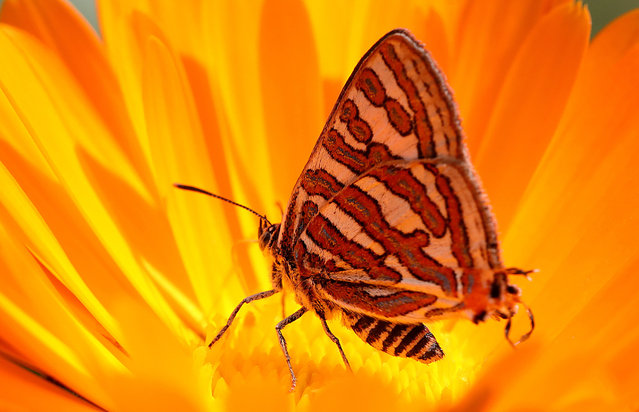
A Common Silverline Butterfly (Cigaritis vulcanus) rests on a flower in New Delhi, India, 11 February 2025. (Photo by Harish Tyagi/EPA/EFE)

A grasshopper clings to a kumquat tree on February 9, 2025, in Los Angeles, California, USA. (Photo by Ringo Chiu/ZUMA Press Wire/Rex Features/Shutterstock)
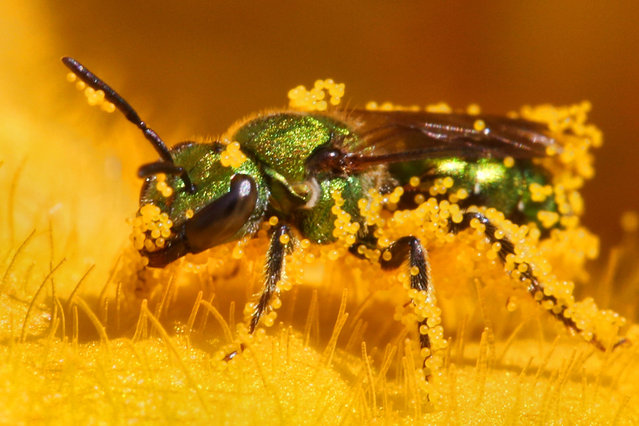
A Pure Green Sweat Bee (Augochlora pura) covers itself in pollen while pollinating the flower of a squash plant in Toronto, Ontario, Canada, on August 23, 2024. (Photo by Creative Touch Imaging Ltd/NurPhoto/Rex Features/Shutterstock)

A jezebel butterfly rests on a leaf at a home garden in Banda Aceh, Indonesia on January 21, 2025. (Photo by Chaideer Mahyuddin/AFP Photo)
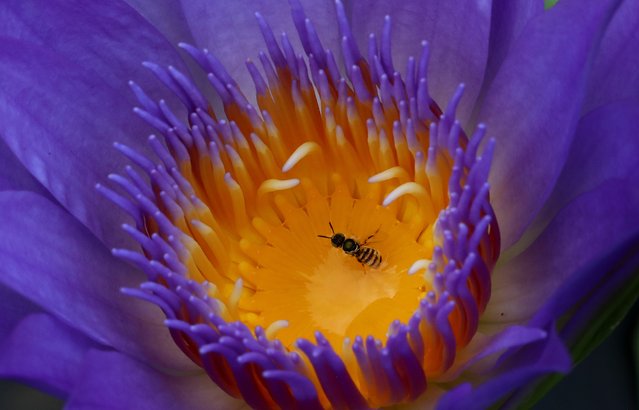
A close-up of a honey bee sitting on an Egyptian lotus flower, known primarily as the blue lotus, in a public garden on the outskirts of New Delhi, India, 26 September 2024. (Photo by Harish Tyagi/EPA/EFE)
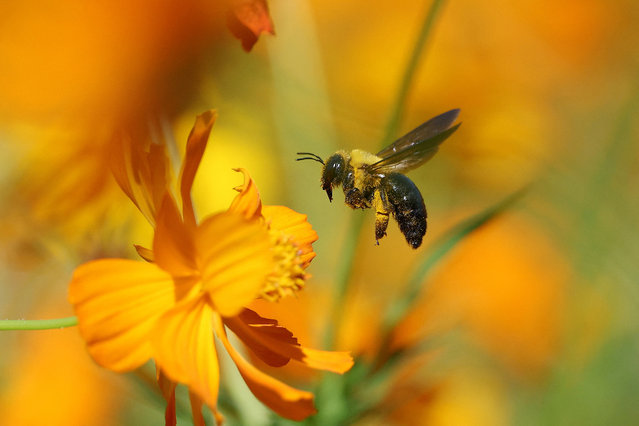
A bee flies over a cosmos flower at a park in Seoul, South Korea, on September 23, 2024. (Photo by Kim Hong-Ji/Reuters)
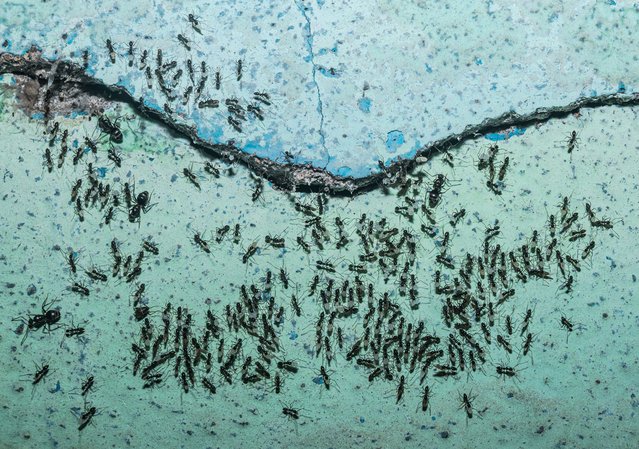
On September 30, 2024, workers of the Longhorn Crazy Ant (Paratrechina longicornis) were observed carrying eggs and pupae, along with queens, as they sought a new home. This movement was prompted by water seeping into their nest through a damp wall crack in Tehatta, West Bengal, India, on a rainy day. (Photo by Soumyabrata Roy/NurPhoto/Rex Features/Shutterstock)

Picture of ants known as “nurses” because they have a white bacterium that works as an antibiotic and that is in charge of curing any anomaly of the fungus on which the anthill feeds, in San Jose, Costa Rica, 17 January 2023. Colonies of ants from the Atta Cephalotes family, known as leafcutters, live from Argentina to the southern United States. Their anthills can reach the size of a bus. The communities reach up to five million individuals, with a queen ant that lays about 2,000 eggs per hour. Scientists have appreciated the social structure of anthills by describing them as a super organism. Studies are constantly being carried out for the creation of an antibiotic that is produced by a bacteria associated with ants and that they use to cure the fungi on which they feed. (Photo by Jeffrey Arguedas/EPA/EFE)
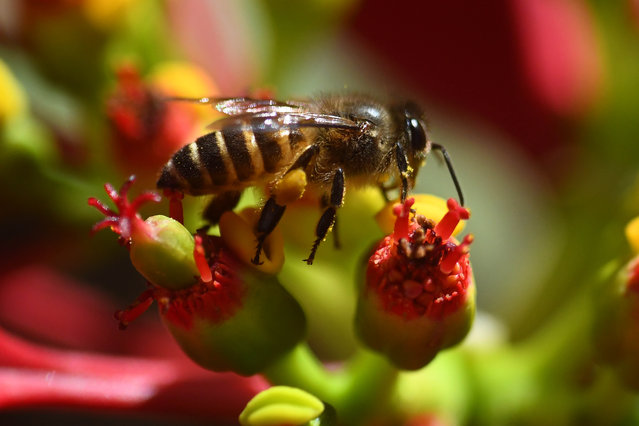
A honey bee collecting nectar and pollen from a flower in Nagaon district, in the north-eastern state of Assam, India on January 9, 2023. (Photo by Anuwar Hazarika/NurPhoto/Rex Features/Shutterstock)

A Red Admiral butterfly (Vanessa atalanta) in Scotland on April 9, 2024.The Red Admiral butterfly had its best year ever in Scotland last year. The colourful insect increased in abundance by 224% in 2023 compared with 2022, which was already its ninth best year since records began 44 years ago. The latest results from the annual UK Butterfly Monitoring Scheme (UKBMS), show Red Admirals have now increased by nearly 1000% north of the Border since 1980. (Photo by Geoffrey Swaine/Rex Features/Shutterstock)
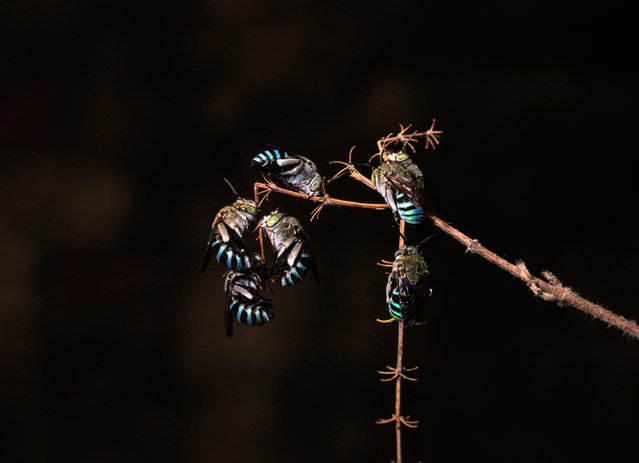
A group of blue-banded bees (Amegilla cingulata) are on the holy basil or tulsi (Ocimum tenuiflorum) plant in the evening at Tehatta, West Bengal, India on September 6, 2022. The blue-banded bee is naturally a solitary bee and it is a big help in the vegetable garden, performing a particular type of pollination known as “buzz pollination”, or sonication, in which it holds onto the flower and shakes its body rapidly. This type of pollination is really useful on crops such as tomatoes, blueberries, cranberries, kiwi fruit, eggplants, and chilies. For this reason, the blue-banded bee is extremely valuable to farmers. (Photo by Soumyabrata Roy/NurPhoto via Getty Images)
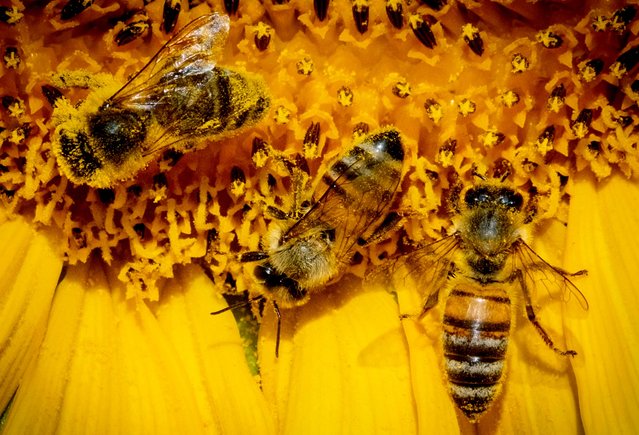
Bees collect pollen from a sunflower on a field on the outskirts of Frankfurt, Germany, Friday, August 2, 2024. (Photo by Michael Probst/AP Photo)
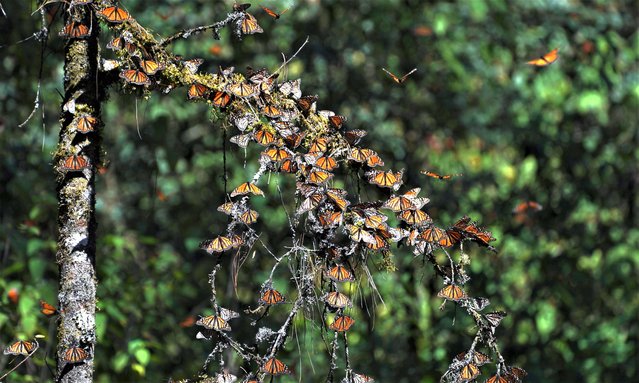
Monarch butterflies rest on a tree branch at Piedra Herrada sanctuary in the mountains near Valle de Bravo, Mexico, Wednesday, January 4, 2023. (Photo by Marco Ugarte/AP Photo)

A swarm of yellowjacket wasps take meat from the remains of a small dead bat on a country road near Elkton in rural southwestern Oregon on August 19, 2022. Yellowjacket wasps are sometimes called 'meat bees' due to their diet which primarily consists of other insects and meat when available. (Photo by Robin Loznak/ZUMA Press Wire/Rex Features/Shutterstock)
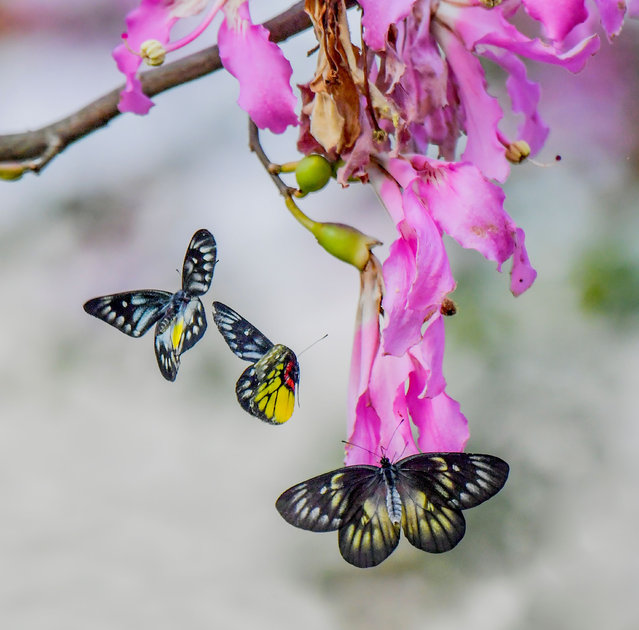
A butterfly feeds on blooming flowers in Nanning, Guangxi, China, on November 16, 2024. (Photo by Costfoto/NurPhoto/Rex Features/Shutterstock)
02 Mar 2025 04:16:00,
post received
0 comments