
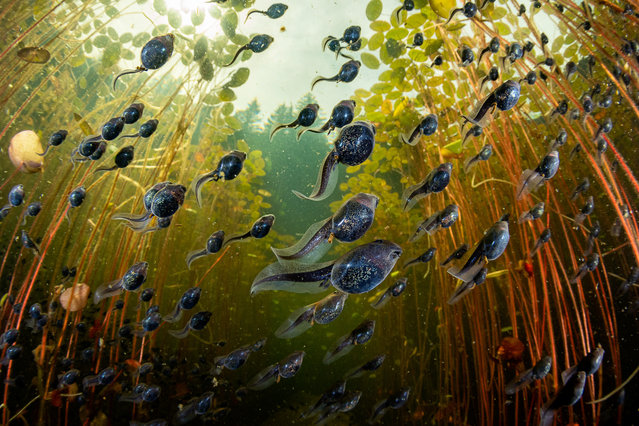
Western toad (Anaxyrus boreas) tadpoles among lily pads in a lake on Vancouver Island, British Columbia, Canada. (Photo by Shane Gross/Siena awards festival 2025)
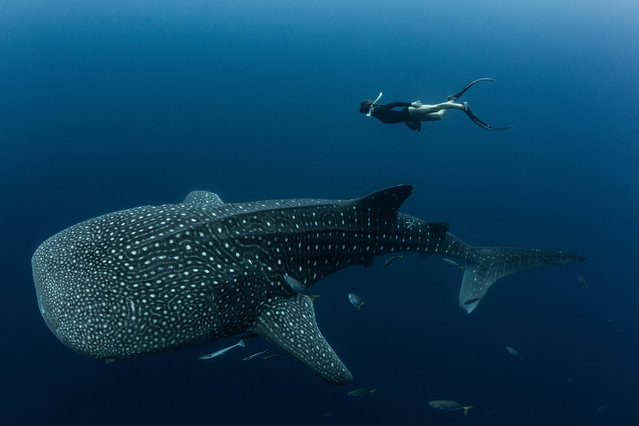
A whale shark swims alongside a snorkeller in Cenderawasih Bay, Indonesia in August 2025. Four in five individuals of the world’s largest fish species spotted at the marine tourism hotspot had human-caused scars, new research reveals. (Photo by M.V. Erdmann/South West News Service)
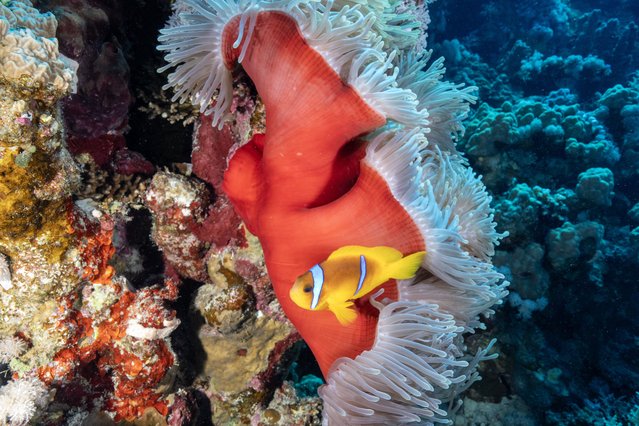
A view of the clownfish (genus Amphiprion) and sea anemones - one of the most vivid examples of mutual dependence in marine ecosystems in Anemone City, Red Sea, Egypt on July 13, 2025. Clownfish take refuge among the sea anemone's venomous tentacles, gaining protection from predators, while also benefiting from feeding opportunities around the anemone. Anemone City, one of the most popular diving spots in the Red Sea, is renowned for its rich diversity of sea anemones. This area, densely inhabited by clownfish, offers a unique experience for divers and underwater photographers alike. The clownfish's body is covered with a special mucus layer that protects it from the anemone's stinging cells. This obligatory symbiosis benefits both organisms: the clownfish drops food particles that nourish the anemone, while also defending it from predators like butterflyfish. (Photo by Tahsin Ceylan/Anadolu via Getty Images)
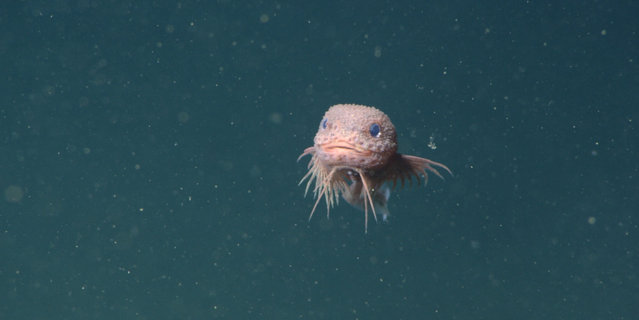
Say hello to the bumpy snailfish – a newly discovered species of deep-sea creature, photographed by a remotely operated vehicle more than 3km underwater off the coast of California in October 2025. With its big blue eyes and winning smile, the little snailfish was an instant online hit. Asked to comment, the lead researcher told the New York Times that the newcomer was “pretty adorable”. (Photo by MBARI)
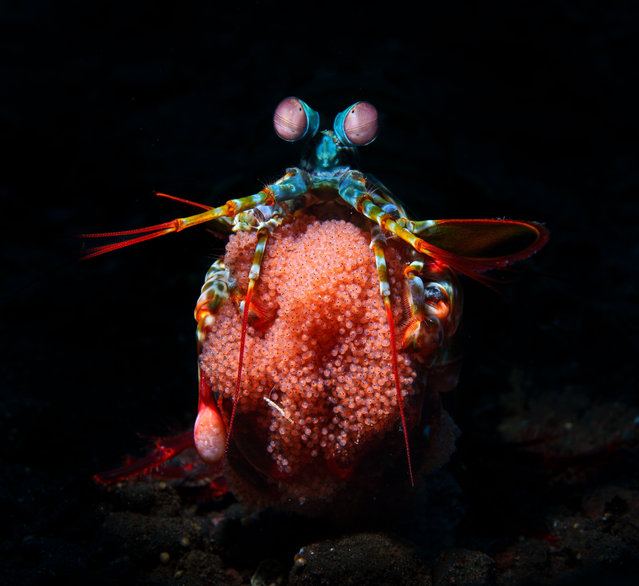
A female peacock mantis shrimp stands upright surveying the area, while holding her large clutch of red eggs. One of the winners in the 2025 Oceania photo contest. (Photo by Peter McGee)
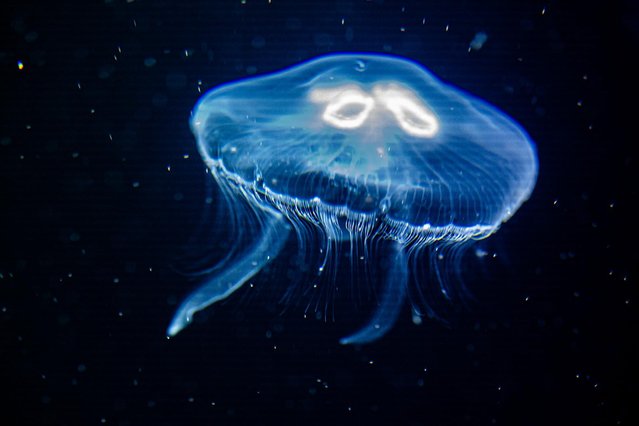
An extra-terrestrial-looking jellyfish, taken in the SeaLife London Aquarium on October 21, 2025. Despite their name, these sea creatures are not actually fish. (Photo by Fred Wall)
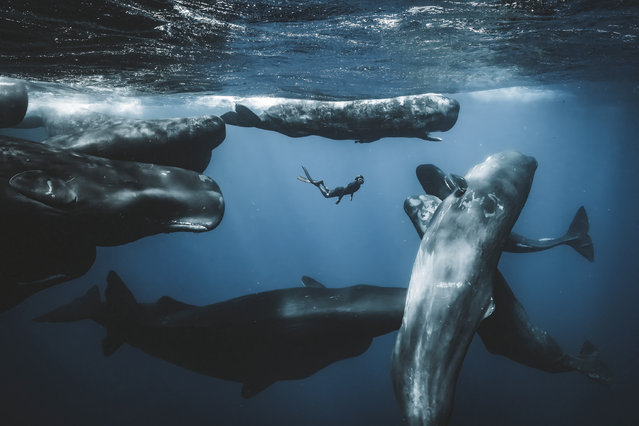
This photo of a diver among sperm whales was a finalist in the “ocean adventure” category of the Ocean Photographer of the Year 2025. “We saw 15 whales socialising”, said the photographer, Romain Barats. “The sea was rough but when you get to see something like that, you quickly forget the conditions”. (Photo by Romain Barats/Ocean Photographer Awards)
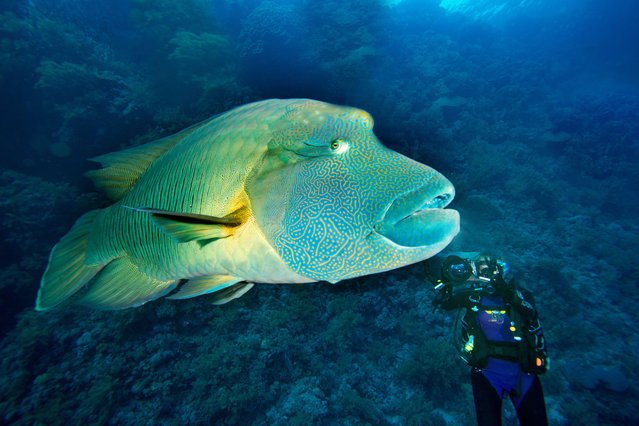
An underwater view from Ras Mohammed National Park, located in Egypt's Sharm El Sheikh region, as one of the Red Sea's premier diving destinations, on August 25, 2025. Established in 1983 by Egypt's Environmental Affairs Agency as a marine reserve to protect both marine and terrestrial ecosystems, the park is renowned for its rich coral populations and diverse marine life. The area, which also includes Tiran and Sataya Islands, hosts a significant portion of the region's diving tours. Due to a ban on anchoring along Egypt's Red Sea coast, boats moor to pre-installed mooring buoys, preventing damage to the delicate coral reefs. With its remarkable biodiversity, Ras Mohammed National Park continues to be one of the world's most famous diving spots in the Red Sea. (Photo by Tahsin Ceylan/Anadolu via Getty Images)
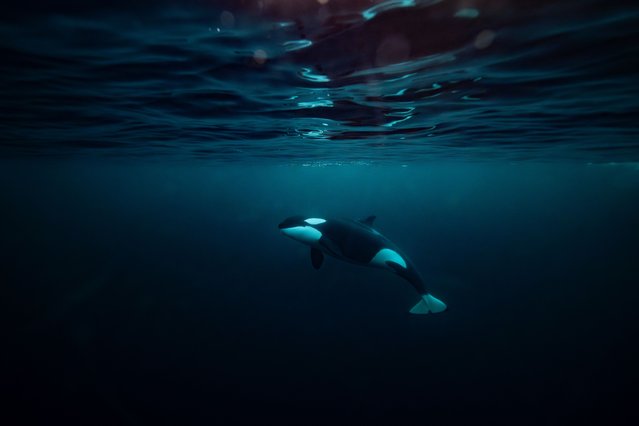
An Orca (Killer Whale) chases a baitball of herrings near Spildra Island, Northern Norway, on November 3, 2025. Between October and January billion of herrings gather in northern Norway fjords to feed. Orcas and Humpback whales chase them to meet their needs of fat and proteins. (Photo by Olivier Morin/AFP Photo)
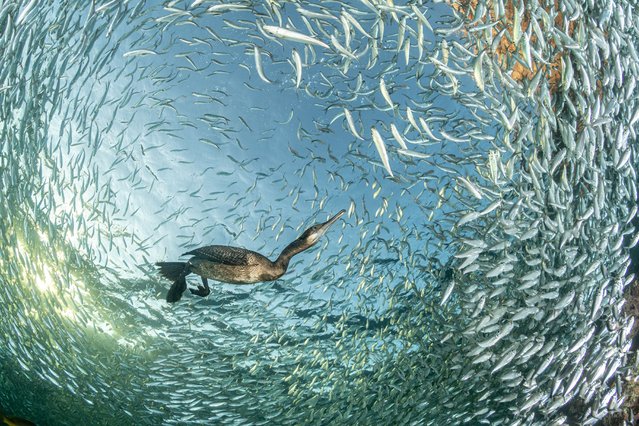
Entitled Feasting at Sunset, this photo of a Brandt’s cormorant among pilchards was the winner of the Birds in the Environment category in the 2025 Bird Photographer of the Year competition. (Photo by Franco Banfi/The Guardian)
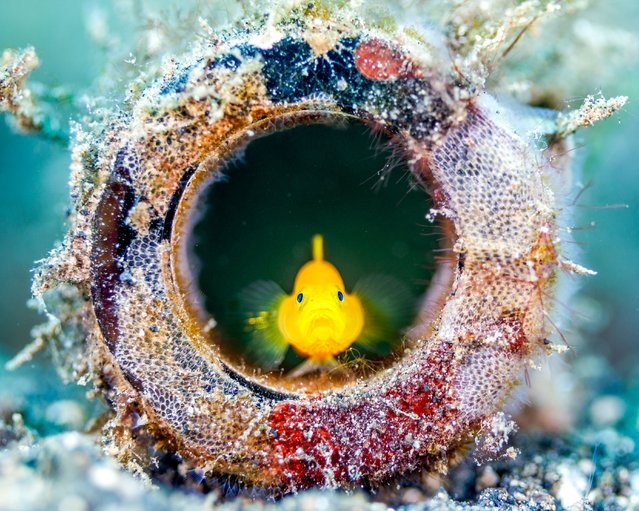
A yellow goby peers in the last decade of August 2025 from the neck of a discarded glass bottle encrusted with coral in Lembeh, Indonesia, using the litter as shelter in a reef shaped by the impact of people. (Photo by Grant Thomas/Solent News & Photo Agency)
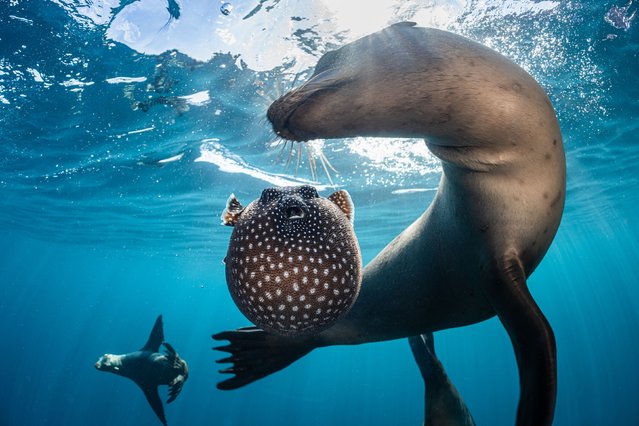
Sea lions play with a pufferfish like it's a ball. The two inquisitive Californian sea lions push around the inflated black and white spotted pufferfish at Espiritu Santo Island National Park in Baja California Sur, Mexico in the second decade of September 2025. (Photo by Henley Spiers/NaturePL/Solent News & Photo Agency)
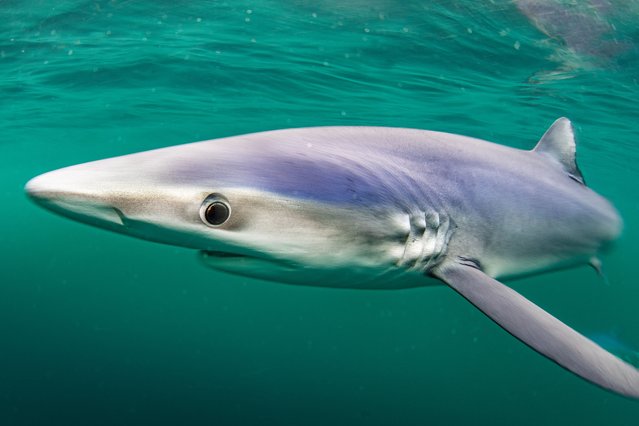
These stunning underwater photos show brave snorkellers getting up close to large blue sharks that have arrived in British waters to feed in the last decade of August 2025. The sleek predators head to the south west coast in the summertime to feed in the nutrient-rich waters. (Photo by Bournemouth News)
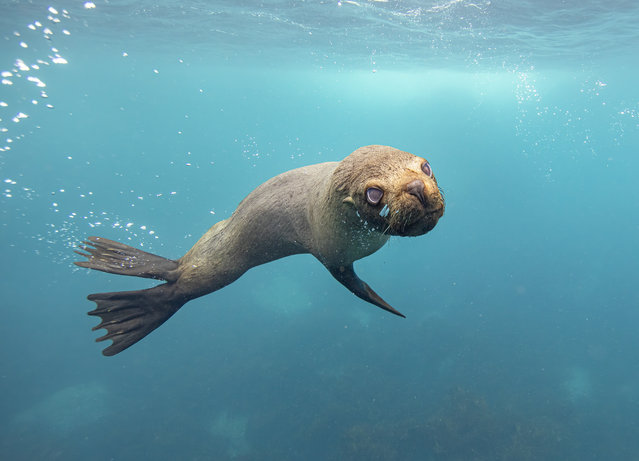
A South American sea lion snoozing peacefully on the rocks off Chañaral Island, Chile in the last decade of August 2025. (Photo by bwmphoto/Caters News Agency)
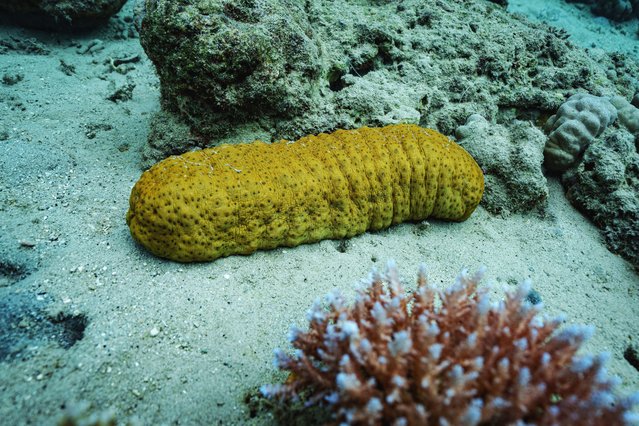
A sea cucumber sits at Havannah Harbour, off the coast of Efate Island, Vanuatu, Sunday, July 20, 2025. (Photo by Annika Hammerschlag/AP Photo)
07 Dec 2025 06:27:00,
post received
0 comments